

Loading...

The phrase "facial recognition technology" is not common. In numerous industries, this technology is well-known. It was initially put to use in the middle of the 1960s. Woodrow Wilson Bledsoe was the first person to figure out how to classify and organize photos of faces by hand. Since then, the technology has been under study to be used in various sectors. As we can now see, it’s a prominent tech used in security and surveillance. It clearly shows that the future of facial recognition holds immense potential, with more advanced applications in numerous fields.
To build a facial template, it captures a person's face and examines their distinctive characteristics. This template is then compared with a database of stored templates to identify or verify the individual. Some of the main Usecases of facial recognition include:
Facial Detection
Finding a face in an image or video is the initial stage in the facial recognition process. It entails determining whether or not a face is present and then detecting its orientation and placement.
Facial Landmarking
When the face is detected, the prominent key points on the face are noticed and learned, such as the eyes, nose, and mouth, and then it's all mapped out for further analysis. These points are used to create a facial template.
Facial Feature Extraction

Facial recognition services and technologies have advanced tremendously. They range from face scans to unlocking smartphone devices to more complex applications like recognizing people in a crowd or detecting emotions based on facial expressions. 3D mapping, one of the most recent developments, records facial characteristics in even more depth, improving accuracy and making it harder to fool. Deep learning algorithms have also been included, which improve performance and flexibility in various situations. We can see the advancement of this technology in various applications, such as:
Artificial Intelligence and Machine Learning
AI has changed the way face recognition works. With this, we now have a digital signature. Now, this digital signature is the same as any human fingerprint, but it's machine-based. This digital signature is converted into a mathematical representation stored in a database for comparison. AI has also enabled this technology to be used in real time. With the help of machine learning, it can now adapt and recognize faces in different lighting conditions, angles, poses, and even with accessories such as glasses or hats. This makes it more reliable and practical for use in various industries.
Integration With Other Technologies
Facial recognition services can now integrated into Mac and mobile devices, making it more accessible and convenient for daily use. It has also been incorporated into payment systems, making transactions more secure and efficient. Furthermore, with the rise of IoT (Internet of Things), facial recognition devices and smart homes can be used for additional security measures. For instance, a camera at the door may recognize the person at the door and decide whether to allow or refuse admission. https://www.folio3.ai/blog/facial-recognition-top-7-trends-tech-vendors-use-cases/?swcfpc=1
Despite the numerous benefits, some concerns and limitations need to be addressed for face recognition. One major concern is privacy as facial mapping becomes more prevalent. There are concerns about who has access to this data and how it is being used. There have been instances where acquired data was used without consent or for discriminatory purposes. Another limitation is accuracy, as the software may not always identify individuals accurately due to factors such as lighting, facial expressions, and diverse demographics. It raises concerns about potential biases and errors in the system. As with any technology, it can hinder individual privacy. Many jurisdictions are now questioning how to regulate it to prevent misuse and protect individual privacy. Facial recognition is continually improving, with new developments and refinements being made every day. However, the public has concerns regarding the legislation and regulation of this technology because it has now become a part of our house. The agencies are opting for stricter regulations to prevent misuse and protect privacy. It is also predicted that it will become even more accurate and efficient in the coming years.
By the year 2024, face recognition is expected to continue advancing and become a more integrated part of our daily lives. It is predicted that there will be an increase in the use of facial recognition for identity verification in airports, banks, and other high-security areas. Moreover, it is also believed that, in the future, it will be implemented in contactless payments. We may soon be able to make payments without using physical cards or devices. It's only a matter of time until we use facial recognition technology to control traffic flow and open doors.
https://youtu.be/tTaHxmbCs6U
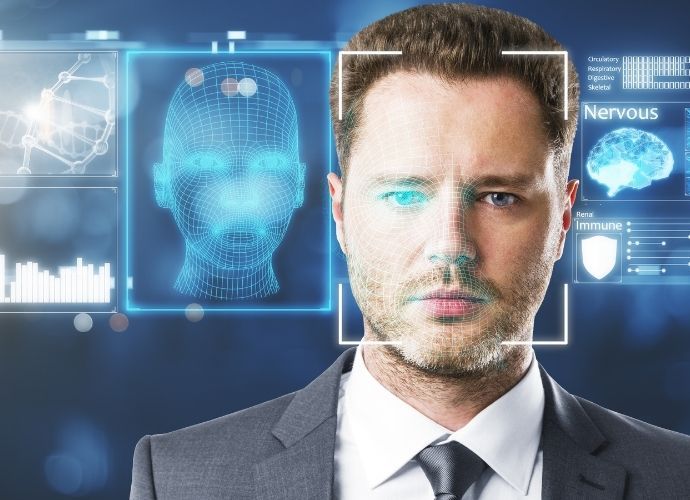
Many people are interested to know how Face recognition works. To understand the algorithms, we must first understand how a face is formed.