
Loading...
Remember the days when security guards manually checked every vehicle entering a facility, writing down license plate numbers on clipboards? Those tedious processes are becoming history as businesses embrace automated solutions that work around the clock. Modern organizations now depend on intelligent recognition systems to monitor their fleets, protect their premises, and streamline traffic management without constant human oversight.
The global automatic license plate recognition market reached $3.77 billion in 2024 and is projected to grow at a CAGR of 9.3% from 2025 to 2030, reflecting widespread industry adoption. The benefits of AI vehicle recognition go far beyond basic identification, delivering real-time precision, operational improvements, and cost reductions that traditional methods simply cannot provide.

AI-powered vehicle recognition systems use artificial intelligence to automatically identify and track vehicles through license plates, vehicle characteristics, and behavioral patterns. Unlike traditional RFID tags or manual logging methods that require physical interaction or human oversight, these systems operate continuously without direct intervention. They capture vehicle data instantly, process it through machine learning algorithms, and provide actionable insights for various applications, including AI automotive solutions that enhance transportation efficiency.
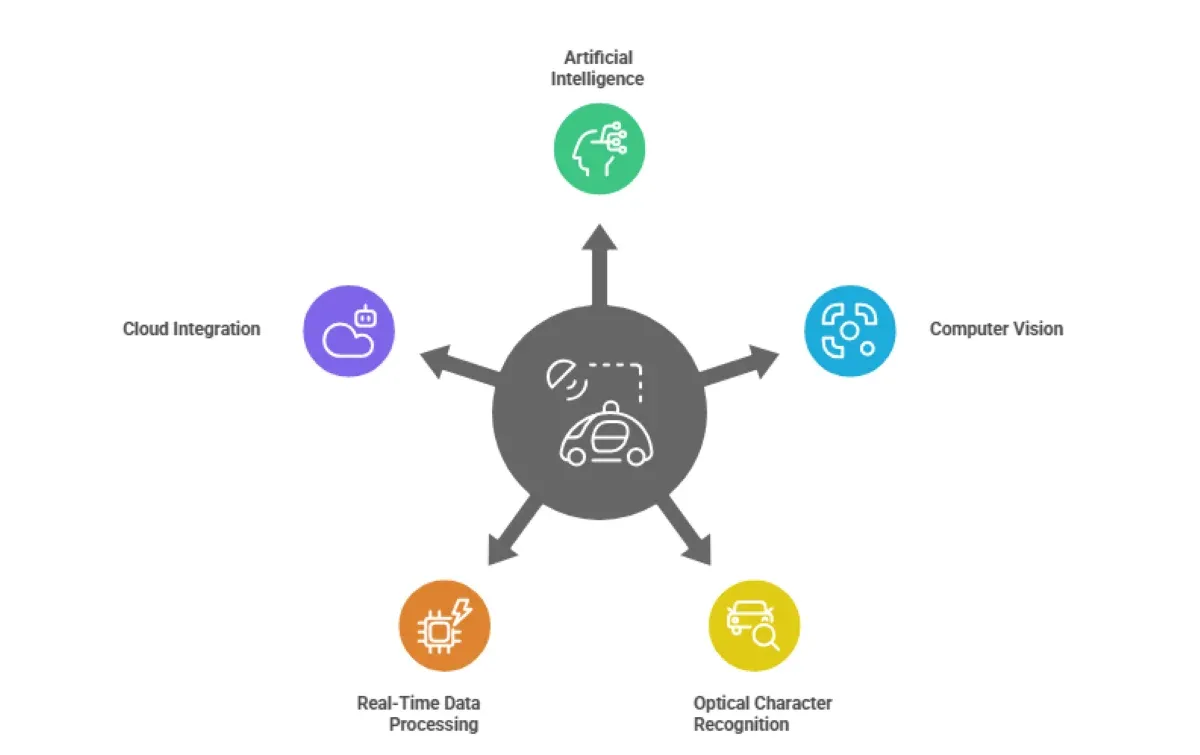
Modern vehicle detection technology combines multiple advanced technologies to deliver accurate and reliable results across different conditions and environments.
AI algorithms learn from millions of vehicle images to improve recognition accuracy over time. These systems adapt to new license plate formats, vehicle types, and environmental conditions automatically.
Advanced cameras capture high-resolution images and videos, while computer vision algorithms extract meaningful data from visual information. This technology identifies license plates, vehicle colors, makes, models, and other distinguishing features.
OCR technology converts license plate images into readable text data. Modern automatic license plate recognition (ALPR) software systems handle distorted plates, partial obstructions, and various fonts with remarkable precision.
Edge computing capabilities process vehicle data instantly at capture points. This eliminates delays and enables immediate decision-making for access control, alerts, and traffic management.
Cloud-based platforms store vehicle data securely and provide scalable processing power. Integration capabilities allow seamless connection with existing fleet management, security, and traffic control systems.

These intelligent systems deliver measurable advantages across security, operations, and cost management, making them valuable investments for organizations of all sizes.
Advanced AI algorithms achieve recognition rates exceeding 95% accuracy even in challenging conditions, surpassing traditional identification methods by considerable margins.
Modern systems process plates with 98% accuracy rates in optimal conditions while machine learning continuously refines recognition algorithms.
Computer vision operates effectively in rain, snow, fog, and varying light conditions with infrared capabilities ensuring consistent night operations.
Real-time processing delivers identification results within milliseconds of vehicle detection, enabling immediate access control decisions without delays.
Advanced systems capture vehicle data from multiple camera angles simultaneously, ensuring accurate identification even with partially obscured plates.
AI algorithms improve recognition accuracy through exposure to diverse conditions, automatically updating their knowledge base without manual programming.
Automated tracking eliminates manual monitoring tasks while providing comprehensive visibility into vehicle movements, routes, and operational patterns for better decision-making.
Fleet managers receive real-time location updates and movement histories without GPS hardware installation costs through automated check-in logging.
Delivery companies reduce processing time at distribution centers through automatic vehicle identification, eliminating manual paperwork and human errors.
Smart traffic management systems adjust signal timing based on real-time vehicle counts, reducing congestion by 15-25% in monitored intersections.
Historical vehicle movement data reveals optimal routes, identifies bottlenecks, and suggests operational improvements for better performance analysis.
Vehicle usage patterns from recognition data help predict maintenance needs and schedule service appointments proactively.
Intelligent vehicle recognition creates multiple security layers, detecting unauthorized access attempts and maintaining detailed records of all vehicle movements.
Security systems instantly identify vehicles not registered in access databases and trigger appropriate alerts for immediate response.
Access control systems open barriers automatically for authorized vehicles while denying entry to unregistered ones with detailed logging.
Stolen vehicle databases integrate with recognition systems to identify compromised vehicles immediately and alert law enforcement agencies.
Corporate facilities can pre-register visitor vehicles and grant temporary access automatically while tracking arrival and departure times.
High-resolution vehicle images and movement histories provide valuable evidence for security investigations with time-stamped incident reconstruction.
Automation reduces labor costs while improving data accuracy, processing speed, and operational consistency across vehicle management tasks.
Automated vehicle logging eliminates security guard needs, typically reducing labor costs by 30-40% compared to manual alternatives.
Digital vehicle records replace physical logbooks, reducing paper costs and storage requirements while eliminating transcription errors.
Vehicle identification occurs in under two seconds compared to manual verification taking 30-60 seconds, increasing facility throughput capacity.
Automated systems eliminate human errors in license plate recording, improving reporting accuracy and reducing administrative corrections.
Predictive analytics identify maintenance needs before equipment failures, reducing emergency repair costs through optimal service timing.
Vehicle recognition technology adapts to diverse operational requirements, from small business parking lots to large-scale municipal traffic management systems.
Waste collection companies track route completion, verify service delivery, and optimize schedules while confirming truck arrivals.
Shipping companies monitor vehicle movements across distribution networks, providing proof of delivery and optimizing route planning.
Shopping centers automate parking access, monitor space utilization, and enforce regulations while improving revenue collection.
Production facilities control vehicle access to restricted areas and track supplier deliveries integrated with inventory systems.
Cities implement vehicle recognition for traffic enforcement, toll collection, and smart city initiatives supporting urban planning decisions.
Real-world applications demonstrate the versatility and effectiveness of AI-powered vehicle recognition across various operational scenarios and industry requirements.
Municipal waste departments use vehicle recognition to verify route completion and monitor collection truck performance. The system confirms service delivery at residential and commercial stops, providing accountability for waste collection contracts and enabling route optimization based on actual completion data.
Traffic management centers monitor vehicle flow patterns and adjust signal timing to reduce congestion. Smart city initiatives integrate vehicle data with public transportation schedules, emergency response systems, and urban planning databases for improved city operations using vehicle counting systems.
Manufacturing facilities and corporate campuses use vehicle recognition for employee parking, visitor management, and restricted area access. The system maintains security logs, enforces parking policies, and integrates with building access control systems.
Transit authorities track bus schedules, monitor route adherence, and analyze passenger demand patterns. Taxi companies verify driver vehicle assignments, monitor service areas, and ensure regulatory compliance through automated vehicle identification.
Police departments use mobile and fixed recognition systems to identify stolen vehicles, track suspect movements, and enforce traffic regulations. Integration with criminal databases enables automatic alerts for vehicles associated with ongoing investigations or security threats.
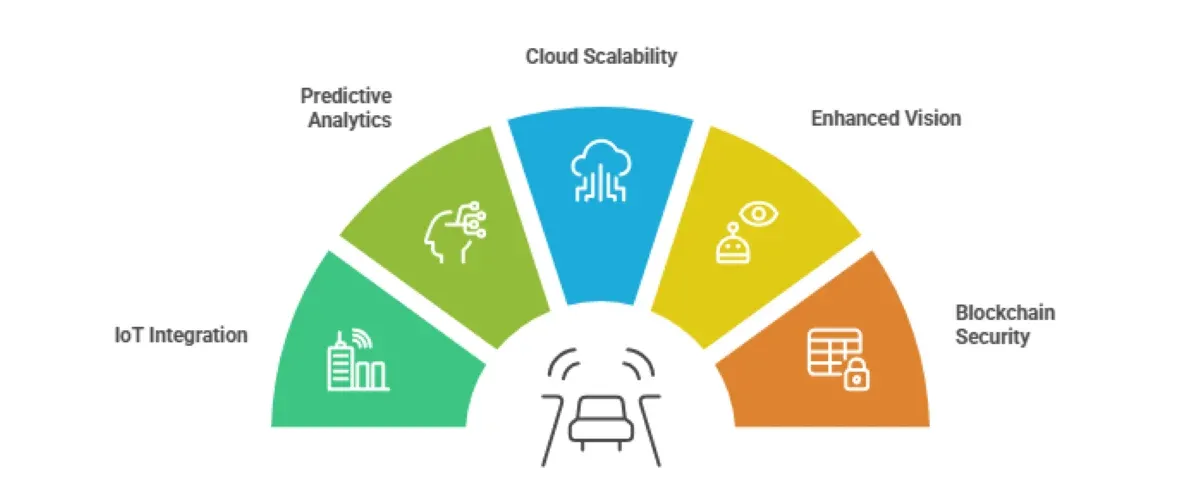
Emerging technologies and expanding capabilities will enhance vehicle recognition systems' accuracy, functionality, and integration potential across multiple platforms and applications.
Connected vehicle ecosystems will share data across traffic lights, parking meters, and emergency services. IoT sensors will provide additional context about vehicle behavior, environmental conditions, and infrastructure status for more intelligent decision-making.
Machine learning algorithms will predict traffic patterns, maintenance needs, and security risks before they occur. Advanced AI will analyze vehicle behavior patterns to identify anomalies, optimize routes proactively, and suggest operational improvements.
Cloud platforms will enable unlimited storage capacity and processing power for organizations of any size. Multi-site deployment will become seamless, allowing centralized management of vehicle recognition across multiple locations and regions.
Next-generation cameras will capture more detailed vehicle characteristics, including occupant counts, cargo status, and vehicle condition assessments. Improved night vision and weather resistance will extend operational capabilities to previously challenging environments.
Distributed ledger technology will secure vehicle data and create tamper-proof records for legal and compliance purposes. Blockchain integration will enable secure data sharing between organizations while maintaining privacy and audit trails.
Our expertise in AI development and computer vision technology positions us to deliver customized vehicle recognition solutions that meet specific business requirements and operational goals.
We develop proprietary machine learning models tailored to your specific vehicle types, environmental conditions, and accuracy requirements. Our algorithms integrate seamlessly with existing systems while providing superior performance compared to generic solutions.
Our team handles complete system deployment from hardware selection to software configuration and staff training. We ensure smooth integration with current fleet management, security, and operational systems without disrupting daily business activities.
We understand unique requirements across waste management, logistics, security, and municipal applications. Our solutions address specific industry challenges while maintaining flexibility for future expansion and operational changes.
Post-deployment support includes system monitoring, performance optimization, and algorithm updates based on real-world usage patterns. We provide training resources and technical assistance to maximize your investment return.
Our cloud-based platforms grow with your business needs, supporting additional locations, increased vehicle volumes, and expanded functionality. Enterprise-grade security and reliability ensure consistent performance across all deployment scenarios.

An AI-powered vehicle recognition system uses artificial intelligence and computer vision to automatically identify vehicles through license plates and visual characteristics. These systems process real-time camera feeds to extract vehicle information without human intervention.
Modern AI vehicle recognition systems achieve 95-98% accuracy rates under optimal conditions. Performance varies based on lighting, weather, and camera positioning, but continuous machine learning improvements maintain high reliability across diverse environments.
AI vehicle recognition optimizes traffic flow by providing real-time vehicle count data for signal timing adjustments. Cities report 15-25% congestion reduction in monitored areas through adaptive traffic control and data-driven infrastructure planning.
Fleet managers use AI recognition for automatic vehicle tracking, route verification, and driver accountability. The system eliminates manual logging requirements while providing detailed movement histories and operational performance metrics.
Security applications include unauthorized vehicle detection, stolen vehicle identification, and automated access control. Real-time alerts notify security personnel of policy violations or potential threats based on vehicle database comparisons.
Smart cities integrate vehicle recognition with traffic management, public transportation, and emergency response systems. The technology supports urban planning decisions through traffic pattern analysis and infrastructure utilization data.
Automated vehicle identification eliminates manual labor costs for logging and verification tasks. Organizations typically reduce staffing requirements by 30-40% while improving data accuracy and processing speed.
Law enforcement uses recognition systems for stolen vehicle recovery, traffic violation enforcement, and criminal investigation support. Mobile and fixed cameras provide real-time alerts and forensic evidence for security operations.
Waste management, logistics, parking facilities, manufacturing, and municipal services gain significant operational improvements. Any industry requiring vehicle tracking, access control, or fleet management benefits from automated recognition capabilities.
Modern recognition systems offer API connections and data export capabilities for seamless integration with fleet management platforms. Custom integration services ensure compatibility with current operational systems and workflows.