
Loading...
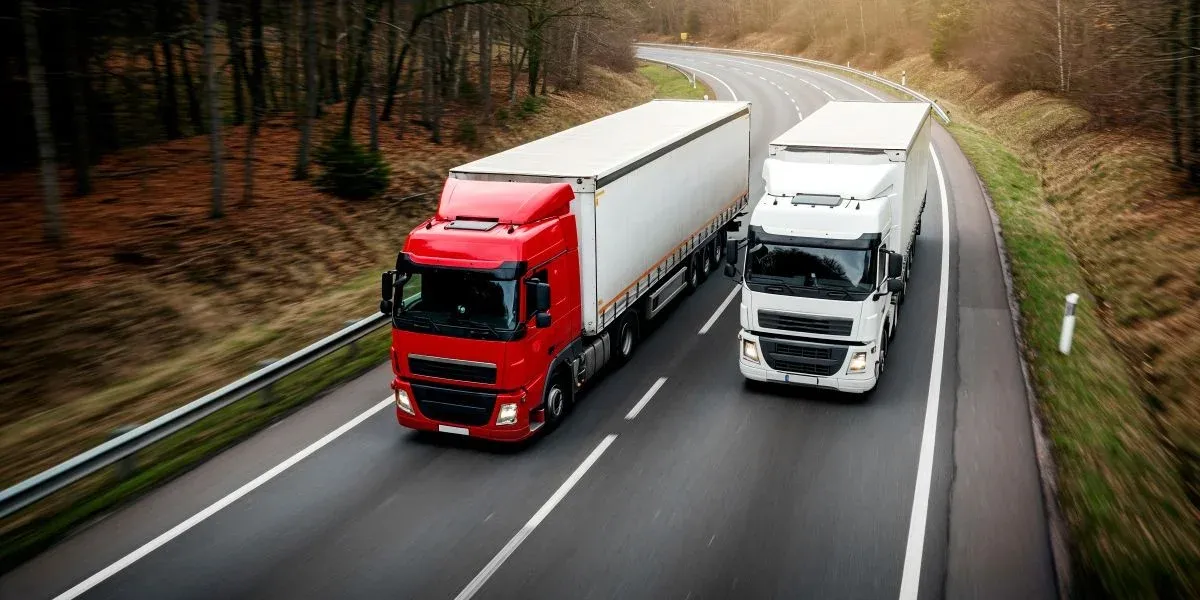
Every morning, thousands of waste collection vehicles roll out across American cities, hauling everything from household garbage to industrial debris. Yet behind this routine operation lies a complex web of inefficiencies that cost the industry significantly each year. That’s why ALPR integration in waste fleets is emerging as the future of waste fleet operations, as combining Automatic License Plate Recognition (ALPR) technology with weighbridge systems and IoT sensors is starting to change how the industry operates.
Traditional waste fleet operations struggle with manual logging processes, paper-based tracking, and disconnected systems that create bottlenecks impacting both profitability and service quality. Advanced fleet management systems now combine real-time vehicle identification, precise weight measurements, and comprehensive sensor data to create more efficient operational networks.
ALPR technology uses advanced optical character recognition and machine learning algorithms to automatically identify and record vehicle license plates in real-time. In waste fleet contexts, this technology serves as the foundation for automated access control, unauthorized dumping detection, and comprehensive vehicle tracking throughout collection routes and disposal facilities.
Modern ALPR systems achieve accuracy rates exceeding 95% under optimal conditions and maintain consistent performance even in challenging weather or lighting situations. These systems integrate with existing fleet management platforms through standardized APIs, enabling real-time data exchange and automated workflow triggers across multiple operational systems.
ALPR systems provide instant vehicle identification as trucks enter weighbridge facilities, automatically logging entry and exit times while triggering weighing sequences. The technology eliminates manual check-in processes and reduces human error in data collection.
Real-time plate recognition enables immediate alerts when unauthorized vehicles attempt to access disposal sites or when fleet vehicles deviate from assigned routes. This capability proves essential for preventing illegal dumping and maintaining operational security.
Integration with route optimization software allows fleet managers to track actual vehicle movements against planned routes, identifying efficiency opportunities and ensuring service compliance. The system automatically records timestamps and locations for each vehicle interaction.
Advanced ALPR platforms can distinguish between different vehicle types, automatically categorizing trucks by size, company affiliation, or waste type. This automated classification streamlines facility operations and improves data accuracy for billing and compliance reporting.
Cloud-based ALPR systems provide instant access to vehicle tracking data across multiple locations, enabling centralized fleet management and real-time operational oversight. This connectivity supports coordinated responses to route changes, equipment failures, or emergency situations.
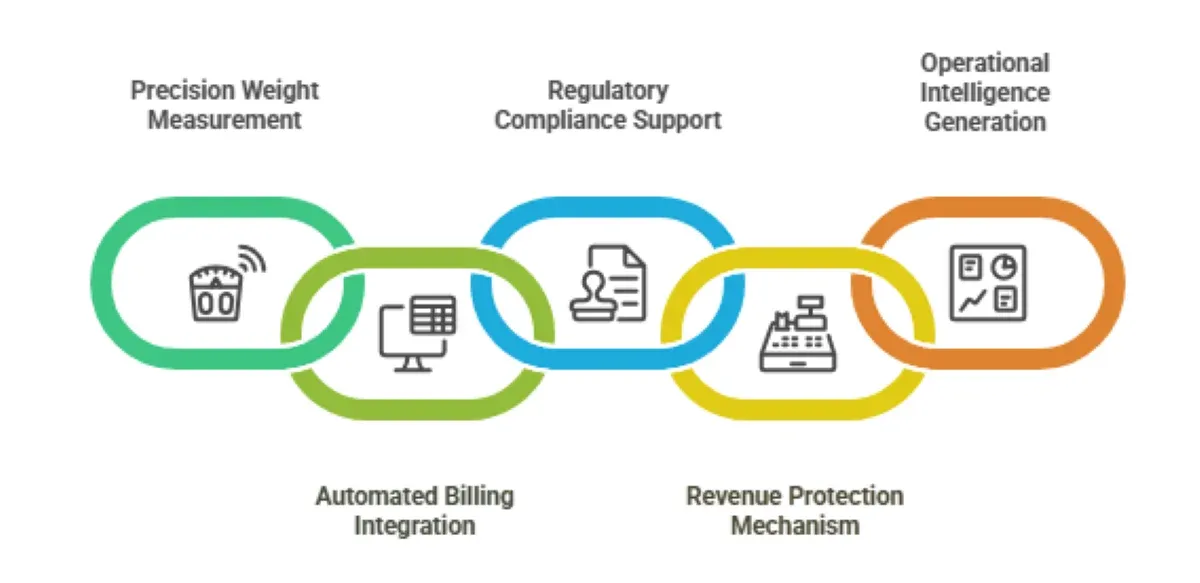
Weighbridge systems serve as critical infrastructure for modern waste management operations, providing precise vehicle weight measurements that ensure accurate billing, regulatory compliance, and operational efficiency across collection and disposal facilities.
These advanced instruments capture exact vehicle weights before and after loading, eliminating estimation errors and providing reliable tonnage data for accurate waste volume calculations and transparent billing processes.
Real-time weight data automatically feeds into billing systems, ensuring customers receive invoices based on actual waste volumes rather than estimates, improving customer satisfaction and reducing billing disputes.
Automated weight documentation meets EPA reporting requirements, generating detailed records for environmental audits and regulatory submissions without manual data compilation, streamlining compliance processes, and reducing administrative burden.
Precise measurement of actual waste volumes prevents billing discrepancies that impact profitability, while accurate weight data supports fair pricing models based on actual service delivery rather than approximations.
Weight pattern analysis reveals peak collection periods, seasonal variations, and route efficiency opportunities, providing strategic insights that drive informed decision-making for fleet deployment and resource allocation optimization.
Modern waste management facilities can choose from various weighbridge configurations, each offering distinct advantages for specific operational requirements and spatial constraints, especially when combined with ALPR integration in waste fleets to enhance tracking, accuracy, and efficiency.
Static weighbridges provide the highest accuracy for facilities with adequate space and consistent vehicle flow patterns. These permanent installations offer long-term reliability but require significant infrastructure investment and dedicated vehicle routing.
Portable weighbridge systems enable temporary installations for special projects or locations with space constraints. While offering flexibility, these systems may sacrifice some accuracy and require more frequent calibration procedures.
Axle weighbridges measure individual vehicle sections sequentially, making them suitable for facilities with limited space. However, these systems require longer processing times and may face accuracy challenges with uneven loading patterns.
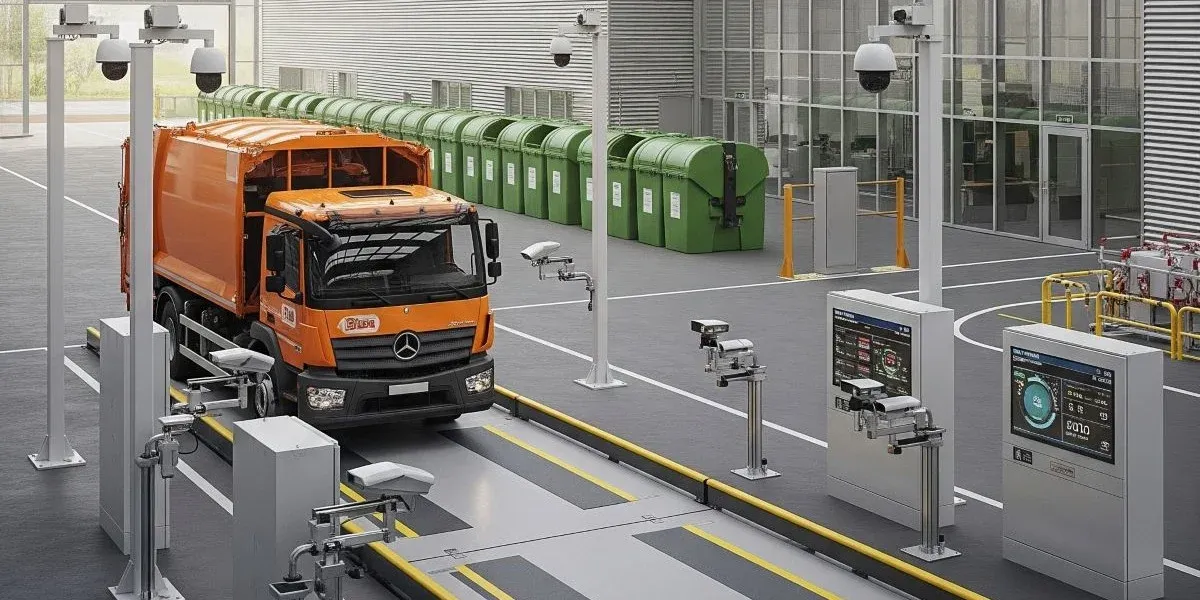
IoT sensors transform waste collection vehicles into intelligent data-gathering platforms that provide real-time operational insights. These connected devices monitor everything from bin levels to fuel consumption, creating comprehensive operational visibility.
Ultrasonic sensors installed in collection bins measure fill levels continuously, enabling dynamic route adjustments based on actual capacity needs. This technology reduces unnecessary stops while preventing overflow situations that create service complaints.
Advanced fuel sensors provide real-time consumption data and detect fuel theft or system leaks immediately. This monitoring capability supports accurate cost allocation and identifies vehicles requiring maintenance attention.
Integrated GPS systems track actual vehicle movements against planned routes, identifying deviation patterns and optimization opportunities. The data reveals traffic impacts, service delays, and route efficiency improvements.
Onboard weight sensors monitor payload levels continuously, preventing overloading while optimizing collection efficiency. These systems alert drivers when vehicles approach capacity limits and suggest route adjustments.
Comprehensive diagnostic sensors monitor engine performance, hydraulic system health, and component wear patterns. This predictive maintenance capability reduces unexpected breakdowns and extends vehicle service life.
The convergence of ALPR, weighbridge, and IoT technologies creates enhanced operational visibility and automation capabilities. This integrated approach transforms traditional waste fleet operations into data-driven systems.
Integrated systems automatically capture vehicle identity, arrival times, and weight measurements without manual intervention. This automation eliminates data entry errors while providing instant operational visibility across all facility locations.
Combined GPS tracking and ALPR verification enable precise route compliance monitoring and optimization recommendations. Fleet managers receive real-time alerts for route deviations while identifying efficiency improvements based on actual performance data.
Automated data collection creates detailed audit trails for regulatory compliance and environmental reporting. The integrated system generates comprehensive documentation for EPA submissions and internal quality assurance processes.
Integrated sensor data reveals waste generation patterns, seasonal variations, and collection efficiency metrics. This intelligence supports strategic planning for capacity expansion, route optimization, and environmental impact reduction initiatives.
Fleet management studies demonstrate fuel reduction potential of 5-30% through technology implementation. Accurate weight measurement and billing automation protect revenue streams while reducing operational overhead costs.
Real-world implementations demonstrate the impact of integrated ALPR, weighbridge, and IoT systems across diverse operational environments. These case studies highlight practical benefits and implementation strategies.
Cities deploy integrated ALPR and IoT sensors as part of ALPR integration in waste fleets to detect unauthorized waste disposal in restricted areas. The system sends immediate alerts to enforcement teams while building evidence databases for prosecution efforts.
Commercial waste companies integrate ALPR with weighbridge systems to automate vehicle check-in processes. This automation reduces facility staffing requirements while improving transaction accuracy and customer service quality.
Advanced municipalities implement comprehensive dashboards that track waste flows from collection through disposal. These systems provide real-time operational visibility and support data-driven decision-making for service optimization.
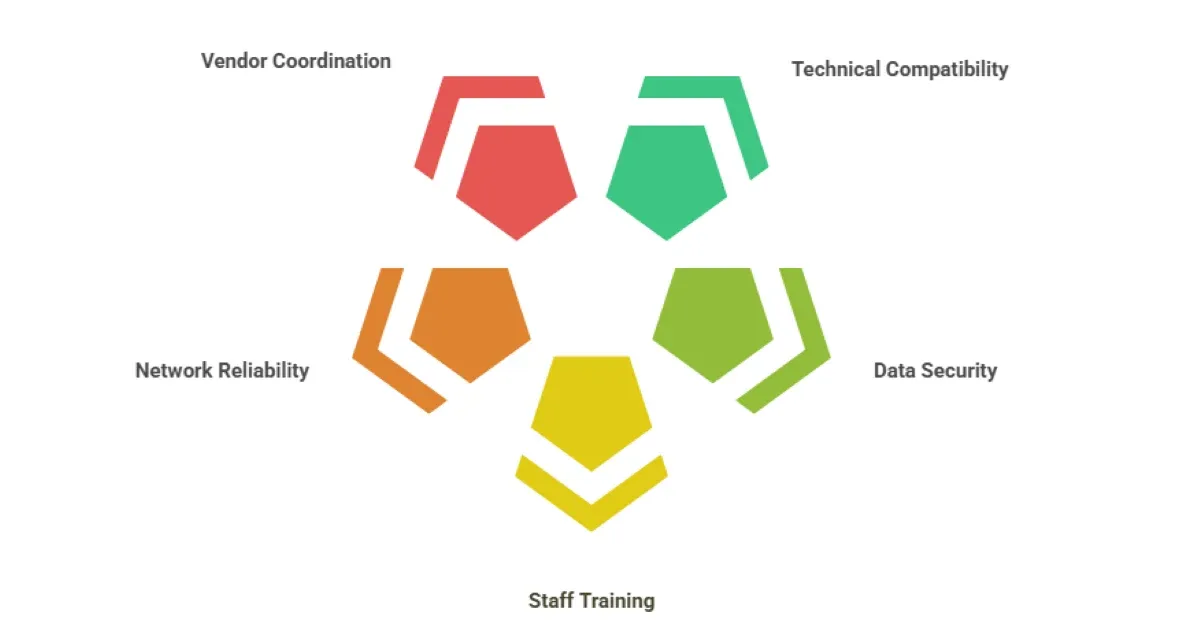
Successful ALPR, weighbridge, and IoT integration requires careful planning and attention to technical, operational, and organizational factors. Understanding these considerations prevents implementation delays and ensures optimal system performance.
Legacy weighbridge systems may lack modern communication protocols required for seamless ALPR integration. Organizations must evaluate existing infrastructure capabilities and plan for necessary upgrades or replacement components.
Integrated systems collect extensive operational data that requires robust security measures and privacy protection protocols. Organizations must implement encryption, access controls, and data retention policies that comply with applicable regulations.
Successful integration requires comprehensive training programs for operators, maintenance staff, and management personnel. Change management strategies must address workflow modifications and new technology adoption across all organizational levels.
IoT sensors and ALPR systems require reliable network connectivity for real-time data transmission. Organizations must assess cellular coverage, Wi-Fi infrastructure, and backup communication options for uninterrupted system operation.
Multiple technology vendors must coordinate installation, configuration, and ongoing support activities. Clear communication protocols and escalation procedures ensure rapid resolution of technical issues and system maintenance requirements.
Strategic implementation of integrated ALPR, weighbridge, and IoT systems follows a phased approach that minimizes operational disruption while building system capabilities progressively. This structured timeline ensures successful deployment and user adoption.
Initial deployment focuses on establishing automated vehicle identification and weight capture capabilities at primary facilities. This foundation phase includes hardware installation, system configuration, and basic operator training for essential functions.
Vehicle sensor installation expands system capabilities to include real-time operational monitoring and route tracking. This phase requires careful scheduling to minimize vehicle downtime while ensuring comprehensive sensor coverage across the fleet.
Final implementation phase integrates all system components and activates advanced analytics capabilities. Organizations fine-tune operational processes, implement comprehensive reporting systems, and realize operational benefits from integrated technology deployment.
Choosing the right ALPR technology partner requires careful evaluation of technical capabilities, integration requirements, and ongoing support commitments to ensure successful implementation and long-term operational value.
What are your actual accuracy rates in waste management environments, including nighttime operations, adverse weather conditions, and moving vehicles at various speeds? Request specific performance data for waste fleet scenarios rather than general automotive application statistics to ensure realistic expectations.
How does your ALPR system integrate with existing weighbridge controllers, IoT sensors, and fleet management platforms? Assess API standards, data format compatibility, and real-time communication protocols to ensure seamless integration without requiring complete infrastructure replacement or costly workarounds.
What ongoing support, training, and optimization services do you provide after implementing ALPR integration in waste fleets? Evaluate response time commitments, escalation procedures for technical issues, comprehensive training programs, and long-term partnership approaches to ensure continuous system improvement and operational success.
Folio3 AI offers specialized ALPR solutions designed specifically for waste management challenges, providing comprehensive fleet tracking and operational oversight capabilities that address the unique needs of waste collection operations.
Advanced computer vision algorithms capture and instantly match license plates at landfill sites, transfer stations, and throughout collection routes. This real-time identification enables immediate vehicle verification and automated access control, eliminating manual check-in processes while ensuring only authorized vehicles enter restricted areas.
The system automatically records every vehicle's arrival and departure times with precise timestamps, enabling fleet managers to monitor route duration, depot visit frequency, and operational efficiency. This detailed logging supports accurate billing calculations and provides comprehensive audit trails for regulatory compliance and performance analysis.
Intelligent geo-fencing capabilities send immediate notifications when vehicles deviate from designated collection zones or skip scheduled pickup areas. This proactive monitoring helps prevent unauthorized dumping, ensures route compliance, and enables rapid response to operational irregularities or emergency situations.
ALPR serves as the foundation for automated vehicle identification and tracking throughout waste collection operations. The technology captures license plates in real-time, creating comprehensive audit trails for route compliance, facility access control, and operational accountability across diverse collection scenarios.
Weighbridge integration eliminates manual data entry while providing instant weight measurements linked to vehicle identification. This automation reduces processing time and ensures accurate billing and regulatory compliance documentation.
Common IoT sensors include ultrasonic bin level monitors, GPS tracking systems, fuel consumption sensors, onboard weight sensors, and engine diagnostic monitors. These devices provide comprehensive operational visibility and support predictive maintenance programs.
Yes, advanced ALPR systems automatically trigger weighbridge sequences upon vehicle identification, eliminating manual operator intervention. The integration creates seamless data flow between vehicle identity, weight measurements, and billing systems for complete transaction automation.
IoT sensor data, when combined with ALPR integration in waste fleets, reveals actual collection needs, traffic patterns, and vehicle performance metrics in real time. This information enables dynamic route adjustments, prevents unnecessary stops, and optimizes fuel consumption while maintaining service quality standards.
Primary challenges include legacy system compatibility, network connectivity requirements, staff training needs, and coordinating multiple vendor installations. Success requires careful planning, phased implementation, and comprehensive change management strategies.
Yes, most waste vehicles can accommodate IoT sensor retrofitting with minimal modifications to existing systems. ALPR integration typically requires camera installations at key facilities rather than vehicle modifications, making deployment feasible across diverse fleet compositions.
ALPR systems capture vehicle license plates and operational data without collecting personal driver information. Organizations must implement appropriate data security measures and comply with applicable privacy regulations while maintaining operational transparency.
Smart cities gain comprehensive waste flow visibility, regulatory compliance automation, and data-driven optimization capabilities. Integrated systems support environmental reporting, service quality monitoring, and strategic planning for infrastructure development and capacity expansion.
Implementation costs vary significantly based on system complexity and integration requirements. Organizations commonly achieve operational cost reductions through technology integration, though specific ROI depends on existing infrastructure and operational scale.