
Loading...
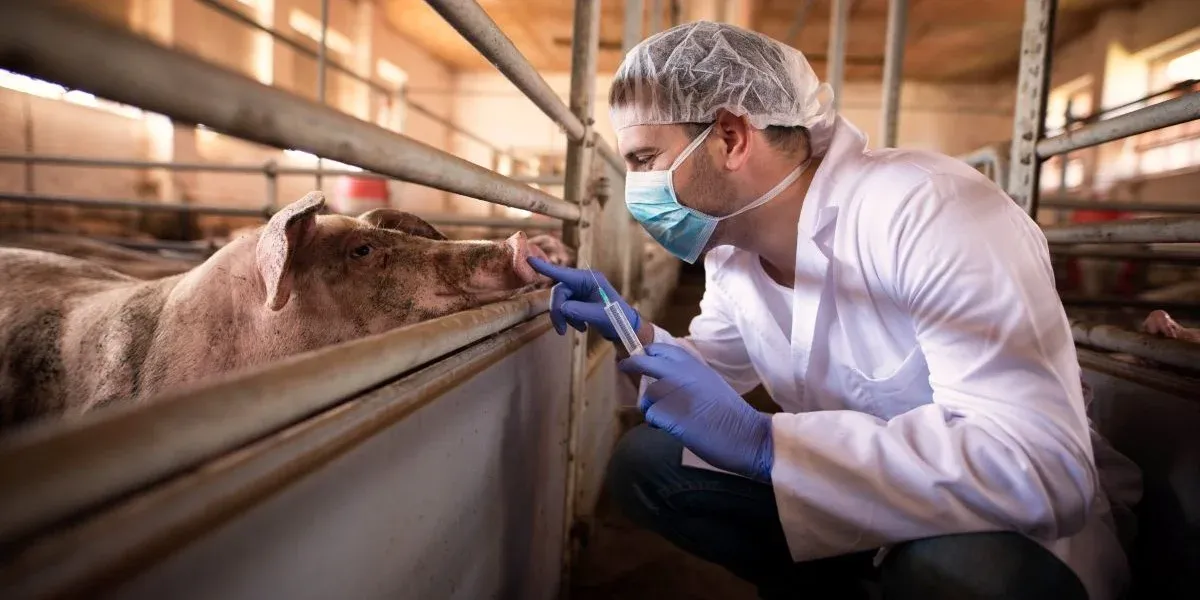
Every morning, livestock producers across the globe face the same challenge: detecting health issues before they become costly disasters. Traditional visual inspections catch symptoms only after animals are suffering, often missing the critical window for effective intervention. The stakes couldn't be higher, which is why computer vision for animal health is transforming how farmers detect diseases early and protect herd well-being.
Bovine respiratory disease alone costs feedlot operators $23.60 per treated case according to USDA research, with annual industry spending exceeding $75 million just on BRD treatments. However, progressive farms using computer vision technology are revolutionizing animal care by detecting illness 3-5 days before human observers can spot symptoms.

Computer vision systems deliver health monitoring through sophisticated analysis of visual data, behavioral patterns, and integration with existing farm management infrastructure.
Modern computer vision systems excel at identifying subtle changes in animal behavior and physical appearance that often precede clinical symptoms by several days. This early warning capability represents the core value proposition for most livestock operations.
Advanced algorithms analyze feeding patterns, water consumption habits, and social interaction changes that often precede clinical disease symptoms by 24-72 hours according to agricultural technology research. Systems establish baseline behaviors for individual animals and trigger alerts when significant deviations occur consistently.
Camera systems monitor weight changes, body condition scoring, gait abnormalities, and posture variations that indicate developing health issues. Computer vision technology can detect subtle lameness, swelling, or body positioning changes that human observers might miss during routine inspections.
Infrared cameras detect elevated body temperatures and inflammation patterns associated with fever, mastitis, or other inflammatory conditions. These systems can identify temperature variations as small as 0.5°C according to veterinary monitoring research, enabling early detection of infections before animals show clinical symptoms.
Instant notification systems alert farm managers, veterinarians, and staff via mobile apps, SMS, or email when health anomalies are detected. Alert severity levels help prioritize responses, ensuring critical issues receive immediate attention while minor concerns are addressed during routine rounds.
24/7 surveillance provides complete coverage during all hours, including nights and weekends when staff supervision is limited. This continuous monitoring is particularly valuable for detecting nighttime behaviors or gradual changes that develop over extended periods.
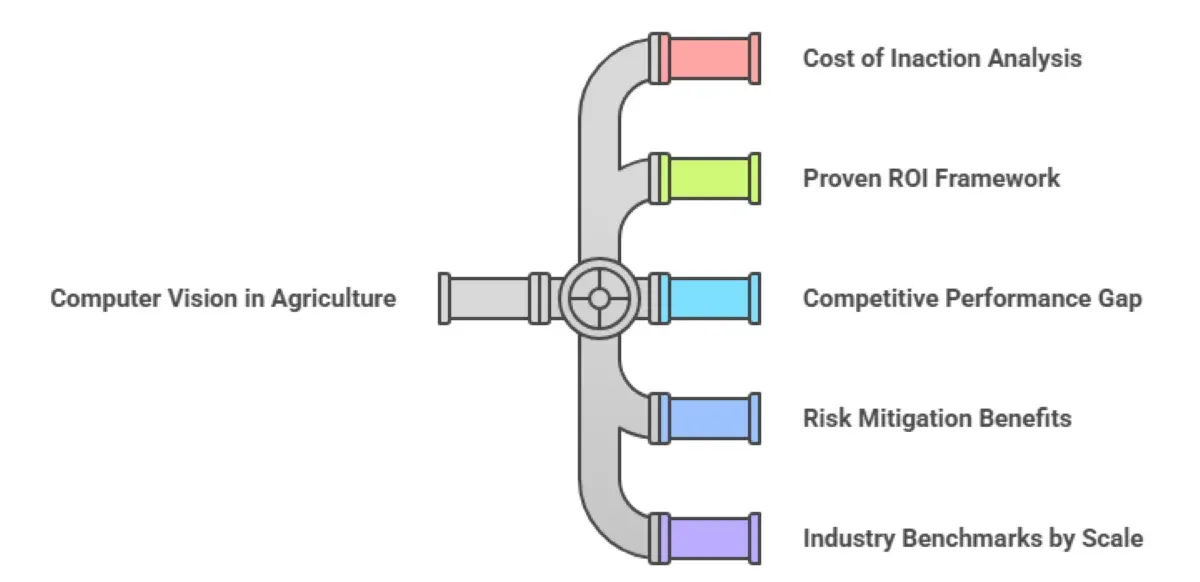
Smart farms are discovering that computer vision technology doesn't just improve animal welfare, it delivers quantifiable returns that justify every dollar invested in the system. The financial benefits extend far beyond simple cost savings, creating sustainable competitive advantages that compound over time.
Disease outbreaks in livestock operations create substantial financial burdens that ripple through entire agricultural enterprises. Research from the University of Nebraska shows that BRD infection in a 1,000-cattle feedlot can cost $13.90 per head in treatment costs and reduced gains.
The livestock monitoring market is projected to grow from $4.42 billion in 2024 to $8.53 billion by 2030, driven by demonstrated value. Operations implementing computer vision systems typically see positive ROI within 12-18 months, with most farmers reporting cost reductions of 20-40% in disease-related expenses according to industry research.
AI-monitored farms consistently outperform traditional operations through improved early detection capabilities. Industry research indicates that advanced systems can achieve 90-99% accuracy in controlled environments when properly calibrated for specific locations, translating directly to improved operational efficiency and profitability.
Insurance companies increasingly offer premium discounts for farms with advanced monitoring systems, recognizing their role in preventing catastrophic losses. These systems help maintain compliance with animal welfare regulations and food safety standards that continue to become more stringent annually.
Enterprise operations typically see $150-200 per animal investment costs with positive ROI within 12-18 months based on precision monitoring studies. Mid-size and smaller operations benefit from proportionally scaled systems that match their operational requirements and budget constraints.
Computer vision systems scale effectively across different operation sizes, with customized approaches that match technical requirements and budget constraints for maximum effectiveness.
Large-scale livestock operations require monitoring solutions that can handle massive data volumes while maintaining accuracy across diverse environmental conditions. These operations benefit most from fully integrated systems that combine multiple monitoring approaches.
Large operations deploy detailed camera networks with 20-50+ strategically positioned units covering feeding areas, milking parlors, and housing facilities. These systems integrate with existing infrastructure and provide complete coverage for continuous monitoring without operational disruption.
Enterprise systems utilize machine learning algorithms that improve accuracy over time by learning specific herd behaviors and environmental patterns. Advanced analytics can predict disease outbreaks 3-5 days before symptoms become visible to human observers, enabling proactive intervention.
Scalable cloud platforms handle massive data processing requirements while providing remote access for farm managers, veterinarians, and corporate oversight teams. Real-time dashboards deliver actionable insights accessible from any location or mobile device.
Folio3 AI cattle counting solutions demonstrate enterprise-scale capabilities, processing thousands of animals daily with automated health status reporting and anomaly detection across multiple facilities.
Enterprise deployments include dedicated technical support, regular system updates, and performance optimization services. These partnerships ensure maximum uptime and continuous improvement of system effectiveness through ongoing refinement and calibration.
Mid-size farms represent the sweet spot for computer vision adoption, offering sufficient scale to justify investment while maintaining manageable complexity.
Mid-size farms benefit from systems that process critical data locally for instant alerts while leveraging cloud analytics for advanced pattern recognition. This approach balances cost-effectiveness with comprehensive monitoring capabilities and reliable performance.
These operations can start with high-priority areas like feeding stations or milking areas, then expand coverage as ROI is demonstrated. Modular systems allow gradual investment while maintaining system integration and data continuity.
Mid-size solutions optimize camera placement for maximum coverage with fewer units, utilizing wide-angle lenses and strategic positioning. Software packages are scaled appropriately without enterprise-level features that smaller operations don't require.
Folio3's AI livestock tracking software seamlessly connects with popular farm management software through robust APIs, eliminating duplicate entry and ensuring comprehensive record keeping.
Mid-size operations focus on high-impact monitoring areas that deliver the fastest payback, such as early disease detection systems where outbreak prevention costs are most critical.
Small farms face unique challenges in adopting computer vision technology, requiring solutions that maximize impact while minimizing complexity and investment.
Small farms utilize flexible camera systems that can be repositioned as needed for different areas or seasons. Wireless connectivity and battery-powered options eliminate infrastructure requirements while maintaining effective monitoring capabilities.
Monthly or annual subscription services make advanced monitoring technology accessible without large upfront investments. These models include software updates, technical support, and system maintenance as part of ongoing service agreements.
Simplified systems focus on the most critical health indicators while remaining user-friendly for operators without extensive technical backgrounds. Pre-configured setups minimize installation complexity and reduce training requirements for successful deployment.
Small operations concentrate on specific high-value animals or critical time periods like calving season or weaning. This focused approach maximizes impact while keeping costs manageable for operations with tighter budget constraints.
Small farm implementations often benefit from regional cooperatives or veterinary practice partnerships that provide shared technical support and bulk purchasing power to reduce individual farm costs and increase implementation success rates.
Successful computer vision implementation requires seamless integration with existing farm management systems and operational workflows. These integrations eliminate data silos and create unified operational dashboards.
Computer vision solutions integrate seamlessly with popular agricultural software platforms, including DairyComp, DHIA systems, Ruminant Manager, and feed management programs, ensuring data consistency and eliminating duplicate entry requirements.
Computer vision systems connect with existing sensors, including automated feeders, milking equipment, water monitoring systems, and environmental controls. This integration creates comprehensive data sets that improve overall decision-making accuracy and farm management effectiveness.
User-friendly mobile applications provide real-time access to system data, alerts, and animal health reports from anywhere with internet connectivity. Dashboard customization allows different user types to access relevant information without system complexity overwhelming daily operations.
Flexible data export options support integration with veterinary records, financial management systems, and regulatory reporting requirements. Open API architecture enables custom integrations with specialized software or future technology additions as farm needs evolve.
Enterprise-grade security protocols protect sensitive farm data while ensuring compliance with agricultural data privacy regulations. Local data storage options combined with encrypted cloud backup provide both security and accessibility for authorized users only.
Successful computer vision deployment follows a structured three-phase approach that minimizes operational disruption while ensuring thorough system integration and staff preparation for optimal results. This phased approach allows for continuous optimization and gradual adoption.
The initial phase focuses on understanding specific operational needs and validating system performance under real-world conditions before committing to full deployment.
Professional assessment teams evaluate facility layout, animal flow patterns, existing infrastructure, and specific monitoring priorities to design optimal camera placement and system configuration. This evaluation ensures maximum coverage with minimal equipment investment and operational impact.
Initial system deployment focuses on a representative section of the operation, typically 10-20% of animals, allowing real-world testing without full facility commitment. This pilot approach validates system performance under actual operating conditions before expanding to complete coverage.
Key personnel receive hands-on training with pilot system operation, alert interpretation, and basic troubleshooting procedures. This early training period allows staff to become comfortable with new technology while providing feedback for system optimization.
Pilot systems collect baseline data on normal animal behaviors and health indicators specific to the farm's conditions, breeds, and management practices. This customized baseline ensures accurate anomaly detection when the system becomes fully operational across the facility.
Implementation teams establish metrics and tracking systems to measure pilot program success, including disease detection accuracy, false positive rates, and preliminary cost savings estimates that support full deployment business case development.
The second phase involves complete system deployment across the entire operation, with comprehensive integration and staff training to ensure smooth operational transition.
Professional installation teams deploy the complete camera network according to the optimized design developed during the pilot phase. Installation includes proper mounting, network connectivity, power supply connections, and environmental protection for long-term reliable operation.
Farm management software integration connects computer vision data with existing record-keeping systems, automated equipment, and mobile applications. Comprehensive testing ensures data accuracy, alert functionality, and seamless workflow integration before the system goes live.
All relevant staff members receive detailed training on system operation, alert response protocols, data interpretation, and routine maintenance procedures. Training includes hands-on practice sessions and written procedures to ensure consistent system utilization across all shifts.
Machine learning algorithms are fine-tuned using actual farm data to optimize detection accuracy for specific animal types, facility conditions, and management practices. This calibration period typically requires 2-3 weeks of continuous operation to achieve optimal performance levels.
Critical system components receive backup infrastructure, including redundant network connections, backup power supplies, and failover procedures to ensure continuous operation during equipment failures or maintenance periods that could compromise monitoring effectiveness.
The final phase focuses on continuous improvement and system ownership transfer, ensuring long-term success and maximum return on investment.
Machine learning systems continue improving accuracy through exposure to farm-specific data patterns, seasonal variations, and individual animal behaviors. This optimization period typically achieves 95%+ accuracy rates for disease detection and behavioral anomaly identification according to research studies.
Regular system performance reviews identify opportunities for improvement in detection accuracy, false positive reduction, and alert timing optimization. These adjustments ensure maximum system effectiveness while minimizing unnecessary alerts that could reduce staff confidence.
Complete system responsibility transfers to farm staff with ongoing technical support available as needed. Handover includes all documentation, maintenance schedules, and direct contact information for technical support to ensure smooth long-term operation.
Additional system capabilities such as predictive analytics, automated reporting, and integration with new sensors or equipment are activated as staff become proficient with basic system operation and monitoring protocols.
Ongoing system optimization protocols ensure continued improvement through regular software updates, algorithm refinements, and integration of new monitoring capabilities as technology advances and farm needs evolve over time.
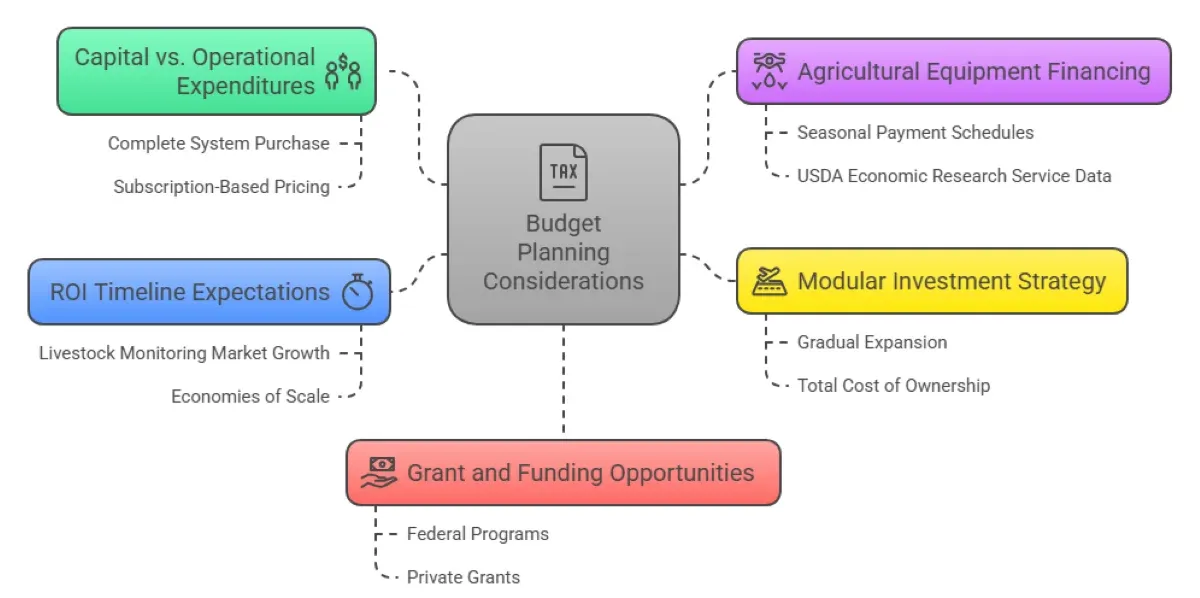
Understanding the complete financial picture is essential for making informed decisions about computer vision implementation. Budget planning should consider both immediate costs and long-term value creation.
Capital expenditure options include complete system purchase with ownership benefits, while operational expenditure models offer subscription-based pricing that includes equipment, software, and support services. Each approach offers different cash flow and tax advantages depending on individual farm financial strategies.
Agricultural equipment financing and leasing programs designed explicitly for technology investments provide flexible payment terms aligned with farm cash flow cycles according to USDA Economic Research Service data. Many programs offer seasonal payment schedules that match agricultural income patterns for improved financial management.
Modular system design allows gradual expansion as budgets permit or ROI is demonstrated through initial deployments. Understanding the total cost of ownership, including equipment, installation, training, and ongoing support, helps in accurate budget planning for multi-year implementations.
The livestock monitoring market growth indicates strong industry adoption, with typical ROI timelines ranging from 12-18 months, depending on farm size and baseline costs. Larger operations with higher baseline disease management costs typically see faster returns due to economies of scale.
Various federal, state, and private grant programs support agricultural technology adoption according to USDA resources, particularly systems that improve animal welfare, food safety, or environmental sustainability. These funding sources can significantly reduce net implementation costs for qualifying operations.
One of Australia's largest beef producers transformed its operation with Folio3 AI state-of-the-art computer vision technology, automating cattle counting across its massive network of properties. This implementation demonstrates the scalability and effectiveness of modern computer vision systems in real-world conditions.
This world-class agribusiness division is the second largest producer of beef in Australia, with a total herd capacity of 340,000 cattle. Owning over 14 properties spread from Western Australia to New South Wales, the company manages some of the finest cattle in the industry, serving both domestic and international markets.
The client needed to maximize operational efficiency when managing and monitoring cattle across their vast properties. Manual counting processes were prone to human error and time-consuming, making it difficult to maintain accurate inventory records for their extensive operations spanning multiple states.
Folio3 AI developed a comprehensive cattle counting solution utilizing machine learning to provide accurate real-time counts using live video from HD drone cameras. The system automatically detects and counts cattle entering or leaving facilities, with the video and images processed through advanced AI algorithms for instant herd counts.
The solution included a complete dashboard for managing operations and generating detailed reports. Folio3 AI’s team of 9 experts delivered the project in just 5 weeks, utilizing object detection and classification expertise alongside web development capabilities.
With Folio3 AI’s cattle counting solution, the client automated their entire cattle monitoring and counting process, eliminating human error while significantly reducing operational costs. The system achieved remarkable accuracy rates while processing thousands of animals across multiple properties, transforming their inventory management capabilities.
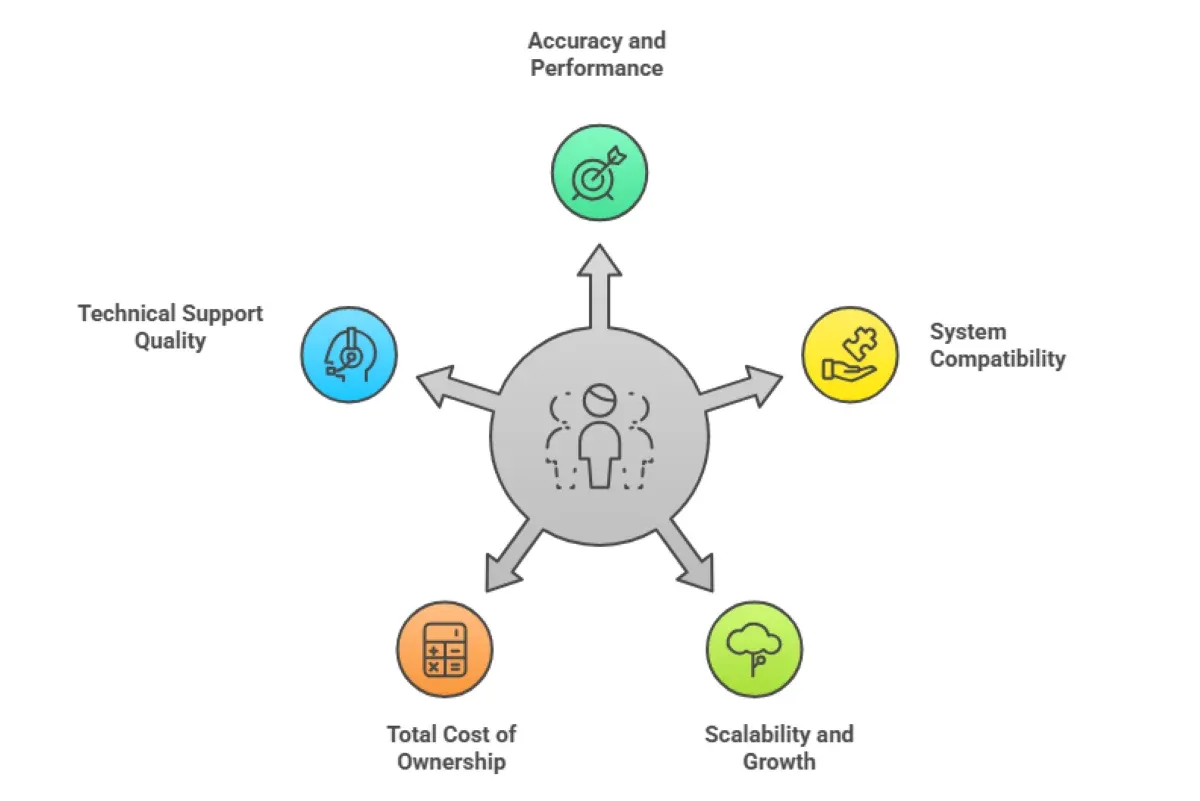
Choosing the right computer vision provider requires a systematic evaluation of technical capabilities, business factors, and long-term partnership potential to ensure successful implementation and ongoing support. The decision impacts operational efficiency for years to come.
Evaluate vendor-provided accuracy statistics against independent validation studies, requesting specific performance data for your animal types and facility conditions. Look for systems achieving 90%+ accuracy in disease detection with false positive rates below 10% for practical operational effectiveness according to industry benchmarks.
Assess compatibility with existing farm management software, network infrastructure, and equipment systems to ensure seamless implementation without major infrastructure upgrades. Vendors should provide detailed technical specifications and integration testing procedures before final selection.
Consider vendors offering modular systems that can grow with your operation's needs and budget availability over time. Evaluate upgrade pathways, additional feature availability, and system flexibility for changing operational requirements or expansion into new monitoring applications.
Calculate complete costs including equipment, installation, training, ongoing support, software licenses, and maintenance over 5-7 year timeframes for accurate financial comparison. Consider financing options, upgrade costs, and potential additional fees for system modifications or expansions.
Evaluate technical support availability, response times, and expertise levels through reference checks with existing customers facing similar operational challenges. Assess training programs, documentation quality, and ongoing support service level agreements for post-implementation success.
YOLO (You Only Look Once) systems excel in real-time processing and multi-object detection but may require more computational power for complex analysis, according to Ultralytics research. CNN (Convolutional Neural Network) approaches often provide higher accuracy for detailed analysis but may process data more slowly.
Cloud-based processing offers unlimited computational power and continuous algorithm updates, but requires reliable internet connectivity and ongoing subscription costs. Edge computing provides faster response times and data security, but may limit analysis sophistication and require hardware upgrades.
Real-time systems provide immediate alerts for urgent health situations but require more sophisticated hardware and higher ongoing costs. Batch processing systems may delay alerts by hours but offer comprehensive analysis capabilities at lower implementation costs.
Specialized single-species systems typically offer higher accuracy and lower costs for focused applications. Multi-species platforms provide flexibility for diversified operations but may compromise accuracy and increase complexity for specific animal types or management practices.
Proprietary systems offer comprehensive support and guaranteed compatibility but may limit customization options and create vendor dependency. Open-source platforms provide flexibility and customization potential but require more technical expertise and may lack comprehensive support services.
Per-camera pricing models offer predictable costs based on facility size and monitoring coverage requirements. Evaluate whether pricing includes software licenses, updates, and support services, or if these represent additional ongoing costs that affect total ownership expenses.
Animal-based pricing scales directly with herd size and may offer better value for operations with high animal density per monitoring location. Consider how pricing adjusts for seasonal animal count variations and whether minimum fees apply during low-occupancy periods.
Enterprise pricing may provide cost advantages for large operations with comprehensive monitoring requirements across multiple facilities or animal types. Evaluate included services, support levels, and expansion options within flat-rate pricing structures for long-term value assessment.
Subscription models reduce upfront capital requirements and typically include updates, support, and maintenance services. Purchase options may offer long-term cost advantages but require separate budgeting for ongoing support, updates, and eventual replacement or upgrade costs.
Identify potential additional costs for installation, training, customization, data storage, technical support beyond basic levels, and system modifications. These costs can significantly impact total ownership expenses and should be factored into vendor comparison calculations.
Folio3 AI delivers cutting-edge livestock counting solutions that eliminate manual processes while providing unprecedented accuracy and operational insights for modern agricultural operations of all sizes. Our comprehensive approach combines advanced technology with practical implementation expertise.
Eliminate manual labor and gain 24/7 accuracy with advanced AI algorithms processing imagery from drones and fixed cameras. The system accurately counts cattle even in low light or challenging weather conditions as animals enter or leave pens, without requiring human oversight.
Access instant herd numbers, pen occupancy, and movement patterns through intuitive cloud-based dashboards that provide comprehensive operational visibility. Receive immediate alerts for anomalies, enabling proactive decision-making and optimizing resource allocation with comprehensive cattle monitoring capabilities.
Monitor health, weight, and performance of specific animals without direct contact through advanced AI recognition systems. Integration with RFID ear tags or unique identification provides invaluable insights for precision livestock farming and individual animal management strategies.
Custom cattle counting solutions connect effortlessly with existing Feedlot Management Software, AgriERP, and other farm management systems via robust APIs. This ensures smooth data flow and unified operational views across all management platforms and systems.
Flexible AI architecture scales from hundreds to tens of thousands of heads, with Folio3 AI specializing in building bespoke solutions. The technology perfectly aligns with unique operational requirements and can grow with expanding agricultural operations over time.

Computer vision in animal health monitoring uses AI-powered cameras and algorithms to continuously observe livestock behavior, movement patterns, and physical appearance. The technology analyzes visual data in real-time to detect subtle changes that may indicate health issues, environmental stress, or behavioral abnormalities before they become visible to human observers.
AI systems analyze baseline behavioral patterns for individual animals and trigger alerts when significant deviations occur, often detecting illness 3-5 days before clinical symptoms appear. The technology monitors feeding patterns, water consumption, movement irregularities, and social interaction changes that typically precede disease onset by 24-72 hours, according to agricultural research.
Computer vision systems excel at detecting bovine respiratory disease (BRD), lameness, mastitis, and metabolic disorders through behavioral and physical indicators. The technology can identify fever through thermal imaging, detect gait abnormalities indicating foot problems, and monitor feeding behavior changes that suggest digestive or systemic illness.
AI-based monitoring reduces disease-related costs by 20-40%, provides 24/7 surveillance without human oversight, and enables early intervention that prevents minor issues from becoming major outbreaks. Operations typically see ROI within 12-18 months while improving animal welfare through continuous health monitoring and reducing labor costs associated with manual inspections.
Computer vision enhances rather than replaces veterinary care by providing continuous monitoring and early alert capabilities that complement professional veterinary expertise. While the technology excels at detecting behavioral changes and potential health issues, veterinarians remain essential for diagnosis, treatment decisions, and hands-on medical interventions.
Modern computer vision systems achieve 90-99% accuracy in controlled environments when properly calibrated for specific farm conditions and animal types. Accuracy rates continue improving through machine learning algorithms that adapt to individual farm environments, with enterprise systems typically reaching 95%+ accuracy for disease detection after initial calibration periods.
Basic systems require strategically placed cameras (both standard and infrared), network connectivity, local processing units or cloud computing access, and mobile applications for alerts and monitoring. More advanced setups may include drone-mounted cameras, thermal imaging sensors, and integration with existing farm management software and automated feeding systems.
Yes, small farms can benefit from flexible, subscription-based systems that require minimal upfront investment and can be repositioned as needed for different areas or seasons. Modular solutions allow small operations to focus on high-value animals or critical periods like calving season while maintaining cost-effectiveness through targeted monitoring approaches.
Data from AI systems integrates with farm management software to create comprehensive animal health records, generate automated reports for veterinarians, and provide predictive analytics for operational planning. The information supports breeding decisions, feeding optimization, treatment tracking, and regulatory compliance while enabling evidence-based management decisions.
The future includes predictive health modeling that anticipates diseases before symptoms develop, integration with wearable sensors for comprehensive biometric monitoring, and automated response systems that adjust environmental controls or feeding based on real-time health data. The global livestock monitoring market, projected to reach $8.53 billion by 2030, indicates continued innovation in areas like individual animal identification, behavioral prediction, and autonomous farm management systems.