Loading...
The drone industry is experiencing unprecedented growth, with the global AI in drones market valued at $12.8 billion in 2024 and projected to reach $55 billion by 2032. As businesses across industries recognize the transformative potential of unmanned aerial vehicles (UAVs), the demand for drone AI services and custom AI drone solutions has surged dramatically.
Unlike generic software packages, drone custom solutions are specifically designed to address unique operational challenges, providing enhanced accuracy, efficiency, and competitive advantages. These unique drones integrate advanced machine learning algorithms, computer vision capabilities, and predictive analytics to deliver precise solutions that align with specific business requirements and industry standards.

Modern drone technology has evolved from simple remote-controlled aircraft to sophisticated autonomous systems powered by artificial intelligence, machine learning algorithms, and advanced sensor networks. This transformation has been driven by advances in computer vision, natural language processing, and edge computing technologies.
Custom AI solutions represent the next frontier in drone AI services innovation, enabling businesses to leverage specialized algorithms, neural networks, and predictive models that address their unique operational requirements rather than relying on one-size-fits-all approaches.
The progression from basic flight control systems to advanced AI-powered decision-making capabilities has revolutionized how UAVs, quadcopters, and autonomous aerial vehicles operate across industries. Early systems relied on pre-programmed flight paths, while modern AI-powered drone solutions incorporate real-time learning, adaptive responses, and intelligent automation.
While commercial AI packages offer broad functionality, drone custom solutions provide targeted capabilities designed for specific use cases including object detection, thermal imaging analysis, and predictive maintenance. Custom development ensures optimal performance for unique operational environments and specialized industry requirements.
Growing demand for specialized drone applications has created substantial ROI opportunities for businesses investing in unique drones with custom AI solutions. Organizations report efficiency gains of 30-50% when implementing tailored AI systems for surveillance, monitoring, inspection, and autonomous navigation tasks.
The foundation of effective custom AI drone solutions rests on three primary technological pillars that work synergistically to create intelligent, autonomous systems capable of complex decision-making and precise execution.
Advanced computer vision algorithms enable drones to interpret visual data in real-time, providing capabilities that surpass human observation in speed and accuracy. Custom implementations focus on specific object recognition tasks, environmental analysis, and quality assessment protocols tailored to industry requirements.
NLP integration allows operators to interact with drone systems using natural language commands, streamlining mission planning and execution. Custom voice recognition systems can be trained for specific terminology and operational contexts unique to different industries.
Machine learning models analyze historical data patterns to optimize flight paths, predict maintenance needs, and enhance operational efficiency. Custom predictive algorithms incorporate industry-specific variables and environmental factors for superior performance outcomes.
Custom AI solutions demonstrate their greatest value when tailored to address the unique challenges and requirements of specific industries, delivering targeted functionality that generic solutions cannot match.
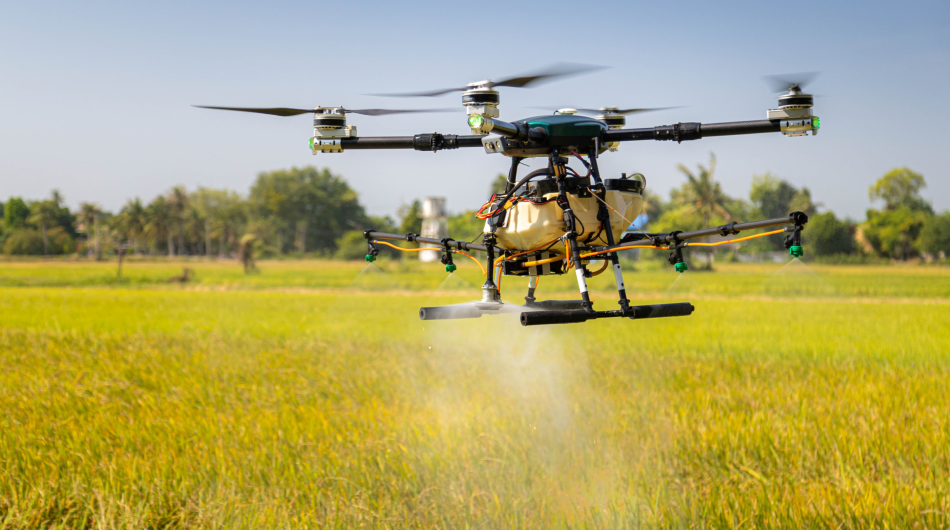
Agricultural drones equipped with custom AI systems provide farmers with unprecedented insights into crop health, soil conditions, and yield optimization. These solutions incorporate multispectral imaging analysis, pest detection algorithms, and automated intervention systems designed specifically for agricultural environments and crop types.
Construction industry applications focus on automated progress monitoring, safety compliance verification, and structural integrity assessment. Custom AI algorithms can identify specific building materials, track construction milestones, and detect safety violations according to industry standards and project specifications.
Emergency response operations require AI systems capable of rapid threat assessment, victim identification, and resource coordination. Custom solutions integrate thermal imaging analysis, crowd monitoring capabilities, and real-time communication protocols designed for first responder operational requirements.
Energy sector applications emphasize infrastructure inspection, predictive maintenance, and grid monitoring capabilities. Custom AI systems analyze thermal signatures, detect equipment anomalies, and assess structural integrity of power lines, solar installations, and wind turbines with industry-specific accuracy standards.
Successful custom AI drone solution development requires a thoroughly framework that addresses data collection, model devtelopment, and real-time processing requirements while maintaining system reliability and performance standards.
Effective custom AI systems require high-quality, domain-specific training data collected through multi-sensor platforms and processed using advanced filtering techniques. Data preprocessing protocols ensure consistency, accuracy, and relevance for specific operational contexts and environmental conditions.
Custom neural network architectures are designed to address specific use case requirements, incorporating domain expertise and operational constraints. Training processes utilize specialized datasets and validation procedures to ensure optimal performance in real-world deployment scenarios.
Edge computing implementation enables real-time decision-making capabilities while minimizing latency and reducing bandwidth requirements. Custom optimization ensures efficient resource utilization and maintains performance standards under varying operational conditions and environmental factors.
Successful deployment of custom AI drone solutions requires careful planning, testing, and ongoing optimization to ensure seamless integration with existing systems and operational workflows.
Scalable architecture design ensures custom AI solutions can grow with business requirements while maintaining performance and reliability standards. Integration protocols facilitate seamless connectivity with existing enterprise systems and third-party platforms.
Comprehensive testing procedures verify system performance under diverse operational conditions and validate compliance with industry standards. Simulation-based testing environments enable thorough evaluation before real-world deployment.
Ongoing model refinement and performance optimization ensure custom AI systems maintain accuracy and efficiency over time. Automated feedback loops and monitoring systems enable continuous improvement without manual intervention.
Implementation of custom AI drone solutions presents several technical and regulatory challenges that require strategic approaches and innovative solutions to ensure successful deployment and operation.
Computational limitations, environmental variability, and hardware constraints present ongoing challenges for custom AI implementation. Advanced optimization techniques and adaptive algorithms address these limitations while maintaining performance standards.
Compliance with aviation regulations, data privacy requirements, and ethical AI principles requires a comprehensive understanding of legal frameworks and industry standards. Custom solutions incorporate compliance protocols and ethical guidelines throughout the development process.
Balancing development costs with performance requirements necessitates strategic resource allocation and phased implementation approaches. Custom solutions optimize cost-effectiveness while delivering maximum value for specific use cases.
The world of custom AI drone solutions is changing at breakneck speed, opening up exciting new doors for businesses across every industry imaginable.
5G connectivity, edge AI processing, and advanced sensor technologies are revolutionizing custom drone capabilities. Integration of quantum computing principles and neuromorphic processing architectures promises significant performance enhancements for complex AI applications.
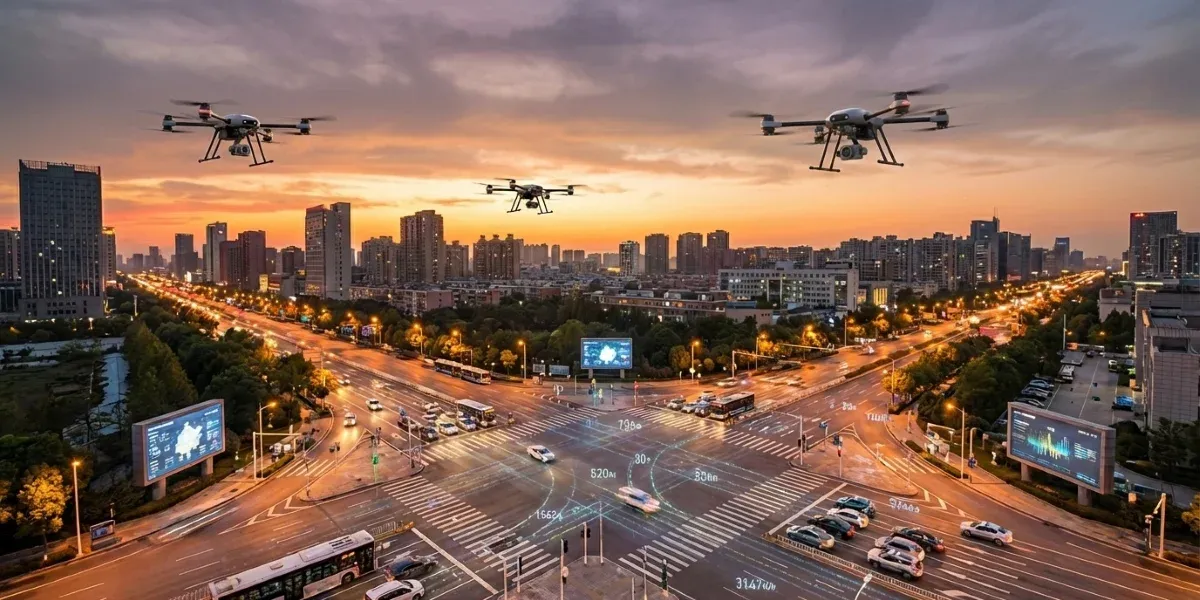
Expanding applications in smart cities, autonomous logistics, and environmental monitoring create substantial growth opportunities for custom AI solutions. Integration with IoT ecosystems and smart infrastructure presents new revenue streams and business models.
Multi-drone coordination and swarm intelligence represent the next frontier in custom AI development. Collaborative decision-making algorithms and distributed processing capabilities enable complex mission execution and enhanced operational efficiency.
Client Challenge: A European renewable energy company needed an AI solution to detect anomalies in solar panel farms through drone imagery, simplifying complex inspection processes and improving analysis accuracy.
Folio3 AI solution:
Developed custom computer vision algorithms for solar panel defect detection
Implemented machine learning models trained on solar panel imagery datasets
Created an automated reporting system integrated with the client's asset management portal
Deployed an edge computing solution for real-time analysis
Results achieved:
85% reduction in inspection time compared to manual processes
95% accuracy in anomaly detection and classification
60% cost savings in maintenance operations
Enhanced safety through reduced human exposure to hazardous conditions
View complete case study
Folio3 AI specializes in developing cutting-edge custom AI solutions that revolutionize drone operations across industries, delivering measurable business value through advanced technology integration and domain expertise.
Folio3 AI offers end-to-end custom AI development for drone applications, from initial consultation and requirements analysis to deployment and ongoing support. Our expertise spans computer vision, machine learning, and predictive analytics specifically tailored for drone operations and autonomous systems.
Our team develops specialized AI solutions, including livestock management drones for agricultural automation, terrain mapping solutions for construction and surveying, AI wind turbine inspection for renewable energy infrastructure, search and rescue drones for emergency response, and AI solar panel inspection for optimizing renewable energy systems.
We integrate cutting-edge technologies, including deep learning models, real-time processing capabilities, and cloud-to-edge architectures. Our solutions leverage the latest advances in AI research while maintaining practical applicability for real-world deployment scenarios across diverse operational environments.
Custom AI drone solution development typically requires 12-24 weeks, depending on complexity and requirements. Initial consultation and requirements gathering take 2-4 weeks, followed by proof of concept development (4-8 weeks), full solution development and testing (8-16 weeks), and deployment optimization (2-4 weeks).
Development costs vary significantly based on solution complexity, data requirements, and integration needs, typically ranging from $50,000 to $500,000. Factors include algorithm sophistication, training data volume, hardware integration requirements, and ongoing support needs. ROI analysis often shows payback periods of 12-18 months through operational efficiency gains.
Custom AI models require diverse datasets including high-resolution imagery, sensor telemetry, environmental conditions, and operational parameters specific to target applications. Data quality, volume, and relevance directly impact model performance, with typical requirements ranging from thousands to millions of labeled examples depending on use case complexity.
Yes, custom AI solutions can be integrated with most existing drone platforms through standardized APIs and communication protocols. Integration approaches include onboard processing modules, cloud-based analysis systems, and hybrid architectures that optimize performance while maintaining compatibility with existing hardware investments.
Ongoing support includes performance monitoring, model updates, security patches, and system optimization services. Regular maintenance ensures continued accuracy and efficiency as operational conditions evolve, with typical support agreements including 24/7 technical assistance, quarterly performance reviews, and annual system upgrades.