
Loading...

Fleet operations executives know that managing hundreds of vehicles across multiple locations demands intelligent solutions that deliver real-time insights and operational control. Modern businesses are discovering that traditional Automatic License Plate Recognition (ALPR) systems operating in isolation cannot meet the complex demands of today's fleet management requirements.
According to Research and Markets' latest analysis, the global automotive telematics market reached USD 76.63 billion in 2023 and is projected to grow at a CAGR of 14.9% between 2024 and 2032 to reach USD 277.17 billion by 2032.
Custom ALPR integration APIs represent the convergence of license plate recognition technology with Internet of Things (IoT) sensors and telematics systems, creating unified fleet intelligence platforms that transform operational efficiency.

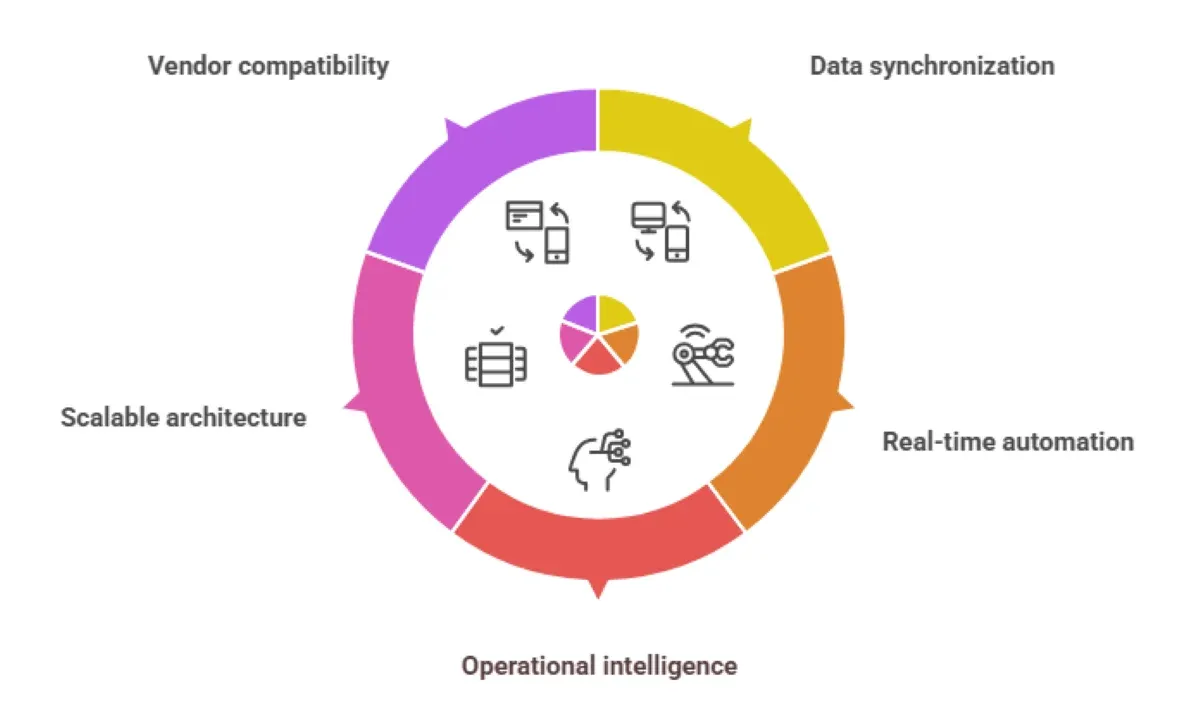
Custom ALPR integration combines automatic license plate recognition technology with Application Programming Interfaces (APIs), Internet of Things sensors, and telematics systems to create unified fleet management ecosystems for enhanced operational intelligence.
Unlike isolated systems, custom integration enables seamless data flow between ALPR cameras, vehicle sensors, and GPS tracking for complete operational visibility.
Integrated systems trigger immediate actions based on license plate recognition events, automatically updating delivery status when vehicles reach designated locations.
Combined data streams provide deeper insights than individual systems, enabling predictive maintenance scheduling and optimized route planning based on historical patterns.
Custom integrations support growing fleet operations without requiring complete system replacements, accommodating new vehicles and locations through API connectivity.
Professional integration ensures different hardware manufacturers' systems communicate effectively, preventing vendor lock-in while maximizing existing technology investments.
Modern fleet operations rely on interconnected technologies that share and analyze data in real time, enabling faster decisions, streamlined workflows, improved safety, and greater operational efficiency across diverse vehicle management activities.
ALPR APIs automatically detect and identify license plates for quick vehicle verification. They help streamline access control, traffic monitoring, and fleet workflows while reducing manual intervention.
IoT sensors collect and transmit data on vehicle performance, cargo status, and environmental conditions. This information supports safer operations, better fuel management, and predictive maintenance.
Telematics systems provide location tracking, driver behavior insights, and vehicle diagnostics. These capabilities help improve routing efficiency, ensure compliance, and reduce operational costs.
A data integration layer merges and standardizes information from different sources into one unified platform. This ensures accurate, synchronized data for decision-making across the fleet.
Edge computing processes data locally for faster response times and reduced network dependency. It ensures uninterrupted operations, even when internet connectivity is limited.
Custom ALPR integration architectures demand robust edge-to-cloud data orchestration to synchronize license plate recognition with vehicle telematics and IoT ecosystems in real-time operational environments.
ALPR cameras equipped with embedded processors perform initial image preprocessing and optical character recognition locally, reducing network latency while filtering false positives before cloud transmission. Edge computing eliminates the maximum of unnecessary data transmission by processing only verified plate detections.
Advanced neural networks process visible light, infrared, and polarized images simultaneously to handle reflective plates, dirt obscuration, and extreme weather conditions. Modern systems utilize transformer-based architectures that achieve 99.2% accuracy rates across international plate formats and mounting angles.
Recognition engines output standardized JSON payloads containing plate alphanumerics, bounding box coordinates, recognition confidence scores, vehicle classification (car/truck/motorcycle), and image quality metrics for downstream processing validation.
Message queuing systems correlate ALPR events with synchronized telematics data streams, including GPS coordinates, accelerometer readings, OBD-II diagnostics, and RFID tag information within 200-millisecond windows to ensure temporal accuracy.
Multi-tier storage systems partition real-time operational data in time-series databases while archiving historical records in data lakes, enabling sub-second query responses for live monitoring and complex analytics for predictive maintenance algorithms.

Fleet management organizations implementing integrated ALPR systems report improved operational efficiency, reduced manual processes, and enhanced data accuracy through comprehensive system unification.
Unified vehicle intelligence: Real-time combination of license plate recognition, GPS location, vehicle diagnostics, and driver behavior creates comprehensive operational visibility for informed decision-making.
Automated workflows: ALPR triggers initiate automatic actions, including gate access, delivery confirmations, maintenance alerts, and compliance notifications, reducing manual processes while ensuring operational standards.
Enhanced decision making: Integrated systems provide accurate, real-time information directly from vehicles, eliminating estimated data and enabling data-driven optimization strategies.
Execution efficiency: Streamlined processes eliminate duplicate data entry, reduce administrative overhead, and accelerate response times for security incidents, maintenance requirements, and customer service inquiries.
Predictive maintenance capabilities: Combined sensor data and vehicle identification history enable proactive maintenance scheduling, reducing unexpected breakdowns while optimizing lifecycle costs and vehicle availability.
Modern industries leverage integrated ALPR solutions to transform operational efficiency and enhance competitive advantages across diverse business applications.
Route optimization systems combine weight sensors with GPS tracking and license plate recognition, enabling automated collection verification and fuel consumption reduction through intelligent scheduling.
Integration enables automatic proof-of-delivery documentation when vehicles reach customer locations, combining GPS coordinates, timestamps, and license plate confirmation for comprehensive service tracking.
Heavy equipment monitoring combines usage sensors, GPS location tracking, and license plate identification to prevent theft, optimize utilization rates, and ensure regulatory compliance.
Access control systems use ALPR technology with driver behavior monitoring to verify authorized personnel, automatically controlling gate access while maintaining comprehensive security audit trails.
Transit systems integrate passenger counting sensors, GPS tracking, and vehicle identification for real-time schedule optimization, capacity management, and enhanced safety monitoring.
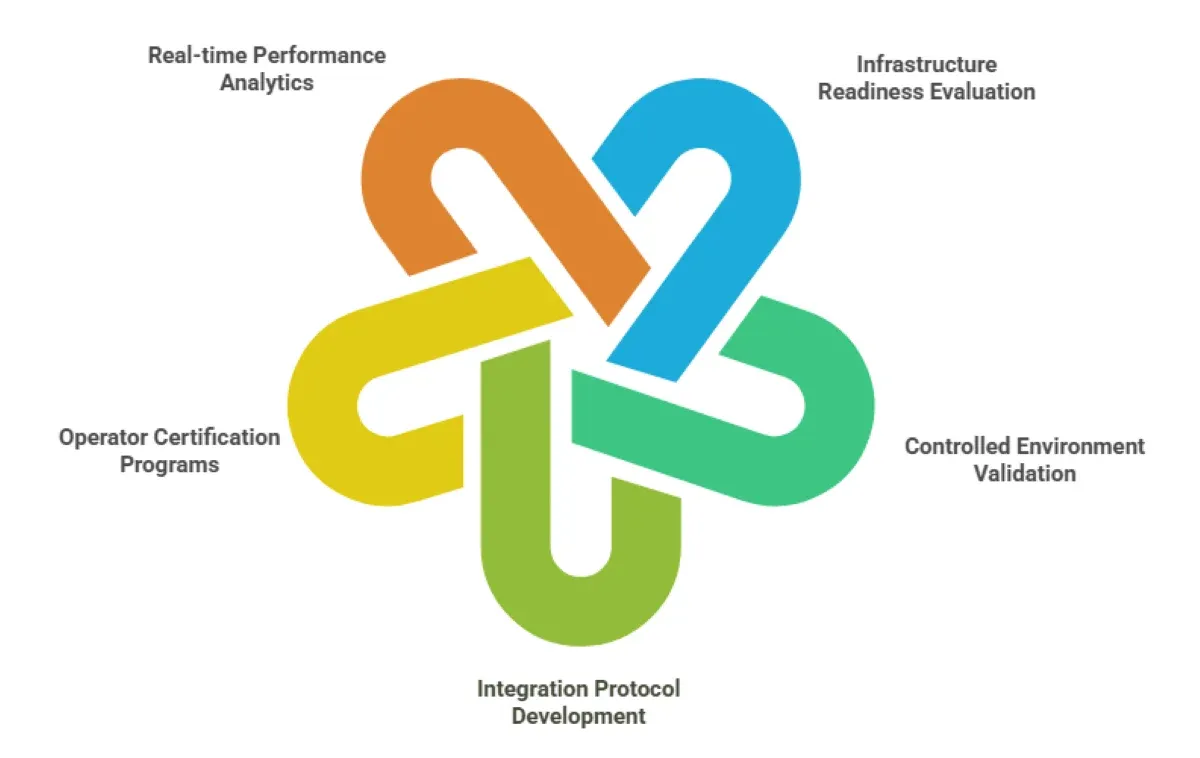
Enterprise ALPR deployment demands methodical integration engineering to minimize operational disruption while maximizing recognition accuracy and system reliability across diverse fleet environments.
Network architects conduct bandwidth analysis for 4K camera streams, assess edge computing capacity for local processing, and validate database scalability for handling 10,000+ daily plate reads per camera while ensuring 99.9% uptime requirements.
Proof-of-concept deployments utilize controlled lighting conditions, standardized vehicle positioning, and known license plates to establish baseline accuracy metrics before introducing variables like weather conditions, traffic flow patterns, and plate condition variations.
API architects establish webhook endpoints, implement OAuth 2.0 authentication, design failover mechanisms for network interruptions, and create data normalization pipelines to handle international plate formats, character encoding standards, and timezone synchronization across global deployments.
Technical personnel receive hands-on training in camera positioning for optimal capture angles, lens cleaning protocols, recognition confidence threshold adjustments, and troubleshooting common issues like motion blur, glare interference, and partial plate occlusion scenarios.
Monitoring dashboards track key performance indicators, including recognition accuracy rates, processing latency, false positive ratios, and camera uptime, while implementing automated alerts for system degradation and predictive maintenance scheduling based on environmental exposure patterns.
AspectCustom IntegrationStandard IntegrationImplementation Time3-6 months for complex systems2-4 weeks for basic setupCost StructureHigher upfront investmentLower initial costsScalabilityUnlimited expansion capabilitiesLimited by vendor constraintsData ControlComplete ownership and accessVendor-dependent accessAPI FlexibilityFull customization optionsPre-defined endpoints onlyMaintenanceInternal team or partner supportVendor-dependent updatesIntegration DepthDeep system connectivitySurface-level connectionsVendor Lock-inIndependent solution architectureHigh dependency riskPerformanceOptimized for specific needsGeneric performance levelsLong-term ROIHigher returns through optimizationLimited improvement potential
The ALPR and fleet management landscape has evolved significantly with several breakthrough developments:
Vision transformer architectures replace traditional CNN models, achieving 99.5% accuracy on degraded plates through self-attention mechanisms. These models process partial occlusions, extreme viewing angles, and motion blur scenarios that previously required manual verification, reducing false negatives by 40% in real-world deployments.
Purpose-built ALPR processors deliver sub-10ms recognition times using quantized neural networks and dedicated NPU silicon. Edge devices now perform real-time license plate tracking across multiple camera feeds simultaneously while consuming under 15 watts, enabling solar-powered installations in remote locations.
Advanced camera systems integrate visible light, near-infrared, and thermal sensors to capture plates in zero-visibility conditions, including fog, smoke, and complete darkness. Polarization filters eliminate reflective glare from wet surfaces and metallic plates, extending operational capability to 24/7 all-weather recognition.
Distributed ledger systems enable tamper-proof license plate authentication by cross-referencing government databases in real-time. Smart contracts automatically validate plate legitimacy, detect cloned plates, and trigger security alerts while maintaining privacy through zero-knowledge proof protocols for sensitive law enforcement applications.
Advanced generative AI models create millions of synthetic license plate images across diverse weather conditions, lighting scenarios, and plate degradation states to train recognition systems without privacy concerns. GANs and diffusion models generate photorealistic training datasets that improve model robustness by 35% compared to traditional data collection methods.
ALPR integration systems face predictable challenges that can disrupt fleet operations, from environmental conditions affecting recognition accuracy to technical failures compromising data flow and system connectivity.
Dirty plates, extreme weather, motion blur, and poor lighting reduce accuracy from 99% to 70-80%, causing missed vehicle detections and incomplete operational data.
Internet outages, cellular dead zones, and bandwidth limitations prevent real-time data transmission between ALPR cameras, IoT sensors, and central fleet management systems.
Third-party system updates, authentication token expiration, rate limiting violations, and data format changes can sever connections between integrated telematics and fleet platforms.
Camera lens contamination, processor overheating, power supply failures, and physical damage from weather or vandalism disable individual ALPR monitoring points completely.
High-volume recognition events, concurrent queries, insufficient storage capacity, and poor indexing cause system slowdowns, delayed responses, and operational interruptions.
Successful ALPR deployments implement comprehensive risk mitigation through redundancy, monitoring, and proactive maintenance to ensure continuous operation despite technical and environmental challenges.
Deploy infrared cameras, polarized filters, multiple viewing angles, and transformer-based neural networks to maintain recognition capability during adverse weather and lighting conditions.
Install local processing units with data buffering to continue operations during network outages, automatically synchronizing stored recognition data when connectivity returns.
Establish error handling protocols, automated retry mechanisms, webhook redundancy, and alternative data pathways to maintain integration stability across system updates and failures.
Implement backup cameras, dual power supplies, environmental protection systems, and predictive maintenance monitoring to prevent single points of failure affecting operations.
Deploy distributed databases, automated scaling, performance monitoring, and regular optimization procedures to handle peak loads and ensure consistent sub-second response times.
Selecting the right integration partner determines the success of custom ALPR implementations across enterprise fleet operations through comprehensive technical expertise, ongoing support, and proven methodologies.
Partners must demonstrate proven experience with ALPR APIs, IoT sensor integration, and telematics platform connectivity for comprehensive fleet management solutions.
Experienced teams reduce implementation time significantly while providing comprehensive documentation, ongoing support services, and proactive system monitoring for operational continuity.
Understanding data format challenges, API rate limiting requirements, and real-time processing capabilities ensures seamless integration across different vendor systems and platforms.
Successful partners offer detailed project management, comprehensive training programs, and change management strategies that ensure smooth transitions from existing fleet systems.
Partners provide troubleshooting protocols, performance optimization guidelines, and scalability planning for growing fleet operations and evolving business requirements.
Folio3 AI delivers comprehensive ALPR solutions specifically designed for commercial fleet operations, combining advanced artificial intelligence with robust integration capabilities for enhanced operational efficiency.
Automated recording systems capture precise entry and exit timestamps, enabling accurate trip reporting, vehicle utilization tracking, and detailed operational analytics for performance optimization.
Intelligent boundary monitoring systems provide instant notifications when fleet vehicles travel outside predefined operational zones, enhancing security protocols and emergency response capabilities.
Comprehensive visualization platforms consolidate fleet activity data in centralized interfaces, providing detailed logs, performance summaries, and historical tracking capabilities for informed decision-making.
Scalable tracking systems simultaneously monitor hundreds of vehicles across multiple geographic locations, supporting business growth while maintaining operational visibility and centralized control.
Secure data storage solutions integrate seamlessly with existing fleet management systems and customer relationship platforms, ensuring data accessibility while maintaining enterprise-grade security standards.

Custom ALPR integration combines license plate recognition APIs with IoT sensors and telematics systems to create unified fleet intelligence platforms. Unlike standard setups that operate independently, custom integration enables real-time data sharing between multiple systems and automated workflow triggers, providing comprehensive vehicle visibility rather than isolated license plate recognition capabilities.
Yes, modern ALPR systems integrate with existing telematics platforms through APIs and middleware solutions. APIs enable seamless integration with business-critical systems, including fleet management software, helping eliminate data redundancy and strengthen organizational infrastructure. Professional integration services ensure compatibility across different vendor systems and data formats.
APIs enable real-time data exchange between ALPR cameras and fleet management systems, providing immediate vehicle identification and automated workflow triggers. APIs offer standardized compatibility across vehicle makes and models, requiring only one integration regardless of fleet diversity. This enhances operational efficiency through automated processes and comprehensive data analytics.
ALPR systems integrate with various IoT sensors, including GPS trackers, fuel monitoring devices, weight sensors, temperature monitors, and driver behavior sensors. Common communication protocols like Wi-Fi, Bluetooth, Zigbee, MQTT, and CoAP enable efficient data exchange between IoT devices and fleet management applications. Integration compatibility depends on communication protocol support and API availability.
Integration typically works with existing hardware through software APIs and communication protocols rather than requiring completely new equipment. Most modern IoT sensors and ALPR cameras support standard communication protocols that enable integration through middleware platforms. Custom hardware may be necessary for specialized applications or legacy system upgrades.
ALPR telematics integration creates comprehensive vehicle intelligence by combining license plate identification with GPS tracking, driver behavior monitoring, and vehicle diagnostics. This unified approach provides real-time location verification, automated compliance monitoring, and enhanced security protocols. Fleet managers receive accurate operational data for improved decision-making capabilities.
Different telematics APIs handle basic data values differently, requiring individual investigation, testing, and code implementation for proper integration. Common challenges include data format standardization, API rate limiting, network connectivity requirements, and ongoing maintenance of multiple system integrations. Privacy concerns and data security have emerged as significant challenges, requiring comprehensive guidelines and data protection protocols.
Yes, combining ALPR with IoT sensors and telematics enables comprehensive real-time vehicle tracking with enhanced accuracy and automation capabilities. ALPR technology combined with IoT protocols can automate various tasks related to access control and operational convenience, providing secure automated access and additional automation features with immediate notifications and responses.
Security measures, including restricted application permissions, strong encryption protocols, and regular system updates, are crucial for safeguarding IoT integrations against vulnerabilities. Professional implementations use HTTPS, encrypted data transmission, and secure cloud storage with enterprise-grade security standards. Governments and organizations are establishing stricter regulations to safeguard privacy and ensure responsible use of ALPR systems.
Look for partners with proven expertise across ALPR, IoT, and telematics systems, comprehensive API development capabilities, and ongoing maintenance support. Pre-existing relationships with key technology vendors and experience managing multiple integrations help prevent implementation challenges and ensure successful deployments. Partners should provide detailed documentation, training programs, and scalability planning for growing operations.