

Loading...

Whether it's accelerating security operations, streamlining fleet management, or enhancing access control systems, modern enterprises are discovering transformative opportunities through strategic ALPR implementation. Fleet managers across industries are achieving operational excellence while security teams leverage automated license plate recognition to eliminate manual processes and boost accuracy. Smart businesses recognize that large-scale ALPR deployment represents more than just plate scanning; it's the foundation for intelligent operational transformation.
The large-scale ALPR deployment market continues expanding rapidly, with global market projections showing growth from $6.71 billion in 2024 to $14.48 billion by 2032, positioning early adopters for competitive advantage. Organizations implementing structured deployment approaches achieve measurable operational improvements while avoiding costly implementation pitfalls that impact budget and timeline success.

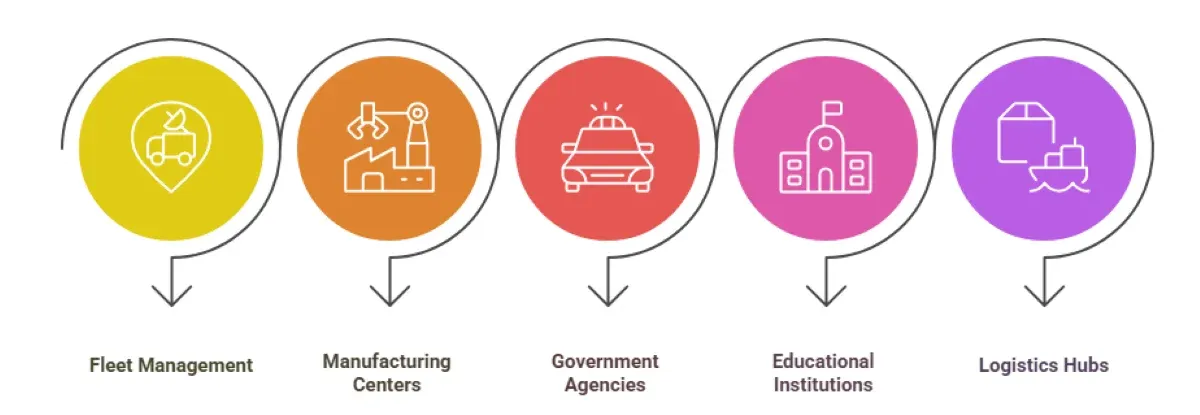
Large organizations across diverse industries require sophisticated ALPR solutions to optimize operations, enhance security protocols, and achieve competitive advantages through automated vehicle identification systems.
Commercial fleet operators managing hundreds of vehicles need automated vehicle identification, real-time location monitoring, unauthorized usage alerts, comprehensive utilization analytics, and seamless depot access control for operational efficiency.
Industrial facilities require secure perimeter monitoring, vendor vehicle tracking, automated gate access control, delivery scheduling optimization, warehouse security enhancement, and comprehensive compliance audit trails for operational excellence.
Public sector organizations need parking enforcement automation, traffic violation detection, security checkpoint management, emergency response coordination, municipal compliance monitoring, and comprehensive regulatory oversight across distributed locations.
Campus environments require visitor management systems, staff vehicle tracking, emergency lockdown capabilities, parking enforcement automation, threat detection alerts, and comprehensive perimeter security across educational facilities.
Ports, airports, freight terminals, and shipping facilities need cargo vehicle tracking, container identification systems, security screening automation, capacity optimization analytics, regulatory compliance monitoring, and real-time operational visibility.
Successful ALPR deployment requires systematic planning to maximize investment returns while minimizing operational disruption and ensuring seamless integration with existing systems.
Commercial fleet operators managing hundreds of vehicles need automated vehicle identification, real-time location monitoring, and unauthorized usage alerts. They also require comprehensive utilization analytics and seamless depot access control for operational efficiency.
Industrial facilities require secure perimeter monitoring, vendor vehicle tracking, and automated gate access control. They also need delivery scheduling optimization, warehouse security enhancement, and comprehensive compliance audit trails for operational excellence.
Public sector organizations need parking enforcement automation, traffic violation detection, and security checkpoint management. They also require emergency response coordination, municipal compliance monitoring, and comprehensive regulatory oversight across distributed locations.
Campus environments require visitor management systems, staff vehicle tracking, and emergency lockdown capabilities. They also need parking enforcement automation, threat detection alerts, and comprehensive perimeter security across educational facilities.
Ports, airports, freight terminals, and shipping facilities need cargo vehicle tracking, container identification systems, and security screening automation. They also require capacity optimization analytics, regulatory compliance monitoring, and real-time operational visibility.
Phase & StepAction ItemsSuccess Criteria1. Define Clear Business Objectives• Document specific use cases (access control, enforcement, analytics) • Establish measurable success criteria and KPIs • Align stakeholders on expected outcomes and timelineBusiness case approved, KPIs defined2. Complete Compliance and Legal Review• Research applicable privacy laws (GDPR, CCPA, state regulations) • Develop data retention and privacy policies • Obtain necessary permits and legal clearancesLegal compliance verified3. Conduct Total Cost of Ownership (TCO) Analysis• Calculate hardware, software, and installation costs • Include ongoing maintenance, support, and training expenses • Plan for a 20% contingency budget for unexpected costsBudget approved with contingency
Phase & StepAction ItemsSuccess Criteria4. Evaluate Infrastructure Readiness• Assess network bandwidth capacity (1-2 Mbps per camera minimum) • Verify power availability and mounting infrastructure • Test connectivity and latency requirementsInfrastructure assessment complete5. Plan System Integration Architecture• Map integration points with existing systems (CCTV, ERP, access control) • Design data flow and API connectivity • Establish database synchronization protocolsIntegration plan documented6. Select Optimal Camera Locations• Choose representative pilot sites with varied conditions • Plan camera positioning at 15-30 degree angles • Consider environmental factors (lighting, weather, traffic patterns)Site survey complete
Phase & StepAction ItemsSuccess Criteria7. Deploy Pilot System with Success Metrics• Install a minimum viable system for testing • Establish baseline performance measurements • Implement comprehensive monitoring and loggingPilot system operational8. Execute Comprehensive Testing Protocol• Test accuracy under various environmental conditions • Validate integration with existing systems • Measure performance against defined KPIs (97%+ accuracy target)Testing protocol complete9. Gather Stakeholder Feedback and Data• Collect user experience feedback from all stakeholder groups • Document system performance and reliability metrics • Analyze cost-benefit results against projectionsFeedback analysis complete
Phase & StepAction ItemsSuccess Criteria10. Develop a Comprehensive Training Program• Create role-based training for different user groups • Establish standard operating procedures (SOPs) • Plan certification and competency validation processTraining program deployed11. Execute Phased Deployment Strategy• Roll out in manageable phases based on pilot learnings • Implement change management processes • Establish rollback procedures for risk mitigationPhased rollout executing12. Implement Security and Compliance Controls• Deploy data encryption and access controls • Establish audit trails and monitoring systems • Create incident response and breach notification proceduresSecurity controls active13. Establish Performance Monitoring Systems• Deploy real-time dashboards and alerting • Schedule regular performance reviews and optimization • Implement predictive maintenance protocolsMonitoring systems active14. Create Ongoing Support Framework• Negotiate 24/7 technical support SLAs with vendor • Establish internal support team and escalation procedures • Plan for regular system updates and technology refresh cyclesSupport framework established15. Plan for Future Scaling and Enhancement• Document lessons learned and best practices • Develop roadmap for additional sites or capabilities • Evaluate emerging technologies and integration opportunitiesScaling plan documented
Strategic pre-deployment planning establishes the foundation for successful ALPR implementation by aligning business objectives, stakeholder expectations, and operational requirements.
Organizations define specific use cases ranging from security enhancement to operational efficiency, establishing measurable KPIs that demonstrate technology value and enabling executives to track investment returns.
Comprehensive alignment includes executive leadership for budget approval, IT departments for infrastructure planning, security teams for operational integration, and end users for workflow optimization.
Complete TCO evaluation encompasses hardware costs (typically $2,000-$8,000 per camera, including installation), software licensing (annual fees of $200-$1,000 per camera), installation services, ongoing maintenance expenses, staff training requirements, and 20% contingency planning for unexpected implementation challenges.
Organizations research applicable privacy regulations, including GDPR and CCPA requirements, develop data retention policies, obtain necessary installation permits, and establish audit protocols for ongoing compliance management.
Comprehensive technology assessment ensures ALPR systems integrate seamlessly with existing infrastructure while delivering optimal performance across varying operational conditions and environmental challenges.
Enterprise deployments require high-resolution cameras (minimum 2MP, preferably 4MP+) with IR illumination capabilities, weather-resistant enclosures (IP66/67 rating), and strategic positioning at 15-30 degree angles, optimal height of 12-18 feet, and capture distance of 20-50 feet for maximum plate visibility and recognition accuracy.
Successful implementations map existing system integration points, including CCTV infrastructure, access control platforms, ERP systems, and IoT devices, while designing efficient data flow and API connectivity protocols.
Network evaluation includes bandwidth capacity verification (minimum 2-5 Mbps per high-resolution camera), latency testing for real-time processing (sub-100ms preferred), power infrastructure assessment (PoE+ capability 30W+ per camera), and redundancy planning for continuous operation.

Strategic pilot implementation validates system performance, integration capabilities, and business value while minimizing risk before full-scale enterprise deployment across multiple locations and operational environments.
Optimal pilot locations feature representative traffic patterns, varied environmental conditions, existing infrastructure availability, and stakeholder accessibility for comprehensive evaluation and demonstration purposes throughout testing phases.
Performance measurement includes technical KPIs like 95%+ accuracy rates under optimal conditions (97%+ in controlled environments), 99%+ system uptime, and sub-3-second processing latency, alongside business metrics, including operational efficiency improvements and cost-benefit analysis.
Structured data collection protocols, real-time performance monitoring dashboards, stakeholder feedback mechanisms, and continuous improvement processes ensure comprehensive evaluation and optimization throughout pilot phases.
Systematic performance evaluation validates ALPR system capabilities, business impact, and scalability potential while providing data-driven insights for strategic decision-making regarding full-scale deployment investment.
Baseline performance establishment includes optimal condition benchmarking (target 97%+ accuracy), environmental stress testing across lighting and weather variations, vehicle speed testing (effective up to 120 mph for highway applications), and statistical validation against industry standards.
Infrastructure scaling evaluation, performance analysis under increased load conditions, technology evolution compatibility assessment, and integration expansion planning ensure long-term investment protection and growth accommodation.
ROI calculation based on pilot results, operational efficiency quantification, cost-benefit analysis refinement, and risk assessment updates provides comprehensive justification for enterprise-wide deployment investment decisions with realistic payback period expectations of 18-36 months.
Effective vendor partnerships accelerate implementation success through expert guidance, proven methodologies, comprehensive support structures, and ongoing technology advancement that ensures long-term system performance and business value.
Leading ALPR vendors demonstrate deep technical expertise across computer vision, machine learning, and enterprise integration while providing proven implementation methodologies, comprehensive project management, and structured knowledge transfer programs.
Enterprise-grade support includes 24/7 technical assistance with defined SLAs (4-hour response for critical issues), planned maintenance scheduling, proactive system monitoring, emergency response protocols, and disaster recovery planning.
Strategic vendor selection encompasses financial stability assessment, reference customer validation, industry certification verification, compliance credential review, and innovation roadmap evaluation.
Strategic rollout execution leverages pilot learnings to implement enterprise-wide ALPR deployment through phased approaches that minimize operational disruption while maximizing technology adoption and business value realization.
Organizations choose between staggered deployment for risk mitigation and resource optimization versus parallel implementation for accelerated coverage, establishing performance validation checkpoints and rollback procedures throughout expansion phases.
Comprehensive staff education includes role-based training curricula, hands-on operational workshops, emergency procedure certification, data privacy protocol education, and ongoing competency validation to ensure optimal system utilization.
Structured operational frameworks encompass daily system management, incident response protocols, maintenance scheduling, data backup procedures, performance monitoring, and regular reporting requirements for consistent enterprise-wide operations.
Real-time performance dashboards, automated alerting systems, regular performance reviews, optimization protocols, and stakeholder communication frameworks ensure continuous improvement and business value demonstration throughout deployment phases.
Ongoing operational excellence requires structured maintenance frameworks, continuous monitoring systems, and advanced analytics capabilities that ensure sustained performance while delivering strategic business insights for competitive advantage.
Real-time monitoring systems, predictive maintenance scheduling, performance optimization protocols, and capacity planning strategies maintain optimal system performance while enabling strategic scaling decisions based on operational data insights.
Regular security audits, vulnerability assessments, data encryption updates, access control management, compliance monitoring, privacy policy maintenance, and staff training ensure ongoing regulatory adherence and data protection.
Comprehensive reporting dashboards, trend analysis capabilities, predictive insights generation, business intelligence platform integration, custom visualization tools, and strategic data analysis deliver actionable insights for operational optimization and strategic planning.
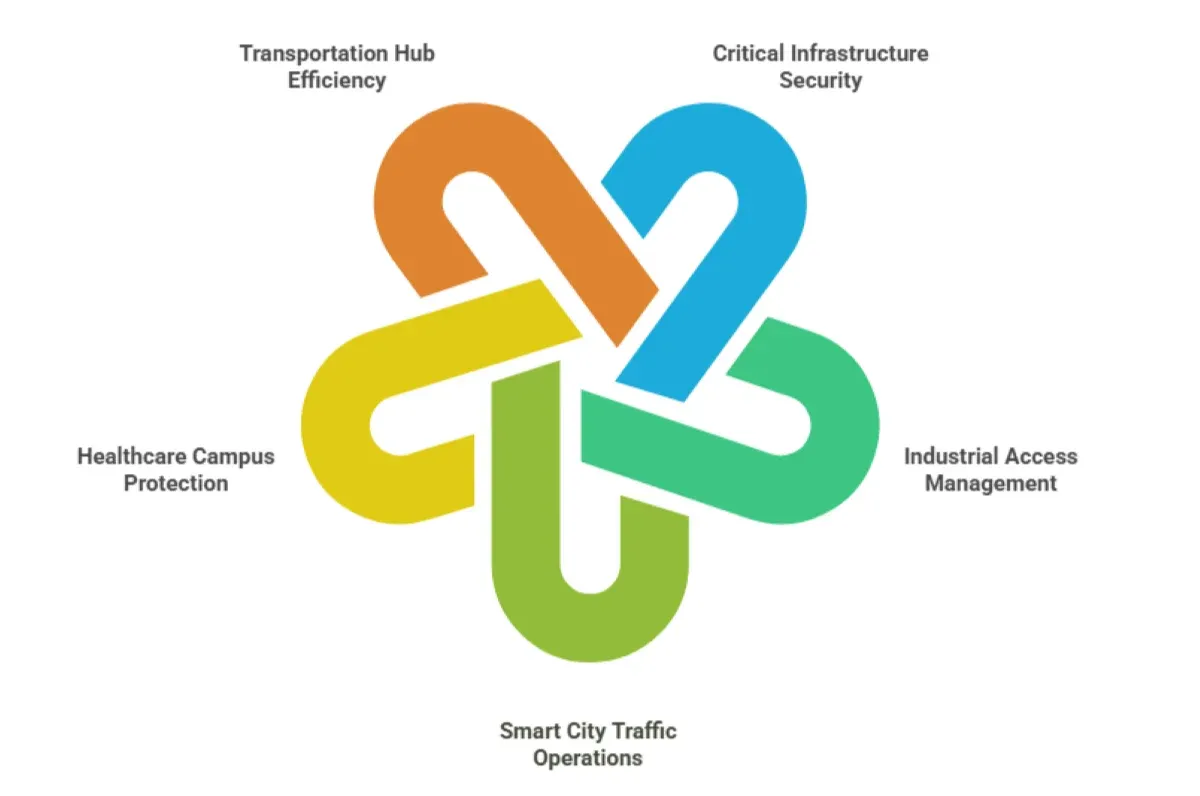
Enterprise facilities across diverse sectors demonstrate successful ALPR implementations that optimize security operations, streamline logistics processes, and enhance operational visibility through comprehensive vehicle tracking capabilities.
Military bases, airports, maritime ports, and government facilities utilize ALPR security solutions for perimeter protection, threat detection, automated watchlist screening, emergency response coordination, and comprehensive security audit trails.
Manufacturing plants, distribution centers, and energy facilities deploy industrial IoT solutions for vendor vehicle authentication, employee access automation, delivery scheduling optimization, safety zone monitoring, and regulatory compliance documentation.
Municipal traffic systems integrate smart city ALPR for congestion monitoring, violation enforcement, emergency vehicle prioritization, parking management automation, and comprehensive urban mobility analytics across metropolitan areas.
Hospital networks and medical complexes implement healthcare security systems for visitor management, threat assessment, emergency lockdown procedures, parking enforcement, and comprehensive campus security across multi-building facilities.
Freight terminals, container ports, and logistics centers leverage logistics automation for cargo vehicle tracking, container identification systems, capacity optimization, regulatory screening, and comprehensive supply chain visibility.
Strategic technology planning ensures ALPR systems evolve with advancing capabilities while maintaining operational excellence and competitive advantage through emerging technology integration and regulatory adaptation.
AI and machine learning advancement integration, cloud migration strategies, edge computing adoption, mobile monitoring capabilities, and emerging technology evaluation ensure long-term system relevance and capability enhancement.
Privacy regulation monitoring, industry standard compliance updates, cross-border operational considerations, and evolving legal framework adaptation maintain operational compliance while enabling business growth and expansion opportunities.
Multi-site deployment strategies, regional expansion planning, enterprise-wide integration, partnership ecosystem development, and intelligent transportation system connectivity enable comprehensive operational transformation and competitive differentiation.
Folio3 AI delivers world-class ALPR solutions engineered for scalability, accuracy, and seamless integration that transform fleet operations and enterprise security through advanced artificial intelligence and computer vision technologies.
Instantly recognize and log plates as vehicles enter or leave premises, ensuring real-time awareness and security while eliminating manual data entry processes that reduce operational efficiency and accuracy.
Automatically record time of entry and exit, enabling accurate trip reports and utilization tracking that provide comprehensive visibility into fleet operations and support data-driven decision-making for optimization.
Set location boundaries and receive instant alerts if fleet vehicles go outside predefined zones, enhancing security protocols while enabling proactive fleet management and unauthorized usage prevention across enterprise operations.
Visualize fleet activity in one place, review logs, get summaries, and track performance over time through comprehensive analytics that enable strategic planning and operational optimization for maximum efficiency.
Simultaneously track hundreds of vehicles across multiple locations, perfect for growing businesses that require scalable solutions supporting enterprise expansion while maintaining consistent performance and reliability standards throughout deployment.

Successful enterprise ALPR deployment follows five critical phases: pre-deployment planning with stakeholder alignment and compliance review, technology assessment including infrastructure evaluation and integration planning, pilot implementation with comprehensive testing and validation, full-scale rollout with training and change management, and ongoing optimization with performance monitoring and continuous improvement.
Pilot testing validates system performance, integration capabilities, and business value while minimizing enterprise-wide risk. Organizations identify technical challenges, optimize configuration settings, validate accuracy rates under real conditions, and demonstrate ROI before committing significant resources to full deployment across multiple locations.
Optimal pilot sites feature representative traffic patterns and volumes, varied environmental conditions including lighting and weather challenges, existing infrastructure availability for cost-effective installation, and stakeholder accessibility for evaluation and demonstration throughout testing phases.
Enterprise deployments require high-resolution cameras (minimum 2MP, preferably 4MP+) with IR illumination, weather-resistant enclosures (IP66/67 rating), variable focal length capabilities, robust networking infrastructure supporting 2-5 Mbps per camera, redundant power systems (PoE+ 30W+ capability), and scalable storage solutions for comprehensive data management.
Modern ALPR systems utilize RESTful APIs and standard protocols to connect with weighbridge systems, ERP platforms, and fleet management software. Integration enables automatic license plate capture linking to weight data, billing systems, and operational databases for streamlined logistics and compliance management.
Critical pilot metrics include technical performance indicators like 95%+ accuracy rates under optimal conditions, 99%+ system uptime, and sub-3-second processing times, alongside business metrics including operational efficiency improvements, cost savings quantification, user satisfaction scores, and integration success rates with existing systems.
Advanced ALPR systems utilize IR illumination, AI-enhanced image processing, and adaptive algorithms to maintain performance in challenging conditions. While extreme weather may impact accuracy, modern systems achieve reliable operation across most environmental conditions through technological advancement and strategic positioning.
Scaling challenges include network bandwidth management (ensuring adequate 2-5 Mbps per camera), integration complexity with diverse systems, regulatory compliance across jurisdictions, change management for multiple user groups, vendor support coordination, and maintaining consistent performance standards across varied environmental conditions and operational requirements.
Data privacy requires implementing role-based access controls, encryption for data transmission and storage, comprehensive audit trails, automated retention policies, regular compliance monitoring, staff training on privacy protocols, and established procedures for data sharing and breach notification.
Vendor support provides critical technical expertise, 24/7 system monitoring with 4-hour response SLAs for critical issues, proactive maintenance, software updates, performance optimization, training programs, and strategic guidance for expansion planning. Strong vendor partnerships ensure reliable operation, rapid issue resolution, and successful scaling across enterprise environments.