Loading...

Generative AI is transforming computer vision from a purely recognition-based field into a powerful engine for content creation, simulation, and automation. From synthetic data generation to image-to-image translation and intelligent content enhancement, this technology is enabling businesses to build smarter, more adaptable vision systems, while cutting costs and reducing time-to-value.
This guide explains how generative AI works in computer vision, provides real-world use cases, outlines implementation steps, and offers practical insights for organizations to adopt it responsibly.
Generative AI in computer vision refers to models that create new images, videos, and visual patterns based on learned features from large datasets. Instead of merely identifying objects in a frame, these models can generate new visual content, enhance existing images, fill in missing areas, or simulate environments.
Core model families include:
Two neural networks, the generator and discriminator, compete to create highly realistic images.Used for synthetic data, face generation, defect simulation, and image upscaling.
Now, the state of the art for visual generation.They gradually add and remove noise to produce highly detailed images with fine structure and lighting consistency.
Ideal for controlled, structured image generation and anomaly detection.
Large multimodal models (e.g., GPT-Vision, LLaVA, Gemini Vision) that understand and generate images using unified architectures.
Traditional computer vision relies heavily on large, annotated datasets, which are expensive, slow to collect, and often biased.
Generative AI solves these constraints by:
Producing high-quality synthetic data
Reducing dependence on real-world data collection
Enhancing model accuracy for edge cases
Accelerating prototyping and iteration
Reducing annotation cost and effort
Enabling complex simulations not possible in the real world
Industries like manufacturing, agriculture, automotive, retail, and healthcare are rapidly adopting these capabilities to modernize operations and unlock automation at scale.
Generative AI is significantly enhancing the accuracy, reliability, and adaptability of modern image and video recognition systems. By generating high-quality synthetic data and improving degraded visuals, it helps computer vision models perform better under challenging conditions, such as low light, motion blur, occlusion, or unusual camera angles.
Traditional datasets often lack diversity, especially for rare or edge-case scenarios.Generative models close this gap by:
Creating additional variations of the same object
Simulating different lighting, textures, and orientations
Reconstructing or “filling in” missing parts of damaged images
Producing privacy-safe synthetic faces, bodies, or medical scans
This makes recognition systems more robust, especially in fields like manufacturing inspection, surveillance, retail, agriculture, and healthcare.
Generative AI techniques such as super-resolution, denoising, and deblurring can transform low-quality visuals into clearer, more usable images.This is particularly valuable for:
CCTV and security cameras
Drone footage
Medical imaging (CT, MRI, X-ray)
Satellite and aerial imagery
Clearer inputs directly improve detection and classification accuracy downstream.
Generative AI helps models go beyond identifying single objects, it enables understanding the relationships between objects, depth cues, and overall context.Examples include:
Scene reconstruction
Layout understanding
Image-to-image translation
Semantic segmentation
These capabilities are critical for robotics, autonomous vehicles, AR/VR, and advanced visual inspection systems.
Generative AI is transforming video processing through:
Motion-based prediction
Frame interpolation
Noise removal and deblurring
Action recognition
Video synthesis and simulation
This enhances security monitoring, sports analytics, medical procedure recording, and autonomous navigation.
GANs (Generative Adversarial Networks): Excellent for synthetic image creation, anomaly simulation, and domain adaptation.
Variational Autoencoders (VAEs): Useful for generating structured representations, anomaly detection, and pattern generation in fashion, interior design, and eCommerce.
Hyper-Realistic Face Generation: Deep generative models can now create photorealistic faces, used in entertainment, gaming, and privacy-safe dataset creation.
Style Transfer: Transforms images into different artistic or product styles. Popular in creative design, social media filters, apparel visualization, and art generation.
Improved Video Generation: Next-gen diffusion models create realistic scenes with complex movement, enabling high-quality VFX, simulation, and training environments.
Text-to-Image Models: Systems like Stable Diffusion or DALL·E generate visuals from written descriptions, enabling dynamic product rendering, content creation, and design prototyping.
Generative AI creates photorealistic synthetic images to train detection, recognition, and segmentation models.
Impact:
Boosts accuracy by 10–40% for underrepresented cases
Reduces manual labeling cost
Handles rare events (e.g., defects, extreme weather, anomalies)
Functions include:
Super-resolution
Noise removal
Colorization of historical footage
Low-light enhancement
Motion blur correction
Great for surveillance, healthcare imaging, and drone vision.
Generative models create variations of defects (scratches, cracks, dents) to overcome limited real data.
Useful in:
Manufacturing
Automotive assembly
Semiconductor inspection
Quality control pipelines
Generative vision can simulate:
Lighting changes
Viewpoint shifts
Environmental variations
Weather conditions
Helps train robots, drones, and AV systems safely and cheaply.
5. Visual Content Generation for Retail & Marketing
Product rendering
Virtual try-on
AI-powered catalog creation
Background generation
Visual merchandising simulations
Brands accelerate content production while reducing studio costs.
6. Medical Imaging Synthesis
Generative AI can create privacy-safe images for:
Early cancer detection
Rare disease modeling
Training without sharing sensitive patient data
Applications of Generative AI in Visual Understanding

Here is a practical roadmap enterprises can follow:
Examples:
“Increase defect detection accuracy by 20%”
“Reduce labeling costs by half.”
“Generate synthetic medical images for model training”
Identify:
Gaps
Biases
Rare classes
Low-quality images
Missing sensor conditions
This tells you exactly what type of synthetic or generated data is needed.
Choose based on use case:
GANs → synthetic manufacturing defects
Diffusion models → high-fidelity imagery
VAEs → anomaly detection
Foundation models → multimodal reasoning and visual Q&A
Generate:
Variations
Edge cases
Lighting/angle changes
Rare scenarios
Validate realism using:
FID score
Precision/recall
Downstream model performance
Blend real + synthetic data (optimal ratio: 60–90% real, 10–40% synthetic depending on domain).
Track KPIs such as:
mAP (mean average precision)
IoU (intersection-over-union)
False positives/negatives
Latency for real-time inference
Iterate until the system reaches production-grade accuracy.

As generative AI becomes increasingly integrated into real-world visual systems, it brings not only unprecedented capabilities but also complex ethical and operational challenges. While the technology can enhance accuracy, generate synthetic data, and augment visual understanding, organizations must address the risks associated with fairness, privacy, misuse, and inclusivity.Below are the most significant considerations enterprises must understand before deploying generative AI within computer vision workflows.
Generative AI systems learn from the datasets they are trained on.If these datasets reflect skewed representation, based on gender, race, age, lighting, location, or context, the resulting models may:
Produce biased synthetic images
Misclassify or underperform on minority groups
Reinforce existing inequalities in decision-making
Produce false positives in security or surveillance contexts
Bias in vision datasets is particularly dangerous because it can affect:
Facial recognition systems
Healthcare diagnostics
Hiring and screening systems
Public safety and surveillance tools
Organizations must implement fairness audits, diverse dataset sourcing, and continuous monitoring to minimize these risks.
Generative AI can create hyper-realistic images and videos, including deepfakes and reconstructed facial features.This introduces serious privacy challenges:
Synthetic faces resembling real individuals without their consent
Reconstructed patient scans in healthcare settings
Misuse of CCTV or security footage for identity inference
Generation of fake imagery used to manipulate public opinion
Without strict controls, generative models may unintentionally leak sensitive visual patterns from training data.
Enterprise safeguards should include:
Data anonymization
Differential privacy techniques
Clear consent mechanisms
Ethical reviews of model outputs
Generative AI technologies can be exploited to create harmful or deceptive content.Examples include:
Deepfake videos that impersonate individuals
Manipulated evidence in legal disputes
Fake news or propaganda
Fraud involving identity spoofing
Synthetic crime-scene images or falsified medical scans
The ease of generating photorealistic content raises concerns about:
Media credibility
Public safety
National security
Digital trust
Enterprises must include misuse-prevention policies, watermarking, and traceability when deploying generative vision systems.
Generative AI often learns patterns from proprietary or copyrighted visual data.This raises questions such as:
Who owns AI-generated images?
Can synthetic data derived from copyrighted material be shared?
How much influence from proprietary datasets is acceptable?
Industries like film, e-commerce, and manufacturing face unique risks around replication of designs, confidential assets, or brand images.
AI systems that do not represent diverse populations can unintentionally exclude certain users or misinterpret their visual appearance.
Challenges include:
Non-inclusive datasets that fail to represent minority groups
Systems that ignore accessibility needs (e.g., assistive visual technologies)
Algorithms trained only on Western or urban environments
Models that perform poorly on darker skin tones or non-standard body shapes
Inclusive design requires:
Diverse global datasets
Regular bias testing
Accessibility guidelines (WCAG & AI fairness frameworks)
Multicultural human oversight during validation
Generative vision models, especially GANs and diffusion models—are often “black boxes.”Enterprises must ensure:
Explainable AI (XAI) techniques for high-stakes decisions
Clear documentation of training data sources
Model interpretability for compliance audits
Traceability of synthetic vs real images
This is critical in regulated industries such as healthcare, insurance, and government.
Governments worldwide are introducing strict laws governing AI-generated imagery and biometric analysis:
EU AI Act classifies many CV applications as high-risk
GDPR restricts handling of biometric data
US state laws address deepfakes and identity fraud
Healthcare compliance prohibits unapproved synthetic patient data
Enterprises must ensure their generative AI workflows comply with regional and industry regulations.
Training large generative models requires significant computational and energy resources.Organizations should consider:
Carbon footprint of model training
Efficient compute strategies (pruning, distillation, edge deployment)
Cloud sustainability practices
Ethical AI includes environmental responsibility as part of governance.
Generative AI is incredibly powerful, but without proper governance, it can:
Damage brand trustIntroduce legal liabilities
Produce biased or unsafe outputs
Compromise user privacy
Enable misuse at a large scale
Responsible implementation requires a balance between innovation and safety, supported by:
Ethical AI frameworks
Governance policies
Transparent model operations
Continuous monitoring and auditing
When these principles guide deployment, generative AI in computer vision can create meaningful, safe, and equitable impact across industries.
Synthetic surface defects improve accuracy and drastically reduce labeling cost.
Inspection systems trained with generative data catch anomalies earlier in the cycle.
Generating crop disease images enables models to identify early-stage infections.
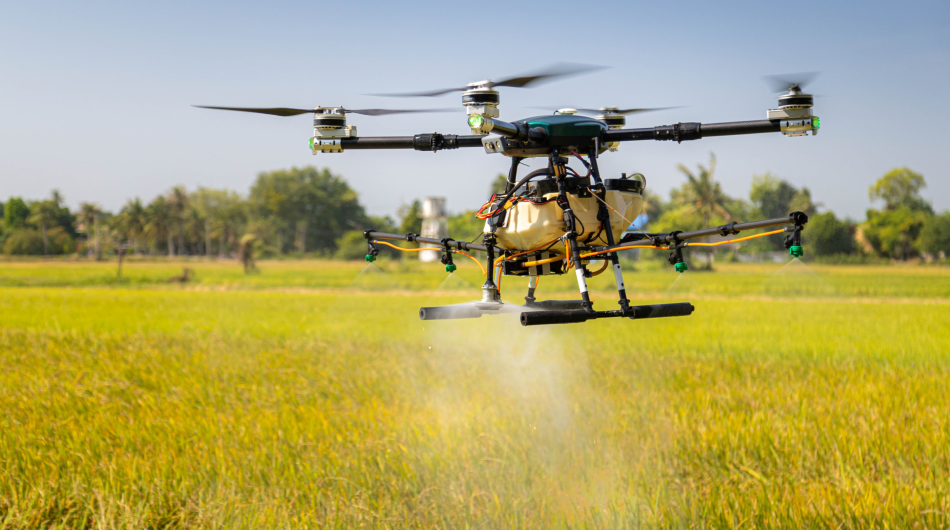
Drone vision enhanced via generative upscaling improves monitoring.
AI-generated product imagery accelerates catalog creation.
Try-on systems use generative models for realistic garment simulation.
MRI/CT synthetic data supports research without exposing real patient information.
Anomaly-detection models benefit from controlled variation.
At Folio3, we build end-to-end computer vision and generative AI solutions tailored to enterprise needs:
Synthetic data generation pipelines
Industrial defect detection systems
Multimodal foundation-model deployments
AI-powered catalog automation for retail
Autonomous inspection and drone-vision solutions
Edge-to-cloud real-time inference architectures
We work with clients across manufacturing, healthcare, sports, agriculture, logistics, and retail to design vision systems that deliver measurable ROI, faster, safer, and at scale.
Our team can help you design, deploy, and scale generative AI–powered computer vision solutions.
Generative AI and computer vision are evolving rapidly, with new breakthroughs emerging every year. As models become more multimodal, more context-aware, and more efficient, they are reshaping how enterprises build intelligent visual systems. Below are the most important future trends shaping the next wave of innovation in this space.
One of the most transformative trends is the integration of generative AI with Augmented Reality (AR) and Virtual Reality (VR).This fusion will allow systems to:
Generate dynamic virtual environments on demand
Create personalized training simulations
Enhance retail experiences with real-time try-ons
Build immersive digital twins for manufacturing, real estate, and healthcare
By blending the physical and digital worlds, AR/VR powered by generative models will unlock hyper-realistic and interactive experiences for both consumers and enterprises.
Generative AI is increasingly merging with natural language processing (NLP), allowing models to interpret text, images, audio, and video simultaneously.
This will enable:
More accurate text-to-image and text-to-video generation
Automatic creation of marketing content, product designs, and creative assets
Smarter visual storytelling through scene generation
Context-aware image editing guided by natural language commands
The convergence of NLP + vision pushes us toward fully multimodal AI systems capable of comprehensive understanding and creation.
Over the next few years, generative AI will move closer to the edge, enabling:
Real-time noise reduction and super-resolution on cameras
On-device anomaly detection
Live reconstruction of missing or corrupted frames
Dynamic lighting, object enhancement, and motion stabilization
This essentially transforms cameras, from CCTV to smartphones, into intelligent vision agents capable of improving footage as it is being captured.
Generative AI will play a major role in:
Autonomous vehicle training
Robotics navigation
Factory floor simulations
Sports analytics and digital coaching
Military and emergency-response training
By generating synthetic environments that mirror real-world complexity, generative AI reduces the need for costly, time-consuming physical data collection.
Future models won’t just identify objects, they’ll understand:
Spatial relationships
Human intent
Object interactions
Scene semantics
This is critical for next-generation applications like collaborative robots, smart cities, retail automation, and advanced medical diagnostics.
Generative AI will increasingly be used to:
Fill in missing image or video segments
Repair corrupted data
Generate synthetic medical scans from limited datasets
Recreate incomplete satellite or drone imagery
This unlocks reliability in industries where data is hard to obtain—such as agriculture, defence, and healthcare.
As generative capabilities grow, so do the risks. Future advancements will require:
Transparent model behavior
Stronger privacy protections
Bias mitigation in training data
Digital watermarking and content authenticity verification
Human-in-the-loop oversight
Enterprises will need to balance innovation with responsibility to maintain trust and compliance.
By 2025 and beyond, generative AI will shift computer vision from a passive recognition tool to an active partner in perception, reasoning, and creation.
It will enable systems that can:
Understand objects and scenes with deeper context
Enhance visuals in real time
Generate training data for any scenario
Build synthetic worlds for testing and simulation
Extract meaningful insights even from incomplete inputs
This evolution will lead to visual systems that are faster, more adaptable, more accurate, and significantly more cost-effective.
However, to unlock its full potential, organizations must pair innovation with responsible governance, ensuring fairness, privacy, and transparency remain at the core of every deployment.
Generative AI is no longer experimental; it’s now a foundational capability for modern computer vision systems.Whether you’re looking to increase accuracy, reduce data costs, or scale automation, generative models can accelerate your entire vision pipeline.
The key is adopting the technology strategically, validating results rigorously, and aligning it with real business outcomes.
Generative AI in computer vision refers to artificial intelligence systems that can create, enhance, or modify visual data. Unlike traditional computer vision, which only analyzes images, generative AI can produce synthetic images, fill in missing parts of visuals, and even improve image quality. This makes it valuable for industries like healthcare, security, entertainment, and autonomous driving.
Generative AI improves computer vision by generating high-quality synthetic data for training, enhancing low-resolution images, and simulating scenarios that are rare in real life. These capabilities allow AI models to learn faster, recognize objects more accurately, and make better decisions in real-world applications.
The main challenges include ensuring high-quality and unbiased training data, preventing overfitting, and maintaining transparency in AI decision-making. Additionally, computational costs and ethical considerations, such as preventing deepfake misuse, are important factors to manage.
Generative AI is used in image recognition to improve accuracy by generating synthetic datasets, simulating challenging environments, and enhancing blurry or low-quality images. This technology is especially useful in applications like facial recognition, medical imaging, and industrial quality control.
Real-world examples include generating synthetic medical scans to train diagnostic AI, creating realistic surveillance footage for security system testing, producing CGI for films and games, and simulating complex traffic scenarios for autonomous vehicles.
Generative AI is transforming multiple industries through advanced visual processing. In healthcare, it creates synthetic MRI and CT scans for research and diagnosis. Security teams use it to enhance facial recognition and enable real-time object tracking. The entertainment sector benefits from realistic CGI, sophisticated special effects, and personalized avatars. These innovations deliver greater accuracy, efficiency, and cost-effectiveness across applications.
Key ethical concerns include the misuse of deepfake technology, invasion of privacy through unauthorized surveillance, bias in AI model outputs, and the lack of transparency in automated decision-making. These issues require strict regulations, ethical AI design, and ongoing system audits.
Future trends include combining generative AI with augmented reality (AR) and virtual reality (VR) for immersive experiences, creating real-time 3D objects from text descriptions, and developing domain-specific models for industries like manufacturing, retail, and robotics.