
Loading...

Every morning at 7:00, trucks start lining up at the logistics facility. By 8:00, that line stretches down the block. Each delayed truck means missed delivery windows, frustrated drivers, and mounting operational costs. This is where understanding how ALPR improves security in logistics becomes essential, not just for smoother gate operations but also for safer, more efficient supply chain management.
According to the National Academy of Sciences' Truck Drayage Productivity Guide, average gate processing times range from 28 to 78 minutes per transaction, with manual processing causing delays of up to 20 minutes per vehicle during busy periods.
This daily chaos at logistics facilities worldwide has created an urgent demand for automated solutions. Recognizing the massive financial impact of these delays, forward-thinking companies are turning to Automatic License Plate Recognition (ALPR) technology that can eliminate the manual bottlenecks entirely.

ALPR stands for automatic license plate recognition, a technology that uses high-speed cameras and advanced optical character recognition software to automatically read and process vehicle license plates in real time. In logistics operations, this technology transforms the traditional gate process by instantly identifying incoming trucks, automatically checking them against pre-approved delivery schedules, and directing drivers to the correct dock - all without requiring manual paperwork or guard interaction.
The technology captures clear images of license plates even in challenging conditions like poor weather, low light, or high-speed traffic. When implemented at logistics facility gates, the system captures plate information, cross-references it with shipment databases, and completes the entire check-in process in approximately 250 milliseconds. This means trucks that previously waited 20-78 minutes for manual processing can now be processed and directed to their assigned docks in under a second, dramatically reducing those morning traffic jams and eliminating costly delays.
Modern ALPR systems represent a sophisticated blend of hardware and software working in perfect harmony to deliver instant vehicle recognition.
These cameras form the foundation of any ALPR system, capturing crystal-clear images of license plates from multiple angles. These specialized cameras use infrared illumination to ensure consistent image quality regardless of lighting conditions, making them effective 24/7.
Processes captured images using advanced algorithms to identify and extract text from license plates. Some ALPR solutions support over 90 countries and are tuned to your specific region, ensuring accurate reading of various plate formats and fonts.
Improves recognition accuracy by learning from each processed image. These systems adapt to local conditions, unusual plate configurations, and even handle damaged or partially obscured plates with remarkable precision.
Allow ALPR systems to instantly cross-reference captured plates against multiple databases, including fleet registries, security watchlists, and authorized vehicle lists. This real-time verification enables immediate decision-making for access control.
Handle data processing locally at the camera level, reducing network bandwidth requirements and ensuring consistent performance even when internet connectivity is limited. This distributed approach provides faster response times and greater system reliability.
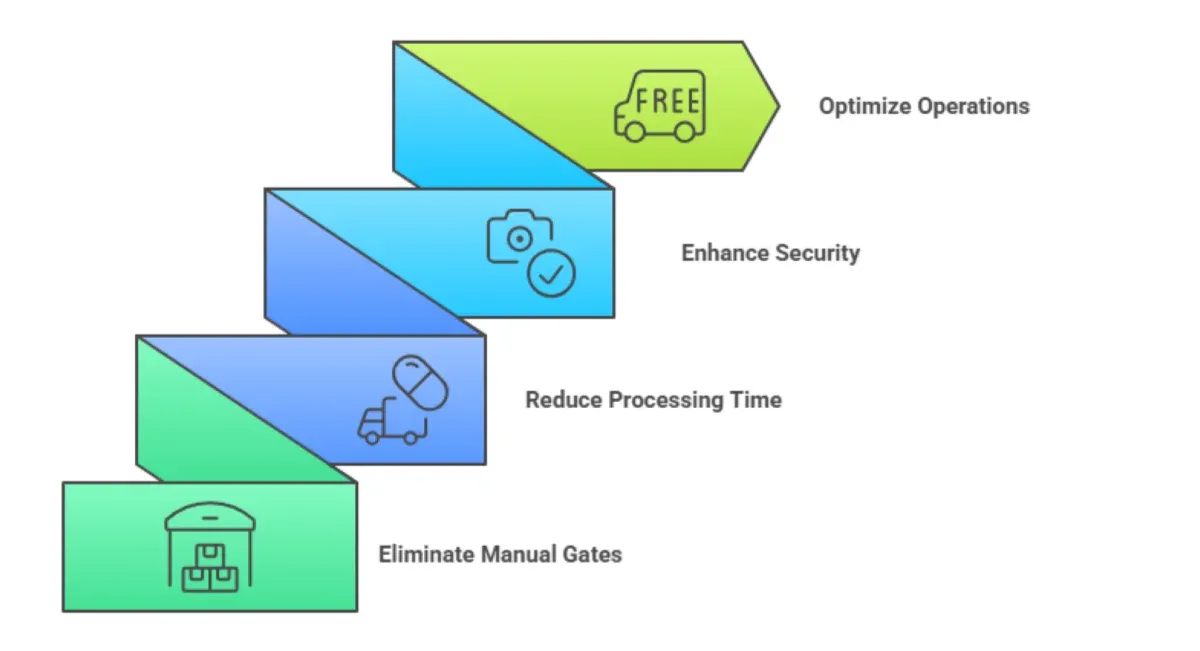
ALPR technology doesn't just automate processes; it fundamentally transforms how logistics operations function, delivering measurable returns that often exceed initial investment within months.
Companies typically see a 70% reduction in gate operations costs by eliminating manual gate operations. Traditional gate operations require security personnel to manually verify each vehicle, check documentation, and log entries. ALPR automates this entire process, reducing labor costs while increasing processing speed. A single ALPR system can handle the workload of multiple gate attendants, operating continuously without breaks, sick days, or overtime costs.
Most trucks clear automated gates in 0-15 seconds compared to 3-6 minutes with manually staffed operations. This dramatic reduction in vehicle processing time directly impacts your facility's throughput capacity. ALPR streamlines access by automatically logging vehicles as they enter or leave the facility, reducing average processing time by up to 95%.
Enhanced security occurs automatically as ALPR systems maintain detailed logs of all vehicle movements. The system recognizes vehicle details under all weather and lighting conditions, checking license plates, trailer IDs, DOT numbers, security seals, and hazmat placards. This level of security monitoring would require significant additional personnel using traditional methods.
Real-time data collection provides insights that were previously impossible to gather efficiently. ALPR systems track peak traffic patterns, identify bottlenecks, and provide data-driven insights for improving facility layout and scheduling. This information helps optimize staff deployment and resource allocation based on actual traffic patterns rather than estimates.
The implementation of ALPR technology creates a cascading effect of operational improvements that extend far beyond simple vehicle identification.
ALPR eliminates the stop-and-go nature of traditional gate operations, creating smooth traffic flow throughout your facility. Vehicles maintain momentum from the approach to parking, reducing fuel consumption and wear on equipment. The seamless entry process also minimizes driver fatigue and frustration, contributing to better overall safety.
Modern ALPR systems provide multi-layered security capabilities that surpass traditional access control methods. The technology maintains real-time watchlists of unauthorized vehicles, immediately alerting security personnel when flagged plates are detected. This proactive approach prevents security incidents rather than merely documenting them after the fact.
ALPR systems automatically generate detailed compliance reports required by various regulatory agencies. The technology maintains accurate records of vehicle access, load weights, hazardous material transport, and driver duty time compliance without additional administrative overhead.
Beyond direct labor savings, ALPR enables more efficient resource allocation throughout your facility. Real-time traffic data helps optimize dock scheduling, reducing wait times and improving asset utilization. The technology also identifies patterns in vehicle arrival times, enabling better workforce planning and reduced overtime costs.
ALPR systems generate valuable analytics that inform strategic business decisions. Traffic pattern analysis reveals optimal facility operating hours, peak demand periods, and opportunities for expansion or consolidation. This data-driven approach replaces guesswork with factual information when planning operational changes.

Modern ALPR deployment has evolved from complex, months-long projects to streamlined implementations that minimize disruption to ongoing operations.
Camera specifications and server requirements have become more flexible and powerful. ALPR system costs range from $50 to $200 per month per camera for cloud solutions to $20,000 to $25,000 for complete hardware systems, depending on your deployment model and feature requirements. Current systems can process multiple lanes simultaneously while maintaining high accuracy rates even in challenging environmental conditions.
Cloud versus on-premise deployment options each offer distinct advantages depending on your operational needs. Cloud solutions provide lower upfront costs, automatic updates, and scalable processing power, making them ideal for facilities with variable traffic volumes. On-premise deployments offer greater data control and reduced ongoing subscription costs, better suited for high-volume operations with consistent traffic patterns.
The installation timeline and minimal disruption approach ensure your facility remains operational during system deployment. Most sites are up and running in under a week without heavy civil work, trenching, or server rooms. Professional installers work with your team to minimize impact on daily operations.
API integration and data flow architecture enable seamless connection with existing systems, including fleet management software, access control platforms, and enterprise resource planning systems. Modern ALPR solutions use standardized communication protocols that facilitate easy integration without extensive custom programming.
When evaluating vehicle identification solutions, understanding the comparative advantages helps justify the investment in ALPR technology over alternatives.
ALPR versus RFID technology reveals fundamental differences in cost, accuracy, and maintenance requirements. While RFID requires expensive tags for each vehicle and readers at every access point, ALPR works with existing license plates without additional vehicle modifications. RFID tags can be lost, damaged, or forgotten, while license plates are legally required and always present.
ALPR, compared to QR codes, highlights durability and automation benefits. QR codes fade, get dirty, or become unreadable, requiring replacement and maintenance. They also require precise positioning for scanning, slowing vehicle processing. ALPR reads license plates from various angles and distances, maintaining functionality even when plates are partially obscured or damaged.
ALPR versus manual processes demonstrates clear ROI through error reduction and efficiency gains. Manual verification is prone to human error, requires constant staffing costs, and creates bottlenecks during peak periods. ALPR operates continuously without breaks, eliminates transcription errors, and provides consistent processing speed regardless of traffic volume.
Hybrid approach scenarios combine ALPR with complementary technologies for enhanced functionality. Some facilities integrate ALPR with weight sensors for automated load verification or combine it with facial recognition for enhanced security. These hybrid systems provide multiple verification methods while maintaining the speed advantages of automated processing.
TechnologyInitial CostOngoing CostAccuracy RateProcessing SpeedMaintenanceALPR$10,000-$25,000Low95%+InstantMinimalRFID$15,000-$30,000High (tags)90%+FastMediumQR Codes$5,000-$15,000Medium (replacement)85%+SlowHighManual$0Very High (labor)70%+Very SlowNone
Different industries leverage ALPR technology in unique ways, each realizing specific benefits aligned with their operational challenges.
Uses ALPR to manage high-volume truck traffic efficiently. The technology eliminates queues at loading docks, automatically directs vehicles to appropriate bays, and maintains accurate arrival/departure logs for scheduling optimization.
Integrate ALPR with production scheduling systems to coordinate inbound raw materials and outbound finished goods. The technology provides real-time visibility into supply chain timing, enabling just-in-time manufacturing processes and reducing inventory carrying costs.
Deploy ALPR for fleet tracking and driver monitoring. The systems verify driver schedules, monitor route compliance, and provide automated reporting for regulatory requirements. This automation reduces administrative overhead while improving compliance with hours-of-service regulations.
Utilize ALPR for container tracking and security screening. The technology manages truck flow through security checkpoints, coordinates with crane operations for efficient container handling, and maintains chain-of-custody documentation for international shipping requirements.
Implement ALPR for secure perimeter access and regulatory compliance. The technology integrates with TSA requirements, maintains detailed access logs for security audits, and coordinates ground transportation with flight schedules to minimize delays in time-sensitive cargo operations.
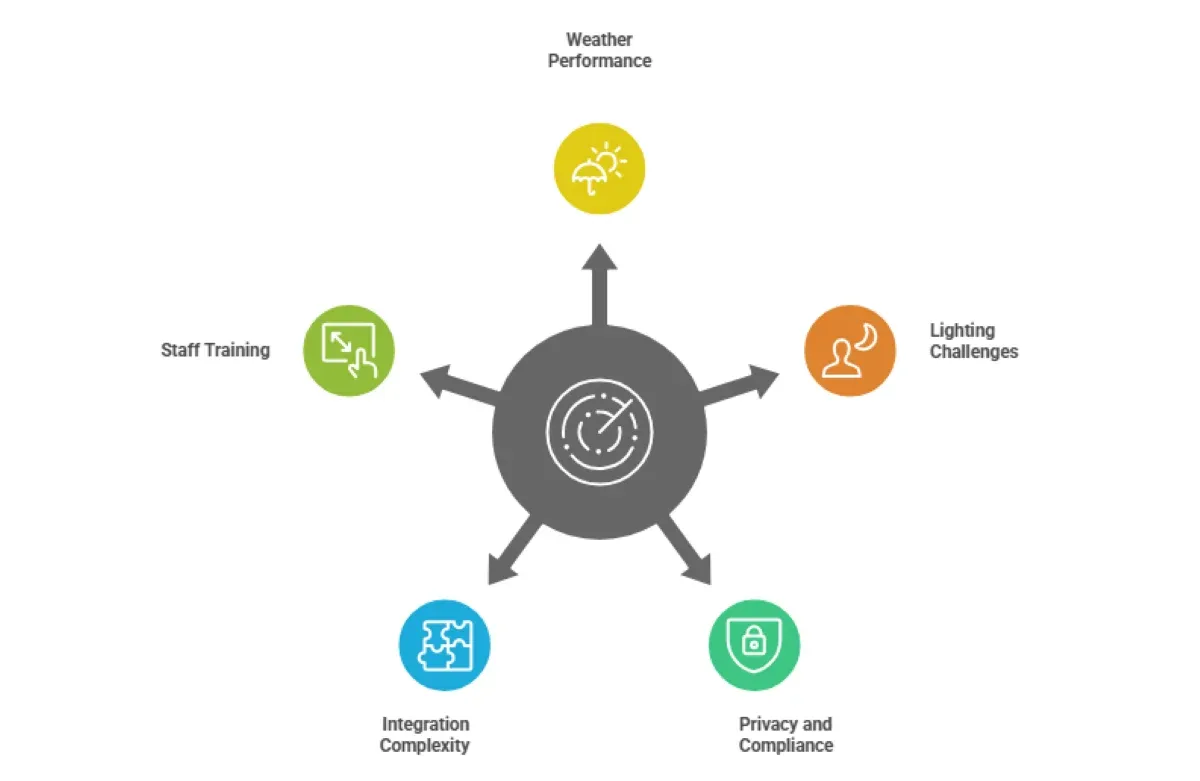
Understanding potential implementation challenges and their solutions ensures smooth deployment and optimal system performance.
ALPR systems may have issues with accuracy in challenging conditions such as poor lighting or dirty license plates, but modern systems use infrared illumination and advanced image processing to maintain consistent performance in adverse weather conditions.
Lighting challenges during nighttime or in poorly lit areas are addressed through integrated IR cameras and adaptive exposure control. These systems automatically adjust camera settings based on ambient conditions, ensuring clear plate recognition regardless of time of day or available lighting.
Privacy and compliance considerations require careful attention to data protection regulations and employee privacy rights. Successful implementations include clear data retention policies, access controls for sensitive information, and compliance with local privacy laws. Regular audits ensure ongoing adherence to regulatory requirements.
Integration complexity with existing systems can be minimized through proper planning and professional implementation services. Most modern ALPR solutions offer pre-built integrations with popular fleet management and facility access control systems, reducing custom development requirements.
Staff training and change management ensure smooth adoption of new technology. Comprehensive training programs help employees understand system capabilities and their evolving roles in automated processes. Clear communication about job security and skill development opportunities helps maintain staff buy-in during implementation.
Folio3 AI provides comprehensive ALPR solutions designed specifically for logistics operations security, with proven implementations across diverse industry applications.
Traffic management applications help optimize vehicle flow through your facilities, reducing congestion and improving throughput. Our AI-powered transportation solutions analyze traffic patterns in real-time, providing actionable insights for operational improvements and capacity planning.
Security and monitoring capabilities provide comprehensive access control with detailed audit trails. Our systems immediately flag unauthorized vehicles while maintaining detailed logs of all facility access for security and compliance purposes.
Drive-through management optimization applies ALPR technology to streamline pickup and delivery processes, reducing wait times and improving customer satisfaction. The system pre-identifies incoming vehicles and prepares orders or documentation in advance.
Parking management solutions ensure compliance with facility parking policies while providing real-time space availability information. Automated violation detection and alert generation reduce the need for manual patrol and enforcement activities.

ALPR (Automatic License Plate Recognition) is a technology that uses high-speed cameras and optical character recognition software to automatically read vehicle license plates. In logistics, it streamlines gate operations by instantly identifying and logging vehicles without manual intervention, processing them within seconds.
ALPR systems can reduce vehicle processing times from 3-6 minutes to 0-15 seconds, representing up to 90% improvement in gate efficiency. For a facility processing 100 vehicles daily, this translates to saving approximately 5-10 hours of processing time daily.
Yes, modern ALPR solutions use standardized APIs that facilitate integration with most fleet management platforms. Integration typically involves configuring data exchange protocols without disrupting existing workflows.
Modern ALPR systems use infrared illumination and adaptive imaging technology to maintain high accuracy rates even in darkness, rain, snow, or fog. Advanced image processing algorithms can extract readable information from partially obscured plates.
ALPR systems create detailed access logs that track every vehicle and immediately flag unauthorized vehicles. Real-time monitoring allows security personnel to respond immediately to potential threats rather than discovering problems after cargo has been compromised.
ALPR systems automatically generate detailed records required for regulatory compliance, including DOT hours-of-service documentation and facility security audits. These automated reports reduce administrative burden while ensuring consistent adherence to regulatory requirements.
Cloud-based ALPR solutions require minimal upfront investment and scale based on usage, making them accessible for small operations. Even processing 20-30 vehicles daily can justify ALPR investment through reduced staffing requirements.
Current ALPR systems achieve accuracy rates exceeding 95% under normal operating conditions, with premium systems reaching 99.3% accuracy. The systems adapt to local license plate formats and mounting styles for optimal recognition.
ALPR systems generally consist of high-speed cameras with infrared filters, processors capable of performing sophisticated optical character recognition (OCR), and application software to compare license plate data to databases of interest to law enforcement and other agencies.
Folio3 AI specializes in logistics applications with a deep understanding of supply chain operations and facility management requirements. We provide comprehensive AI and machine learning development services, computer vision solutions, and flexible deployment options tailored to your specific operational and budgetary requirements. Our ALPR expertise includes both North American ALPR and European ANPR markets with local compliance support.