Loading...
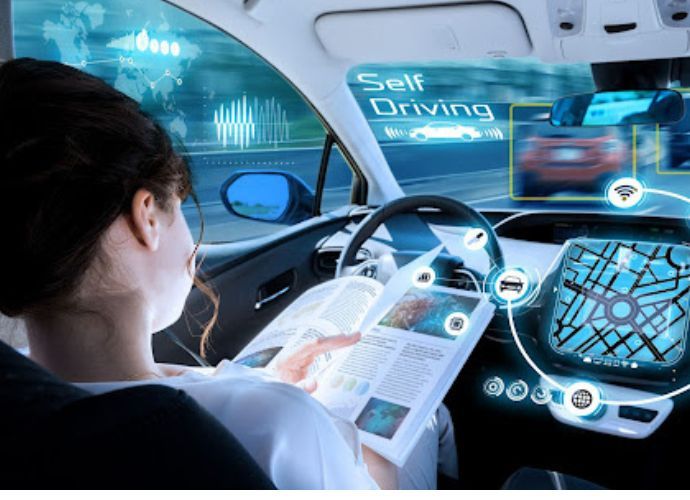
The global automotive AI market is on track for substantial growth in the coming years, driven by rapid technological advancements and increasing adoption across the industry. From AI in the automotive industry to optimizing logistics and predicting maintenance, AI in vehicles is reshaping how we design, build, and drive cars.
No longer limited to factory robots, AI now powers predictive analytics, generative design, and self-learning systems. Inside vehicles, it supports real-time decision-making, driver assistance, and personalized experiences.
This article explores the evolution, applications, and real-world impact of AI across the automotive industry, covering production, mobility, safety, and user satisfaction.
AI has come a long way in the automotive industry, from early automation and electronics to the complex intelligence that powers autonomous vehicles today. Moreover, its evolution has transformed everything from factory floors to in-car experiences.
Self-driving technology depends heavily on AI to function effectively and safely.
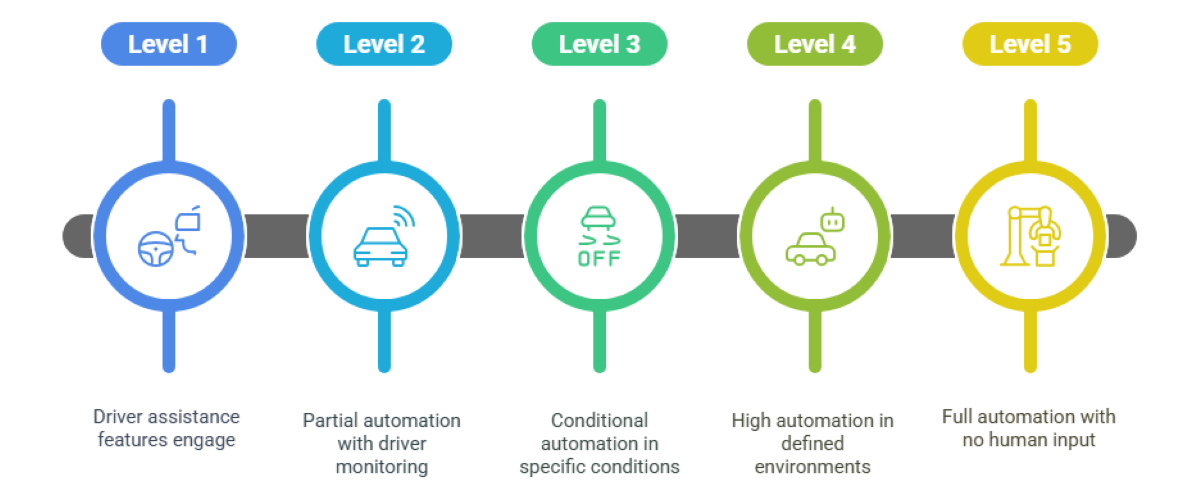
Driving automation ranges from Level 1 to Level 5.
Level 1: Driver assistance features, such as cruise control or lane keeping, allow the driver to remain fully engaged.
Level 2: Partial automation - the car can control steering and speed, but the driver must monitor and intervene anytime.
Level 3: Conditional automation - car handles driving in specific conditions; the driver must be ready to take over when prompted.
Level 4: High automation - vehicle drives itself in defined environments (e.g., urban shuttles); no driver needed within those zones.
Level 5: Full automation - no human input required at any time; no steering wheel or pedals needed.
Most current vehicles are classified as Level 2 or Level 3, which means they offer features like adaptive cruise control, lane centering, and some degree of hands-free driving under certain conditions.
AI in car manufacturing has enabled real-time diagnostics and proactive maintenance.
Using sensors and machine learning solutions, AI continuously monitors engine health, battery performance, brake systems, and other components to catch potential issues.
This predictive capability reduces unexpected breakdowns and improves vehicle longevity, highlighting one of the major benefits of AI in the automotive industry.
ADAS leverages artificial intelligence in automobiles to enhance driving safety and awareness.
It has features such as lane-keeping assist, blind spot alerts, forward collision warnings, and adaptive cruise control that are now standard in many new vehicles.
These systems rely on AI to process input from the vehicle’s sensors and cameras, allowing for timely and accurate reactions to sudden road hazards.
AI in automotive manufacturing has redefined how vehicles are produced.
AI-powered robots perform high-precision tasks such as welding, painting, and assembly, thereby improving consistency and reducing errors on production lines.
These AI tools simulate vehicle performance, optimize parts before production, and help engineers test concepts virtually, saving time and resources.
Artificial intelligence in vehicles enhances the driver’s experience through customization and automation.
In-car assistants, like Amazon Alexa Auto or BMW’s Intelligent Personal Assistant, respond to natural speech, adjust climate settings, suggest routes, and play personalized media content.
AI uses traffic patterns, weather data, and driver history to suggest the fastest, safest, and most efficient driving routes in real time.
The impact of AI in automotive industry logistics is often overlooked but highly valuable.
AI tracks raw materials and parts through every stage of the supply chain, ensuring timely procurement and preventing stockouts.
Predictive models assess historical data and market trends to forecast demand, helping manufacturers avoid overproduction and minimize delays.
The benefits of AI in the automotive industry operations are broad and impactful. Specifically, these benefits include:
AI systems enhance vehicle safety through features such as lane-keeping, collision warnings, adaptive cruise control, and obstacle detection, which reduce the risk of accidents and support safer driving in real-time conditions.
Predictive maintenance, powered by AI, identifies potential issues before they occur. This reduces downtime, prevents costly repairs, and helps operators manage maintenance schedules efficiently, saving both time and money.
AI tailors in-vehicle experiences by learning driver preferences. From seat position to infotainment and navigation, it creates a more responsive, enjoyable, and personalized journey for every individual.
AI optimizes factory workflows using robotics, digital twins, and predictive analytics. It streamlines supply chains, reduces material waste, and improves delivery precision for faster, more cost-effective production cycles.
AI enables vehicles to interact with infrastructure and other cars. This connectivity enhances traffic flow, supports smart city development, and lays the groundwork for future autonomous and shared mobility systems.
AI systems monitor for unusual activity, detect intrusions, and respond in real time. This protects onboard software, driver data, and connectivity features from evolving cyber threats and unauthorized access.
AI helps maintain optimal engine performance by analyzing driving patterns, calibrating systems, and ensuring timely maintenance. This improves energy efficiency and extends the vehicle’s operational lifespan over time.
Here’s how global automakers are leveraging artificial intelligence in automobiles and beyond:
Tesla recorded one crash for every 7.44 million miles driven using Autopilot technology, compared to one crash for every 1.51 million miles without Autopilot and approximately 702,000 miles for the U.S. average Tesla Vehicle Safety Report | Tesla.
The system leverages massive real-world driving data from over 9 billion miles to continuously improve autonomous driving capabilities and enhance vehicle safety through AI-powered predictions and real-time decision making.
BMW's Regensburg plant achieved the world's first end-to-end digitalised and automated process to inspect, process, and mark painted vehicle surfaces in series production, where AI-controlled robots apply objective quality standards to process each vehicle individually. Automated Surface Processing.
This innovative system eliminates human error in quality inspection, reduces production defects, and enables real-time manufacturing adjustments for improved efficiency.
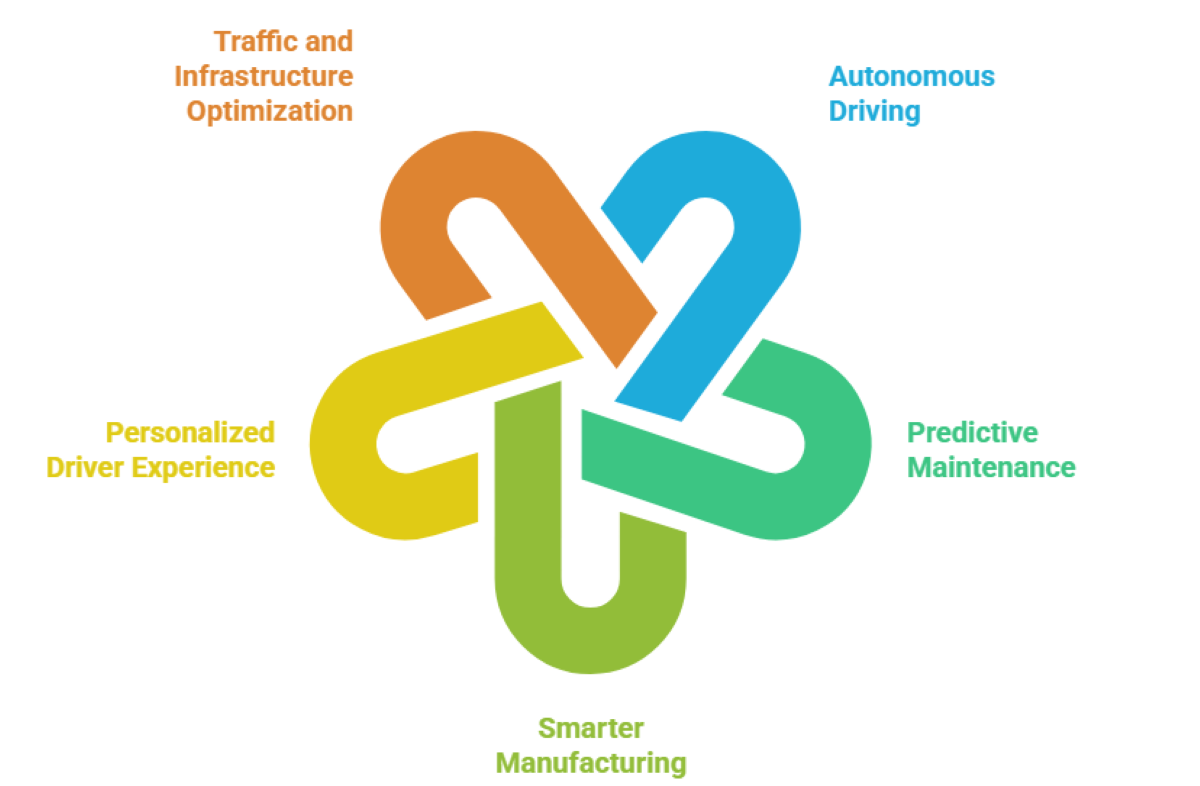
AI is rapidly transforming the U.S. automotive industry, driving innovation in vehicle technology, manufacturing, and customer experience. Here's how AI is shaping the future of mobility across the United States.
AI powers self-driving systems, enabling vehicles to make real-time decisions using data from sensors and cameras, significantly improving safety and reducing reliance on human drivers.
Machine learning detects potential issues before they happen, helping drivers and fleet operators avoid costly repairs and downtime through intelligent maintenance alerts and diagnostics.
AI enhances production lines with robotics, quality control, and supply chain optimization, allowing automakers to produce vehicles more efficiently and reduce manufacturing errors.
AI systems customize in-car settings like navigation, music, and climate control, offering drivers a seamless, intuitive experience tailored to their preferences.
AI helps cities manage traffic flow through smart signals and V2X technologies, reducing congestion and emissions while improving overall transportation efficiency.
The development and deployment of AI in the automotive industry are influenced by evolving global regulations:
United States: The National Highway Traffic Safety Administration (NHTSA) provides guidelines for testing and deploying AI-driven driving systems, focusing on innovation without compromising safety.
European Union: The EU AI Act classifies autonomous vehicles as high-risk AI systems and mandates strict safety and transparency standards to ensure public trust and accountability.
China: Government-backed initiatives like Baidu Apollo benefit from a supportive regulatory environment that encourages smart city testing and rapid AI integration.
India: India is investing in AI-powered traffic management, predictive maintenance for public vehicles, and telematics, with mobility startups like Ati Motors leading the innovation.
ADAS supports human drivers with features like cruise control and lane assist, while autonomous driving goes further, allowing vehicles to control themselves in specific conditions with minimal or no human input.
Not yet. While AI has advanced considerably, fully autonomous systems still struggle in unpredictable environments. Legal, ethical, and technical challenges must be addressed before human drivers can be entirely replaced.
AI helps insurers analyze vehicle usage data, predict risks more accurately, personalize coverage, and process claims faster using automated decision-making systems.
AI is used in nearly every phase of the automotive process—from design and manufacturing to navigation, diagnostics, logistics, and even in-cabin personalization features.
The automotive industry is no longer just a futuristic concept—it's already redefining mobility.
From AI in car manufacturing to intelligent driving systems, its integration is delivering tangible improvements in safety, efficiency, personalization, and sustainability.
As the impact of artificial intelligence in automotive industry practices continues to grow, the road ahead looks smarter, safer, and more connected than ever.
Automakers who embrace these technologies are not only future-proofing their businesses but also helping to shape the next era of intelligent transportation.