
Loading...

Last-mile delivery operations face mounting pressure as costs continue to climb while customer expectations demand faster service. Distribution centers and logistics hubs process hundreds of vehicles daily, with manual verification creating bottlenecks that ripple through entire delivery networks. Security personnel spend valuable minutes checking each truck, which delays departure times and reduces daily delivery capacity.
Last-mile costs account for up to 53% of total delivery expenses, making efficiency critical for profitability. AI-powered last-mile delivery solutions address these challenges by automating vehicle identification at entry and exit points. The technology eliminates manual gate checks, reduces unauthorized access, and provides real-time tracking data that integrates directly with transportation management systems.
For logistics operations managing tight delivery windows and high vehicle volumes, ALPR transforms gate operations from bottlenecks into competitive advantages.

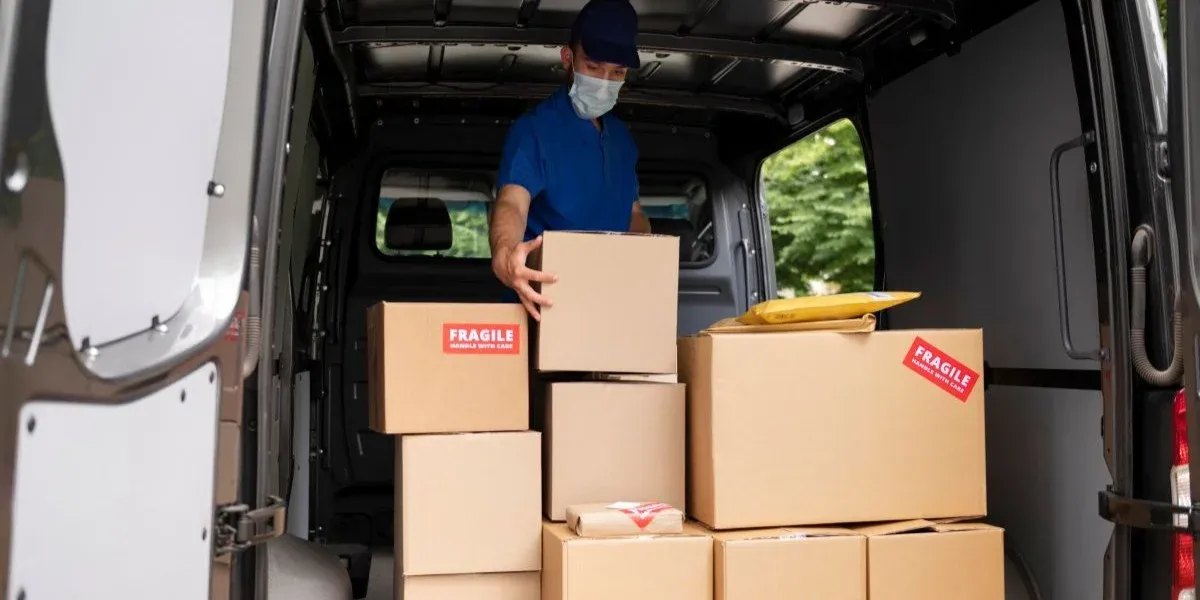
ALPR (Automatic License Plate Recognition) deploys AI-powered cameras at distribution center gates to instantly identify delivery trucks. The system verifies carrier authorization automatically. It logs vehicle movements without manual checks, paperwork, or access card systems that slow operations.
High-resolution cameras capture license plates of approaching delivery trucks in under 250 milliseconds. The system uses optical character recognition to read plates from multiple jurisdictions. Vehicles maintain normal approach speeds toward facility gates during the entire process.
System instantly cross-references captured plates against pre-authorized carrier databases. It checks scheduled delivery appointments and approved vendor lists simultaneously. The platform automatically triggers gate barriers to open for verified vehicles while blocking unauthorized entries.
ALPR timestamps synchronize with dock appointment software immediately upon vehicle arrival. The system automatically notifies warehouse managers when scheduled carriers arrive. It triggers dock door assignments and alerts operations teams to early arrivals or late trucks requiring schedule adjustments.
Platform monitors the total time each delivery truck spends inside facilities, from gate entry through loading/unloading to final exit. The system provides data to identify carriers with inefficient dock operations. Operations managers use this information to optimize daily capacity planning.
The central dashboard tracks all carrier movements across multiple distribution centers in real-time. The platform enables logistics managers to monitor delivery punctuality across entire networks. Operations teams identify repeat offenders for late arrivals and enforce carrier performance standards consistently.
Calculating ALPR return on investment requires tracking logistics-specific KPIs that directly impact delivery departure schedules. These metrics measure dock utilization rates precisely. They determine successful on-time deliveries to end customers requiring immediate fulfillment.
Measure time saved per delivery truck at entry points accurately. Compare manual verification (3-5 minutes, including paperwork) against automated recognition (15-30 seconds). Multiply by the daily inbound delivery volume for total hours reclaimed.
Calculate security and gate personnel hours eliminated from manual driver checks. Include document verification and logbook entry time. Multiply by fully-loaded labor rates to determine annual cost reduction, enabling staff reallocation to value-added warehouse tasks.
Track the percentage increase in delivery trucks leaving facilities within scheduled departure windows. Gate delays directly lead to missed customer delivery commitments. Failed first-attempt deliveries and costly re-delivery operations absorb double resources.
Quantify the reduction in delivery delays caused by unauthorized vehicles and unapproved carriers. Measure blocked entry incidents to prevent fraudulent delivery attempts. Cross-reference vehicle data against actual delivery orders and calculate prevented theft losses.
Calculate additional delivery trucks processed per operating hour after eliminating manual gate bottlenecks. Determine whether existing infrastructure can handle increased delivery volumes. Assess if capital expenditure on additional docks or facility expansion can be avoided.
Successful ALPR implementation requires strategic planning around camera positioning for optimal plate capture. System architecture must support the existing logistics infrastructure seamlessly. Integration with transportation and warehouse management platforms that manage delivery operations ensures maximum operational efficiency.
Cloud deployment enables centralized management across multiple fulfillment centers with remote system access. Automatic updates occur without on-site IT involvement. Edge processing provides sub-100ms local response, eliminating internet dependency. Hybrid architectures balance both requirements effectively.
Install cameras 15-30 feet from gate barriers at 30-45 degree angles. This ensures clear plate visibility for delivery trucks approaching at 5-15 mph. Supplementary cameras cover exit lanes and backup angles for trailers requiring separate identification.
API-first design connects ALPR directly to transportation management systems for automatic shipment status updates. Warehouse management systems receive dock assignment triggers automatically. Carrier portals get real-time delivery confirmation without duplicate data entry.
System requires stable wired network connectivity (preferred over wireless for reliability). Sufficient bandwidth for continuous image processing (5-10 Mbps per camera minimum) is essential. Proper network segmentation ensures ALPR traffic doesn't impact critical warehouse operations systems.
Begin deployment at the highest-volume distribution center as a controlled pilot. Thoroughly validate recognition accuracy and integration functionality. Train operations staff on exception handling, then systematically expand to additional sites using standardized procedures.
Implementation follows a structured methodology from initial facility assessment through full production deployment. The process ensures minimal disruption to daily delivery operations. System effectiveness, user adoption, and measurable operational improvements are maximized throughout the transition.
Conduct an on-site survey documenting gate locations, peak delivery traffic patterns, and carrier mix. Establish baseline metrics for current gate processing times and daily vehicle volumes. Measure departure schedule adherence before implementation for accurate ROI calculation.
Configure authorized carrier vehicle lists and establish scheduled delivery appointment rules. Define carrier-specific routing protocols for different delivery types. Conduct thorough testing during off-peak hours, verifying accuracy, integration functionality, and alert mechanisms.
Train security personnel on dashboard monitoring and exception handling procedures. Educate warehouse managers on new dock assignment workflows. Brief carrier account managers on gate procedures, and provide logistics directors with analytics tools.
Deploy the system during controlled periods with backup manual processes available initially. Closely monitor performance metrics during the first operational week. Gather feedback from gate staff and dock supervisors, and address integration issues immediately.
Analyze operational data after 30-60 day stabilization period systematically. Fine-tune recognition algorithms for problematic plate types or lighting conditions. Adjust carrier access rules based on performance patterns, expand to additional gates or facilities.
Folio3's License plate recognition solution delivers distribution center-specific capabilities designed for high-velocity fulfillment operations. The platform combines instant vehicle recognition with carrier-specific rules. Real-time dock coordination eliminates departure delays and optimizes throughput for demanding delivery schedules.
Our ALPR software integrates seamlessly with your existing CCTV and IP camera infrastructure, eliminating costly hardware replacement. Folio3's technical team handles complete installation, configuration, and integration with your current systems.
Every delivery vehicle movement is automatically recorded with precise timestamps upon gate entry and exit. The system makes trip reports and carrier utilization tracking effortless. Compliance documentation and carrier performance reviews are automated completely.
Access a unified view of all carrier movements across your distribution network from a single interface. Review vehicle logs and generate carrier performance summaries instantly. Track delivery punctuality trends over time and identify problematic carriers requiring corrective action.
Monitor hundreds of delivery vehicles simultaneously across multiple fulfillment centers and distribution hubs. The platform handles large-scale operations with multiple carriers and vendors. Growing delivery networks scale seamlessly without additional manual oversight requirements.
Securely store ALPR data in the cloud and integrate directly with transportation management systems. Connect seamlessly with warehouse management platforms and dock scheduling software. Existing camera infrastructure remains compatible, protecting investments while upgrading gate operation capabilities.

ALPR uses AI-powered cameras at distribution center gates to automatically read delivery truck license plates in under 250 milliseconds, instantly verifying vehicles against authorized carrier lists and scheduled delivery appointments. The system captures plate images using optical character recognition, cross-references data with transportation management systems to grant or deny facility access, and logs precise entry/exit timestamps for dock coordination.
Manual check-ins cause congestion, idle trucks, and driver frustration, with ALPR reducing processing time from 3-5 minutes to 15-30 seconds while eliminating manual paperwork and preventing departure delays. Distribution centers typically achieve 20-30% cost reductions through improved vehicle throughput and eliminated manual verification processes.
Track gate processing time per vehicle, labor hours eliminated from manual verification, daily vehicle throughput capacity increase, on-time departure adherence rate improvement, and unauthorized access incidents prevented. Gate management solutions with powerful analytical capabilities allow the creation of reports uncovering hidden pain points, such as chronic carrier delays and long gate dwell times.
Yes, Folio3's ALPR solution integrates seamlessly with your existing delivery management systems through API-first architecture and pre-built connectors. Our team handles the complete integration process, enabling automatic shipment status updates, dock assignment triggers, and real-time delivery confirmation without manual system updates.
Most distribution centers processing 200+ daily delivery vehicles achieve payback within 3-6 months with immediate benefits from reduced gate processing times and eliminated manual verification labor. Full ROI typically reaches 180-250% in year one, with ongoing annual benefits as throughput capacity grows without infrastructure expansion.
ALPR eliminates gate delays that cause delivery trucks to depart behind schedule, reducing vehicle dwell time and cutting gate processing time. This preserves route timing and improves first-attempt delivery success rates.
Yes, ALPR provides measurable ROI for any distribution center processing 100+ daily delivery vehicles, including e-commerce fulfillment centers, third-party logistics facilities, retail distribution networks, and direct-to-consumer operations. Cloud-based deployment makes ALPR accessible regardless of facility size or technical resources.
ALPR systems employ AES-256 encryption for data transmission and storage, with role-based access controls limiting data visibility to authorized personnel only. Systems support on-premise edge processing for operations requiring air-gapped security or local data sovereignty without cloud connectivity.
Cloud deployment offers centralized multi-facility management with automatic software updates, while edge deployment provides sub-100ms response times with operation during internet outages. Hybrid architectures combine edge recognition with cloud analytics, balancing performance, security, and management needs for enterprise logistics operations.
Folio3 provides end-to-end ALPR implementation specifically for last-mile delivery operations, including facility traffic assessment, custom integration with existing TMS/WMS/dock scheduling systems, and comprehensive staff training. Our logistics-optimized platform offers multi-jurisdiction recognition, carrier-specific routing rules, real-time operations dashboards, and dedicated support, ensuring rapid deployment with measurable ROI from day one.