

Loading...

The world of Artificial Intelligence (AI) is currently witnessing an intriguing competition between two major AI chatbots: Google Gemini vs. ChatGPT. Do you ever think that someday, AI-powered chatbots could handle various duties like sending emails, coding, music composition, and academic research? These automated platforms have changed many aspects of our lives. Imagine AI chatbots conducting complex market studies, engaging and involving audiences with highly inspiring content, or providing precise customer support. These two leading AI chatbots significantly impact the business world, transforming work and communication methods. They guarantee to be operational and staffing enthusiasts who will provide quality services according to their customer's requirements. But still, the question that remains on everyone’s mind is: Which AI will stay on top? In this blog, we will compare them and examine each one's specific superiorities to find out.
When comparing Google Gemini vs. ChatGPT, several differences emerge, Gemini tends to offer more concise and direct responses, focusing on factual accuracy and informative content. On the other hand, ChatGPT, trained on a diverse dataset, can provide more elaborate and descriptive responses, sometimes leading to verbosity. Below is a table summarizing the key differences between Google Gemini and ChatGPT, which can help you decide which AI tool is best for your business needs.
Feature Google Gemini ChatGPT Focus All-in-One Business Assistant Conversational AI Platform Strength in Research Strong (Data Analysis & Retrieval) Moderate(Information Retrieval) Strength in Writing Varied & Task-Specific (Content Creation, Automation) Creative & Engaging (Content Creation) Content Creation Product descriptions, marketing copy, social media posts, emails, presentations Scripts, poems, musical pieces, emails, letters Task Automation High (FAQs, Document Summaries) Limited Accuracy/Explainability High - Explains reasoning Moderate - May require more user guidance Data Integration Seamless with Google Workspace Limited integration with popular apps User Interface Text-based Voice Commands Text-based Additional Features Image Analysis Code Generation (limited)
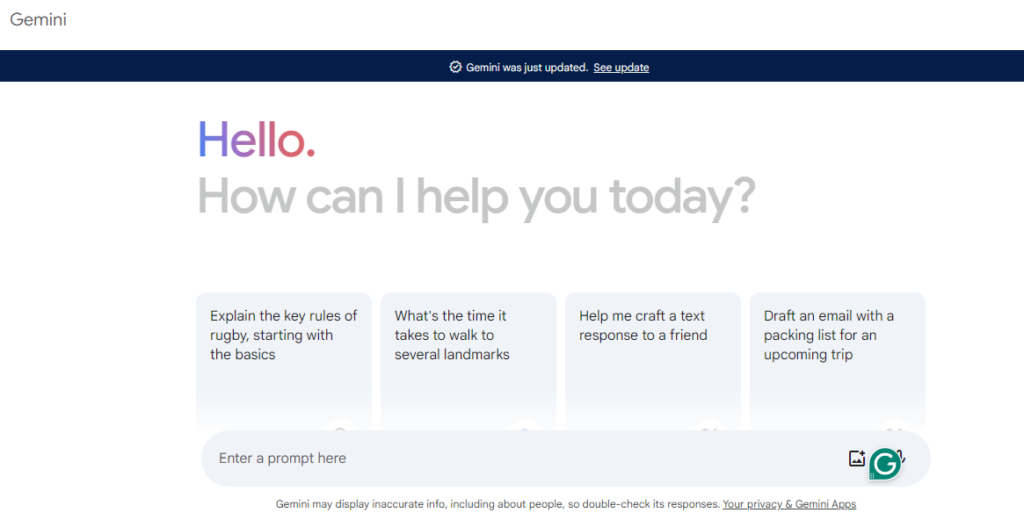
Google Gemini isn’t just your average chatbot. It automatically gathers information from various sources and neatly compiles it into well-organized reports, saving time and effort. Here’s a closer look at Gemini’s feature set.
While Powerful, Gemini Still Faces Challenges Despite its impressive capabilities, Google Gemini is not without limitations. Here's a closer look at some areas where this AI tool is still under development.
Bias and Accuracy: Gemini is prone to biases in its training data, just like any other AI model. This may result in information that is false or misleading, particularly when it comes to delicate or divisive subjects. It is imperative that any information obtained from Gemini be verified and that its answers be viewed critically.
Limited Reasoning and Context: Gemini excels at processing information and generating responses but struggles with complex reasoning and understanding nuanced contexts. It might not be the most suitable tool for tasks requiring in-depth analysis or critical thinking.
Lack of Source Attribution: Currently, Gemini doesn't provide specific sources for the information it presents. This makes it difficult to trace the origin of the data and assess its credibility. While It strives for factual accuracy, conducting independent research is important when needed.
Limited Free Version Capabilities: The free version of Gemini offers a robust set of features, but it might not be as powerful as the paid versions (which are not yet available). Features like advanced image analysis or access to the latest LLM versions might be restricted in the free tier.
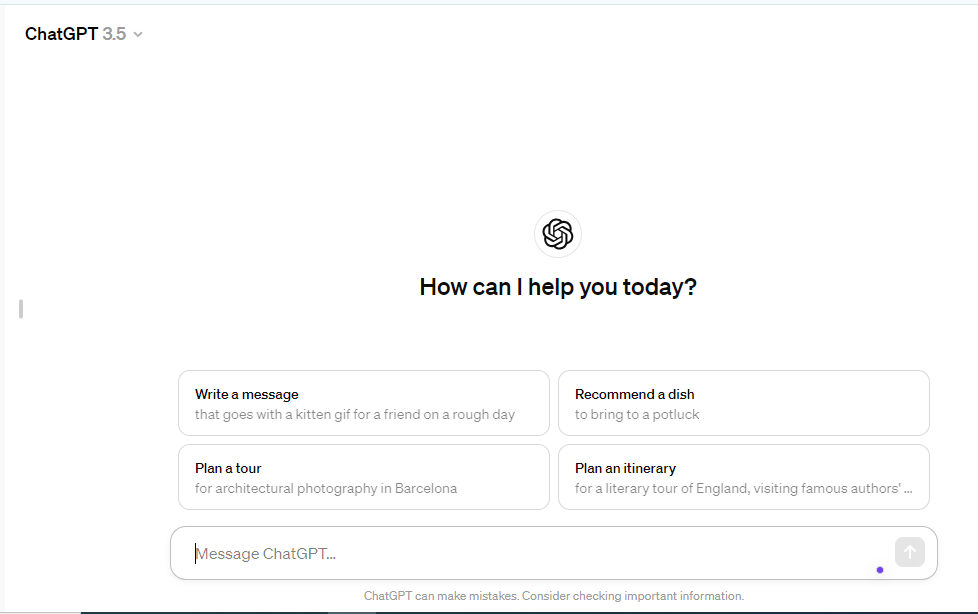
With several remarkable qualities, ChatGPT is a formidable competitor in the field of AI language models. Here are the top four areas where ChatGPT excels.
Long-Form Content Creation: Are you experiencing writer's block or have a long report due soon?ChatGPT can be your writing partner. Because it can produce long-form content, it's perfect for writing fiction stories, blog entries, and articles. Give ChatGPT an outline or a starting point, and it will create a well-organized story, saving you time and work.
Elaborative and Descriptive Language: Rich and detailed language is something that ChatGPT doesn't hold back when employing. Words create vivid images that draw readers into the center of a story or immerse them in the specifics of a product description. This ability is useful when creating product descriptions, marketing materials, or video scripts. By employing expressive language, ChatGPT can grab readers' attention and leave a lasting impact.
Engaging in Conversational AI: ChatGPT is skilled in having interesting and natural-sounding discussions. It can comprehend the subtleties of human language, thoughtfully answer follow-up queries, and even modify its tone and manner depending on the topic at hand. This makes it perfect for applications like chatbots, virtual assistants, or even educational tools that mimic real-world interactions. Imagine having an engaging conversation on a historical topic or practicing your interview techniques with an AI tool. Its conversational features improve education and make the learning process more engaging.
Even though ChatGPT includes a lot of useful features, there are certain drawbacks to take into account. Here's a summary of several significant areas where ChatGPT might be lacking.
Limited Access to Real-Time Information: In contrast to Gemini, ChatGPT's access to the real-time web is restricted. Therefore, the data it is trained on might not be updated and current, leading to out-of-date information.
Potential for Bias and Misinformation: Similar to other AI models, ChatGPT might influence biases in the training set. This can lead to output that is discriminatory, offensive, or simply inaccurate. It's crucial to be aware of this limitation and to critically evaluate the information.
Security and Privacy Concerns: As ChatGPT collects data on how it's used, security and privacy concerns arise. Understanding how this data is stored and used is important to ensure it's handled responsibly and ethically.
Limited Multitasking and Reasoning: ChatGPT primarily excels at specific tasks within a single conversation. It can struggle with complex reasoning or handling multiple requests at once.
Declaring a single winner in the battle between Google Gemini vs. ChatGPT is difficult. Both AI models boast distinct strengths and weaknesses, making them ideal for different tasks and user needs. Here's a breakdown to help you decide which AI titan might be the better fit for you:
You prioritize factual accuracy and up-to-date information. Gemini's real-time access to the web ensures it delivers the latest data.
You need an all-rounder for various tasks. Gemini excels at answering questions, creating content, and basic code analysis.
Integration with Google products is important for your workflow. Gemini seamlessly interacts with Docs, Sheets, Slides, and other Google applications.
If you focus on creative text formats, ChatGPT impresses with its ability to craft poems, scripts, and other engaging content.
You need help with long-form content creation. ChatGPT easily tackles articles, reports, and even fictional stories.
Natural conversation is key. ChatGPT excels at simulating human dialogue, making it ideal for chatbots or educational tools.
Ultimately, the best way to choose is to experiment with both Gemini and ChatGPT. Explore their features, try out some prompts, and see which one delivers the results that best suit your needs.
If your main focus is writing and research, then both these tools can perform this task. But which has the best research and writing capabilities, Google Gemini vs. ChatGPT, is the question? For that, you need to prompt both these tools, observe the information provided, and select the one that best suits your requirements. Here’s a breakdown to help you choose the right tool for your needs.
Research: Google Gemini has the upper hand in terms of research capabilities. Its integration with Google products and access to real-time information gives it an edge over ChatGPT.However, ChatGPT is not far behind when it comes to research. Its extensive knowledge base and ability to generate detailed content can be valuable for tasks that require thorough research. Ultimately, it will depend on the specific topic and information needed for your research. Experimenting with both tools can help determine which one suits your needs best.
Writing: ChatGPT takes the lead when it comes to writing capabilities. Its ability to generate long-form content and use descriptive language makes it a valuable tool for writers. Google Gemini, on the other hand, may struggle with creative writing tasks but excels at generating concise and accurate information. Ultimately, it will depend on your specific writing needs. If you need help generating creative content or crafting marketing materials, ChatGPT might be the better option. But Google Gemini might be more suitable if you need quick answers to factual questions or assistance with basic coding tasks.
It's difficult to predict which AI tool will best fit businesses in 2024, as technology is constantly evolving and new tools are being developed. However, both Google Gemini and ChatGPT have promising capabilities that could benefit businesses in the future. For businesses that require accurate and up-to-date information, Google Gemini's access to real-time data may make it the preferred tool. On the other hand, ChatGPT's ability to generate creative and engaging content could be valuable for businesses looking to enhance their marketing strategies or improve customer interactions. Ultimately, businesses should carefully evaluate their needs and goals before choosing between Google Gemini and ChatGPT. It may also be beneficial to experiment with both tools and see which one better aligns with their business objectives.
You May Also Like To Learn About:
Generative AI Vs Large Language Models (LLM) Natural Language Processing (NLP) VS Large Language Models (LLM) DALL-E vs. MidJourney