
Loading...

Start with one specific problem: customer support, lead qualification, or task automation. Narrow focus delivers better results than trying to build an everything-bot that does nothing well.
Use RAG instead of fine-tuning: Retrieval Augmented Generation connects your chatbot to knowledge bases dynamically, keeping information current without expensive retraining cycles or stale responses.
Choose platforms matching your skills: LangChain and OpenAI APIs for developers, Botpress and Voiceflow for no-code builders. Wrong platform choice creates months of frustrating technical debt.
Test tool reliability obsessively: agentic chatbots fail most often when API calls break or tools fire incorrectly. Your test suite should break your chatbot repeatedly before any real user does.
Deploy monitoring from day one: LangSmith, Helicone, or similar tools track what's actually happening. You cannot improve what you don't measure, and blind deployments guarantee silent failures.
Want to build a generative AI chatbot, but don't know where to get started. Maybe you've tried following tutorials that felt outdated the moment you started. Maybe you've wondered whether to use RAG or fine-tuning, LangChain or Botpress, GPT-4o or Claude. Maybe you're not even sure if your chatbot needs agentic capabilities or what that actually means in practice.
Here's the thing: building chatbots has changed dramatically. The old rule-based approaches are dead. Today's chatbots reason through problems, call APIs, search databases, and execute multi-step tasks without human intervention. They're not just answering questions; they're actually getting things done for users.
Over 987 million people are using AI chatbots worldwide, and that number accelerates as businesses realize these aren't toys anymore. They're competitive advantages.
This guide gives you the complete blueprint, from defining your chatbot's purpose to deploying an intelligent agent that learns and improves continuously. Every step includes practical decisions you'll actually face, not theoretical concepts that sound good but don't help when you're stuck at 2 am, debugging why your tool calls keep failing.
Whether you're a developer comfortable with Python or a business user who's never written code, you'll find your path here. Let's build something that actually works.
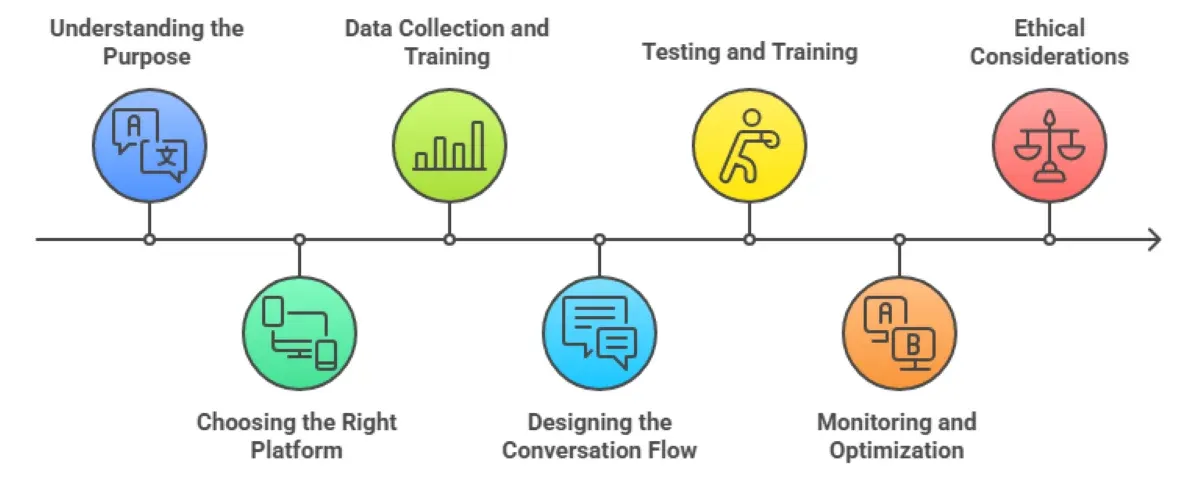
In this guide, we’ll explore how to build a generative AI chatbot, from choosing the right model to preparing data, designing conversations, integrating APIs, and deploying it effectively.
Before touching any code, define precisely what your chatbot needs to accomplish and why it matters to your business. This foundational decision drives every technical choice you'll make afterward, from model selection to conversation design and system integration architecture.
Pick one specific problem your chatbot solves, whether it's customer support, lead qualification, or task automation. Narrow focus beats trying to do everything poorly. Start with one well-defined use case and expand capabilities later based on proven success and user demand.
Decide whether your bot just answers questions or takes meaningful actions in external systems. Searching databases, calling APIs, or executing complex workflows requires completely different architecture choices. This fundamental decision shapes your entire technical stack and development approach significantly.
Understand what success means for your actual users in concrete terms. Fast answers? Accurate information? Completed tasks? Design your entire system backward from desired outcomes to ensure you're building something people genuinely want and will actually use consistently.
Establish concrete metrics like response accuracy percentages, resolution rates, and customer satisfaction scores before building anything. Vague goals like "better engagement" won't help you optimize anything meaningful. Complex numbers keep you honest and focused on continuous improvement.
List every system your chatbot must connect with, like CRM, inventory management, payment processing, calendars, and databases. These integrations determine your platform choice and development timeline completely. Missing critical integrations creates friction that kills user adoption quickly and permanently.
Your platform determines capabilities, limitations, and development speed for the entire project lifecycle. The right choice accelerates progress significantly while the wrong one creates months of painful technical debt. Evaluate all options carefully before committing to any specific technology stack.
OpenAI GPT-4o, Anthropic Claude 3.5/4, and Google Gemini 2.0 offer powerful reasoning capabilities with built-in function-calling features. Choose based on accuracy benchmarks, response latency, and token pricing structures. Each model has different strengths optimized for specific use cases and industries.
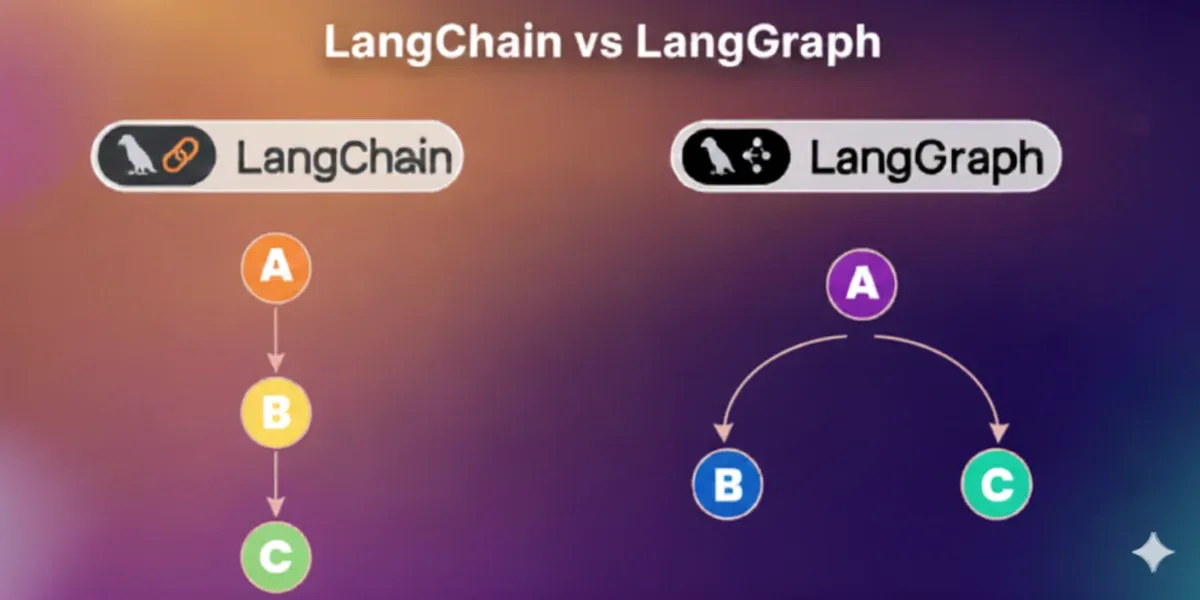
LangChain, LangGraph, and CrewAI help build sophisticated multi-step workflows and tool-using autonomous agents efficiently. These frameworks are essential when your chatbot must execute complex, multi-turn tasks requiring coordination between multiple external systems, APIs, and decision points throughout conversations.
Botpress, Voiceflow, and Flowise let you build sophisticated chatbots without writing any code whatsoever. Perfect for prototyping quickly or teams without dedicated AI engineers on staff. You can always migrate to code-based solutions later once requirements stabilize completely.
Llama 3, Mistral, and Qwen offer enhanced privacy controls and significant cost savings at scale. Deploy on your own infrastructure when data sovereignty or deep model customization matters most. The trade-off is substantially more operational overhead in managing infrastructure and updates yourself.
Compare function calling reliability, streaming responses, multi-modal support, and memory persistence across all platform options carefully. Match platform capabilities precisely to your specific use case requirements and budget constraints. Don't pay for expensive features you won't actually use.

Your chatbot's intelligence comes entirely from how you prepare and deliver information to the underlying model. Modern approaches strongly favor retrieval-based methods over traditional fine-tuning for most practical use cases because retrieval is significantly faster and more maintainable long-term.
Retrieval Augmented Generation connects your chatbot to knowledge bases dynamically at query time. It fetches relevant context when needed instead of baking everything into model weights permanently. This approach keeps information current and accurate without expensive and time-consuming retraining cycles.
Pinecone, Weaviate, Chroma, and Qdrant store document embeddings optimized for fast semantic search operations. They find relevant information even when user queries don't match exact keywords in your knowledge base. This semantic understanding capability dramatically improves response relevance and accuracy.
Well-written system prompts define personality, behavioral constraints, and output formats clearly and comprehensively. They're often more effective than expensive fine-tuning and infinitely easier to iterate on quickly. Treat prompts as living documents that evolve constantly based on observed performance.
Include example conversations in prompts demonstrating exactly the desired behavior patterns you want to see. Show the model explicitly how to handle edge cases and maintain response consistency throughout all interactions. Good concrete examples beat lengthy abstract instructions every single time.
For agentic chatbots, clearly define all available tools, their required parameters, and specific usage conditions in structured schemas. Well-structured tool definitions enable reliable, predictable function calling every time without errors. Poor tool definitions cause unpredictable behavior and frustrating failures.
Modern chatbot design carefully balances structured conversation flows with dynamic reasoning capabilities for flexibility. You're creating guardrails and guidelines, not rigid scripts, guiding overall behavior while enabling intelligent flexibility throughout every user interaction, edge case, and unexpected scenario.
Identify all key stages: greeting, intent recognition, information gathering, action execution, and confirmation of completion. Design clear transitions between states based on explicit user signals and implicit context. Good state management prevents conversations from going off track or getting stuck.
Plan proactively for misunderstandings, out-of-scope requests, and system failures before they happen in production. Graceful fallbacks maintain user trust when the chatbot inevitably hits its limits or encounters errors. Bad fallbacks frustrate users and destroy confidence in the system immediately.
Define precisely when your chatbot calls external APIs, searches databases, or escalates conversations to human agents. Use explicit decision logic or let the LLM decide contextually based on conversation flow. Poor orchestration causes tools to fire inappropriately or not at all.
Decide carefully what information persists across conversation turns or user sessions for continuity and personalization. Memory enables powerful personalization but requires careful management to avoid context window bloat and confusion. Remember that more memory isn't always better or necessary.
Use JSON mode or structured output schemas for reliable, parseable formatting in all responses. This is essential when chatbot responses feed into other systems or trigger automated downstream actions and workflows. Unstructured outputs break integrations and cause cascading failures.
Testing agentic chatbots requires significantly more rigor than traditional rule-based bots ever demanded from development teams. You're validating conversations, tool usage, decision-making logic, and error handling all simultaneously. Skipping thorough testing absolutely guarantees embarrassing production failures and frustrated users.
Create comprehensive test cases covering happy paths, edge cases, and adversarial inputs that try to break your system. Include scenarios where the chatbot should refuse requests or escalate to humans appropriately. Your test suite should break your chatbot repeatedly before launch.
Verify your chatbot calls the correct tools with proper parameters consistently across many different scenarios and phrasings. Check that it handles API failures, timeouts, and errors gracefully without hallucinating fake tool results. Tool failures are the most common source of production issues.
Use LLM-as-judge approaches or human evaluation for assessing accuracy, helpfulness, and tone comprehensively. Automated metrics alone won't capture actual user experience quality properly or completely. Human review catches subtle issues that algorithms miss entirely every time.
Try aggressively breaking your chatbot with prompt injections, jailbreak attempts, and adversarial inputs designed to cause harm. Find vulnerabilities yourself before malicious users discover and exploit them in production. Assume determined attackers will try absolutely everything possible against your system.
Set up robust feedback loops capturing failures, edge cases, and user complaints in production consistently over time. Regular prompt updates and knowledge base improvements keep your chatbot getting smarter and more capable continuously. Static chatbots become obsolete and frustrating very quickly.
Post-deployment monitoring reveals what actually works and what breaks during real usage by actual users. Good observability transforms your chatbot from a static deployment into a continuously improving system that gets measurably better with every conversation and identified issue.
LangSmith, Helicone, and Weights & Biases track latency, token usage, error rates, and quality metrics comprehensively. You cannot improve what you don't actually measure consistently over time. Blind deployments without monitoring lead to silent failures and increasingly unhappy users.
Review failed conversations regularly, identifying patterns, common failure modes, and recurring user frustrations systematically. Are users asking questions your chatbot can't answer? Are certain tools failing repeatedly? Logs reveal exactly where to focus improvement efforts most effectively.
Implement intelligent caching for repeated queries, use smaller and cheaper models for simple tasks, and route only complex requests to expensive models. Token costs compound quickly at scale and can surprise you badly. Cost optimization is an ongoing process, not a one-time task.
Implement comprehensive input/output filtering, catching harmful content, PII exposure, or off-brand responses proactively before users see them. Guardrails protect both your users and your company's reputation significantly. One bad viral response can damage trust and brand perception permanently.
Start simple and add new features based on observed user demand patterns demonstrated clearly in your analytics and logs. New tools or integrations should address real, documented user needs, not hypothetical feature requests from internal stakeholders who don't use them.
Building responsibly isn't optional; it's essential for sustainable long-term success and avoiding serious problems. Ethical practices protect users, build lasting trust, and keep your chatbot out of serious legal and reputational trouble. Shortcuts in ethics always backfire eventually and painfully.
Use RAG to ground all responses in verified, authoritative sources consistently throughout every interaction. Implement confidence scoring and have your chatbot acknowledge uncertainty honestly instead of fabricating convincing-sounding but false answers. Hallucinations destroy credibility instantly and permanently with users.
Encrypt all data, minimize retention periods aggressively, and comply with GDPR/CCPA and other privacy requirements fully and completely. Be transparent about what data you collect and exactly how you use it. Privacy violations carry serious legal consequences and destroy user trust.
Filter harmful inputs and outputs using dedicated moderation APIs proactively before any problematic content reaches users. Never let your chatbot generate or amplify toxic, illegal, or dangerous content under any circumstances. You're legally and ethically responsible for everything it says.
Disclose clearly and prominently that users are talking to AI, not actual humans, at the start of every conversation. Explain capabilities and limitations upfront, honestly and completely. Don't deceive users into believing they're chatting with real humans. Deception always backfires badly when discovered.
Audit responses systematically across demographic groups and sensitive topics on an ongoing basis, not just once. Biased outputs damage trust significantly and cause real, measurable harm to marginalized users over time. Bias testing should be a continuous process integrated into your development workflow.
At Folio3 AI, we develop custom chatbot solutions tailored to your business workflows, helping you retrieve statistical data and handle customer queries with precision and efficiency.
We build virtual assistants that instantly pull accurate information from your documentation and databases. Our solution eliminates time-consuming manual searches, giving your users relevant, contextual responses within seconds.
Our team enables you to access and analyze datasets through simple conversational queries. Our chatbots generate reports and crunch numbers, empowering data-driven decisions without requiring technical expertise.
We connect your chatbot with existing APIs, CRMs, and enterprise systems to create a unified interface. Our integration services streamline workflows by consolidating multiple tools into one conversational platform.
The Folio3 AI team can create intelligent assistants that engage customers with natural, human-like conversations. Our chatbots troubleshoot issues, answer complex questions, and deliver personalized recommendations around the clock.
We develop Excel bots that automate your spreadsheet workflows entirely. Upload your data, and our solution generates formulas, creates visualizations, and delivers actionable insights through interactive queries.

A chatbot powered by large language models (GPT-4o, Claude, Gemini) creates dynamic responses instead of following rigid scripts. Many now include agentic capabilities for autonomous task execution, multi-step reasoning, and real-time tool usage.
OpenAI GPT-4o API, Anthropic Claude 3.5/4, Google Gemini 2.0, LangChain, LangGraph, Botpress, Flowise, and Voiceflow are popular choices. Choose based on coding ability, budget, and specific feature requirements.
Select your model, build a RAG pipeline with vector databases, craft effective system prompts, implement tool integrations, test thoroughly across scenarios, and deploy with comprehensive monitoring and feedback loops.
Yes absolutely. Botpress Cloud, Voiceflow, Flowise, and custom GPTs enable sophisticated chatbots with drag-and-drop interfaces and pre-built integrations requiring absolutely no code to get started quickly.
Chatbots focus primarily on conversation and generating responses. AI agents combine conversation with reasoning, tool use, and autonomous action, executing complex multi-step workflows independently without requiring human intervention throughout.
Most don't require traditional training anymore. Use RAG for dynamic knowledge retrieval, system prompts for behavior definition, and few-shot examples for consistency. Reserve expensive fine-tuning only for highly specialized domains.
Customer support, lead generation, knowledge assistants, shopping helpers, HR automation, data analysis, appointment scheduling, and multi-modal applications incorporating voice, images, video, and document inputs together.
Accuracy benchmarks, reasoning ability, response latency, cost per token, function-calling support, multi-modal capabilities, context window size, and deployment options, including cloud versus on-premise hosting options.
Deploy via web widgets, mobile apps, Slack, Teams, Discord, WhatsApp, or website integrations using APIs and webhooks. Most platforms offer one-click deployment options with built-in security features.
Retrieval Augmented Generation fetches relevant documents at query time, grounding responses in verified sources dynamically. It reduces hallucinations significantly and keeps information current without expensive model retraining cycles.