
Loading...

Customer support teams are drowning in repetitive questions. Sales teams are losing leads because no one's available at 2 AM. Operations staff are manually copying data between five different systems. Sound familiar? Many have heard that AI can fix these problems, but here's where it gets confusing: should businesses invest in a chatbot or an AI agent?
According to recent industry analysis, companies implementing conversational AI solutions report average cost reductions of 30% in customer service operations, while improving response times and customer satisfaction. The wrong choice could waste six months and hundreds of thousands of dollars. The right one could transform operations and provide a serious competitive edge. Let's cut through the hype and figure out exactly which technology businesses actually need.

When exploring conversational AI, two distinct technologies often get confused. Understanding what chatbots and AI agents actually do helps in choosing the right tool for specific business needs.

A chatbot is an artificial intelligence (AI) program or software application designed to simulate human conversation through text or voice interactions. It can operate using predefined rules or advanced AI models trained to understand intent, context, and language patterns, enabling it to respond intelligently to user queries and perform automated tasks.
Chatbots originated in the 1960s with ELIZA, a program developed at MIT that mimicked human conversation using simple pattern matching. The technology saw gradual improvements over the following decades, but it wasn’t until the 2010s, with the rise of messaging platforms, natural language processing (NLP), and machine learning, that chatbots entered mainstream use.
Today’s chatbots range from basic scripted responders to AI-powered conversational agents capable of understanding context, managing workflows, and interacting across multiple languages and domains.
Chatbots fall into two primary categories based on their underlying technology and capabilities. Each type serves different business needs with distinct advantages and limitations.
These chatbots follow predetermined decision trees and scripted responses. They match user inputs against specific keywords or patterns and deliver fixed answers. They're reliable but inflexible, unable to handle queries outside their programmed scope.
These leverage machine learning and natural language processing to understand intent and context. They learn from interactions, handle varied phrasings, and provide more natural conversations. They adapt over time but require training data and ongoing refinement.
Chatbots excel in specific, well-defined scenarios where their focused capabilities deliver maximum value. Understanding these strengths helps businesses deploy them effectively.
Chatbots efficiently manage thousands of similar questions simultaneously, like checking order status, resetting passwords, or providing business hours, reducing wait times to zero.
They deliver immediate answers at any time without human intervention, ensuring customers never face delayed responses during off-hours, holidays, or peak demand periods.
Chatbots collect initial information from prospects, ask qualifying questions, assess intent, and direct high-value leads to appropriate sales representatives based on predefined criteria.
They integrate with calendar systems to show availability, allow customers to book appointments, send confirmations, and handle rescheduling requests without human coordination or back-and-forth emails.
Chatbots acknowledge customer inquiries instantly, provide initial troubleshooting steps, and gather relevant information before human agents take over, improving satisfaction scores and resolution efficiency.
Despite their utility, chatbots face inherent constraints that businesses must consider when evaluating their suitability for complex operational needs and customer expectations.
Chatbots struggle with nuanced conversations that require remembering previous interactions across sessions or understanding complex customer histories, often forcing users to repeat information.
They fail when tasks require coordination across multiple systems, decision-making with incomplete information, or adapting processes based on changing circumstances beyond simple if-then logic.
Rule-based systems need constant reprogramming to handle new scenarios, products, or policies. Even AI-powered versions require retraining and oversight to maintain accuracy and relevance.
When customer queries deviate from expected patterns, chatbots provide irrelevant answers or repeatedly misunderstand intent, damaging brand perception and forcing escalation to human agents.
They cannot analyze root causes, weigh multiple solutions, or exercise judgment in ambiguous situations, limiting them to surface-level assistance rather than genuine problem resolution.
Basic chatbot implementations start from $500 monthly for simple rule-based systems using platform builders. Custom AI-powered chatbots typically cost $10,000 to $50,000 for development plus $500 to $2,000 monthly for hosting, maintenance, and API usage.
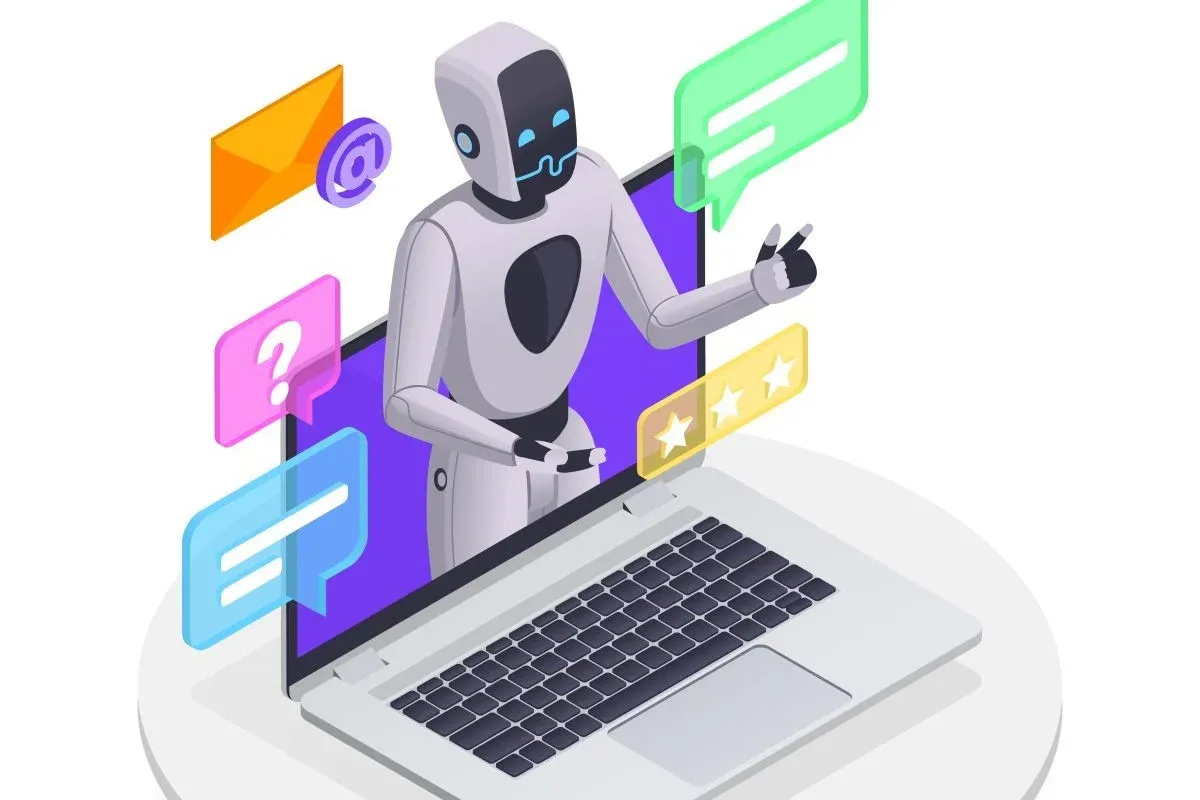
AI agents represent the next evolution beyond chatbots, emerging from academic AI research in the 1990s and becoming commercially viable in the 2020s with advances in large language models. Unlike chatbots that respond reactively, AI agents operate autonomously to achieve goals by perceiving their environment, making decisions, and taking actions across multiple systems.
They combine reasoning, planning, memory, and tool use to complete complex tasks that span different platforms and require judgment. These systems can adapt their approach based on feedback, learn from outcomes, and orchestrate workflows that previously required human coordination and decision-making.
AI agents possess sophisticated abilities that extend far beyond simple conversation, combining integration, reasoning, and orchestration to handle complex business processes autonomously.
AI agents connect seamlessly across CRM platforms, databases, ERP systems, and external APIs simultaneously. They pull data from disparate sources, synchronize information, and execute actions across your entire technology stack without manual intervention.
These systems employ reasoning frameworks to evaluate multiple options, weigh tradeoffs against business rules, and select optimal actions. They consider contextual factors, historical patterns, and organizational priorities when making choices.
AI agents break complex goals into manageable subtasks, execute them in proper sequence, and handle dependencies automatically. They adapt when exceptions occur, rerouting processes without human intervention or rigid predefined scripts.
Unlike chatbots, AI agents maintain a comprehensive memory of past interactions, decisions, and outcomes across sessions. This persistent context enables them to personalize responses and make informed decisions based on complete customer histories.
AI agents work backward from desired outcomes, formulating strategies to achieve objectives even when facing obstacles. They explore alternative approaches, test hypotheses, and persist until goals are accomplished or escalation is required.
AI agents deliver transformative value in scenarios requiring autonomy, intelligence, and cross-functional coordination that traditional automation cannot achieve effectively or efficiently.
They manage complete workflows from initiation to completion, like processing refund requests by verifying eligibility, updating inventory, initiating payments, and notifying stakeholders across separate systems automatically.
AI agents analyze situations considering multiple factors, historical patterns, and business priorities to choose appropriate actions, like prioritizing urgent support tickets or adjusting inventory reorders based on trends.
They connect siloed platforms without custom coding, pulling data from one system and pushing updates to others, creating unified processes across your technology stack effortlessly.
Through reinforcement learning and feedback loops, AI agents optimize their strategies over time, identifying more efficient paths, avoiding past mistakes, and adapting to changing business conditions.
Unlike rigid automation, they reason through novel situations they haven't encountered before, applying general principles and available tools to achieve objectives despite unexpected complications or missing information.
While powerful, AI agents introduce complexities and challenges that organizations must carefully evaluate before deployment, particularly regarding control, transparency, and organizational readiness for autonomous systems.
Implementing AI agents demands robust API integrations, data pipelines, monitoring systems, and computing resources that many organizations lack, necessitating substantial upfront investment in technology foundations.
Autonomous access to multiple systems creates expanded attack surfaces and potential for failures. Improper guardrails can lead to unintended actions with serious business consequences.
Organizations must establish clear boundaries, approval workflows, and oversight mechanisms to prevent AI agents from making decisions beyond their intended scope or conflicting with business policies.
Understanding why an AI agent made a specific decision can be difficult, complicating debugging, compliance audits, and building stakeholder trust in automated recommendations or actions.
Effective AI agents require extensive, high-quality data representing various scenarios and outcomes. Many businesses lack sufficient historical data or proper data labeling to train reliable systems.
AI agent implementations typically range from $50,000 to $500,000+ for initial development, depending on complexity and system integrations. Ongoing costs include $2,000 to $20,000 monthly for infrastructure, model usage, monitoring, and maintenance.
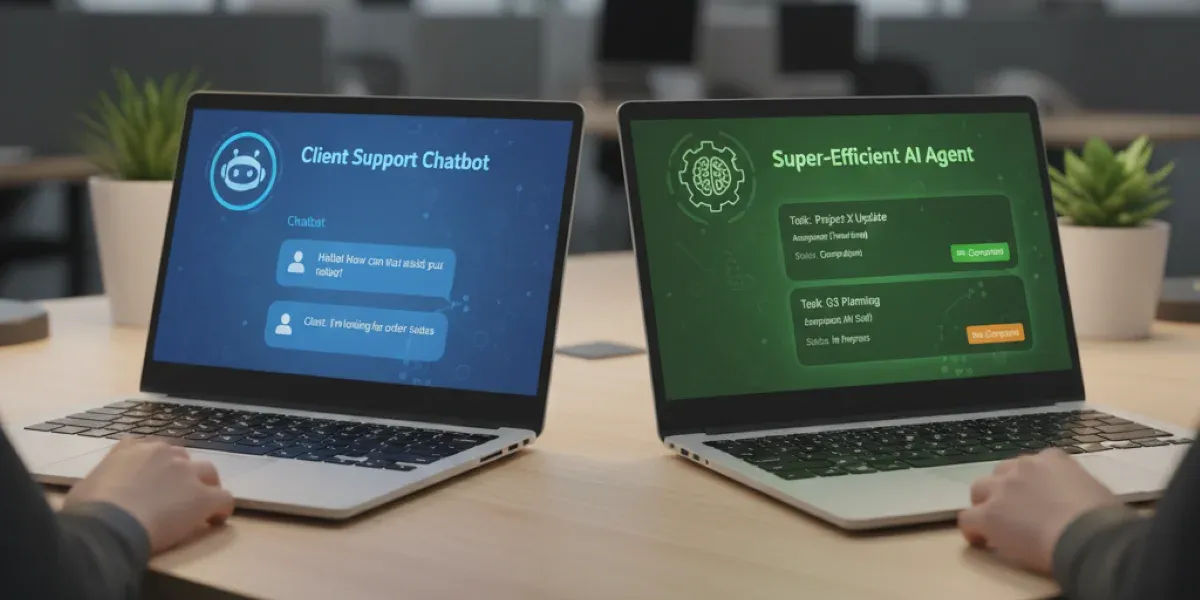
Understanding the true financial impact requires examining both direct expenses and measurable returns across different operational contexts and business scales.
Chatbots deliver measurable returns primarily through efficiency gains and cost displacement, with relatively predictable payback periods that appeal to organizations seeking proven automation investments.
Chatbots handling 60-80% of tier-1 inquiries reduce support headcount needs or enable existing teams to manage higher volumes, typically saving $15,000 to $50,000 annually per avoided full-time equivalent.
24/7 instant lead engagement and qualification increases conversion by 10-30%, translating directly to revenue gains that often exceed entire chatbot implementation costs within the first year.
By collecting information upfront and resolving simple issues autonomously, chatbots decrease human agent time per ticket by 30-50%, multiplying team capacity without adding headcount..
AI agents generate returns through the transformation of core processes and strategic advantages, though longer implementation timelines delay payback compared to simpler chatbot deployments.
AI agents eliminate manual work across entire workflows, not just conversations. Organizations report 40-70% time savings on complex processes like order management, claims processing, and compliance reporting.
Dynamic pricing, intelligent upselling, and proactive customer engagement driven by AI agents increase average transaction values and identify revenue opportunities humans miss consistently.
By coordinating activities across departments and systems, AI agents reduce process cycle times by 50-80%, enabling faster time-to-market, quicker issue resolution, and improved capital efficiency.
Strategic technology selection depends on matching your specific operational needs, existing infrastructure, and organizational readiness with each solution's strengths and limitations.
When workflows require pulling data from ERP, updating CRM, checking inventory, and notifying stakeholders across disconnected platforms, AI agents eliminate manual coordination.
Complex scenarios needing historical analysis, policy interpretation, or judgment calls based on multiple factors exceed chatbot capabilities but suit AI agents' reasoning abilities.
Strategic processes like supply chain optimization, financial reconciliation, or compliance monitoring justify AI agents' higher costs through transformative efficiency gains and competitive advantages.
Rapid growth, geographic expansion, or seasonal spikes that would require doubling headcount become manageable with AI agents handling increased workload without proportional cost increases.
Organizations with skilled data scientists, engineers, and robust IT infrastructure can implement, maintain, and optimize AI agents effectively, maximizing return on substantial investments.
When workflows require pulling data from ERP, updating CRM, checking inventory, and notifying stakeholders across disconnected platforms, AI agents eliminate manual coordination.
Complex scenarios needing historical analysis, policy interpretation, or judgment calls based on multiple factors exceed chatbot capabilities but suit AI agents' reasoning abilities.
Strategic processes like supply chain optimization, financial reconciliation, or compliance monitoring justify AI agents' higher costs through transformative efficiency gains and competitive advantages.
Rapid growth, geographic expansion, or seasonal spikes that would require doubling headcount become manageable with AI agents handling increased workload without proportional cost increases.
Organizations with skilled data scientists, engineers, and robust IT infrastructure can implement, maintain, and optimize AI agents effectively, maximizing return on substantial investments.
Chatbots handle simple inquiries while AI agents manage complex cases, routing intelligently based on issue complexity. This optimizes cost efficiency across the entire support spectrum.
Customer-facing chatbots provide instant responses while backend AI agents automate employee workflows like expense processing, combining public interaction with operational transformation.
Start with chatbots for immediate wins and proven ROI, then add AI agents for complex processes as budget grows and organization gains automation maturity.
Marketing uses chatbots for lead qualification while operations deploys AI agents for supply chain management, tailoring technology to specific functional requirements.
Hybrid approaches test waters with lower-risk chatbot deployments, building confidence and learning before committing to expensive AI agent implementations for mission-critical workflows.
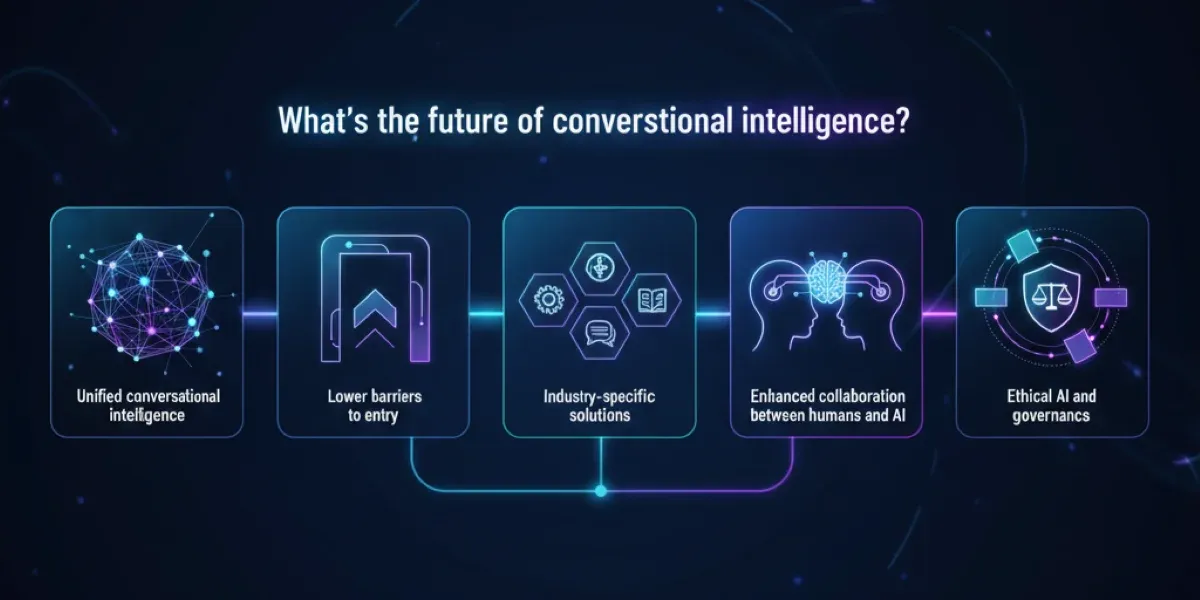
The distinction between chatbots and AI agents continues to blur as technologies advance, creating hybrid solutions that combine conversational interfaces with autonomous capabilities.
Next-generation platforms will seamlessly blend chatbot interfaces with AI agent capabilities, allowing single systems to handle simple FAQs while autonomously executing complex workflows when needed.
Improved no-code platforms and pre-trained models will democratize AI agent capabilities, enabling smaller businesses to deploy sophisticated automation without large technical teams or massive budgets.
Vertical-focused offerings combining chatbot and agent capabilities for healthcare, finance, retail, and manufacturing will accelerate adoption by providing pre-built workflows tailored to specific regulatory and operational requirements.
Future systems will facilitate seamless handoffs, with chatbots handling routine tasks, AI agents managing complex processes, and humans intervening only for judgment calls requiring empathy or creativity.
As adoption grows, industry standards for transparency, fairness, and accountability will mature, ensuring AI systems operate responsibly while maintaining trust with customers and regulators.
As a leading generative AI services provider, Folio3 AI offers end-to-end solutions tailored for enterprises looking to accelerate innovation, streamline operations, and unlock measurable business value. From strategy to deployment, we deliver scalable Generative AI consulting services and technology solutions that drive results.
We design and develop custom Generative AI models tailored to your business needs. Our domain-specific models handle text, image, and multimodal data with precision, enhancing automation, scalability, and insight generation across enterprise workflows.
Our experts craft context-aware, optimized prompts that maximize model accuracy and relevance. By fine-tuning responses to enterprise use cases, we ensure dependable AI outputs and dramatically reduce refinement cycles and response inconsistencies.
Enhance your in-house AI capabilities with our skilled MLOps engineers. We oversee deployment pipelines, performance monitoring, and scaling, ensuring your Generative AI systems remain stable, efficient, and production-ready around the clock.
We embed Generative AI seamlessly into your existing technology ecosystem, CRM, ERP, and proprietary platforms, ensuring secure, efficient, and disruption-free integration that enhances system intelligence, streamlines operations, and improves overall decision-making speed.
We deploy AI-driven code generation tools that automate routine programming tasks, streamline software development, and boost code quality, reducing delivery times while freeing teams to focus on innovation and complex problem-solving.

A chatbot primarily handles predefined conversations and basic user queries using scripted or rule-based responses. An AI agent, on the other hand, can reason, take autonomous actions, and integrate with tools to complete end-to-end tasks.
AI agents typically deliver higher ROI by automating complex workflows, reducing manual effort, and improving process efficiency. Chatbots provide value through customer engagement and support, but have limited task execution capabilities.
AI agents are not replacing chatbots but evolving beyond them. While chatbots manage simple interactions, AI agents handle reasoning, decision-making, and workflow automation, offering a more advanced form of digital assistance.
Businesses should use chatbots for handling repetitive inquiries, lead qualification, and 24/7 customer support. They are cost-effective solutions for improving response times and enhancing basic customer communication.
Enterprises should invest in AI agents when aiming to automate multi-step workflows, connect internal systems, or make intelligent decisions autonomously. They’re ideal for scaling operations and maximizing productivity across departments.
Yes, AI agents and chatbots complement each other effectively. Chatbots manage initial interactions, while AI agents take over complex requests, process data, and execute actions—delivering seamless end-to-end automation.
AI agents eliminate manual work by executing decisions and actions autonomously across connected systems. This leads to measurable time savings, reduced errors, and faster process completion—driving higher ROI across operations.
Industries such as finance, healthcare, logistics, retail, and manufacturing gain the most from AI agents. They streamline compliance, claims, order management, and customer support while reducing operational costs.
Conversational AI serves as the front-end interface that enables natural communication between users and systems. It powers chatbots and AI agents, ensuring smooth, human-like interactions that trigger automated backend workflows.
Folio3 AI combines deep industry expertise with advanced Generative AI and automation frameworks to deliver custom, enterprise-grade solutions. Our end-to-end approach ensures measurable ROI, scalability, and seamless integration with existing systems.