Loading...
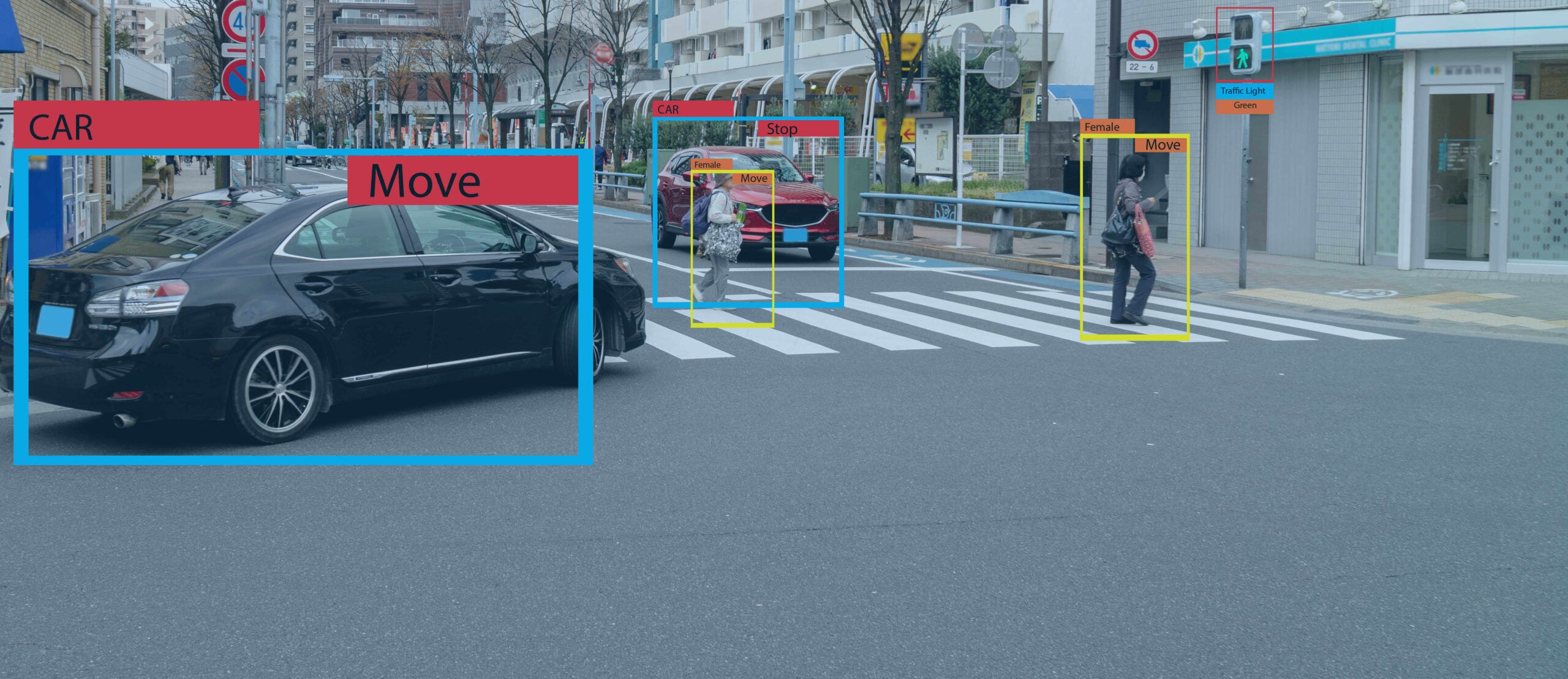
Have you ever considered how your favorite apps and websites effortlessly recognize images? Well, that's where image labeling services come into play. These services are essential in today's data-driven world, enabling machines to understand and interpret visual information like humans. By accurately categorizing and tagging different elements within an image, these services allow artificial intelligence systems to perform tasks such as object detection, facial recognition, and even sentiment analysis. Thus, the importance of image labeling services cannot be overstated in our increasingly visual and automated world. In this article, we're going to discuss why image labeling services are so necessary nowadays and explore how they function.

The workflow of an image labeling service starts with receiving a set of raw images from the client. These images can be in various formats, such as JPEG, PNG, or GIF. The next step involves understanding the requirements and determining which type of annotation is needed for each image. Once the annotations have been finalized, they are applied to the images using specialized tools and software. Each annotation task requires a different set of tools and techniques. For example, bounding box annotation can be done manually or by using automated algorithms depending on the complexity of the project. After all the images have been annotated, they go through a quality check process where trained professionals review each image to ensure accuracy and consistency. Any errors or discrepancies are corrected at this stage.
As machine learning and artificial intelligence gain popularity, the demand for high-quality training data has also increased. Image labeling services play a crucial role in this process. These services save time and resources for companies while ensuring that the training data is accurate and consistent, which is essential for developing reliable AI models. Moreover, image labeling services allow businesses to focus on their core competencies while leaving the tedious task of annotating images to professionals who specialize in this field. This results in better overall efficiency and productivity.
There are three main approaches to image labeling services:
Manual image labeling: This is the most traditional and accurate method. Human labelers, often referred to as annotators, meticulously examine each image and assign relevant labels using specialized tools. This allows for highly detailed and nuanced labeling, particularly for complex tasks.
Automated image labeling: his approach uses machine learning algorithms to automate parts of the labeling process. You can train AI models to spot basic objects or patterns in images, which speeds things up when you're dealing with big datasets. But keep in mind, automated labeling isn't always great for more complex tasks and sometimes you still need a human to check for accuracy.
Combination approaches: A lot of image labeling services mix things up by using both manual and automated methods. So, like, they might start with automated tools to do the initial labeling, then have humans review and tweak everything to make sure it's accurate, especially for important stuff. This way, they get the job done efficiently but still keep the quality high.
Despite the importance of image labeling, the process is not free from challenges. One of the primary difficulties lies in maintaining high accuracy, especially when dealing with complex images that contain numerous objects or overlapping entities. Labeling such images requires meticulous attention to detail and a deep understanding of the context. Another challenge is keeping annotations consistent across different images and annotators. It's tough to make sure everyone follows the same guidelines and applies labels the same way. Plus, when dealing with large datasets, scaling up the labeling process becomes a big issue. That's when you need advanced tools and automated algorithms to handle the volume.
The future of image labeling is poised to see significant advancements driven by technological innovations. One emerging trend is the integration of artificial intelligence and machine learning in the labeling process itself. AI-powered tools can assist human annotators by pre-labelling images, thereby reducing the time and effort required for manual annotation. Another exciting development is synthetic data generation, where we create and label simulated images using 3D models. This helps when getting large real-world datasets is tough. Plus, better collaborative platforms are on the way, which will boost efficiency by making team communication and coordination smoother. This means we'll get more consistent and higher-quality labeling.