Loading...
Introduction:
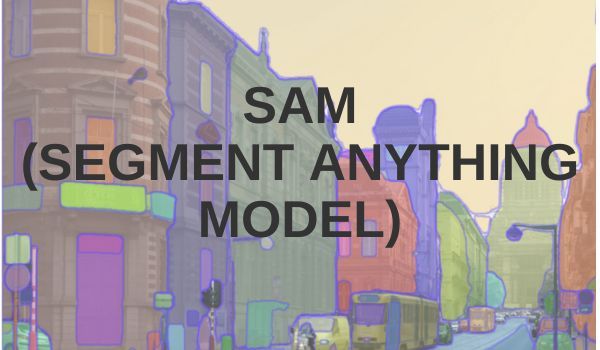
Researchers at Meta AI developed a groundbreaking Segment Anything Model (SAM) for image segmentation. This tool offers unmatched flexibility and adaptability and represents a fundamental change in handling visual data analysis. At its core, SAM is designed to simplify the segmentation process by serving as a foundational model that can be prompted with various inputs, including clicks, bounding boxes, or text. This eliminates the need for task-specific modeling expertise and custom data annotation, making image segmentation accessible to a broader range of users and applications.
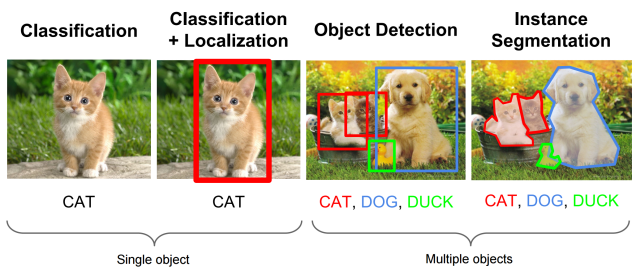
Using SAM has made object identification very simple. Typically, image segmentation models require training on a specific task, like segmenting cars in images, which involves much-specialized work and data. SAM, however, is more flexible. It can segment a wide variety of objects in an image. It is trained on an extensive data set with around 1 billion masks on 11 million images. Meta also said they had evaluated the model performance on various tasks and found that the zero-shot performance is impressive. Zero short performance simply means testing the model on new or unseen scenarios without additional training, That means this segment Anything model can also identify objects that were not part of the training.
Multiple Guidance Options: You can tell SAM what to segment in a few ways: Click on the object directly in the image.
Click points to include and exclude areas around the object.
Provide a bounding box around the object.
Ambiguity Handling: It can handle uncertainty in an image. An object's identity might generate multiple possible segmentation masks if it is ambiguous. Automatic Segmentation: SAM also automatically finds and segments all the objects in an image without specific guidance. Real-time Interaction: Once SAM has processed the image initially, it can quickly generate segmentation masks for different prompts (like clicking new objects).
Input Image: The first thing it does is load an input image. Choose any image, regardless of size, or containing one or more objects that need to be segmented.
Feature Extraction: The convolutional layers process the input image. These layers maintain spatial information while extracting significant features from the image.
Segmentation: It then creates a segmentation mask for the input image using extracted features. This mask successfully separates the items from the backdrop by highlighting the areas of interest in the image.
Training: SAM must be trained on an annotation-rich image dataset before deployment. Backpropagation is the technique by which the model adjusts its internal parameters during training so that it can learn to map input images to their appropriate segmentation masks.
Inference: Once trained, it easily segments objects in new, unseen images. During inference, the model takes an input image and produces a segmentation mask, outlining the objects in the picture.
Post-processing (Optional): In some cases, post-processing techniques such as smoothing or refining the segmentation mask may be applied to improve the final segmentation results.
The Segment Anything Model (SAM) offers several compelling reasons to consider it for your image segmentation needs
Multiple Guidance Options: Unlike traditional models requiring specific training data, SAM provides flexibility in how you tell it what to segment. You can click directly on the object, select points around it, or draw a bounding box. This makes it accessible to users with varying levels of technical expertise.
Automatic Segmentation (Optional): SAM can go beyond user-guided segmentation. It can attempt to automatically identify and segment all objects within an image, saving you time and effort, especially for tasks involving numerous objects.
Real-time Interaction: Once SAM processes the initial image, it can generate segmentation masks for different objects very quickly. This allows for efficient workflows where multiple objects can be segmented within the same image without significant delays.
Ambiguity Handling: SAM acknowledges the inherent complexities of images. If the object's boundaries are unclear, it might generate several possible segmentation masks. This allows you to choose the most accurate representation for your needs.
Deep Learning Approach: By leveraging deep learning techniques, SAM has the potential to continuously improve its segmentation accuracy over time as it's exposed to more data.
The Segment Anything Model offers several key features, making it a powerful tool for image segmentation tasks.
Versatility: Regardless of an object's size, form, or orientation, SAM can segment a vast range of objects inside images. It can effectively handle complex scenes with multiple objects and background variations.
High Accuracy: SAM relies on deep learning techniques and advanced architectures to achieve a high level of segmentation accuracy. Through extensive training on annotated datasets, it learns to identify the boundaries of objects in the image accurately.
Semantic Understanding: SAM goes beyond basic pixel-level segmentation by offering a deeper understanding of the objects depicted in an image. It achieves this by identifying object classes and assigning semantic labels to distinguish between different regions within the image.
Scalability: The SAM is optimized to handle large data sets and complex computational tasks effortlessly. Its architecture is specifically designed to efficiently process high-resolution images, making it well-suited for real-world applications requiring precise and rapid segmentation of large data volumes.
Adaptability: The SAM can be easily fine-tuned to perform specific segmentation tasks. The model can accurately segment objects in a particular domain or context by training them on specialized datasets.
Robustness to Noise and Variability: SAM is robust in real-world scenarios, tolerating noise, occlusions, and various image variations. It performs well in challenging conditions like low lighting, partial occlusions, and image artifacts, guaranteeing dependable segmentation outcomes across diverse situations.
The Segment Anything Model (SAM) can be applied in various fields due to its ability to segment objects within images accurately. Here are some potential applications.
Medical Imaging: Hospitals have such large datasets of images that a good image segmentation model is required to identify diseases or information in medical imaging, such as MRIs, CT scans, or X-rays. But now, with SAM, it is easy to segment organs, tumors, or anomalies from medical imaging. This component is essential for disease progression tracking, therapy planning, and diagnosis.
Autonomous Vehicles: The high population density makes it difficult to control traffic in metropolitan areas and locate stolen vehicles. However, SAM is increasingly used in camera or LiDAR sensor images to distinguish between vehicles, bicycles, and other environmental objects. This aids autonomous vehicles, which require this information to navigate safely and make informed choices.
Retail and E-commerce: To help with visual search, product suggestion, and inventory management on e-commerce platforms, SAM can segment products within photos. It can also be used to find anomalies in the production process or fake products.
Security and Surveillance: SAM can help security professionals monitor and evaluate actions in public areas, airports, or vital infrastructure by segmenting people, vehicles, and suspicious items in video footage.

The Segment Anything Model (SAM) is an advanced AI model designed to segment objects within images. It is capable of identifying and delineating objects in a wide variety of images with high precision.
SAM uses deep learning algorithms, particularly convolutional neural networks (CNNs), to analyze images. It leverages a large dataset of segmented images to learn the features and boundaries of different objects, enabling it to segment new images accurately.
SAM can be used in numerous applications, including autonomous driving, medical imaging, robotics, video surveillance, and any other field where object detection and segmentation are crucial.
SAM distinguishes itself by its versatility and accuracy. It is designed to segment "anything," meaning it can handle a wide range of objects and environments without needing specialized training for each new type of object.
Yes, SAM can be optimized for real-time image processing applications. Its efficient architecture allows it to process images quickly, making it suitable for applications that require immediate segmentation results.
In autonomous driving, SAM enhances the vehicle's ability to understand its surroundings by accurately segmenting pedestrians, other vehicles, road signs, and obstacles. This improves navigation safety and efficiency.
SAM can be used to segment medical images, such as MRI or CT scans, to identify and delineate anatomical structures and abnormalities. This assists radiologists and medical professionals in diagnosing and planning treatments more accurately.
Yes, SAM can be retrained or fine-tuned with new data to improve its segmentation capabilities. This adaptability makes it a powerful tool for continuously evolving applications.
Training SAM requires large and diverse datasets of images with annotated segmentations. The diversity in the dataset helps SAM learn to segment a wide variety of objects and environments accurately.
SAM is designed to handle complex scenarios involving occlusions and overlapping objects. It uses advanced algorithms to predict and delineate the boundaries of each object, even in challenging situations.