Loading...
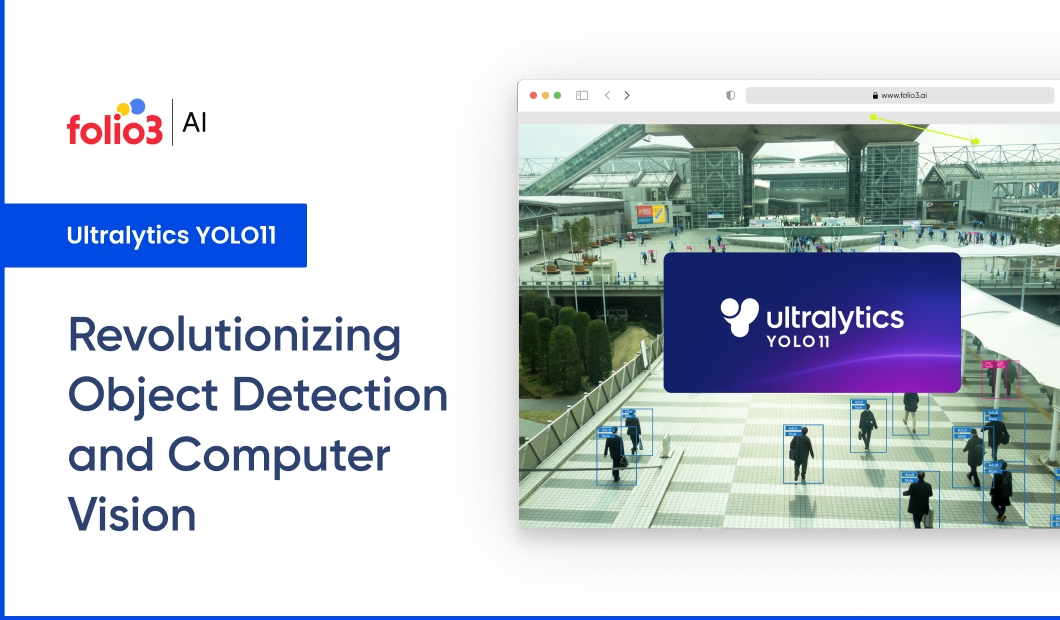
YOLO11 is the latest version in the Ultralytics YOLO series of real-time object detection models. It offers modification in accuracy, speed, and efficiency compared to prior YOLO iterations.
The model incorporates substantial architectural improvements and advanced training methods, making it suitable for various computer vision applications.
YOLO11 builds upon its predecessors by improving performance and flexibility. Key features include:
High Speed: YOLO11 is fast, observing objects in just a few milliseconds. It’s perfect for autonomous driving, live video streams, or gaming, where quick feedback is needed without delays.
Edge Compatibility: YOLO11 works best on all edge devices, even if they're not very powerful. It doesn't matter if you're using smart home gadgets or mobile robots; they support top performance without losing speed or accuracy.
Greater accuracy: YOLO11 is excellent at handling tricky situations like crowded spaces or scenes with overlapping objects—this benefits situations like intelligent surveillance or autonomous vehicles, where every little detail matters.

YOLO11 is built to handle various computer vision tasks with some serious upgrades. Here’s a quick look at the main functions and modes it’s excellent for:
Object Detection: Identifying and labeling multiple objects in real time.
Object Tracking: Following objects across video frames.
Instance Segmentation: Detecting various objects within the same category.
ModelsFilenameTask InfluenceValidationTrainingExportYOLOv3model_v3.ptObject DetectionYesYesYesONNX, TensorRTYOLOv4model_v4.ptObject DetectionYesYesYesONNX, TensorRTYOLOv5model_v5.ptObject DetectionYesYesYesONNX, TensorRTYOLOv6model_v6.ptObject DetectionYesYesYesONNX, TensorRTYOLOv7model_v7.ptObject DetectionYesYesYesONNX, TensorRTYOLOv8model_v8.ptObject Detection, SegmentationYesYesYesONNX, TensorRTYOLOv11model_v11 .ptObject Detection, SegmentationYesYesYesopenVINO,CoreML
Here’s a breakdown of the YOLO11 model variants, highlighting how they work best for specific tasks and are adaptable to different operational modes like Inference, Validation, Training, and Export.
YOLO11 excels in several performance benchmarks, boasting:
ModelSize(Pixels)mAPvalSpeed(CPU ONNX) (ms)Speed (TensorRT10) (ms)Params(M)FLOPS(B)YOLOv11-S64047.512.81.11223YOLOv11-L64053.718.31.82545YOLOv11-M64057.424.72.64790YOLOv11-X64059.835.63.887180
Mean Average Precision (mAP): Higher accuracy compared to previous versions.
Frame Rate: Capable of processing up to 60 frames per second (FPS).
These improvements make YOLO11 suitable for high-demand environments such as self-driving cars or smart cities, where real-time analysis and response are essential.
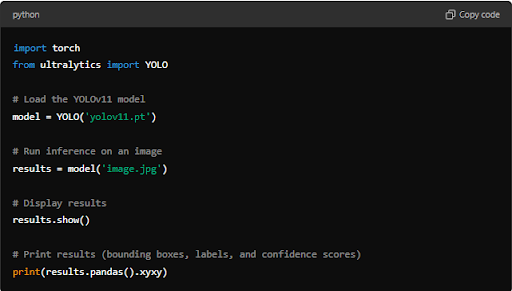
Some real-world applications of YOLO11 include:
Autonomous Vehicles: These are used to detect pedestrians and obstacles.
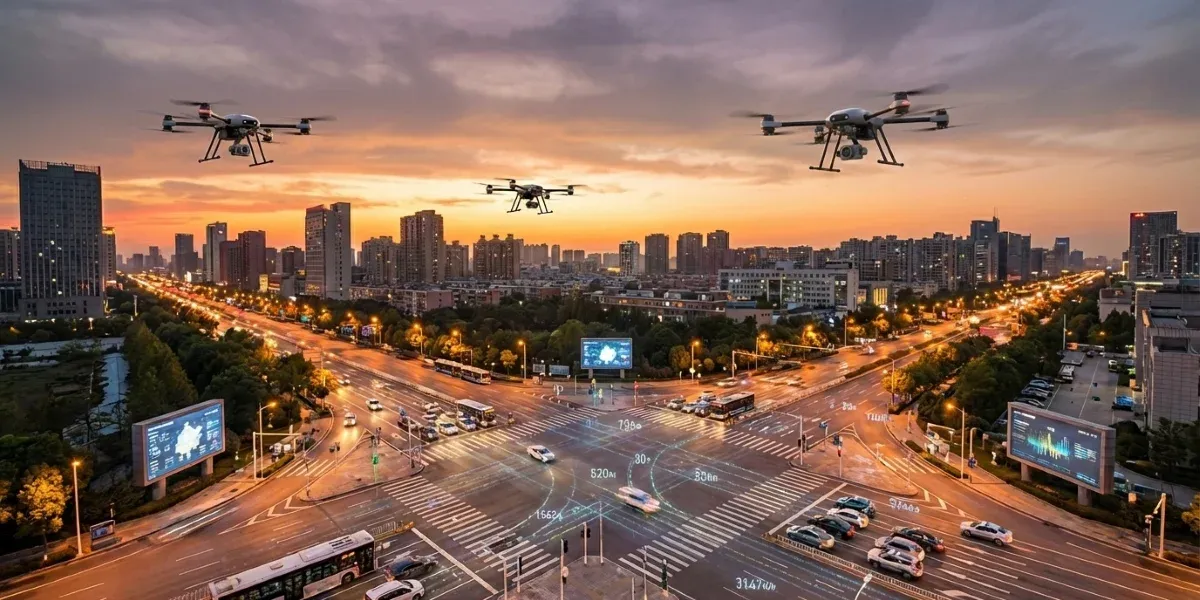
Smart Surveillance: Used in city monitoring to identify security risks.
Robotics: Helps robots navigate environments and recognize objects.
Augmented Reality (AR): Delivering better user experiences by identifying objects and overlaying pertinent info in real time.
Using YOLO11 in computer vision software gives developers a powerful tool for creating solid solutions. It's easy to use with frameworks like PyTorch and TensorFlow, and being open-source allows for lots of customization.
It can be incorporated into automated security, retail analytics, and industrial robotics systems.
YOLO11's mean average precision (mAP) and frame rate benchmarks outperform many other detection models.
Its ability to handle more detailed, nuanced object recognition in crowded scenes has set it apart in urban planning and autonomous driving fields.
As computer vision continues to evolve, future iterations of YOLO are expected to introduce further advancements, including integrating self-supervised learning and scaling for larger datasets.
YOLO11’s foundational architecture ensures its adaptability to new challenges in fields like smart cities, automated industries, and healthcare.