
Loading...

Sports fans today demand more than passive viewing experiences. The modern sports enthusiast expects personalized content, real-time interactions, and immersive digital experiences that traditional broadcasting simply cannot deliver. This shift has forced sports organizations worldwide to embrace AI-driven fan engagement strategies and cutting-edge technology solutions.
For example, during global events like the FIFA World Cup, fans now enjoy personalized highlights, real-time stats, and interactive prediction games, while AR filters and virtual fan walls bring the stadium experience home.
According to recent industry research, the AI in sports market is expected to grow at a CAGR of 29.8% from 2024 to 2025, fueled by demand for enhanced fan engagement and real-time analytics. The integration of AI in sports marketing represents a paradigm shift from one-size-fits-all approaches to hyper-personalized, data-driven fan experiences that drive measurable business outcomes.

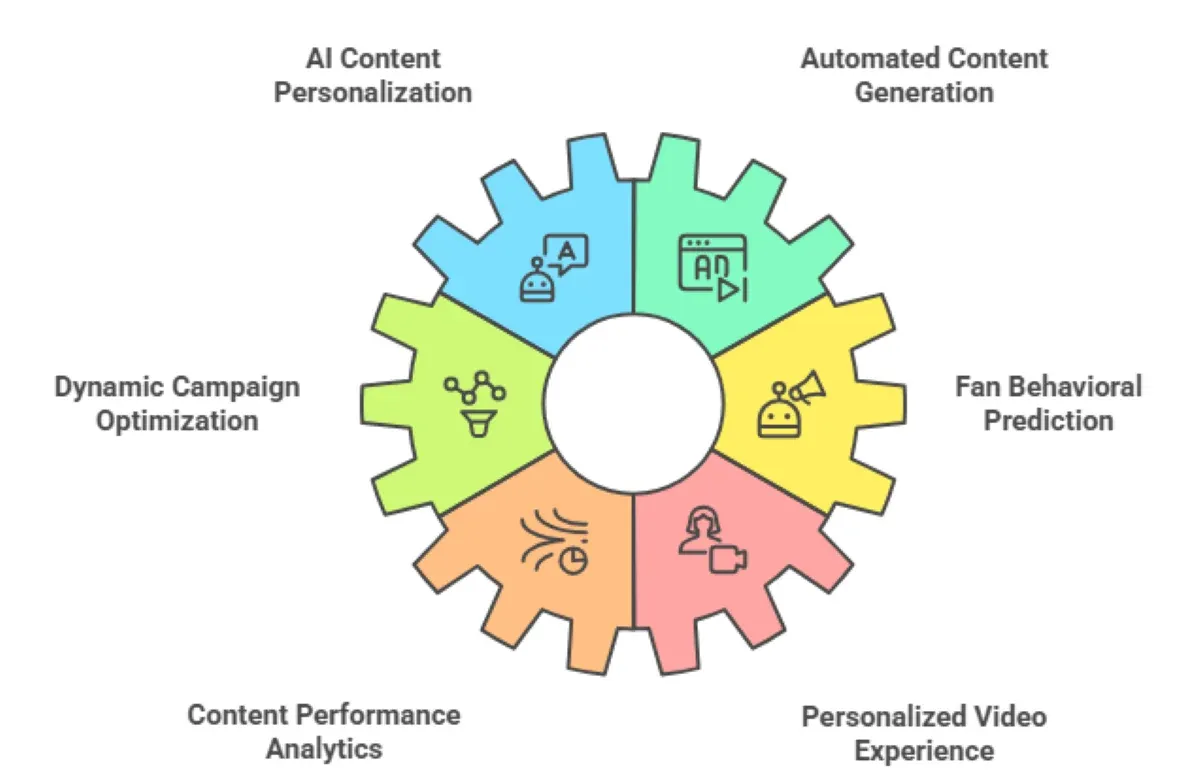
Successful sports organizations implement comprehensive AI strategies across multiple customer touchpoints to create cohesive, personalized fan experiences that drive engagement, loyalty, and measurable revenue growth.
AI recommendation engines analyze viewing patterns, team preferences, engagement history, and demographic data to deliver customized highlight reels, exclusive content, and targeted promotional materials for individual fans. Additionally, these systems continuously learn from user behavior to improve recommendations.
AI systems create real-time social media posts, articles, and video commentary, ensuring consistent content flow across platforms while reducing manual workload. Furthermore, these systems maintain brand voice consistency throughout campaigns and can generate multilingual content for global audiences.
Machine learning algorithms optimize email timing, push notification frequency, content formats, and promotional offers based on individual fan response patterns. Moreover, these systems provide engagement preferences and predicted behavior for maximum effectiveness.
Advanced analytics predict fan interests, merchandise preferences, attendance likelihood, and churn risk, enabling proactive marketing campaigns. Consequently, these insights resonate with specific audience segments and drive targeted conversion opportunities.
AI tracks content engagement across platforms, identifying high-performing formats, optimal posting times, audience preferences, and viral content characteristics. Therefore, this enables continuous optimization and strategic content planning initiatives.
Intelligent video editing creates customized highlight packages featuring favorite players, teams, memorable moments, and personalized commentary. Additionally, these are based on individual viewing history, preferences, and engagement patterns.
Modern sports organizations are experiencing a technological transformation that's reshaping every aspect of fan interaction, business operations, and revenue generation through intelligent automation and data-driven decision making.
Google's Vertex AI platform provides sports organizations with advanced machine learning capabilities, while Generative AI tools automate content creation processes. Additionally, Computer Vision APIs analyze player movements and fan behavior patterns in real-time for actionable insights.
Early AI adopters in sports find it easier to commercialize content, demonstrating clear competitive advantages for organizations implementing artificial intelligence solutions across their fan engagement strategies and revenue optimization initiatives.
Modern sports fans show increasing acceptance of AI-generated content, indicating widespread adoption of automated personalization systems, real-time recommendations, and intelligent content curation platforms across digital touchpoints. Moreover, fans increasingly expect these personalized experiences as standard offerings.
Sports organizations implementing AI see significant returns, with marketing targeting improvements and substantial increases in fan lifetime value through personalized engagement strategies. Additionally, the AI in the sports market demonstrates remarkable growth, fueled by demand for real-time analytics and enhanced fan experiences.
Teams are adopting comprehensive AI ecosystems combining predictive analytics, natural language processing, computer vision, and machine learning algorithms. Consequently, these create seamless, multi-touchpoint fan experiences that drive engagement and revenue.
Contemporary sports consumption patterns and evolving fan expectations have created an urgent need for intelligent, responsive engagement technologies that deliver personalized experiences at scale across multiple platforms.
Gen Alpha expects quick highlights, behind-the-scenes access, and personalized recommendations, requiring sports organizations to deliver bite-sized, mobile-optimized content. This generation shows distinctly different consumption preferences that match shortened attention spans and digital-native consumption preferences.
The majority of younger fans use multiple screens at once while watching sports, creating opportunities for companion apps, second-screen experiences, synchronized multi-platform content delivery, and integrated social media interactions during live events. Furthermore, most sports fans use second screens while watching live broadcasts.
Converting casual viewers into loyal, paying customers requires sophisticated targeting algorithms, personalized promotional offers, and dynamic pricing strategies that traditional marketing approaches cannot achieve at scale. Therefore, AI becomes essential for a competitive advantage.
Modern sports generate massive datasets from ticketing systems, streaming platforms, social media interactions, biometric sensors, and fan behavior patterns. Consequently, this requires AI-powered processing capabilities for generating actionable business insights.
Organizations without AI capabilities face significant disadvantages in fan acquisition, retention, and monetization strategies. Meanwhile, competitors leverage intelligent systems for superior user experiences and more effective marketing campaigns.

Live data integration transforms passive viewing into interactive experiences through intelligent information overlays, predictive insights, and dynamic content delivery that enhances fan understanding and engagement.
70% of fans want access to player metrics and live match data, driving demand for real-time statistics, performance analytics, predictive game outcomes, and interactive data visualizations. Furthermore, this creates opportunities for enhanced viewing experiences.
Advanced image recognition systems provide instant replay analysis, player tracking visualizations, heat maps, automated highlight generation, and tactical analysis during live broadcasts.
Fans desire "what-if" scenario replays and virtual competitions, creating engaging experiences that extend beyond traditional viewing. Moreover, these include gamified interactions, prediction games, and social competition elements.
AI models predict game outcomes, player performance metrics, key moments, injury risks, and strategic decisions. Consequently, these provide fans with intelligent insights that enhance understanding and emotional investment.
Real-time statistics are presented through interactive graphics, augmented reality overlays, dynamic dashboards, and personalized information displays. Therefore, these adapt to individual fan preferences and viewing contexts.
Intelligent chatbots and virtual assistants provide immediate responses, seamless transactions, and personalized recommendations while collecting valuable data about fan preferences, behaviors, and service requirements.
Golden State Warriors use AI for instant fan question responses, demonstrating effective implementation of conversational AI for customer service, ticket sales, merchandise recommendations, and engagement. Additionally, these systems operate 24/7 to serve global audiences.
Natural language processing breaks language barriers, enabling global fan engagement through automated translation, culturally-appropriate responses, and localized content delivery. Furthermore, this expands reach across multiple languages and regional preferences.
AI anticipates fan needs, proactively offering ticket recommendations, merchandise suggestions, event information, and personalized services. Moreover, these are based on historical preferences, behavioral patterns, and predictive modeling algorithms.
Conversational AI connects with ticketing platforms, merchandise systems, CRM databases, and payment processors, enabling seamless transactions. Additionally, this provides personalized service delivery through unified chat interfaces.
Smart speaker integration allows hands-free access to team information, game updates, personalized content, ticket purchases, and interactive experiences. Furthermore, these use natural voice interactions and conversational interfaces.
Smartphone-optimized experiences cater to modern viewing habits while creating additional revenue opportunities through integrated commerce solutions, social features, and personalized content delivery across devices.
Companion apps provide synchronized experiences during live events, featuring real-time statistics, social interactions, exclusive content, interactive polls, and gamification elements. Additionally, these are accessible alongside main broadcasts.
Seamless cross-platform content sharing enables fans to engage across multiple social networks while maintaining consistent brand experiences, messaging, and personalized content recommendations. Furthermore, this occurs throughout platforms.
In-app purchasing capabilities capitalize on peak engagement moments, allowing immediate merchandise purchases, ticket upgrades, exclusive content access, and promotional offers. Moreover, these occur during games and high-excitement periods.
AI optimizes notification timing, content relevance, frequency, and personalization to maximize engagement while avoiding user fatigue. Additionally, this uses intelligent scheduling, behavioral analysis, and preference learning algorithms.
Mobile-first web experiences provide app-like functionality without requiring downloads, reducing barriers to engagement while maintaining high performance standards. Furthermore, these include offline capabilities and seamless user experiences.
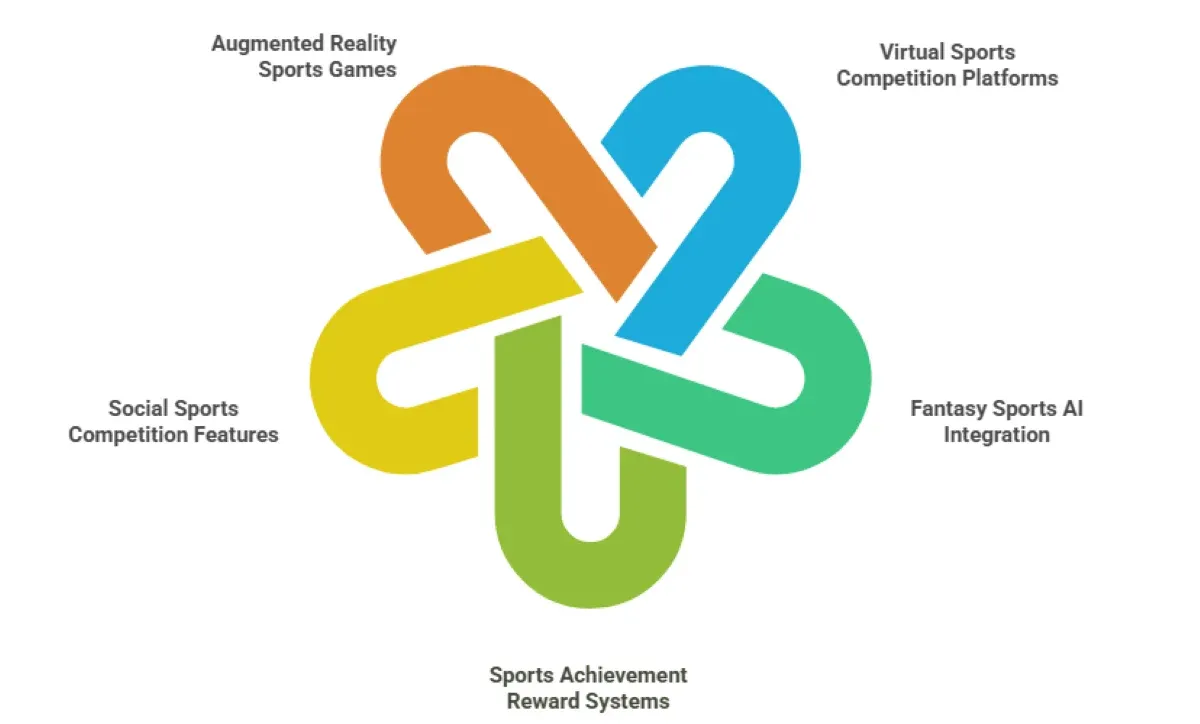
Game-like elements and competitive features transform passive consumption into active participation, increasing engagement duration, frequency, and emotional investment while creating additional monetization opportunities.
Fans’ desire to compete against players in virtual spaces creates opportunities for skill-based games, prediction contests, interactive challenges, and social competitions. Consequently, these drive engagement and create new revenue streams.
AI-powered predictions and recommendations enhance fantasy league experiences through intelligent player analysis, injury risk assessment, performance forecasting, and strategic advice. Additionally, these provide a competitive advantage to users.
Loyalty programs use gamification principles to reward fan engagement, attendance, social sharing, and purchases through points, badges, exclusive access opportunities, and tiered membership benefits. Furthermore, these create long-term fan loyalty.
Leaderboards, group challenges, team-based competitions, and peer comparisons foster community building while encouraging continued participation. Moreover, these promote platform engagement and social sharing among fan networks.
Location-based AR experiences at stadiums and venues create interactive treasure hunts, photo opportunities, immersive brand activations, and memorable experiences. Additionally, these blend physical and digital engagement seamlessly.
Thorough analytics frameworks track AI implementation effectiveness across engagement metrics, revenue generation, operational efficiency, and fan satisfaction to demonstrate return on investment and optimization opportunities.
Improved targeting achieves better results, measured through time spent, interaction rates, content sharing frequency, return visit patterns, and conversion funnel performance. Furthermore, these metrics provide actionable insights for optimization.
Conversion rate improvements, average spend per fan increases, lifetime value growth, merchandise sales optimization, and ticket revenue enhancement demonstrate AI's financial benefits. Additionally, these show measurable outcomes across multiple revenue streams.
AI-generated versus traditional content engagement comparisons reveal optimization opportunities, validate automated content creation strategies, and identify high-performing formats. Moreover, this work crosses platforms and audience segments.
Comprehensive dashboard systems track user journeys, predict churn risk, identify high-value fan segments, measure campaign effectiveness, and provide actionable insights. Therefore, these enable targeted marketing campaigns.
Continuous performance monitoring enables immediate adjustments to campaigns, content delivery systems, user experience elements, and engagement strategies. Additionally, these are based on current patterns and predictive analytics.
Responsible AI implementation requires balancing personalization benefits with privacy protection, transparent data usage practices, and ethical guidelines that maintain fan trust and regulatory compliance.
Fan awareness of data collection practices necessitates clear communication about information usage, storage duration, user control options, and data sharing policies. Furthermore, these build trust and ensure compliance.
Ensuring fair representation across fan demographics requires diverse training data, regular bias testing, inclusive design practices, and continuous monitoring. Additionally, these occur throughout the development and deployment phases.
GDPR, CCPA, and emerging regulations mandate explicit consent mechanisms, data portability options, user rights protection, deletion capabilities, and transparent privacy policies. Moreover, these apply across all AI systems.
Finding the right technology balance without dampening excitement requires careful consideration of data minimization principles, user control preferences, and personalization effectiveness optimization strategies. Therefore, privacy and functionality must coexist.
Transparent privacy policies, user education initiatives, clear benefit communication, opt-out mechanisms, and responsive customer service help build confidence. Additionally, these support AI-powered fan engagement systems.
A media company needed an automated and AI-powered solution to gauge brand visibility during broadcast sports events and tournaments. To build this solution, they partnered with Folio3 AI for a custom logo detection solution that detected brand logos in sports and tournament broadcasts uploaded on their existing platform.
This client provides innovative solutions for digital sports and entertainment, bringing together athletes and content creators from several sports, such as football, fitness, BMX, e-sports, etc.
Project details:
Team composition: 4 members
Expertise used: Computer Vision, Machine Learning, Deep Learning
Duration: 15 weeks
Services provided: AWS infrastructure configuration, system access APIs, AI model pipeline
Country: Germany
Industry: Spectator sports
Keeping track of all the brand logos in a sports event was quite tricky, as many sponsored brands display their logos in different areas of a game. To make sure a specific brand's logo is displayed on the screen during an event and to keep track of a brand logo's visibility, they needed a solution that could detect logos and give insights into information for quick analysis and ROI calculation.
Folio3 AI built a solution for our client that could detect multiple brand logos in images and video clips extracted from various sports events. The model was trained and fine-tuned on the data set provided by our client using computer vision and deep learning techniques.
Customized AI model: The algorithm was fine-tuned and trained on the client data set and customized according to the solution needs to detect various brand logos.
Sponsorship monitoring: By detecting logos at different locations in an event clip, our client was able to monitor and analyze the ROI for the event sponsors, counting how many times a logo was detected and where.
Logo source detection: Locate logos at different locations during the event and provide results accordingly (player jersey, signage, digital graphics, floor, etc.)
Model trained on 200+ brands: The model was trained to detect logos of more than 200 brands from anywhere within an image or a video clip uploaded on the client platform.
With seamless integration onto the client's existing platform, the model automatically detected client logos in images and video clips uploaded on the platform, saving hours of manual work. The model also helped our client calculate the ROI for all event sponsors, providing measurable insights into brand visibility and exposure value.
Transforming sports organizations through cutting-edge artificial intelligence technology, Folio3 delivers comprehensive solutions that revolutionize fan engagement, maximize revenue potential, and create competitive advantages in today's digital-first sports landscape.
We go far beyond basic metrics. Our AI systems help quantify and improve fan engagement ROI with real, actionable data that drives strategic business decisions and long-term growth.
Capture fan interactions across mobile apps, streaming platforms, social media, and in-venue experiences with one unified platform. Additionally, this simplifies complex datasets and provides clear insights.
Whether you're managing international fan bases or activating locally, we deliver granular, territory-specific data and culturally-appropriate AI solutions. Furthermore, these optimize your engagement strategies effectively.

AI enables personalized content delivery, real-time analytics, predictive insights, automated customer service, and dynamic pricing. Therefore, these create more engaging and profitable fan relationships across platforms.
Google AI provides machine learning models, natural language processing, computer vision capabilities, and cloud infrastructure. Additionally, these power recommendation engines and content personalization systems work effectively.
AI delivers short-form content, mobile-first experiences, social media integration, interactive features, and gamification elements. Moreover, these match younger demographic preferences and consumption patterns.
Organizations must comply with GDPR and CCPA regulations, provide transparent data usage policies, implement user control mechanisms, and maintain ethical standards. Furthermore, these ensure responsible data handling practices.
Chatbots provide 24/7 customer service, personalized recommendations, seamless purchasing experiences, proactive engagement, and instant support. Consequently, these increase conversion rates and satisfaction levels.
Key indicators include engagement duration, conversion rates, customer lifetime value, content performance, return on AI investment, and fan satisfaction scores. Additionally, these should be tracked across digital touchpoints.
Cloud-based solutions, Software-as-a-Service platforms, phased implementation approaches, and scalable pricing models enable smaller organizations to access enterprise-level AI capabilities. Furthermore, these are affordable and effective.
AI generates personalized, real-time content at scale with data-driven optimization, while traditional marketing relies on manual creation and broad demographic targeting. Moreover, AI provides limited customization compared to traditional methods.
Second-screen apps provide synchronized experiences with real-time statistics, social interactions, personalized content, interactive polls, and gamification features. Additionally, these complement the main broadcast viewing seamlessly.
Folio3 offers proven sports industry expertise, end-to-end implementation services, Google AI partnership benefits, measurable ROI tracking, and comprehensive support. Furthermore, these cover fan engagement initiatives comprehensively.