
Loading...
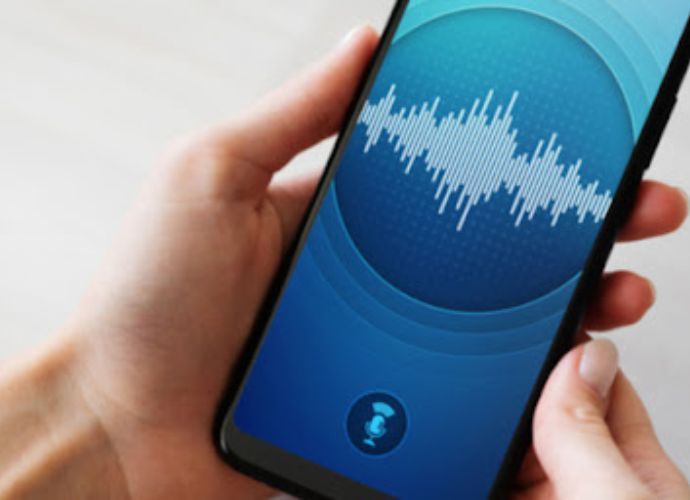
Artificial intelligence-powered speech recognition systems have gradually become an integral part of our daily lives over the past decade, from voice search to virtual assistants in call centers, automobiles, hospitals, and restaurants. Deep learning advances have enabled these gains in speech recognition.
Programmers utilize automatic speech recognition (ASR) and the best free speech-to-text software in various fields to enhance company productivity, application efficiency, and digital accessibility. The top 7 AI features transforming speech recognition are covered in this article, along with other helpful details.
The best free speech-to-text software or Speed Recognition systems are becoming more inexpensive as they improve accuracy. In turn, this broadens their appeal and accessibility. Expect to see cutting-edge ASR technology emerge in new smart TVs, laptops, and vehicles during the transition, further integrating the technology into our daily lives.
Expect to see ASR applications in unexpected areas, like grocery store self-checkout kiosks. Voice interfaces might surpass touch-screen gadgets in popularity soon. The way people interact with the world may alter due to voice interfaces.

You might think of speech recognition or the best free speech-to-text software as a system (or a group of technologies) that accepts human voice as input, converts this unstructured audio into text, and produces some output (which could be a transcription of the text, an analysis, or an automated action). Speech recognition focuses on converting human-generated audio into structured text, as opposed to voice recognition, which aims to match a series of spoken sounds to a known speaker.
The accuracy with which the machine can reproduce what is being said determines how effective speech recognition is. Unfortunately, this is more difficult than it seems because every person has a distinctive inflection, intonation, and speaking style—almost like a fingerprint. Therefore, accurately converting every speaker's audio into text is challenging.
Additionally, because the human vocabulary is so vast, algorithms sometimes struggle to match audio to meaningful words because language is a living, developing thing.
Speech recognition works to get around this problem by providing its main algorithm as many different types of utterances and their translations as it can handle during training. In addition, modern voice recognition is more or less accurate thanks to sophisticated AI algorithms, which have advanced well beyond the 1950s' rudimentary phonetic sound processing capability.
Speaker journaling
It can distinguish between different speakers in audio or video files. To identify speakers and evaluate their behavior to forecast the future, call centers utilize speaker diarization. To make the transcriptions easier to read, a podcast, for instance, might automatically tag each transcription with the names of the speakers.
Feature extraction
The process of extracting different aspects from a speech signal includes power, pitch, and vocal tract configuration. By using a method of differentiation and concatenation, parameter transformation transforms these traits into signal parameters.
Content safety tracking
It recognizes and filters content for potentially dangerous information, including hate speech, violence, drug use, and other sensitive topics. For content moderation, online podcast systems may use content safety detection.
Sentimental evaluation
It takes the sentiments from a speaker's speech fragments to assess feelings. The emotions displayed during customer-agent interactions in the telecom sector serve as one example. This analytical data can be used by a business to improve call center customer service, staff training, and targeted marketing messaging.
Summarization
Summarization creates a summary for each logical " chapter" into which audio or video transcripts are divided. Virtual meeting platforms use overviews to provide insightful summaries following each meeting automatically. In addition, call centers can use summarization to help with conversation reviews.
For example, an AI PDF summarizer can be useful to shorten reviews and transcripts for better readability."
Removal of personal information
Redacted personally identifiable information (PII), such as social security numbers, credit card numbers, and addresses, are identified as personal information. To comply with security and privacy rules, communications and telecom platforms use PII redaction.
Entity detection
It recognizes and organizes the entities in a text. For instance, an entity like an engineer may be categorized as a profession, whereas an arm or a foot could be classified as a bodily part. Medical professionals can utilize entity identification to recognize diseases and treatments, enabling the automatic organization of patient data and the conduct of statistical analysis. In addition, voice bots may identify individuals or businesses via entity detection, automatically initiating steps to personalize conversations.
Due to improvements in deep learning-based algorithms, automatic speech recognition (ASR) and the best free speech-to-text software have become as accurate as human recognition, further enhancing the popularity of speech recognition. Additionally, innovations like multilingual ASR enable businesses to make their apps accessible to users worldwide. Bringing algorithms from the cloud to the device saves money, protects privacy, and expedites inference. As a result of their improved accuracy, usability, and analytical strength, ASR products are now being incorporated into IT architecture on a much deeper level. Additionally, ASR is reasonably accessible to people who want to integrate it into their business and IT systems because to open source frameworks like DeepSpeech.
What are the key AI features used in modern speech recognition?AI features like NLP, deep learning, and voice biometrics enhance accuracy, context awareness, and speaker identification in speech systems.
How does deep learning improve speech recognition accuracy?Deep learning models analyze complex voice patterns and adapt to accents, noise, and language variations for more accurate results.
What role does NLP play in speech recognition technology?Natural Language Processing (NLP) helps speech systems understand context, intent, and semantics in spoken language.
Is AI-based speech recognition effective in noisy environments?Yes, AI-powered tools use noise filtering, acoustic modeling, and adaptive algorithms to maintain high accuracy in noisy settings.
How is voice biometrics used in AI speech recognition?Voice biometrics authenticates users by analyzing unique vocal traits, adding a layer of security and personalization.