
Loading...

How many times have you watched fuel costs eat into your profits while vehicles sit in traffic or break down unexpectedly? According to Statista, the artificial intelligence market size reached 200 billion U.S. dollars in 2023 and is anticipated to exceed 1.8 trillion U.S. dollars by 2030.
AI for Fleet Management is helping businesses solve these everyday challenges by turning vehicle data into smart decisions. Instead of reacting to problems after they happen, fleet managers can now predict maintenance needs, optimize routes in real-time, and monitor driver behavior to prevent accidents.
This practical approach to AI in transportation and fleet operations delivers measurable improvements in efficiency, tracking capabilities, and fuel savings that directly impact your bottom line.
AI for Fleet Management integrates artificial intelligence technologies into transportation operations, converting vehicle data streams into actionable insights that help fleet managers make better decisions faster. This sophisticated system processes thousands of data points simultaneously, including engine diagnostics, GPS coordinates, fuel consumption rates, and driver behavior patterns.
For example, when a delivery truck's engine temperature rises beyond normal parameters, AI algorithms instantly analyze this data alongside maintenance history and current route conditions to determine if immediate action is needed or if the vehicle can safely complete its route.
This real-time intelligence enables fleet managers to prevent costly breakdowns, optimize fuel efficiency, and maintain safety standards across their entire operation while reducing manual monitoring efforts.
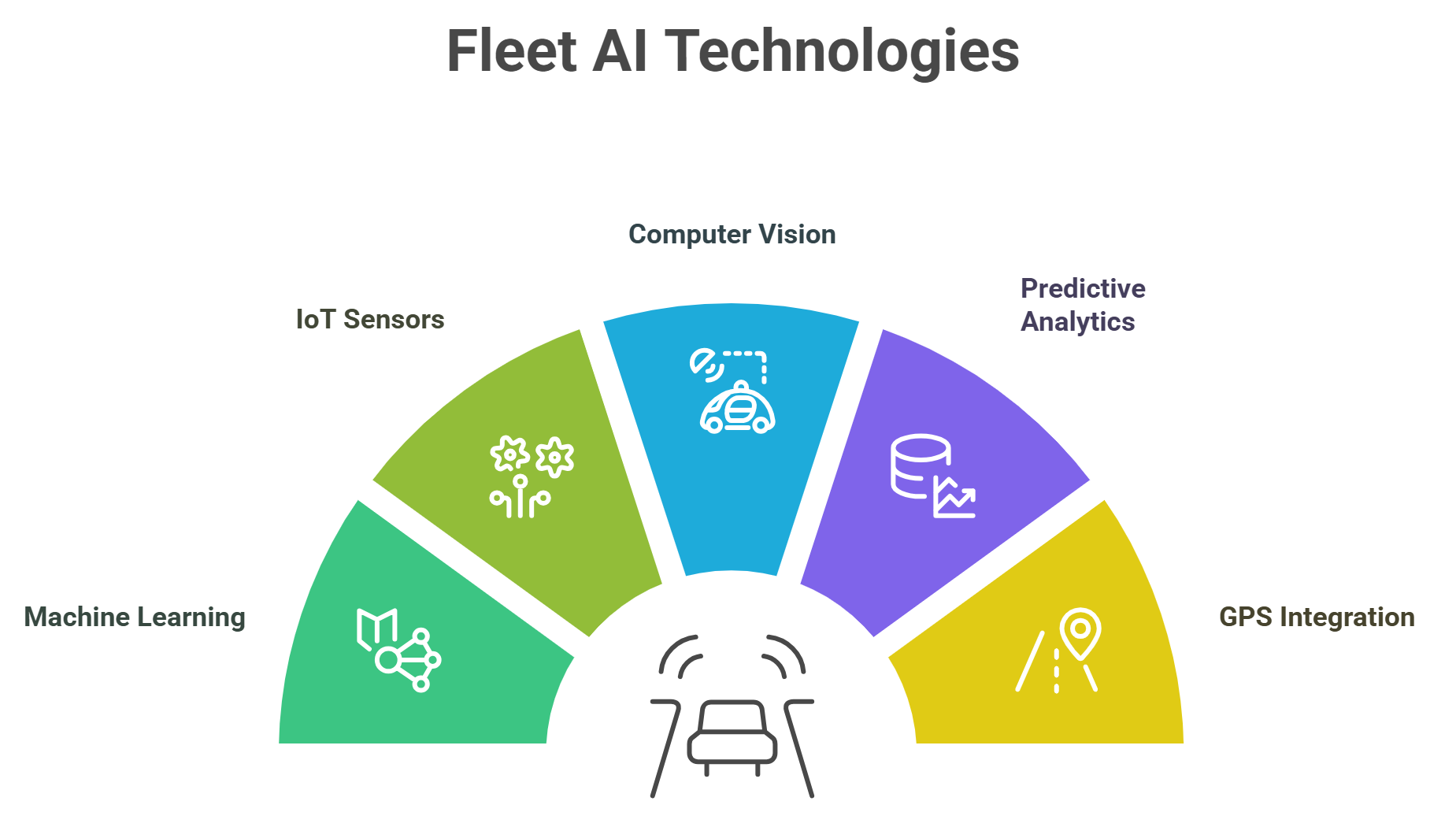
Core technologies powering modern fleet AI include:
Machine Learning Algorithms - Analyze driving patterns and vehicle performance to predict optimal maintenance timing
Internet of Things (IoT) Sensors - Collect real-time data on engine health, fuel usage, and driver behavior
Computer Vision Systems - Monitor driver safety and detect potential hazards through dashboard cameras
Predictive Analytics Platforms - Forecast maintenance needs and operational challenges before they occur
GPS Integration - Enhanced location tracking with intelligent route optimization capabilities
Real-world AI applications helping fleet operations:
Modern AI systems are already solving practical problems for fleet managers across various industries by automating routine tasks and providing insights that improve daily operations.
Smart Route Planning - AI analyzes traffic conditions and weather patterns to find the fastest delivery paths
Predictive Maintenance Alerts - Systems warn managers about potential engine problems weeks before breakdowns occur
Driver Safety Monitoring - Technology detects fatigue and distracted driving, providing immediate feedback for improvement
Automated Fuel Tracking - AI identifies unusual consumption patterns that might indicate theft or mechanical issues
Real-time Fleet Visibility - Dashboard systems provide instant updates on vehicle locations and driver performance
AI helps fleet operations run smoother by automating routine decisions and providing insights that human managers might miss in daily operations.
Advanced algorithms process traffic data, delivery schedules, and vehicle capacity to create the most efficient daily routes
Systems automatically adjust routes when traffic jams or weather delays occur, keeping deliveries on schedule
Real-time optimization reduces unnecessary mileage and ensures drivers spend more time delivering rather than driving
Fleet management machine learning considers driver availability, vehicle maintenance windows, and customer priorities when assigning jobs
AI automatically reassigns tasks to nearby vehicles when delays happen, maintaining service quality
Intelligent scheduling balances workloads across drivers while meeting delivery commitments
Predictive systems analyze engine data, brake performance, and transmission health to schedule maintenance before failures occur
Early warning alerts help fleet managers plan maintenance during slow periods rather than emergency situations
Proactive maintenance scheduling extends vehicle life and reduces unexpected repair costs
Modern tracking systems powered by AI provide fleet managers with actionable insights about vehicle locations, driver performance, and operational efficiency.
AI interprets location data to identify route deviations, unauthorized vehicle use, and optimal future planning opportunities
Smart geofencing automatically alerts managers when vehicles enter customer locations or restricted areas
Historical pattern analysis helps optimize territory assignments and identify security concerns
AI systems track acceleration, braking, and turning patterns to create personalized safety profiles for each driver
Computer vision technology detects phone use, fatigue, and safety belt violations during driving
Personalized coaching recommendations help drivers improve their safety scores and reduce accident risk
Automated alerts trigger when vehicles enter job sites, customer locations, or maintenance facilities
Remote monitoring tracks engine performance, fuel system health, and emission levels continuously
Early problem detection prevents minor issues from becoming expensive repairs
AI dashboards show fuel efficiency, driver productivity, and vehicle utilization rates as they happen
Analytics identify trends that suggest opportunities for cost savings or operational improvements
Customized reports provide relevant insights for dispatchers, managers, and executives
Machine learning analyzes vehicle usage and maintenance history to recommend optimal replacement timing
AI helps determine when to retire vehicles based on repair costs versus replacement benefits
Strategic asset planning maximizes return on vehicle investments while maintaining service quality
Comparison FactorsNormal Fleet SolutionFolio3 Custom Fleet SolutionImplementation ApproachStandardized off-the-shelf platforms with fixed features and workflows. Businesses must adapt their processes to fit the software.Bespoke software solutions tailored to specific operational goals and requirements. Seamlessly integrates with existing systems without workflow disruption.Technology & AI CapabilitiesBasic tracking and reporting features with limited AI integration. Generic analytics and standard automation options.Generic solutions are designed for broad market appeal. Limited customization for specific industry needs and regulations.Industry SpecializationGeneric solutions designed for broad market appeal. Limited customization for specific industry needs and regulations.Industry-specific solutions for logistics, construction, e-commerce, food distribution, public sector, ride-sharing, and utilities with specialized compliance features.Support & ExpertiseStandard customer support with limited customization options. Vendor-dependent update schedules and generic troubleshooting approaches.Decades of AI-driven software development expertise with end-to-end support. Complete lifecycle management from development to ongoing enhancements.Scalability & GrowthFixed platform limitations that may require expensive upgrades or migrations. Rigid systems that struggle with business growth.Cutting-edge AI technologies, including machine learning, predictive analytics, computer vision, and natural language processing, for future-ready solutions.
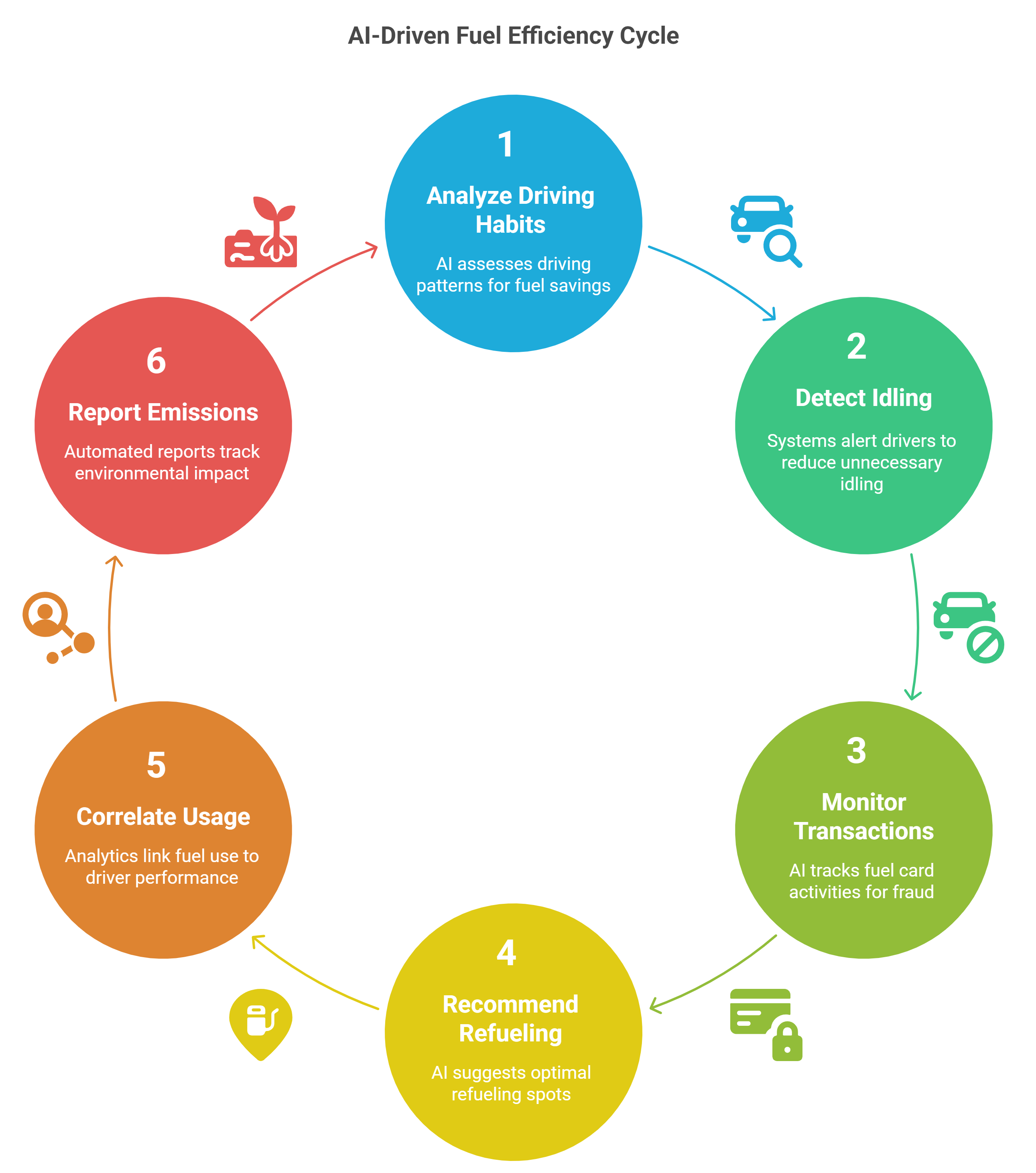
AI-powered fuel management helps fleet operators reduce costs through smarter consumption monitoring, fraud detection, and operational optimization.
AI analyzes driving habits and route efficiency to identify specific opportunities for fuel savings
Smart systems detect unnecessary engine idling and alert drivers to shut off vehicles during stops
Machine learning monitors fuel card transactions to spot unusual activities and prevent fraud
Automated alerts flag purchases that exceed tank capacity or occur at suspicious locations
AI recommends optimal refueling locations based on current prices and route requirements
Analytics correlate fuel usage with driver performance for better decision-making
Automated environmental reporting helps companies track emissions and meet sustainability goals
Aiden, a pioneering vehicle data collection company, partnered with Folio3 to overcome machine learning deployment challenges and create a seamless custom fleet management platform for enhanced consumer insights.
Folio3's experienced MLOps team streamlined Aiden's machine learning workflows, enabling automated data processing from vehicle sensors while reducing deployment time and eliminating system integration errors.
Our team designed tailored fleet management solutions that transformed raw vehicle sensor data into actionable consumer insights, perfectly aligning with Aiden's unique business requirements and operational needs.
Folio3 implemented sophisticated algorithms for real-time vehicle detection and fleet tracking, combining computer vision technology with predictive analytics to enhance Aiden's data collection capabilities significantly.
Faster Deployment: Reduced machine learning model deployment time through optimized MLOps processes
Enhanced Accuracy: Improved vehicle detection and data collection precision
Operational Efficiency: Streamlined fleet management operations with custom-built solutions
Selecting an effective AI fleet management platform requires evaluating practical features that align with your operational needs and growth plans.
Look for solutions that connect easily with your existing dispatch, accounting, and maintenance systems
Ensure the platform supports data exchange with current telematics and GPS tracking equipment
Choose systems offering flexible APIs that accommodate future technology additions
Select platforms designed to grow with your fleet size without performance issues
Evaluate cloud-based solutions that automatically adjust resources based on your needs
Consider systems that maintain response times as data volumes and user counts increase
Prioritize intuitive interfaces that require minimal training for drivers and dispatchers
Look for mobile applications that provide field teams with easy access to critical information
Choose platforms with customizable dashboards that match different user roles and responsibilities
Evaluate vendor support including technical assistance, training, and system updates
Look for providers offering comprehensive documentation and responsive customer service
Ensure regular software updates and security patches are included in service agreements
Fleet operators face a critical decision when selecting AI systems: implementing proven commercial platforms with established features or investing in custom-developed solutions tailored to unique operational needs.
Commercial solutions offer proven functionality with faster implementation timelines
Standard platforms benefit from continuous improvements based on industry feedback
Lower upfront costs and established support infrastructure reduce implementation risks
Custom development provides perfect alignment with unique operational requirements
Tailored solutions accommodate specialized equipment or distinctive business processes
Custom platforms require higher investment and ongoing technical maintenance
Many organizations combine commercial platforms with custom modules for specific needs
This approach balances cost-effectiveness with customization requirements
Hybrid solutions enable rapid deployment while addressing unique operational challenges
AI revolutionizes fleet operations by transforming raw vehicle data into actionable insights, enabling smarter decisions that reduce costs, improve safety, and maximize operational efficiency across all transportation activities.
AI analyzes engine performance, brake health, and transmission data to predict failures weeks in advance, allowing proactive maintenance scheduling during slow periods rather than costly emergency repairs.
Advanced algorithms process real-time traffic, weather, and delivery data to create optimal routes, automatically adjusting for delays while reducing unnecessary mileage and fuel consumption significantly.
Computer vision systems detect fatigue, phone use, and unsafe driving patterns, providing personalized coaching recommendations that improve safety scores and reduce accident risks across fleet operations.
AI-powered dashboards provide instant updates on vehicle locations, driver performance, and operational metrics, enabling managers to make informed decisions and respond quickly to changing conditions.
Machine learning monitors fuel card transactions, detects unusual consumption patterns, and identifies potential theft or fraud, while optimizing refueling locations based on current prices and routes.
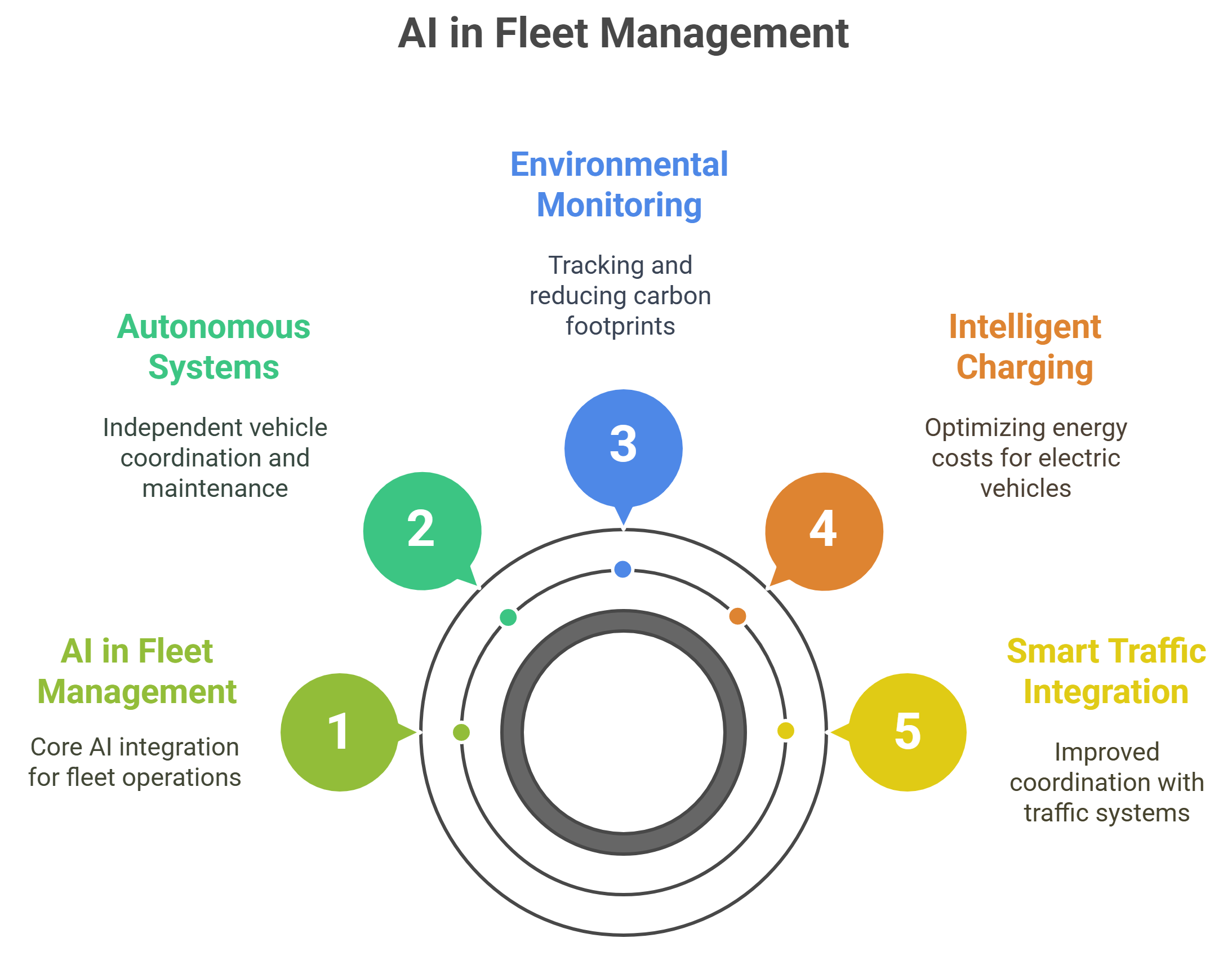
AI continues to evolve, bringing new capabilities that will enhance fleet operations through autonomous systems, environmental monitoring, and integrated transportation networks.
Future AI Developments in Fleet Management:
AI systems will independently coordinate vehicle deployment and maintenance scheduling without human intervention
Smart emissions tracking will help fleets reduce carbon footprints through optimized operations
Intelligent charging algorithms will optimize energy costs for electric vehicle fleets
AI-powered fleets will integrate with smart traffic systems for improved coordination
Advanced algorithms will continuously learn from operational decisions to improve future performance
Folio3 specializes in developing custom AI solutions that address specific fleet management challenges, helping companies optimize operations, reduce costs, and improve safety through intelligent automation and predictive analytics.
Custom AI Development - Folio3 builds tailored fleet management systems that integrate seamlessly with existing operations and workflows for maximum efficiency
Predictive Maintenance Solutions - Advanced algorithms forecast vehicle maintenance needs weeks in advance, preventing costly breakdowns and minimizing unexpected downtime across fleets
Real-time Route Optimization - AI-powered systems continuously analyze traffic patterns and operational data to optimize routes and reduce fuel consumption significantly
Driver Safety Enhancement - Computer vision and behavioral analytics monitor driver performance, detect risky behaviors, and provide coaching to improve safety scores
Cost Reduction Analytics - Intelligent fuel monitoring, fraud detection, and operational optimization deliver measurable savings on fleet expenses and operational costs
AI for Fleet Management integrates artificial intelligence technologies like machine learning, IoT sensors, and computer vision into transportation operations. It converts vehicle data streams into actionable insights, helping fleet managers predict maintenance needs, optimize routes in real-time, and monitor driver behavior to make smarter operational decisions.
AI reduces fuel costs by analyzing driving habits and route efficiency to identify savings opportunities, detecting unnecessary engine idling, monitoring fuel card transactions for fraud prevention, and recommending optimal refueling locations based on current prices. These intelligent systems can deliver measurable savings on operational expenses.
The choice depends on your specific needs and budget. Off-the-shelf solutions offer proven functionality with faster implementation and lower upfront costs, while custom development provides perfect alignment with unique operational requirements. Many organizations choose a hybrid approach, combining commercial platforms with custom modules for specific needs.
Predictive maintenance analyzes engine data, brake performance, and transmission health to schedule maintenance before failures occur. This approach prevents costly breakdowns, extends vehicle life, reduces unexpected repair costs, and helps fleet managers plan maintenance during slow periods rather than emergency situations.
Folio3 specializes in developing custom AI solutions tailored to specific fleet management challenges. Their approach includes building systems that integrate seamlessly with existing operations, providing predictive maintenance solutions, real-time route optimization, driver safety enhancement through computer vision, and cost reduction analytics for measurable operational savings.
{ "@context": "https://schema.org", "@type": "FAQPage", "mainEntity": [{ "@type": "Question", "name": "1. What is AI for Fleet Management and how does it work?", "acceptedAnswer": { "@type": "Answer", "text": "AI for Fleet Management integrates artificial intelligence technologies like machine learning, IoT sensors, and computer vision into transportation operations. It converts vehicle data streams into actionable insights, helping fleet managers predict maintenance needs, optimize routes in real-time, and monitor driver behavior to make smarter operational decisions." } },{ "@type": "Question", "name": "2. How can AI help reduce fuel costs and improve efficiency in fleet operations?", "acceptedAnswer": { "@type": "Answer", "text": "AI reduces fuel costs by analyzing driving habits and route efficiency to identify savings opportunities, detecting unnecessary engine idling, monitoring fuel card transactions for fraud prevention, and recommending optimal refueling locations based on current prices. These intelligent systems can deliver measurable savings on operational expenses." } },{ "@type": "Question", "name": "3. Should I choose an off-the-shelf AI fleet solution or invest in custom development?", "acceptedAnswer": { "@type": "Answer", "text": "The choice depends on your specific needs and budget. Off-the-shelf solutions offer proven functionality with faster implementation and lower upfront costs, while custom development provides perfect alignment with unique operational requirements. Many organizations choose a hybrid approach, combining commercial platforms with custom modules for specific needs." } },{ "@type": "Question", "name": "4. What are the key benefits of predictive maintenance in AI fleet management?", "acceptedAnswer": { "@type": "Answer", "text": "Predictive maintenance analyzes engine data, brake performance, and transmission health to schedule maintenance before failures occur. This approach prevents costly breakdowns, extends vehicle life, reduces unexpected repair costs, and helps fleet managers plan maintenance during slow periods rather than emergency situations." } },{ "@type": "Question", "name": "5. How does Folio3's AI approach differ from other fleet management solutions?", "acceptedAnswer": { "@type": "Answer", "text": "Folio3 specializes in developing custom AI solutions tailored to specific fleet management challenges. Their approach includes building systems that integrate seamlessly with existing operations, providing predictive maintenance solutions, real-time route optimization, driver safety enhancement through computer vision, and cost reduction analytics for measurable operational savings." } }] }
How AI is Used in Transportation: Benefits and Applications
Top 5 Transportation Industry Trends for 2025
How AI is Revolutionizing Public Transport Systems