
Loading...
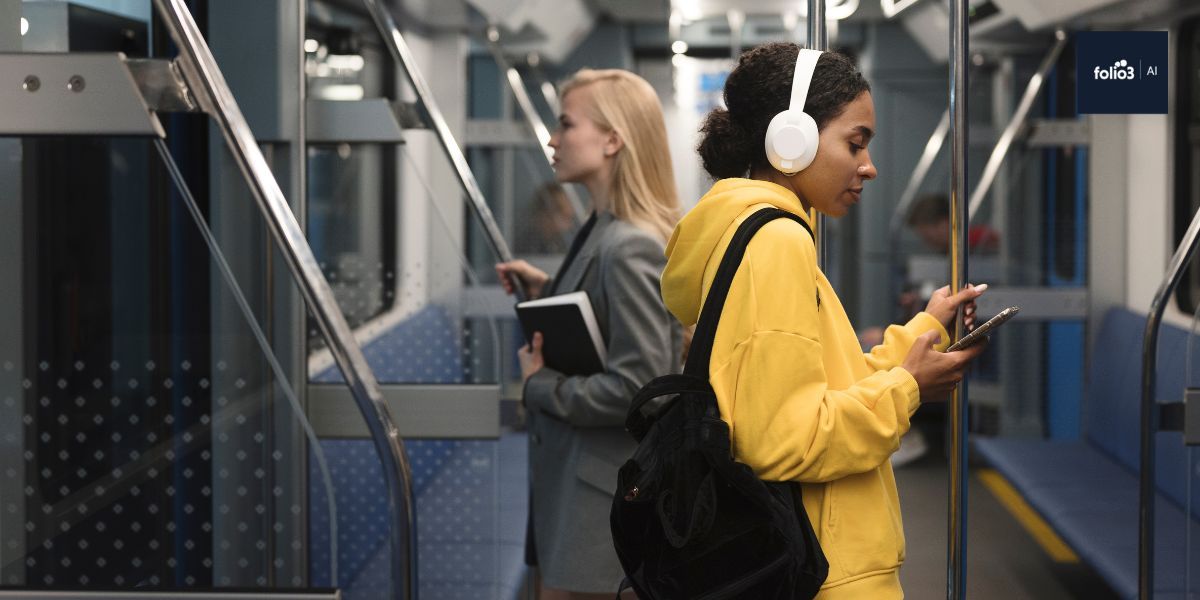
Urban traffic chaos is everywhere. Cities are drowning in gridlock while outdated public transportation systems struggle to handle millions of daily passengers. Buses run late, trains break down, and frustrated commuters are left waiting on overcrowded platforms.
Artificial intelligence is changing everything. AI in public transport is emerging as a game-changing force that transforms how buses, trains, and transit systems operate. This smart technology can predict problems before they happen, automatically adjust routes based on real-time conditions, and make split-second decisions that keep passengers moving efficiently.
In this guide, we'll explore how AI transforms every aspect of public transportation - from predicting when buses will arrive to preventing breakdowns before they occur.
AI in public transport harnesses machine learning algorithms, data analytics, and automated decision-making to optimize transit operations and enhance passenger experiences.
Modern AI systems in transportation encompass several core technologies:
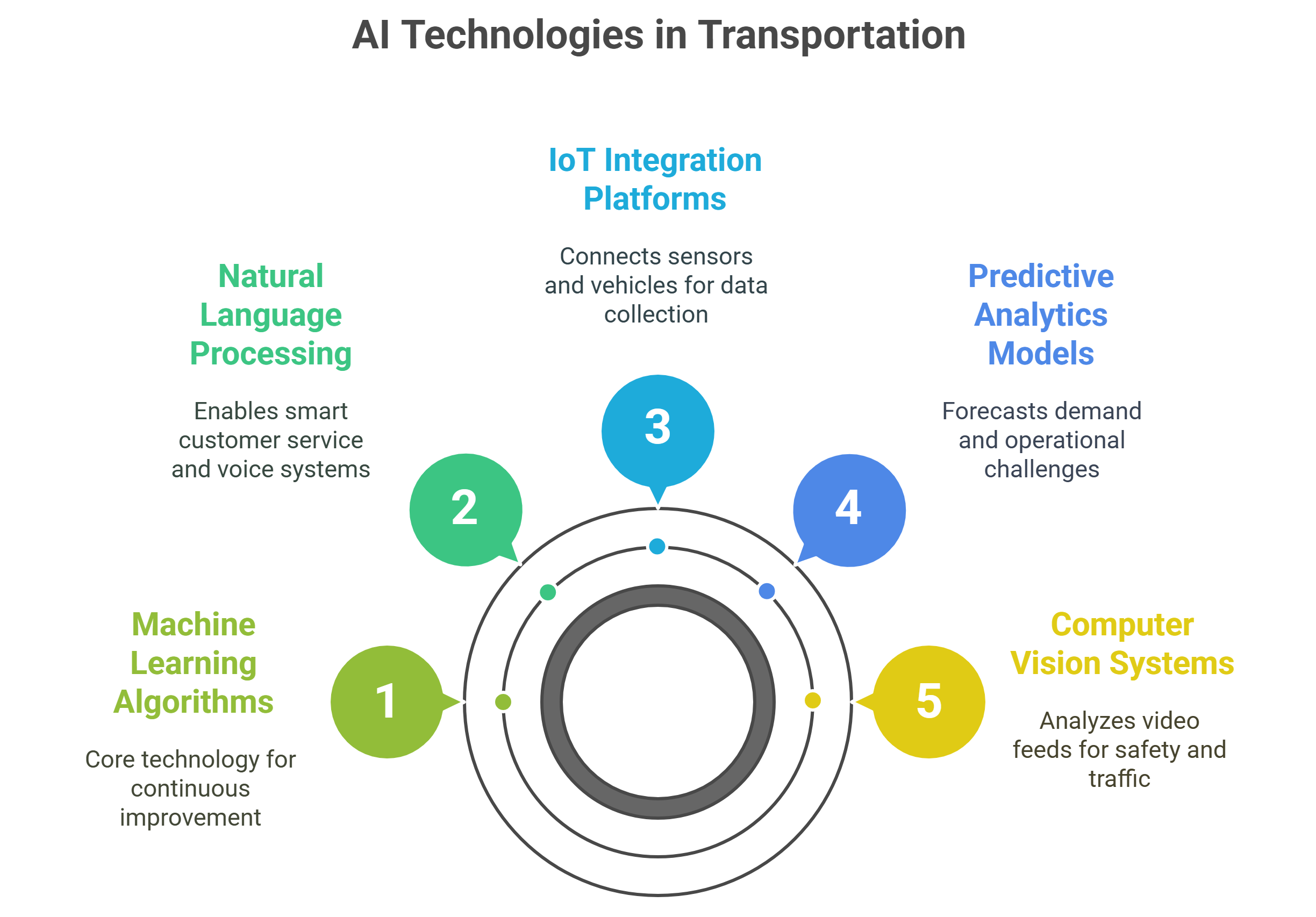
Machine Learning Algorithms – Continuously improve routing, scheduling, and resource allocation based on operational data
Natural Language Processing – Enable smart customer service chatbots and voice-activated information systems
IoT Integration Platforms – Connect sensors, vehicles, and infrastructure for seamless data collection and real-time responses
Predictive Analytics Models – Process historical and real-time data to forecast demand, maintenance needs, and operational challenges
Computer Vision Systems – Analyze video feeds for passenger counting, safety monitoring, and traffic pattern recognition
Cities worldwide are already implementing these technologies with remarkable results:
Singapore's Smart Nation Initiative - Uses AI-powered traffic management to reduce congestion by 30% during peak hours
London's Intelligent Transport System - Employs predictive analytics to optimize bus frequencies, improving on-time performance by 18%
San Francisco's SFMTA - Leverages machine learning for dynamic route adjustments, reducing passenger wait times by 20%
Helsinki's MaaS Platform - Integrates AI across multiple transport modes for seamless multimodal journey planning
Amsterdam's Smart Traffic Lights - Utilize computer vision to prioritize public transit, cutting bus travel times by 15%
AI applications are transforming public transit operations, from behind-the-scenes optimization to direct passenger-facing improvements that enhance daily commuting experiences.
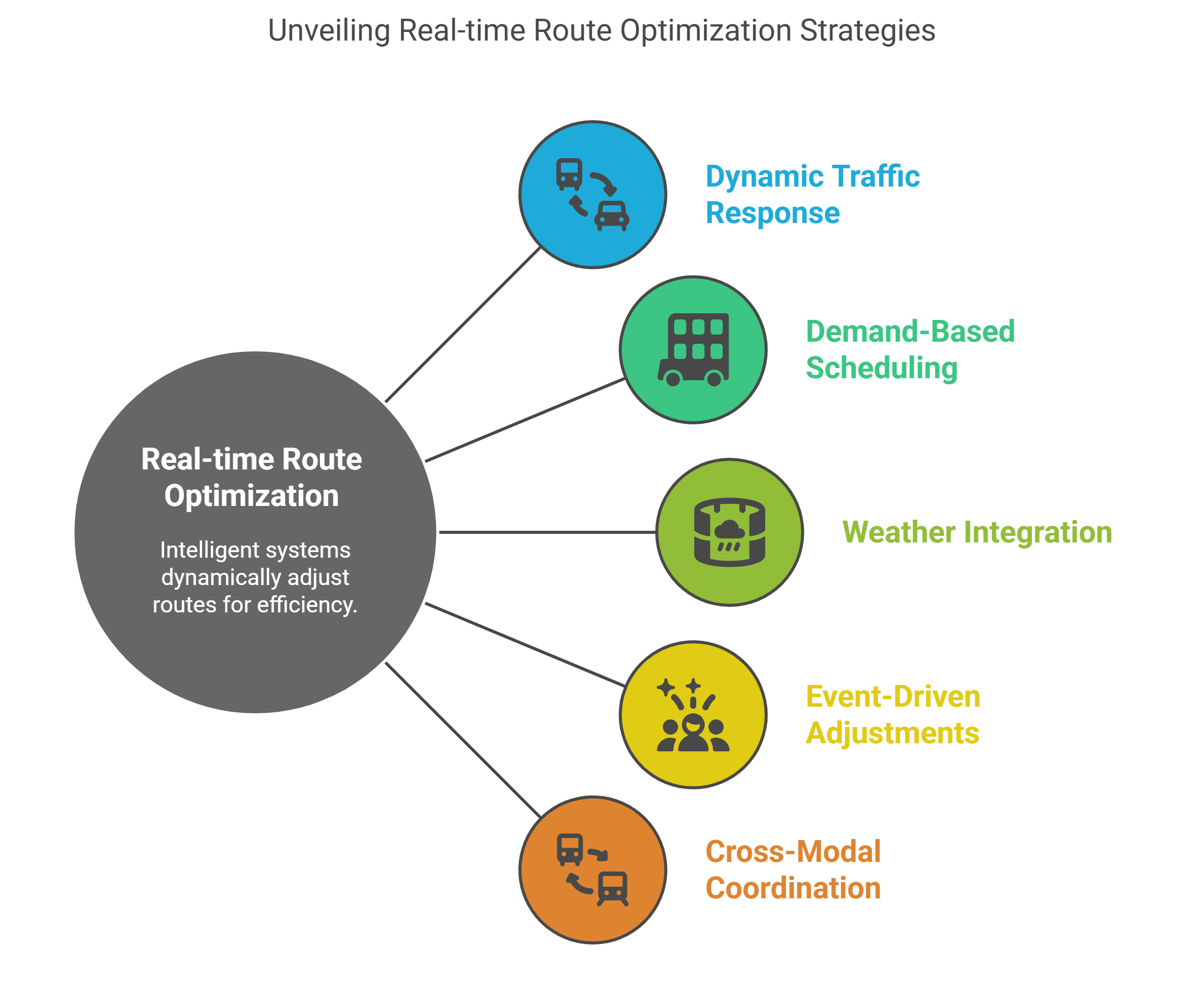
Intelligent routing systems analyze traffic patterns, passenger demand, and external factors to dynamically adjust transit routes and schedules for maximum efficiency.
Dynamic Traffic Response - AI algorithms process real-time traffic data from GPS, sensors, and mobile devices to automatically reroute buses around congestion
Demand-Based Scheduling - Machine learning models predict passenger volumes and adjust service frequency accordingly, reducing overcrowding during peak times
Weather Integration - Systems factor in weather conditions, automatically adding extra vehicles during storms or adjusting routes for safer travel
Event-Driven Adjustments - AI detects special events, concerts, or emergencies and preemptively modifies schedules to handle increased ridership
Cross-Modal Coordination - Algorithms synchronize buses, trains, and other transit modes to minimize transfer waiting times and improve connectivity
Advanced sensor networks combined with machine learning algorithms monitor vehicle health continuously, predicting failures before they occur and scheduling maintenance proactively.
Sensor Data Analysis - IoT devices track engine performance, brake wear, and component temperatures, feeding data to AI models that identify deterioration patterns
Failure Prediction Models - Machine learning algorithms analyze historical maintenance records to predict component failures weeks in advance
Cost Optimization - Systems balance maintenance costs with service disruption, scheduling repairs during off-peak hours to minimize passenger impact
Safety Enhancement - Predictive models identify potential safety issues before they become critical, ensuring vehicle reliability and passenger protection
Fleet Longevity - Proactive maintenance extends vehicle lifespans by 20-30%, reducing capital expenditure and environmental impact through extended asset utilization
AI-powered payment systems streamline fare collection while detecting fraud and optimizing pricing strategies based on usage patterns and demand fluctuations.
Contactless Payment Integration - Computer vision and NFC technology enable seamless boarding through facial recognition, mobile apps, and tap-to-pay systems
Dynamic Pricing Models - AI algorithms adjust fare prices based on demand, time of day, and route popularity to optimize revenue and passenger distribution
Fraud Detection Systems - Machine learning identifies suspicious payment patterns, duplicate cards, and fare evasion attempts in real-time
Passenger Flow Analysis - Smart turnstiles and cameras track boarding patterns to optimize station layouts and reduce bottlenecks
Revenue Optimization - Predictive models analyze ridership trends to recommend pricing strategies that maximize both revenue and accessibility
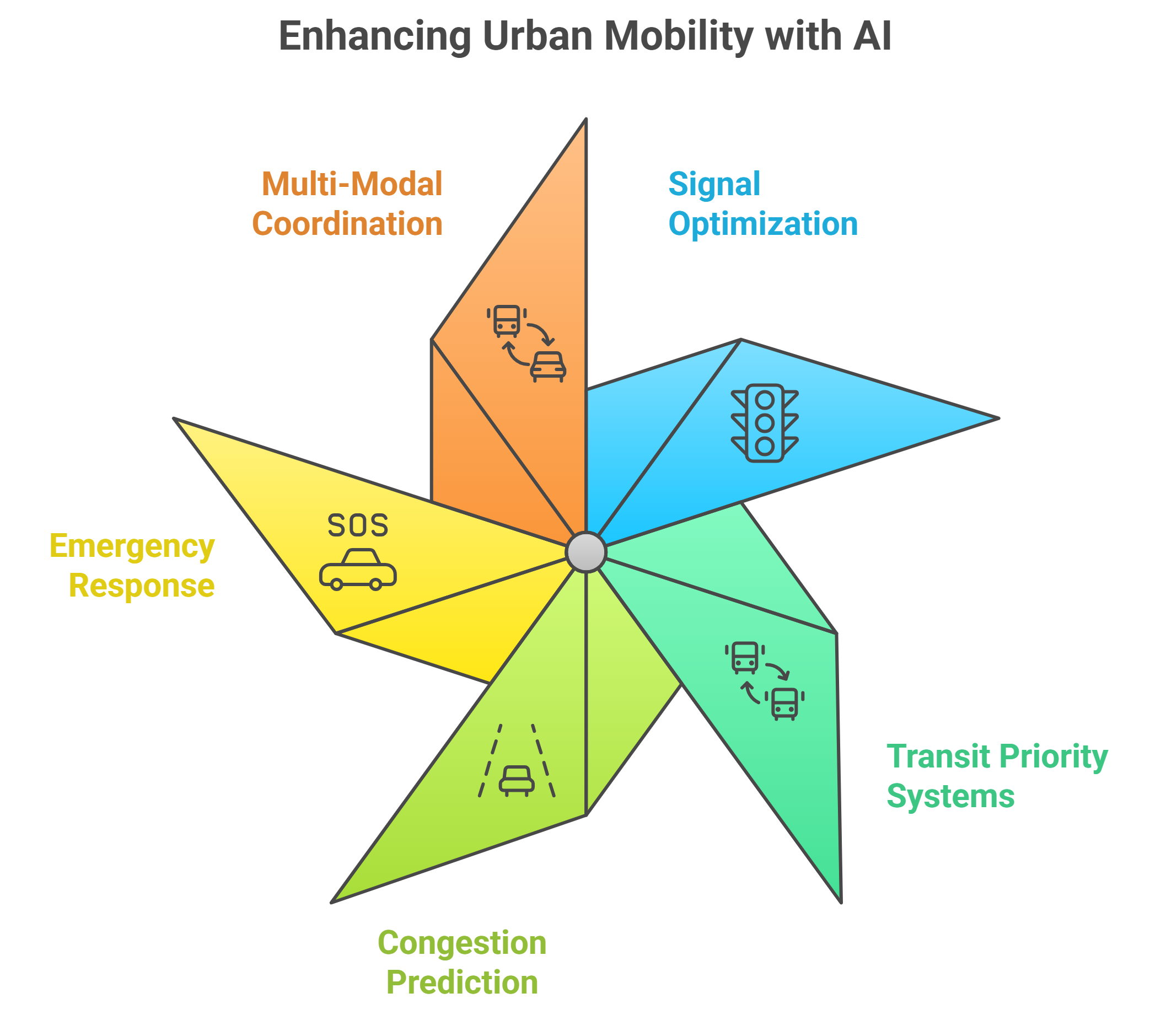
Intelligent traffic management systems coordinate signals, manage congestion, and prioritize public transit to create smoother urban mobility ecosystems.
Signal Optimization - AI-powered traffic lights adapt timing based on real-time vehicle and pedestrian flow, reducing bus delays by up to 35%
Transit Priority Systems - Smart signals detect approaching buses and trains, automatically extending green lights or shortening red phases
Congestion Prediction - Machine learning models forecast traffic buildups and proactively adjust signal timing to prevent gridlock formation
Emergency Response - Systems automatically clear traffic corridors for emergency vehicles while minimizing disruption to public transit schedules
Multi-Modal Coordination - AI balances traffic flow across cars, buses, bikes, and pedestrians to optimize overall urban mobility efficiency
Advanced analytics predict ridership patterns, enabling transit agencies to allocate resources efficiently and improve service quality based on anticipated demand.
Ridership Prediction Models - AI analyzes historical data, weather, events, and seasonal patterns to forecast passenger volumes with 90% accuracy
Resource Allocation - Predictive insights enable optimal fleet deployment, reducing empty buses while ensuring adequate capacity during peak periods
Service Planning - Long-term demand forecasts inform route expansion decisions, helping agencies invest in areas with growing transportation needs
Capacity Management - Real-time passenger counting and prediction prevent overcrowding by automatically dispatching additional vehicles when needed
Customer Journey Optimization - AI tracks entire passenger journeys across multiple transport modes to identify improvement opportunities and reduce total travel time
AI-powered video analytics and anomaly detection systems enhance public safety while protecting passenger privacy through advanced monitoring capabilities.
Behavioral Anomaly Detection - Computer vision identifies unusual activities, aggressive behavior, or potential security threats in real-time
Crowd Management - AI monitors passenger density on platforms and vehicles, alerting operators to dangerous overcrowding situations
Incident Response - Automated systems detect accidents, medical emergencies, or equipment failures and immediately notify appropriate response teams
Predictive Safety Analytics - Machine learning identifies high-risk locations and times, enabling proactive security deployment and safety improvements
Privacy-Preserving Monitoring - Advanced algorithms ensure safety monitoring while protecting individual privacy through anonymization and data protection protocols
AI implementation delivers transformative benefits that address core challenges facing modern public transportation systems while creating sustainable, efficient, and passenger-centric mobility solutions.
The integration of artificial intelligence into public transit generates measurable improvements across operational efficiency, cost management, environmental impact, and safety standards:
Better Passenger Experience - AI provides accurate, real-time arrival information so passengers know exactly when their bus or train will arrive. Smart systems also detect crowding and suggest alternative routes, while mobile apps powered by AI help passengers plan the fastest journeys across different transport options
Lower Operating Costs - Smart route planning reduces fuel waste by finding the most efficient paths and avoiding traffic jams. AI also helps schedule drivers and vehicles more effectively, reducing overtime costs and making sure resources are used where they're needed most
Environmental Benefits - Intelligent traffic management keeps buses moving smoothly instead of sitting in traffic, which cuts down on pollution. AI also helps electric buses optimize their battery usage and find the best times to charge vehicles when electricity is cleanest and cheapest
Improved Safety - AI cameras can spot potential safety issues like overcrowding on platforms or unusual behavior that might indicate problems. Predictive systems also catch mechanical issues before vehicles break down, preventing accidents and keeping passengers safe
Smarter Planning - Transit agencies can use AI to understand passenger patterns and identify where new routes are needed or where service should be increased. This data-driven approach helps agencies make better decisions about how to spend their budgets and improve service
While AI offers tremendous potential, the implementation of AI in public transport faces challenges that require careful consideration and strategic planning to ensure equitable, secure outcomes.
Successful AI adoption in public transit must address complex technological, social, and regulatory challenges that impact both operators and passengers:
Data Privacy Concerns - Extensive passenger monitoring raises questions about surveillance, data collection, and individual privacy rights, requiring robust anonymization protocols and transparent data governance policies
Algorithmic Bias Issues - AI systems can perpetuate existing inequalities in transit service, potentially disadvantaging low-income communities or minority groups if training data reflects historical biases in route planning and service allocation
Infrastructure Investment Costs - AI implementation requires substantial upfront investment in sensors, computing infrastructure, and staff training, with total costs ranging from $5-15 million for comprehensive city-wide deployment
Regulatory Compliance Complexity - Transit agencies must navigate evolving data protection laws like GDPR, accessibility requirements under ADA, and emerging AI governance frameworks while maintaining operational efficiency
Technology Integration Challenges - Legacy transit systems often lack compatibility with modern AI platforms, requiring extensive retrofitting and potentially disrupting existing operations during transition periods
Folio3 transforms public transportation through specialized AI solutions that address the unique needs of government agencies and modern mobility services, delivering measurable improvements in operational efficiency and passenger satisfaction.
Our expertise focuses on two critical areas of AI in public transport technology:
Public Sector and Government Fleet Solutions - Folio3 enhances the efficiency of public transportation, emergency response vehicles, and municipal fleets through AI-powered predictive maintenance and analytics. Our solutions ensure compliance with government regulations, reduce operational costs, and improve service delivery for transit authorities, police departments, fire services, and municipal transportation networks
Ride-sharing and Mobility Services - We improve rider and driver experiences through smart dispatching systems, geo-fencing technology, and real-time location data integration. Folio3's AI tools maximize vehicle utilization, reduce passenger downtime, and ensure seamless service delivery across on-demand transportation platforms and shared mobility networks
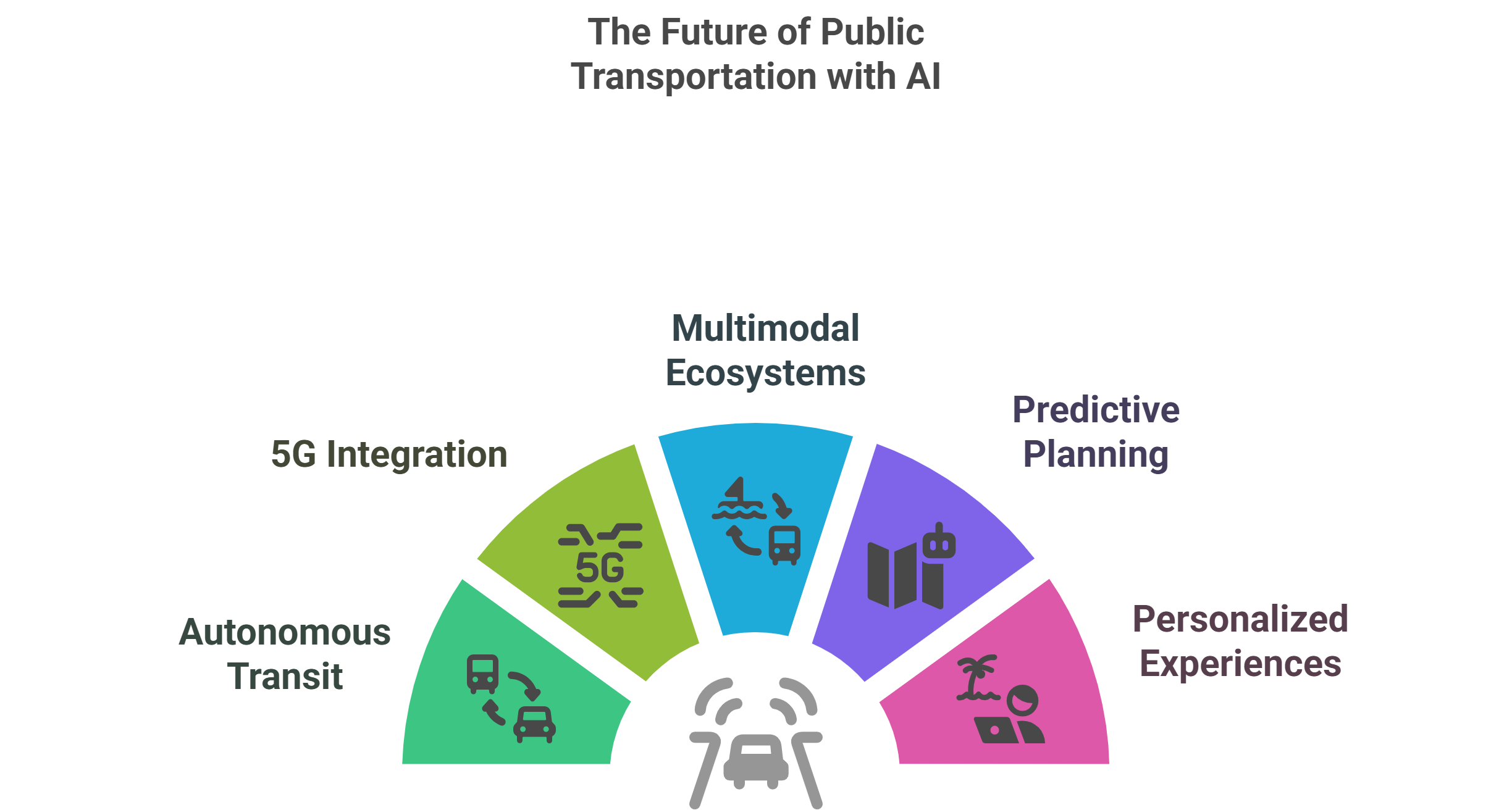
The next decade will witness unprecedented transformation as AI technologies mature, creating fully integrated, autonomous, and intelligent transportation ecosystems that redefine urban mobility.
Emerging AI capabilities promise revolutionary changes that will reshape how cities approach transportation planning, service delivery, and passenger engagement:
5G-Enabled Smart City Integration - Ultra-fast connectivity will enable real-time coordination between all urban systems, allowing traffic lights, parking meters, and transit vehicles to communicate instantly for seamless city-wide optimization
Multimodal AI Transportation Ecosystems - Integrated platforms will orchestrate buses, trains, bikes, scooters, and ride-sharing as a unified service, automatically planning and booking optimal journeys across multiple transport modes
Predictive Urban Mobility Planning - AI will forecast transportation needs years in advance, enabling cities to proactively build infrastructure and adjust services based on demographic shifts, economic development, and climate change impacts
Personalized Transit Experiences - Machine learning will create individualized journey recommendations, preferred seating arrangements, and customized accessibility features while maintaining privacy through federated learning approaches
Folio3 transforms public transportation through smart, data-driven AI technologies that create safer, more efficient, and passenger-focused transit systems. With over 15 years of experience and 1000+ enterprise clients, we deliver proven AI solutions that address real-world transportation challenges.
Our comprehensive AI expertise empowers public transit agencies through specialized capabilities:
Real-time Traffic Intelligence - Our AI solutions detect, classify, and track vehicles in real-time for intelligent traffic monitoring and control. This technology helps transit agencies optimize traffic flow, reduce congestion, and ensure buses and trains move efficiently through urban corridors
Smart Route Optimization - We leverage AI to automatically adjust routes and schedules based on real-time traffic conditions, passenger demand, and operational constraints. Our systems help public transport predict passenger volumes and optimize service delivery for improved efficiency and rider satisfaction
Predictive Maintenance Solutions - Our AI models predict maintenance needs before problems occur, helping transit agencies reduce costs, minimize service disruptions, and keep vehicles running safely. This proactive approach prevents breakdowns and extends fleet lifespan
Enhanced Safety and Monitoring - Our traffic analysis solutions provide real-time vehicle tracking, accurate traffic flow insights, and enhanced road safety planning. AI-powered monitoring helps prevent accidents, enables faster incident response, and creates safer transportation environments
AI in public transport is fundamentally transforming from reactive, rigid systems into intelligent, adaptive networks that anticipate and respond to urban mobility needs.
Through predictive maintenance, real-time optimization, and data-driven decision making, cities worldwide are achieving remarkable improvements in efficiency, sustainability, and passenger satisfaction.
https://www.folio3.ai/blog/top-5-transportation-industry-trends/
https://www.folio3.ai/blog/how-ai-used-in-transportation/
https://www.folio3.ai/blog/vehicle-tracking-for-transport-logistics-industry/
{ "@context": "https://schema.org", "@type": "FAQPage", "mainEntity": [ { "@type": "Question", "name": "What is AI in public transportation?", "acceptedAnswer": { "@type": "Answer", "text": "AI uses machine learning, IoT, and computer vision to optimize operations, enhance safety, and improve rider experience in transit systems." } }, { "@type": "Question", "name": "How does AI reduce public transit delays?", "acceptedAnswer": { "@type": "Answer", "text": "AI detects track anomalies and predicts maintenance needs, reducing delays and improving on-time performance, as seen in the MTA Pixel pilot." } }, { "@type": "Question", "name": "Can AI optimize bus routes in real time?", "acceptedAnswer": { "@type": "Answer", "text": "Yes, AI models predict traffic and passenger demand dynamically, enabling adaptive route planning and better services." } }, { "@type": "Question", "name": "How is AI improving safety in public transit?", "acceptedAnswer": { "@type": "Answer", "text": "AI systems monitor infrastructure, detect anomalies, and alert operators in real time for preventive maintenance or crowd management." } }, { "@type": "Question", "name": "Has any city used AI robots or sensors for metro maintenance?", "acceptedAnswer": { "@type": "Answer", "text": "Yes, Dubai’s RTA deployed AI robots (ARIIS) for metro inspections, reducing inspection man-hours by 75%." } }, { "@type": "Question", "name": "How is AI helping with bus driver shortages or scheduling?", "acceptedAnswer": { "@type": "Answer", "text": "AI-powered tools like Strategic Routing help school districts reduce routes and optimize resource use amid driver shortages." } }, { "@type": "Question", "name": "What technologies enable AI in transit systems?", "acceptedAnswer": { "@type": "Answer", "text": "Technologies include machine learning prediction models, IoT sensors, edge computing, computer vision, predictive analytics, and AI chat support for passenger interaction." } }, { "@type": "Question", "name": "Can AI predict bus arrival and departure times accurately?", "acceptedAnswer": { "@type": "Answer", "text": "Yes, neural-network models achieve under 80-second deviation in bus departure times in smart transit systems." } }, { "@type": "Question", "name": "How does AI aid the broader public transportation ecosystem?", "acceptedAnswer": { "@type": "Answer", "text": "AI supports smart ticketing, fare fraud detection, demand forecasting, autonomous signage, and real-time passenger updates." } }, { "@type": "Question", "name": "What does the future hold for AI in transit systems?", "acceptedAnswer": { "@type": "Answer", "text": "The future includes AI-integrated robots, Mobility as a Service (MaaS), seamless rider communication, and greener, demand-driven planning." } } ] }
AI uses ML, IoT, and computer vision to optimize operations, enhance safety, and improve rider experience in transit systems.
AI detects track anomalies and predicts maintenance needs, reducing delays and improving on-time performance (see MTA Pixel pilot).
Yes, AI models predict traffic and passenger demand dynamically, enabling adaptive route planning and better services.
Systems monitor infrastructure, detect anomalies, and alert operators in real time for preventive maintenance or crowd management.
Yes, Dubai’s RTA deployed AI robots (ARIIS) for metro inspections, cutting inspection man-hours by 75%.
AI-powered tools like “Strategic Routing” help school districts reduce routes and optimize resource use amid driver shortages.
Technologies include ML prediction models, IoT sensors, edge computing, computer vision, predictive analytics, and voice/AI chat support for passenger interaction.
Yes, neural-network models achieve under 80-second deviation in bus departure times in smart transit systems.
AI supports smart ticketing, fare fraud detection, demand forecasting, autonomous signage, and real-time passenger updates.
Expect AI-integrated robots, MaaS (Mobility as a Service), seamless rider communication, and greener, demand-driven planning.