
Loading...

Commercial fleet managers face mounting pressure to track vehicles accurately while maintaining compliance with increasingly complex regulations. Manual monitoring creates bottlenecks, errors, and missed opportunities that cost businesses thousands in fines and operational inefficiencies. An ALPR system for commercial vehicle tracking & compliance helps overcome these challenges by automating accuracy, reducing costs, and ensuring regulatory adherence.
The global automatic license plate recognition market reached approximately $2.9-4.4 billion in 2024, according to verified market research, and is projected to reach $10.1-14.5 billion by 2032, driven by the urgent need for automated fleet tracking solutions. ALPR systems transform how businesses monitor their commercial vehicles, turning license plate data into actionable intelligence for better compliance and operational control.

Fleet operators need reliable systems that provide real-time visibility into vehicle movements while ensuring regulatory compliance across multiple jurisdictions.
Eliminate manual vehicle identification errors by automatically capturing license plates with accuracy rates exceeding 90% under optimal conditions, according to industry analysis. This automation significantly reduces the time fleet managers spend on vehicle location verification and status updates, though performance may vary based on lighting, weather conditions, and camera positioning.
Automated plate recognition helps businesses maintain compliance with transport regulations from FMCSA guidelines by tracking vehicle entry and exit times, route adherence, and restricted area violations without requiring constant human oversight. However, ALPR systems work best when integrated with other compliance tools like Electronic Logging Devices (ELD) for comprehensive Hours of Service monitoring.
Organizations typically see 10-20% improvement in operational efficiency within the first year, according to transportation industry reports, through better vehicle utilization, reduced unauthorized usage, and faster response times to compliance violations. These improvements stem from enhanced visibility and data-driven decision-making rather than ALPR technology alone.
Modern ALPR systems send instant notifications when vehicles enter restricted zones, exceed time limits, or trigger compliance violations, allowing fleet managers to address issues before they escalate into costly penalties. Response time depends on network connectivity and system configuration.
License plate recognition generates detailed movement patterns and utilization data that help fleet managers optimize routes, reduce idle time, and make informed decisions about vehicle deployment and resource allocation.
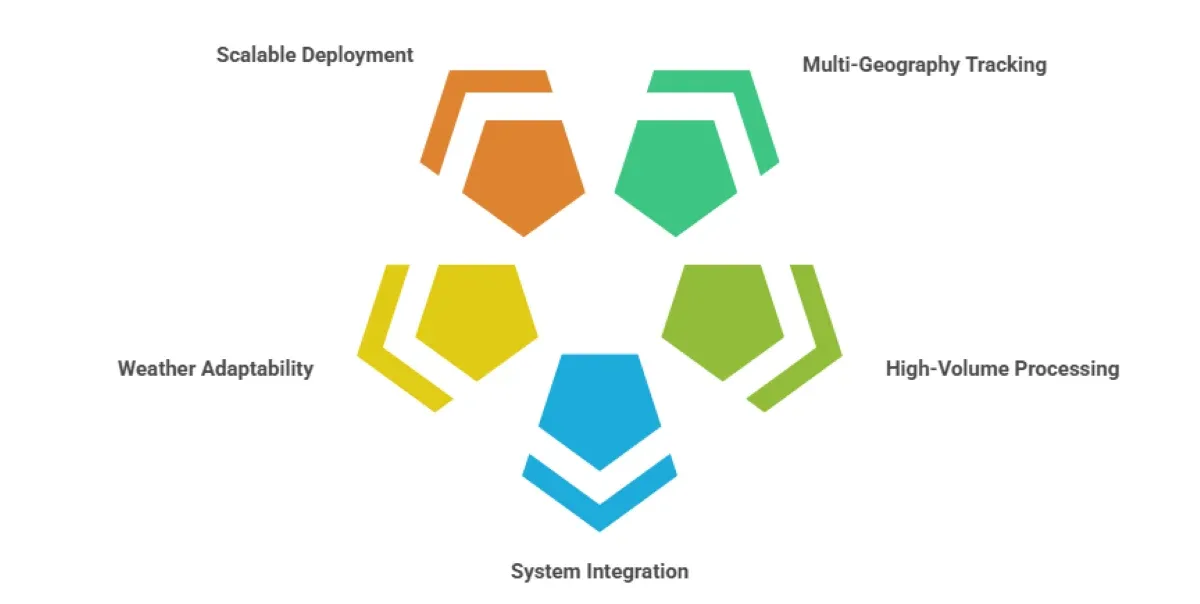
Commercial fleets require specialized ALPR capabilities that address the unique challenges of multi-vehicle operations across diverse geographical areas and regulatory environments.
Commercial fleets operating across state lines need ALPR systems that recognize different license plate formats and maintain tracking accuracy regardless of regional variations in plate designs and jurisdictional requirements.
Large fleets generate thousands of license plate reads daily, requiring systems that can process high volumes of data without performance degradation or delays in real-time monitoring capabilities.
ALPR solutions must connect seamlessly with telematics platforms, fleet management software, and ERP systems to provide unified visibility across all vehicle tracking and compliance monitoring tools.
Commercial vehicles operate in all conditions, making it essential for ALPR systems to maintain reasonable accuracy during nighttime, adverse weather, and challenging lighting situations that affect plate visibility.
Growing fleets need ALPR systems that can expand from monitoring a few depot locations to covering extensive geographic areas without requiring complete system overhauls or significant infrastructure changes.
Transportation regulations are becoming more stringent, making automated compliance monitoring through ALPR systems a business necessity rather than a competitive advantage.
ALPR helps monitor vehicle movement patterns to complement Hours of Service compliance by tracking when vehicles enter and exit facilities. For complete HOS compliance, the system must be integrated with ELD systems that monitor actual driver activity and rest periods according to FMCSA regulations.
Fleet managers use automated plate recognition at restricted routes to ensure their vehicles comply with route limitations and avoid costly violations. Vehicle weight monitoring requires integration with weigh station systems and load sensors, as ALPR alone cannot track this data.
ALPR systems automatically capture toll road usage, enabling accurate billing and helping fleets avoid toll evasion penalties while maintaining detailed records for expense tracking and reimbursement.
Commercial vehicles face strict parking regulations in urban areas. ALPR systems monitor parking compliance by tracking how long vehicles remain in designated areas and alerting managers to potential violations.
Many facilities require authorized vehicle access only. ALPR systems verify vehicle permissions automatically, maintaining security while creating audit trails for compliance reporting and incident investigation.
Selecting the right ALPR system requires evaluating specific technical capabilities that directly impact fleet tracking accuracy and compliance monitoring effectiveness.
Modern ALPR systems achieve over 90% accuracy rates in optimal conditions using deep learning algorithms. Performance varies significantly based on environmental factors including lighting, weather, plate condition, and camera angle. Organizations should request performance metrics for their specific operating conditions.
Cloud-based ALPR offers greater scalability and automatic updates, while on-premise solutions provide complete data control for security-sensitive operations. Hybrid approaches combine local processing with cloud analytics for optimal performance and data sovereignty.
Edge computing technology enables instant plate recognition and immediate alert generation, allowing fleet managers to respond to compliance violations or security issues within seconds of occurrence.
Comprehensive reporting tools transform raw plate data into actionable insights about vehicle utilization patterns, compliance trends, and operational efficiency metrics that support strategic decision-making.
ALPR systems must include encryption, access controls, and audit trails to protect sensitive vehicle data while complying with regional privacy regulations like GDPR requirements and CCPA requirements.

Understanding different ALPR deployment approaches helps fleet managers choose the right architecture for their specific operational requirements and technical infrastructure.
Cloud deployment eliminates the need for extensive on-site hardware while providing automatic software updates, unlimited processing capacity, and remote access capabilities for distributed fleet management teams.
Local deployment offers complete data control, reduced latency for real-time applications, and independence from internet connectivity issues that could disrupt critical fleet monitoring operations.
Combined cloud and on-premise architectures allow fleets to process sensitive data locally while leveraging cloud analytics for advanced reporting and multi-location visibility across their operations.
Mobile ALPR applications enable field teams to perform inspections, verify vehicle identities, and update fleet status from any location using smartphone cameras enhanced with AI-powered recognition capabilities.
Processing plate recognition at the camera level reduces bandwidth requirements and enables instant decision-making without relying on central server communication for time-critical compliance monitoring.
Understanding ALPR system limitations helps organizations set realistic expectations and plan appropriate implementations.
ALPR accuracy can be significantly affected by weather conditions, lighting variations, camera angles, and plate conditions. Dirty, damaged, or non-standard plates may reduce recognition accuracy below optimal levels.
Organizations must comply with local privacy laws and data retention requirements. Some jurisdictions have specific regulations governing ALPR data collection, storage, and sharing according to privacy compliance guidelines.
While modern ALPR systems offer APIs and integration capabilities, connecting with legacy fleet management systems may require additional middleware or custom development work.
Thorough vendor evaluation ensures your chosen ALPR system meets both current needs and future growth requirements while delivering measurable return on investment.
Test systems under real-world conditions, including various weather, lighting, and traffic scenarios. Vendors should provide documented accuracy rates and processing speed metrics for different operational environments specific to your use case.
Evaluate how well ALPR systems connect with existing fleet management platforms, telematics devices, and business software to ensure seamless data flow and unified operational visibility.
Beyond initial purchase price, consider ongoing licensing fees, maintenance costs, training requirements, and infrastructure needs to understand the complete financial impact over multiple years.
Assess the capabilities of the vendor for implementation support, staff training, technical assistance, and system maintenance to ensure smooth deployment and ongoing operational success with minimal disruption.
Choose the business that can accommodate fleet growth without requiring complete system replacement, offering modular expansion options that protect your technology investment as business needs evolve.
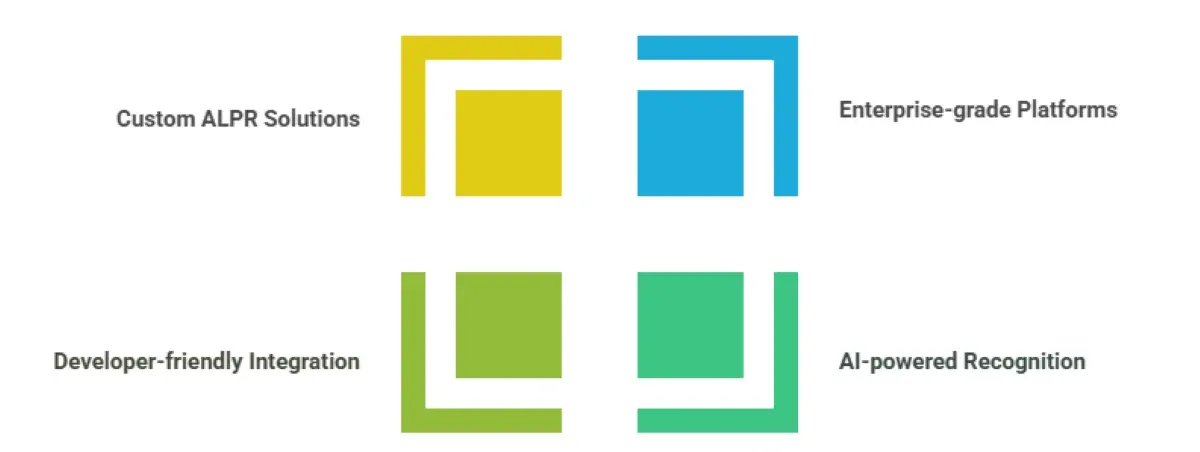
Modern ALPR vendors offer distinct advantages for commercial fleet tracking, each excelling in specific areas that match different operational requirements and business priorities.
High-end systems provide extensive scalability for operations ranging from small depot monitoring to large-scale deployments across multiple geographic regions. These platforms capture comprehensive vehicle data, including license plates, jurisdiction information, vehicle make, model, and color data, delivering actionable intelligence for fleet optimization and compliance management.
Cloud-native architecture provides automatic scaling, real-time processing, and multi-location access without requiring extensive on-site hardware investments or infrastructure modifications. Robust APIs and pre-built connectors integrate seamlessly with fleet management software, telematics systems, and ERP platforms for unified operational visibility.
AI-powered ALPR solutions utilize artificial intelligence and machine learning algorithms to deliver superior accuracy rates and adapt to challenging operational environments. AI-powered systems achieve over 90% recognition accuracy in optimal conditions, with machine learning algorithms continuously improving performance by learning from operational data and adapting to new plate formats.
Advanced AI systems process license plate recognition instantly, enabling immediate alerts and responses for compliance violations or security incidents while optimizing regional accuracy based on local plate variations.
Flexible solutions prioritize easy integration and customization, offering comprehensive integration capabilities and development tools that enable rapid deployment and seamless connection with existing systems. Modern platforms support rapid implementation with extensive documentation, sample code in multiple programming languages, and pre-built fleet management integrations.
Standardized APIs enable straightforward integration with existing software platforms, incorporating ALPR data into current workflows without extensive development requirements. Advanced platforms support webhook integrations for real-time data streaming and instant notifications.
For organizations with specific requirements that standard solutions cannot meet, custom ALPR development offers tailored functionality designed for unique operational needs. Custom solutions provide complete control over recognition algorithms, data processing workflows, and integration capabilities while ensuring compliance with specific industry requirements.
Custom implementations typically require 3-6 months of development time but deliver precisely matched functionality for complex fleet operations, specialized compliance requirements, and unique environmental conditions.
Different commercial sectors benefit from tailored ALPR implementations that address their unique operational challenges and regulatory requirements.
Waste management operations use specialized ALPR solutions for route optimization, service verification, and vehicle deployment across service territories. Systems track collection routes, monitor service completion, and optimize vehicle scheduling for improved operational efficiency.
Long-haul trucking companies use ALPR for depot access control, delivery verification, and compliance monitoring across multiple states while maintaining detailed records for customer billing and regulatory reporting.
ALPR technology enables automatic vehicle tracking, return processing, theft prevention, and utilization optimization across multiple rental locations while providing detailed audit trails for customer billing and damage assessment.
Container facilities use ALPR for gate automation, cargo manifest verification, and traffic flow optimization to process thousands of commercial vehicles daily while maintaining security and regulatory compliance.
Public sector fleets leverage ALPR for asset tracking, unauthorized usage prevention, and compliance with government vehicle regulations while providing transparent accountability for taxpayer-funded resources.
Successful ALPR deployment requires careful planning and phased implementation to minimize operational disruption while maximizing system adoption and performance.
Start with high-traffic locations or critical compliance areas to demonstrate value before expanding system coverage. This approach allows teams to learn system capabilities while proving return on investment to stakeholders.
Provide comprehensive training on system operation, data interpretation, and workflow integration to ensure teams can effectively use ALPR capabilities for improved decision-making and compliance monitoring.
Organizations should develop strategic ALPR implementation plans that map data flows between ALPR systems and existing fleet management platforms to ensure seamless information sharing and unified operational visibility across all vehicle tracking tools.
Implement ALPR systems gradually across different locations or vehicle types to manage costs, reduce complexity, and allow for system optimization based on real-world operational feedback.
Establish metrics for system accuracy, alert response times, and compliance improvement to continuously optimize ALPR performance and demonstrate ongoing value to stakeholders.
ALPR systems deliver measurable financial returns through reduced compliance violations, improved operational efficiency, and enhanced fleet security that directly impact bottom-line performance.
Automated monitoring prevents costly regulatory violations by providing real-time alerts and detailed audit trails that demonstrate proactive compliance management to regulatory authorities and insurance providers.
Fleet operators typically achieve ROI within 6-12 months according to transportation industry reports through improved vehicle utilization, reduced unauthorized usage, enhanced route optimization, and better maintenance scheduling based on accurate vehicle movement data.
ALPR systems provide immediate alerts for unauthorized vehicle movement, stolen vehicle detection, and access control violations that protect valuable fleet assets and may reduce insurance premiums.
Historical plate recognition data reveals usage patterns, route inefficiencies, and maintenance needs that enable strategic decisions about fleet size, vehicle deployment, and resource allocation for improved profitability.
Vehicle movement patterns captured through ALPR systems help predict maintenance needs, reduce unexpected breakdowns, and optimize service scheduling to minimize downtime and extend vehicle lifespan.
Choosing the right ALPR vendor requires evaluating technical capabilities, business compatibility, and long-term partnership potential to ensure successful implementation and ongoing support.
Request detailed demonstrations under real operating conditions, review customer references from similar fleet operations, and evaluate technical documentation to understand system capabilities and limitations.
Insist on trial periods or pilot programs that allow testing ALPR systems with your actual vehicles, locations, and operational requirements before making final purchasing decisions.
Evaluate vendor capabilities for technical support, training programs, system maintenance, and software updates to ensure reliable ongoing service that minimizes operational disruption.
Test ALPR system compatibility with existing fleet management software, telematics platforms, and business systems to ensure seamless data integration and unified operational visibility.
{ "@context": "https://schema.org", "@type": "FAQPage", "mainEntity": [ { "@type": "Question", "name": "What makes an ALPR system suitable for commercial vehicle tracking?", "acceptedAnswer": { "@type": "Answer", "text": "Commercial ALPR systems need high accuracy rates above 95% and multi-lane processing capabilities to handle large fleet operations. They must integrate seamlessly with existing fleet management platforms and telematics systems. Weather resistance and reliable performance in challenging conditions are essential for commercial vehicle environments." } }, { "@type": "Question", "name": "How does ALPR help with fleet compliance in logistics and transport?", "acceptedAnswer": { "@type": "Answer", "text": "ALPR automates compliance monitoring by tracking vehicle movements and generating detailed audit trails for regulatory reporting. The system provides real-time alerts for potential violations before they occur, helping prevent costly penalties. It monitors restricted area access, time limits, and route adherence to ensure regulatory compliance." } }, { "@type": "Question", "name": "Can ALPR systems integrate with fleet telematics platforms?", "acceptedAnswer": { "@type": "Answer", "text": "Yes, modern ALPR systems offer robust APIs and direct integrations with major telematics platforms for unified data collection. These integrations enable comprehensive fleet visibility through existing management dashboards without requiring separate systems. Standardized connections ensure seamless data flow between ALPR and current fleet management tools." } }, { "@type": "Question", "name": "What accuracy rates should I expect from a commercial-grade ALPR system?", "acceptedAnswer": { "@type": "Answer", "text": "Commercial ALPR systems should achieve 95% or higher accuracy rates under normal operating conditions with proper installation. Leading systems maintain performance above 90% even in challenging weather and lighting situations. AI-powered systems continuously improve accuracy through machine learning algorithms that adapt to different operational environments." } }, { "@type": "Question", "name": "How does ALPR assist in avoiding compliance penalties for commercial fleets?", "acceptedAnswer": { "@type": "Answer", "text": "ALPR prevents violations by monitoring restricted areas and tracking time limits, alerting managers before infractions occur. The system creates detailed documentation and audit trails that demonstrate proactive compliance management to regulatory authorities. Real-time notifications enable immediate corrective actions to avoid costly penalties and regulatory issues." } }, { "@type": "Question", "name": "Are ALPR systems effective for tracking cross-border or interstate vehicles?", "acceptedAnswer": { "@type": "Answer", "text": "Yes, ALPR recognizes various license plate formats across different jurisdictions and maintains tracking accuracy regardless of regional variations. Modern systems adapt to different plate designs, fonts, and jurisdictional requirements for seamless multi-state operations. Cloud-based platforms provide unified tracking visibility across multiple geographic regions and regulatory environments." } }, { "@type": "Question", "name": "What data security measures should an ALPR vendor provide?", "acceptedAnswer": { "@type": "Answer", "text": "Essential security features include end-to-end data encryption, role-based access controls, and comprehensive audit trails for all system activities. Vendors must ensure compliance with privacy regulations like GDPR and CCPA through proper data handling and storage protocols. Secure data transmission between system components and regular security updates protect sensitive fleet information." } }, { "@type": "Question", "name": "How scalable are ALPR systems for growing fleet operations?", "acceptedAnswer": { "@type": "Answer", "text": "Leading ALPR systems support expansion from single locations to thousands of cameras without performance degradation or system limitations. They offer modular growth options that protect technology investments as fleet operations expand across multiple regions. Cloud-based architectures provide unlimited processing capacity that scales automatically with business growth." } }, { "@type": "Question", "name": "What environmental conditions can a commercial ALPR system handle?", "acceptedAnswer": { "@type": "Answer", "text": "Commercial ALPR systems operate effectively in extreme temperatures, heavy rain, snow, and challenging visibility conditions that commonly affect fleet operations. Advanced systems maintain accuracy during nighttime operations, varying lighting conditions, and when license plates are dirty or damaged. Weather-resistant hardware components ensure reliable performance in harsh outdoor environments." } }, { "@type": "Question", "name": "How do I evaluate vendors when selecting an ALPR solution for my fleet?", "acceptedAnswer": { "@type": "Answer", "text": "Test system accuracy under real operating conditions, including various weather, lighting, and traffic scenarios with actual fleet vehicles. Verify integration capabilities with existing fleet management software and evaluate total cost of ownership, including licensing, maintenance, and training. Assess vendor support infrastructure, implementation timeline, and references from other fleet operators." } } ] }
Commercial ALPR systems need high accuracy rates above 95% and multi-lane processing capabilities to handle large fleet operations. They must integrate seamlessly with existing fleet management platforms and telematics systems. Weather resistance and reliable performance in challenging conditions are essential for commercial vehicle environments.
ALPR automates compliance monitoring by tracking vehicle movements and generating detailed audit trails for regulatory reporting. The system provides real-time alerts for potential violations before they occur, helping prevent costly penalties. It monitors restricted area access, time limits, and route adherence to ensure regulatory compliance.
Yes, modern ALPR systems offer robust APIs and direct integrations with major telematics platforms for unified data collection. These integrations enable comprehensive fleet visibility through existing management dashboards without requiring separate systems. Standardized connections ensure seamless data flow between ALPR and current fleet management tools.
Commercial ALPR systems should achieve 95% or higher accuracy rates under normal operating conditions with proper installation. Leading systems maintain performance above 90% even in challenging weather and lighting situations. AI-powered systems continuously improve accuracy through machine learning algorithms that adapt to different operational environments.
ALPR prevents violations by monitoring restricted areas and tracking time limits, alerting managers before infractions occur. The system creates detailed documentation and audit trails that demonstrate proactive compliance management to regulatory authorities. Real-time notifications enable immediate corrective actions to avoid costly penalties and regulatory issues.
Yes, ALPR recognizes various license plate formats across different jurisdictions and maintains tracking accuracy regardless of regional variations. Modern systems adapt to different plate designs, fonts, and jurisdictional requirements for seamless multi-state operations. Cloud-based platforms provide unified tracking visibility across multiple geographic regions and regulatory environments.
Essential security features include end-to-end data encryption, role-based access controls, and comprehensive audit trails for all system activities. Vendors must ensure compliance with privacy regulations like GDPR and CCPA through proper data handling and storage protocols. Secure data transmission between system components and regular security updates protect sensitive fleet information.
Leading ALPR systems support expansion from single locations to thousands of cameras without performance degradation or system limitations. They offer modular growth options that protect technology investments as fleet operations expand across multiple regions. Cloud-based architectures provide unlimited processing capacity that scales automatically with business growth.
Commercial ALPR systems operate effectively in extreme temperatures, heavy rain, snow, and challenging visibility conditions that commonly affect fleet operations. Advanced systems maintain accuracy during nighttime operations, varying lighting conditions, and when license plates are dirty or damaged. Weather-resistant hardware components ensure reliable performance in harsh outdoor environments.
Test system accuracy under real operating conditions, including various weather, lighting, and traffic scenarios with actual fleet vehicles. Verify integration capabilities with existing fleet management software and evaluate total cost of ownership, including licensing, maintenance, and training. Assess vendor support infrastructure, implementation timeline, and references from similar fleet operations.