
Loading...

Companies that once prided themselves on careful, methodical decision-making are now rushing to implement AI solutions, making AI partner selection for enterprises in 2025 a critical priority, driven by both competitive pressure and the genuine potential for transformation.
Companies without a formal AI strategy report only 37% success at adopting and implementing AI, compared to 80% at companies with a strategy. The risk of choosing the wrong partner extends far beyond wasted budget; it can cost organizations their innovation edge, competitive positioning, and future growth potential. AI adoption has become essential for maintaining relevance in 2025, making vendor selection decisions more critical than ever.
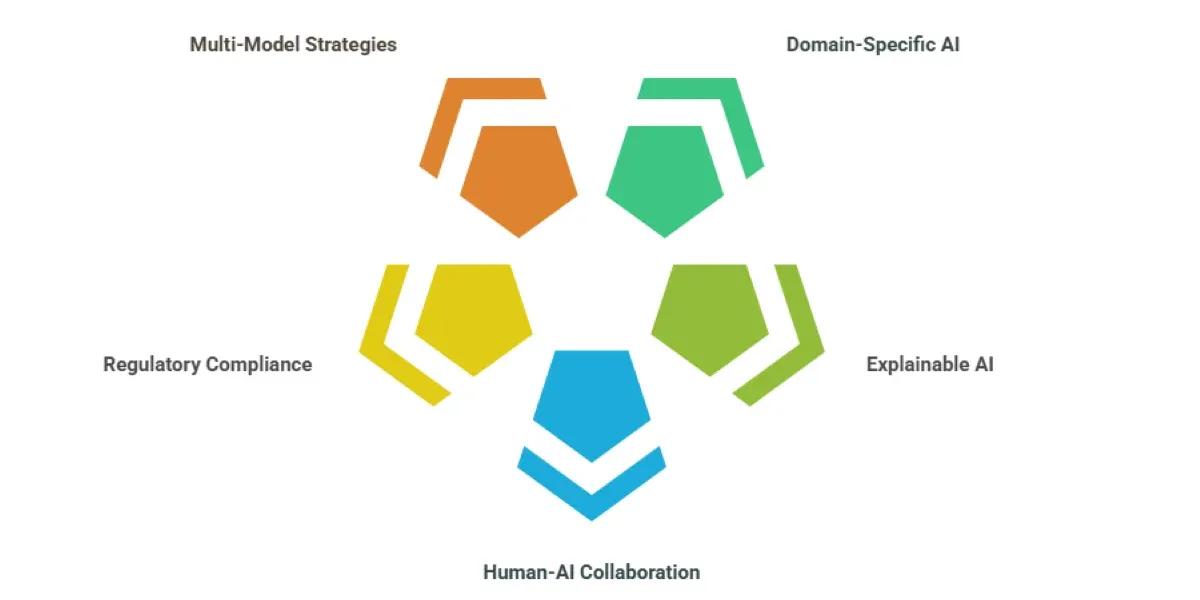
The enterprise AI world has changed rapidly, bringing both fresh opportunities and new challenges for business leaders as they choose the right vendors.
Businesses increasingly demand AI tools tailored to their specific industries, from healthcare diagnostics to supply chain optimization. Vendors must demonstrate a deep understanding of industry regulations, workflows, and success metrics rather than offering generic solutions.
Organizations require AI systems that can clearly explain their decision-making processes, especially in regulated industries. Partner selection should prioritize vendors who provide transparent model architectures and clear audit trails for compliance purposes.
Rather than fully autonomous AI systems, most manufacturing specialists (53%) prefer working with collaborative bots or "copilots" that support human workflows instead of fully replacing them. Vendors must demonstrate how their solutions enhance rather than replace human capabilities.
Data privacy, algorithmic bias, and regulatory compliance have become non-negotiable requirements. Partner evaluation must include a thorough assessment of vendors' governance frameworks and compliance capabilities.
The days of betting on a single large language model (LLM) provider are over. Organizations are adopting multi-model strategies, with 37% of enterprise respondents now using five or more models compared to 29% the previous year. Organizations need partners who offer flexibility rather than vendor lock-in situations.
Selecting the right AI vendor has implications that extend far beyond initial implementation, affecting long-term business success and competitive positioning.
The right partner provides solutions that grow with business needs while delivering measurable returns. Organizations need vendors who understand their growth trajectory and can adapt solutions accordingly without requiring complete platform changes.
Leading AI partners bring cutting-edge research, industry insights, and proven methodologies to implementations. They offer access to emerging technologies and best practices that internal teams might not develop independently.
Successful AI adoption requires comprehensive support beyond software delivery. The right partner provides robust APIs, seamless integration capabilities, and thorough training programs for internal teams.
Generic AI solutions rarely meet enterprise-specific requirements effectively. Quality partners offer model customization, fine-tuning capabilities, and flexible architectures that accommodate unique business processes and data structures.
AI implementations involve sensitive data and complex compliance requirements. The right partner maintains strict security protocols, privacy protections, and regulatory compliance frameworks that protect organizational assets and reputation.
A structured approach to evaluating potential AI partners helps organizations identify and mitigate risks before they become costly problems.
Organizations must carefully review IP ownership terms, data usage rights, and licensing agreements to protect proprietary information and maintain control over their data assets. Many AI vendors seek broad data usage rights, making careful contract negotiation essential for protecting organizational interests.
Assess vendor technologies for portability, data export capabilities, and integration standards that allow future transitions. Evaluate contract terms for termination clauses, data retrieval rights, and technical dependencies that could create switching barriers.
Conduct thorough security audits, compliance certifications review, and data handling practice assessments. Verify vendor adherence to relevant industry standards, privacy regulations, and security frameworks through third-party audits and documentation review.
Evaluate vendor financial health, funding status, and business model sustainability to ensure continued support and development. Consider market position, customer base stability, and strategic partnerships that indicate long-term viability.
Examine vendor data handling policies, storage locations, retention periods, and deletion procedures to ensure compliance with regulations like GDPR and CCPA. Assess their ability to provide data lineage tracking, audit trails, and user consent management capabilities that meet enterprise privacy requirements.
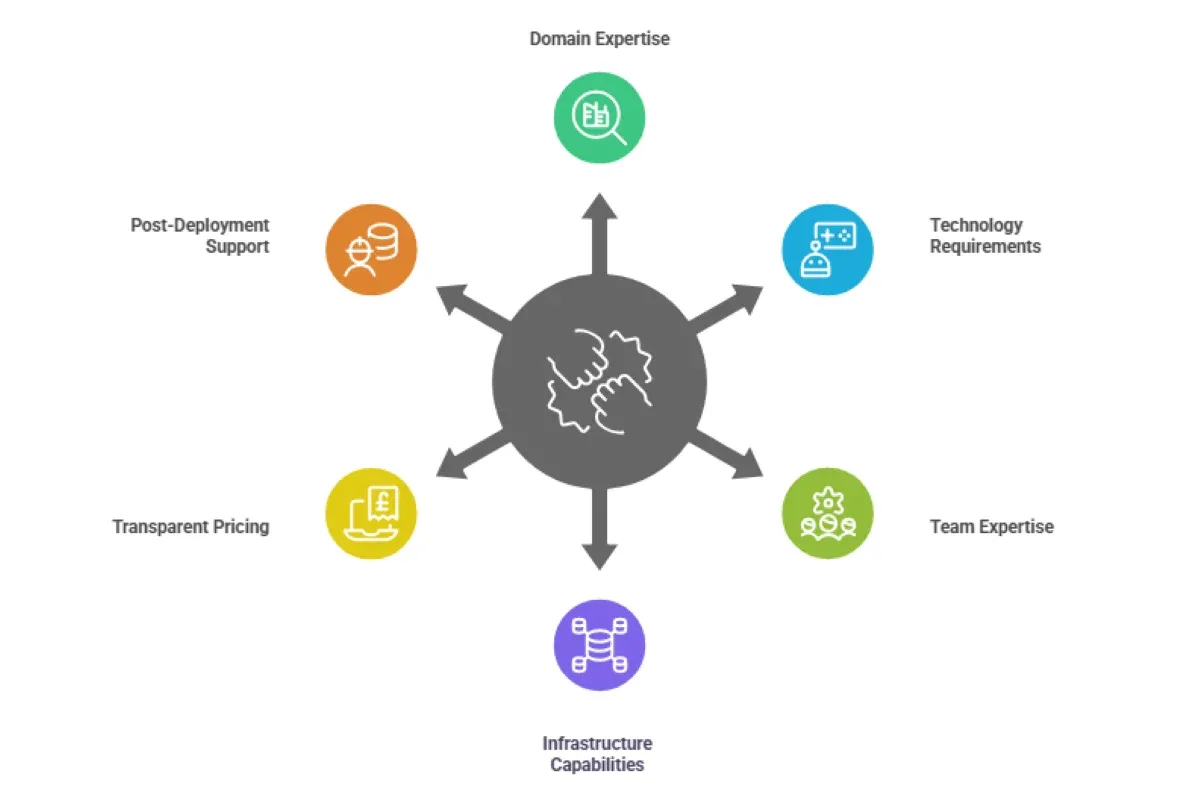
Successful AI partnerships require vendors who demonstrate specific capabilities and characteristics that align with enterprise needs and expectations.
Look for partners with proven track records in relevant industries, documented case studies, and a deep understanding of sector-specific challenges. Verify their experience through client references, published research, and industry recognition or certifications.
Ensure vendors utilize modern AI frameworks, support the latest model architectures, and maintain compatibility with emerging technologies. Assess their research and development investments, technology roadmaps, and ability to adopt new innovations quickly.
Evaluate the qualifications, experience levels, and specializations of vendor teams who will work on implementations. Review team certifications, published work, and track records of successful project delivery in similar environments.
Assess vendor infrastructure scalability, cloud platform support, and integration tools that work with existing enterprise systems. Verify their ability to handle enterprise-scale deployments and provide reliable performance under varying load conditions.
Seek partners who offer clear pricing structures, detailed project estimates, and a willingness to conduct proof of concept projects. Transparent vendors provide detailed breakdowns of costs, timelines, and deliverables without hidden fees or unexpected charges.
Evaluate ongoing support offerings, training programs, and partnership approaches that extend beyond initial implementation. Quality partners provide continuous optimization, troubleshooting assistance, and strategic guidance for maximizing AI value over time.
Strategic questioning helps reveal vendor capabilities, limitations, and alignment with organizational needs before making partnership commitments.
Do vendors offer risk-free trial periods or proof of concept projects that demonstrate value before major investments?
What deployment options do vendors support, including on-premises, cloud, hybrid, and edge computing configurations?
How do vendors approach model training, fine-tuning, and customization for specific business needs?
Can vendors integrate seamlessly with existing enterprise systems like ERP, CRM, and data management platforms?
What specific metrics do vendors use to define implementation success, and how do they track and report performance over time?
A structured comparison process helps organizations evaluate multiple vendors objectively and select partners who best meet their specific requirements.
Evaluation CriteriaVendor AVendor BVendor CWeightIndustry ExperienceScore: 1-5Score: 1-5Score: 1-525%Technical CapabilitiesScore: 1-5Score: 1-5Score: 1-520%Integration SupportScore: 1-5Score: 1-5Score: 1-520%Security & ComplianceScore: 1-5Score: 1-5Score: 1-515%Pricing & ValueScore: 1-5Score: 1-5Score: 1-510%Support & TrainingScore: 1-5Score: 1-5Score: 1-510%Total Weighted ScoreCalculateCalculateCalculate100%
Use this matrix to systematically evaluate vendors based on the criteria most important to specific organizational needs. Assign weights based on business priorities, score each vendor objectively, and calculate weighted totals for data-driven comparison.
Include space for notes on specific strengths, weaknesses, and differentiating factors that numbers alone cannot capture.
Understanding frequent vendor selection errors helps organizations avoid costly mistakes and improve their decision-making processes.
Large, well-known companies may not offer the best solutions for specific needs. Many enterprises select familiar names without thoroughly evaluating whether their offerings align with particular use cases, industry requirements, or organizational constraints.
Focusing solely on AI capabilities while overlooking integration challenges creates implementation problems. Vendors may offer powerful AI tools that cannot effectively connect with existing systems, leading to costly workarounds or delayed deployments.
Starting vendor selection without clearly defined objectives leads to misaligned partnerships. Organizations should identify specific business problems, success metrics, and expected outcomes before evaluating potential solutions or partners.
Choosing vendors based on current needs without considering growth plans or regulatory requirements creates future obstacles. Solutions that work for pilot projects may not scale effectively or meet evolving compliance demands.
Focusing primarily on initial implementation while ignoring ongoing support needs leads to partnership problems. AI solutions require continuous monitoring, optimization, and support that many vendors cannot provide effectively in the long term.
Learning from these common mistakes helps enterprises develop more thorough and effective vendor evaluation processes.

The AI vendor ecosystem includes several categories of providers, each offering different strengths and specializations for enterprise implementations.
Major cloud providers like Microsoft, Google, AWS, and IBM offer comprehensive AI platforms with extensive integration capabilities and enterprise-grade security. These vendors provide broad service portfolios but may lack specialized industry expertise.
Specialized AI companies like OpenAI, Anthropic, and Cohere focus exclusively on AI development and offer cutting-edge models with innovative capabilities. These vendors often lead in technological advancement but may have limited enterprise support infrastructure.
Companies like Folio3 AI, specializing in computer vision and industry-specific solutions, offer deep domain expertise tailored to particular sectors. These vendors understand unique industry challenges but may have narrower service portfolios.
Newer companies often provide innovative approaches and competitive pricing, but may carry higher risk regarding long-term viability and support capabilities.
When evaluating vendors across these categories, consider the balance between innovation, stability, industry expertise, and support capabilities that best align with organizational needs and risk tolerance.
Successful AI implementations require more than selecting the right vendor; they demand careful planning and ongoing partnership management.
Create AI governance committees that include stakeholders from IT, legal, compliance, and business units. Organizations with established governance structures report higher success rates in AI adoption and implementation.
Start with pilot projects that demonstrate value before scaling to enterprise-wide deployments. Successful implementations typically follow staged rollouts that allow for learning and optimization at each phase.
Establish clear KPIs and measurement systems from the beginning. Organizations tracking well-defined KPIs for AI solutions show stronger bottom-line impact than those without measurement frameworks.
Invest in training and development programs that build internal AI expertise alongside vendor partnerships. This ensures organizations can effectively manage and optimize AI solutions over time.
Treat AI vendor relationships as strategic partnerships requiring ongoing communication, feedback, and collaboration. Regular review cycles and performance assessments help ensure continued value delivery.
Folio3 AI delivers comprehensive enterprise AI solutions with over 15 years of computer vision expertise, serving Fortune 500 companies through custom development, seamless integrations, and proven outcomes across diverse industries.
With over 15 years in AI and computer vision, Folio3 has successfully deployed solutions from startups to Fortune 500 enterprises, consistently delivering tailored outcomes that drive innovation and business growth across diverse industry verticals.
Folio3 offers complete AI capabilities, including computer vision, generative AI, large language models, natural language processing, and predictive analytics, providing enterprises with integrated solutions rather than fragmented point solutions.
From concept to deployment in weeks, Folio3's rapid prototyping approach accelerates time-to-market for enterprise AI initiatives, enabling quick validation and faster realization of business value from AI investments.
Expert AI/ML consultation services help enterprises identify optimal development approaches, maximize AI impact on business operations, and ensure strategic alignment between AI initiatives and organizational goals for enhanced return on investment.
Offering staff augmentation services and on-demand AI experts, Folio3 provides flexible engagement options that allow enterprises to scale AI projects quickly while accessing specialized talent without long-term hiring commitments.
{ "@context": "https://schema.org", "@type": "FAQPage", "mainEntity": [ { "@type": "Question", "name": "What are the key AI adoption trends for enterprises in 2025?", "acceptedAnswer": { "@type": "Answer", "text": "Key trends include the rise of domain-specific AI solutions tailored to industry needs, emphasis on explainable AI for regulatory compliance, a shift toward AI-human collaboration rather than full automation, and a move toward multi-model strategies that provide flexibility rather than vendor lock-in situations." } }, { "@type": "Question", "name": "Why is it important for enterprises to align with AI trends when choosing a tech partner?", "acceptedAnswer": { "@type": "Answer", "text": "Alignment with current trends ensures vendors can support evolving business needs, regulatory requirements, and competitive positioning. Partners who understand trends like explainable AI, domain specialization, and human augmentation can provide solutions that remain relevant and valuable as the AI landscape continues to develop rapidly." } }, { "@type": "Question", "name": "How do AI adoption trends influence vendor selection in 2025?", "acceptedAnswer": { "@type": "Answer", "text": "Current trends shift evaluation criteria from purely technical capabilities toward factors like industry expertise, transparency, integration flexibility, and compliance support. Organizations now prioritize vendors who offer customizable models, clear explanation capabilities, and multi-cloud deployment options rather than one-size-fits-all solutions." } }, { "@type": "Question", "name": "What should enterprises look for in an AI partner in 2025?", "acceptedAnswer": { "@type": "Answer", "text": "Essential qualities include proven domain expertise, modern technology stacks, transparent pricing models, robust security practices, and comprehensive post-deployment support. Look for AI partners who share case studies, performance benchmarks, and customer success stories outlining how their technology works in real-world scenarios." } }, { "@type": "Question", "name": "How can AI maturity models help enterprises evaluate potential AI partners?", "acceptedAnswer": { "@type": "Answer", "text": "Maturity models provide frameworks for assessing both organizational readiness and vendor capabilities across multiple dimensions, including strategy, data, technology, and governance. They help enterprises identify gaps in their current state and evaluate whether potential partners can support their journey toward higher maturity levels." } }, { "@type": "Question", "name": "Which industries are leading in enterprise AI adoption in 2025?", "acceptedAnswer": { "@type": "Answer", "text": "Companies within the financial services industry are most likely to be using AI, with about half of IT professionals within that industry reporting their company has actively deployed AI. Telecommunications, healthcare, manufacturing, and retail also show strong adoption rates across various use cases." } }, { "@type": "Question", "name": "How do scalability and integration capabilities impact AI partner selection?", "acceptedAnswer": { "@type": "Answer", "text": "Scalability ensures AI solutions can grow with business needs without requiring platform changes, while integration capabilities determine how smoothly AI tools work with existing systems. Integration capabilities often determine real-world success more than raw AI performance metrics alone." } }, { "@type": "Question", "name": "What role does data privacy and compliance play when selecting an AI partner?", "acceptedAnswer": { "@type": "Answer", "text": "Data privacy and compliance represent critical risk factors that can result in regulatory fines, legal issues, and reputation damage if not properly addressed. Understanding vendor data handling practices, licensing terms, and compliance capabilities is essential for ensuring regulatory adherence and risk mitigation." } }, { "@type": "Question", "name": "How can enterprises assess an AI vendor's innovation and roadmap alignment?", "acceptedAnswer": { "@type": "Answer", "text": "Evaluate vendor research and development investments, published innovation roadmaps, participation in industry conferences, and partnerships with technology leaders. Assess their ability to adopt emerging technologies quickly and their track record of updating solutions to incorporate latest advances in AI capabilities." } }, { "@type": "Question", "name": "What are the common mistakes enterprises should avoid when choosing an AI partner in 2025?", "acceptedAnswer": { "@type": "Answer", "text": "Major mistakes include selecting vendors based on brand recognition rather than specific fit, ignoring integration capabilities, lacking clarity on problems to solve, neglecting scalability requirements, and insufficient evaluation of ongoing support models. Organizations without formal AI strategies report significantly lower success rates, highlighting the importance of strategic planning before vendor selection." } } ] }
Key trends include the rise of domain-specific AI solutions tailored to industry needs, emphasis on explainable AI for regulatory compliance, a shift toward AI-human collaboration rather than full automation, and a move toward multi-model strategies that provide flexibility rather than vendor lock-in situations.
Alignment with current trends ensures vendors can support evolving business needs, regulatory requirements, and competitive positioning. Partners who understand trends like explainable AI, domain specialization, and human augmentation can provide solutions that remain relevant and valuable as the AI landscape continues to develop rapidly.
Current trends shift evaluation criteria from purely technical capabilities toward factors like industry expertise, transparency, integration flexibility, and compliance support. Organizations now prioritize vendors who offer customizable models, clear explanation capabilities, and multi-cloud deployment options rather than one-size-fits-all solutions.
Essential qualities include proven domain expertise, modern technology stacks, transparent pricing models, robust security practices, and comprehensive post-deployment support. Look for AI partners who share case studies, performance benchmarks, and customer success stories outlining how their technology works in real-world scenarios.
Maturity models provide frameworks for assessing both organizational readiness and vendor capabilities across multiple dimensions, including strategy, data, technology, and governance. They help enterprises identify gaps in their current state and evaluate whether potential partners can support their journey toward higher maturity levels.
Companies within the financial services industry are most likely to be using AI, with about half of IT professionals within that industry reporting their company has actively deployed AI. Telecommunications, healthcare, manufacturing, and retail also show strong adoption rates across various use cases.
Scalability ensures AI solutions can grow with business needs without requiring platform changes, while integration capabilities determine how smoothly AI tools work with existing systems. Integration capabilities often determine real-world success more than raw AI performance metrics alone.
Data privacy and compliance represent critical risk factors that can result in regulatory fines, legal issues, and reputation damage if not properly addressed. Understanding vendor data handling practices, licensing terms, and compliance capabilities is essential for ensuring regulatory adherence and risk mitigation.
Evaluate vendor research and development investments, published innovation roadmaps, participation in industry conferences, and partnerships with technology leaders. Assess their ability to adopt emerging technologies quickly and their track record of updating solutions to incorporate latest advances in AI capabilities.
Major mistakes include selecting vendors based on brand recognition rather than specific fit, ignoring integration capabilities, lacking clarity on problems to solve, neglecting scalability requirements, and insufficient evaluation of ongoing support models. Organizations without formal AI strategies report significantly lower success rates, highlighting the importance of strategic planning before vendor selection.