
Loading...

Every day, fleet managers face a sobering reality about driver safety. Computer vision for driver behavior monitoring addresses the root causes of risky actions. Poor driving behaviors don't just put lives at risk; they drain company resources through accidents, fuel waste, and skyrocketing insurance premiums. Traditional monitoring systems only tell part of the story, capturing when something went wrong but missing the crucial "why" behind risky behaviors.
Computer vision for driver monitoring changes this equation entirely. By using AI-powered cameras and advanced algorithms, these systems can detect dangerous behaviors like distracted driving, drowsiness, and aggressive maneuvers in real time. Unlike reactive systems that only sound alarms after incidents occur, these AI-powered solutions provide immediate coaching and intervention. They transform risky moments into learning opportunities that prevent accidents before they happen.

The financial impact of poor driving extends far beyond the obvious costs of accidents and repairs. When drivers engage in risky behaviors like harsh braking, rapid acceleration, or distracted driving, they create a cascade of expenses that quietly erode fleet profitability.
Fuel consumption increases dramatically with aggressive driving habits. According to research by Oak Ridge National Laboratory and the U.S. Department of Energy, aggressive driving behaviors can increase fuel consumption by approximately 15-30% at highway speeds and 10-40% in stop-and-go traffic conditions, depending on specific driving patterns and vehicle types. For large fleets, this translates to thousands of dollars in unnecessary fuel expenses each month.
Insurance premiums reflect driving safety records. Companies with higher accident rates face substantially increased insurance costs, while those demonstrating proactive safety measures often qualify for significant discounts. The difference can amount to tens of thousands of dollars annually for mid-sized fleets.
Computer vision represents a fundamental shift from traditional fleet monitoring approaches. Rather than relying solely on vehicle sensors that detect motion patterns, computer vision systems use AI-powered cameras to actually "see" and understand what's happening inside the vehicle cab and on the road ahead.
Traditional telematics systems excel at tracking vehicle location, speed, and basic driving events like hard braking or rapid acceleration. However, they cannot determine whether these events resulted from legitimate safety responses or risky driver behaviors. Computer vision fills this gap by providing visual context for every driving event.
The technology works by analyzing video feeds in real time, using machine learning algorithms trained to recognize specific patterns and behaviors. These systems can distinguish between a driver reaching for their phone versus adjusting the radio, or identify when someone appears drowsy based on eye movement and head position.
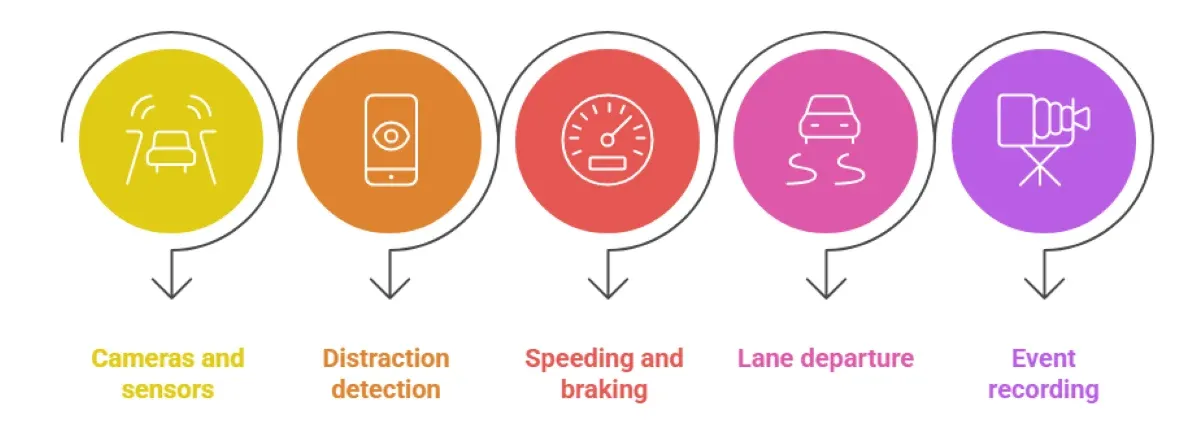
Modern computer vision systems create a safety net by continuously analyzing multiple aspects of driver performance through strategically placed cameras and sensors. The technology processes thousands of visual data points per second to identify potentially dangerous situations before they escalate.
AI-powered cameras and sensors form the foundation of effective driver monitoring systems. Interior cameras focus on the driver's face and upper body, tracking eye movement, head position, and hand placement, while exterior cameras monitor road conditions.
Distracted driving detection represents one of the most critical capabilities of computer vision systems. Moreover, the technology recognizes when drivers hold phones, look away from the road for extended periods, or show signs of drowsiness through drooping eyelid patterns.
Speeding and harsh braking alerts combine visual analysis with vehicle sensor data to provide context for driving events. The system can distinguish between emergency braking to avoid a hazard versus aggressive driving that wastes fuel and increases risk.
Lane departure and tailgating detection uses forward-facing cameras to monitor vehicle position relative to lane markings and other vehicles. The system calculates safe following distances based on speed and road conditions, alerting drivers when they follow too closely.
Automated event recording captures video clips before, during, and after safety events, providing fleet managers with complete visual documentation. This footage proves invaluable for driver coaching, insurance claims, and accident investigations while protecting drivers from false accusations.
Artificial intelligence transforms raw driving data into actionable insights that help fleet managers identify and address safety risks before they result in accidents or costly incidents.
Advanced algorithms process visual data streams to identify patterns and opportunities that human analysis might miss, transforming fleet operations through intelligent automation and predictive insights.
Machine learning algorithms continuously analyze traffic patterns, delivery success rates, and vehicle performance data to automatically optimize routing decisions. The AI learns from historical outcomes to predict the most efficient paths, adjusting for factors like weather conditions, construction zones, and peak traffic hours without human intervention.
AI systems process visual data about vehicle loading patterns, delivery volumes, and seasonal trends to optimize fleet composition and utilization rates. Additionally, this technology predicts future capacity needs and identifies underutilized assets, enabling more efficient resource allocation and reducing operational costs.
Predictive algorithms analyze visual inspections and vehicle condition data to forecast maintenance needs with greater accuracy than traditional schedules. Moreover, this approach reduces unexpected breakdowns, optimizes parts inventory, and schedules maintenance during low-demand periods to minimize service disruptions.
Computer vision combined with AI creates intelligent loading systems that automatically determine optimal cargo placement, weight distribution, and loading sequences. The technology learns from successful loading patterns to maximize trailer capacity while ensuring safe transport conditions.
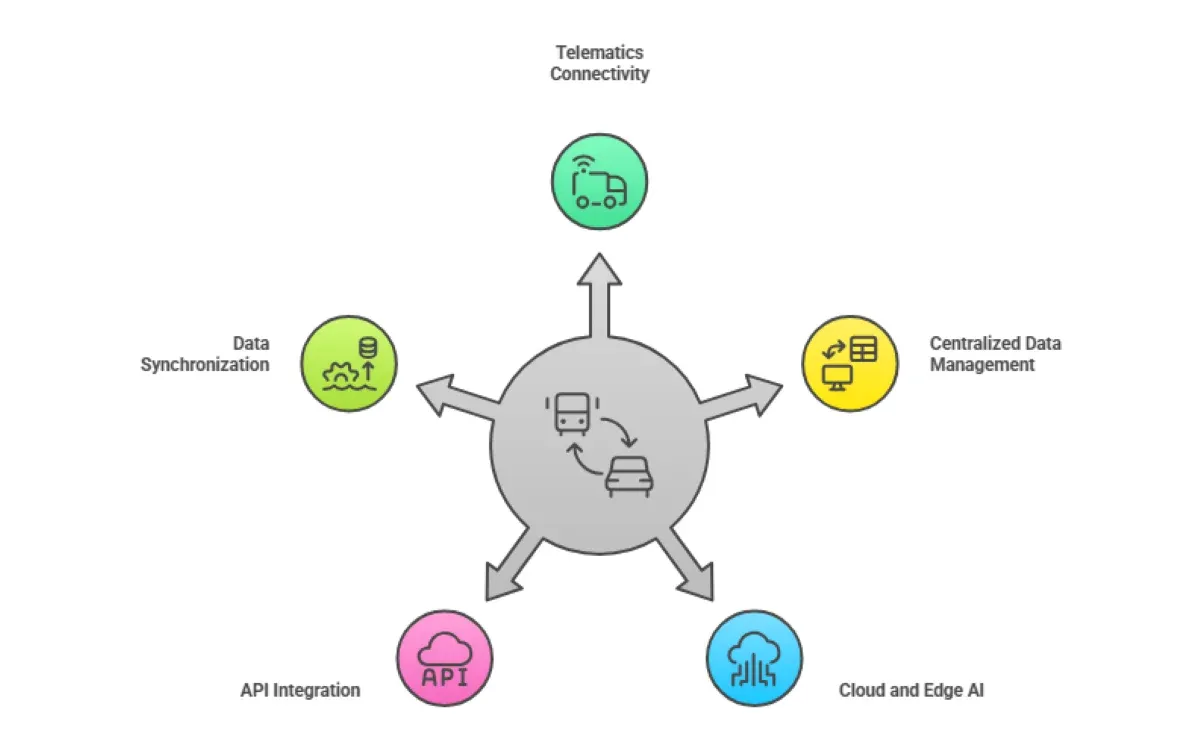
Successful computer vision implementation requires seamless integration with existing fleet management systems to maximize the value of safety data and streamline operations across all business functions.
Telematics dashboard connectivity ensures that visual safety data appears alongside traditional fleet metrics like fuel consumption, maintenance schedules, and route information. This consolidated view helps managers make more informed operational decisions using complete data sets.
Centralized data management eliminates information silos by bringing driver performance data into the leading fleet management platform. Furthermore, managers can access safety reports, video footage, and analytics from a single interface rather than switching between multiple systems.
Cloud computing infrastructure enables real-time processing of large amounts of video data while providing secure storage and easy access to historical information. Edge AI processing handles time-critical safety alerts without depending on internet connectivity for immediate responses.
API integration capabilities allow custom connections with specialized fleet software, payroll systems, and third-party applications. This flexibility ensures that safety data can flow into existing business processes without requiring major system changes or operational disruptions.
Data synchronization ensures that driver performance information stays current across all connected systems, preventing discrepancies that could lead to poor decision-making. Real-time updates help maintain accuracy in reporting, scheduling, and performance evaluation processes throughout the organization.
Folio3.ai developed an end-to-end MLOps solution for Aiden, a California-based startup that collects vehicle sensor data and makes it useful for consumers.
Automated system provisions new vehicles with AWS IoT Core using bootstrap certificates, generating unique vehicle certificates for secure future communications. This module streamlines fleet onboarding by eliminating manual certificate management and ensuring each vehicle maintains authenticated connections to cloud services.
Cloud infrastructure collects vehicle sensor data and routes it to multiple consumers through segregated pipelines based on specific requirements. Moreover, the system processes real-time telemetry data, applies filtering rules, and distributes information to insurance companies, fleet managers, and other stakeholders according to their data needs.
The platform enables consumers to send consent forms to vehicles, requiring owner acceptance while supporting consent revocation and automated notifications. Vehicle owners receive digital consent requests through their dashboard, can review data sharing terms, and maintain full control over their information with instant revocation capabilities.
All project modules were completed on time with maximum productivity, enhancing Aiden's software functionality by 50%.
The implementation of computer vision technology delivers measurable improvements across multiple areas of fleet operations, creating value that extends well beyond basic safety compliance.
Enhanced road safety: Computer vision reduces accident rates and near-miss events by monitoring driver behavior, with fleet managers observing measurable safety improvements within months.
Lower fuel costs: Efficient driving patterns reduce harsh acceleration and idling, with many fleets reporting 10-15% fuel savings through real-time feedback systems.
Reduced insurance premiums: Fewer accidents and claims lower settlement costs while insurance companies provide premium discounts for fleets using advanced safety technology.
Improved regulatory compliance: Automated documentation of safety events and driver behaviors simplifies compliance with Hours of Service regulations during government audits.
Real-time corrective feedback: Instant audio alerts enable immediate behavior modification, allowing drivers to correct risky actions before incidents occur rather than retrospective discussions.
While computer vision technology offers measurable benefits, successful implementation requires careful planning and attention to several key challenges that can impact adoption and effectiveness across fleet operations.
Data privacy compliance: GDPR and CCPA regulations require clear policies for video footage collection, data retention, access controls, and employee notification requirements.
High hardware costs: Quality cameras and sensors designed for demanding vehicle environments require substantial investment to ensure system reliability and prevent false alerts.
Driver resistance management: Effective communication about system benefits and transparent policies helps build driver acceptance and reduces workplace tension from monitoring technology.
Ongoing maintenance requirements: Regular calibration, camera cleaning, and software updates ensure optimal performance while preventing technical issues that compromise safety monitoring capabilities.
Legacy system integration: Existing fleet management systems may require modifications or additional software layers to work effectively with modern computer vision technology.
The evolution of computer vision technology continues to create new possibilities for fleet safety and efficiency, with emerging trends pointing toward even more sophisticated monitoring capabilities and predictive safety features.
AI-driven predictive safety alerts will become more accurate as systems learn from larger datasets and incorporate additional factors like weather conditions, traffic patterns, and individual driver characteristics to anticipate potential safety events before they occur.
Integration with autonomous driving systems will create hybrid monitoring approaches where computer vision monitors human drivers while also supporting semi-autonomous features like lane keeping and adaptive cruise control during the transition to fully automated vehicles.
Real-time biometric monitoring capabilities will expand beyond visual observation to include heart rate, stress levels, and other physiological indicators that affect driving performance, providing a more complete picture of driver readiness and alertness throughout shifts.
Enhanced behavioral pattern recognition will identify subtle indicators that suggest impairment, medical emergencies, or other situations requiring immediate intervention, potentially saving lives through early detection of health-related driving risks and immediate response protocols.
Advanced machine learning improvements will reduce false alerts while increasing detection accuracy, making the systems more reliable and further improving driver acceptance of monitoring technology.
Folio3.ai delivers specialized computer vision expertise with over 15 years of experience, combining cutting-edge AI algorithms with proven implementation success across 1000+ enterprise-level clients in diverse industries.
We collaborate closely with your business to align computer vision solutions with strategic goals, identifying optimal requirements, datasets, and models for maximum impact and ROI.
Our team crafts robust, scalable computer vision-enabled solutions that redefine user experiences, ensuring seamless functionality from initial conceptualization through complete deployment and optimization.
Utilizing cutting-edge frameworks including OpenCV, TensorFlow, and GPU modules, we optimize custom model designs specifically for high-performance machine vision applications and real-world deployment scenarios.
We expertly integrate computer vision software into existing products and systems, configuring solutions to align perfectly with your business objectives while maintaining operational continuity.
By leveraging the latest research developments, we help your business maintain competitive advantages through innovative visual recognition technologies and forward-thinking AI implementation strategies.

Computer vision uses AI-powered cameras and algorithms to analyze driver behavior in real time, detecting dangerous actions like distracted driving, drowsiness, and aggressive maneuvers. Unlike traditional sensors that only measure vehicle movement, computer vision actually "sees" what drivers are doing and provides visual context for safety events.
AI systems analyze video feeds to identify specific behaviors like phone use, looking away from the road, or signs of fatigue such as drooping eyelids or head nodding. Likewise, this technology uses machine learning algorithms trained on thousands of examples to accurately distinguish between normal driving actions and potentially dangerous behaviors.
Yes, fleets typically see notable reductions in accidents and insurance premiums after implementing computer vision monitoring systems. The real-time alerts help prevent incidents before they occur, while the visual evidence helps resolve insurance claims more quickly and fairly.
AI systems can detect distracted driving, drowsiness, aggressive acceleration and braking, phone use, smoking, not wearing seatbelts, lane departure, tailgating, and various other risky behaviors. The technology works continuously during vehicle operation to provide complete safety monitoring.
Modern computer vision systems achieve accuracy rates of 95% or higher for detecting the most risky driving behaviors when properly configured and maintained under optimal conditions. However, accuracy can vary based on lighting conditions, camera quality, and environmental factors. The systems use multiple visual indicators and sensor inputs to minimize false alerts while ensuring genuine safety risks are detected reliably.
Yes, driver monitoring systems typically help fleets achieve 10-15% fuel savings by reducing aggressive driving behaviors like harsh acceleration, excessive idling, and speeding. However, actual savings vary based on fleet characteristics, driving conditions, and baseline driver behaviors. The real-time feedback helps drivers develop more efficient driving habits that save fuel and reduce vehicle wear.
Properly implemented systems can comply with privacy regulations like GDPR and CCPA through appropriate data handling policies, secure storage, and clear employee notification procedures. Fleet managers must establish transparent policies about data collection, retention, and access to ensure compliance.
Yes, modern computer vision systems are designed to integrate with existing fleet management platforms through APIs and cloud-based connections. Moreover, this integration allows safety data to appear alongside other fleet metrics in a single dashboard for more effective management.
Predictive analytics analyzes patterns in driving behavior to identify drivers at higher risk for future incidents, allowing fleet managers to provide targeted training or intervention before accidents occur. The technology helps shift from reactive incident response to proactive risk prevention.
Most fleets see positive ROI within 12–18 months through reduced accidents, lower insurance costs, and fuel savings. Consequently, decreased vehicle maintenance expenses follow. The exact ROI depends on fleet size and current safety performance, but improvements typically justify the investment quickly through multiple cost reduction areas.