
Loading...
Business owners face more security challenges today than ever before. Facilities are larger, assets more valuable, and threats more sophisticated. Traditional surveillance systems that worked fine ten years ago simply can't keep up with modern security demands. That’s why understanding how computer vision is revolutionizing security systems in 2025 is critical for organizations looking to stay ahead of evolving threats.
According to multiple industry research reports, the global computer vision market was valued between $19.82 billion and $25.41 billion in 2024, with projections reaching $23.62 billion to $31.83 billion in 2025, primarily driven by security applications that deliver real results.
The shift from passive recording to intelligent monitoring represents the most significant change in security technology since the invention of the camera itself.
Computer vision in security systems refers to AI technology that gives cameras and surveillance equipment the ability to understand visual information, like how the human eyes and brain work together. Traditional CCTV systems only record footage for later review, requiring human operators to watch endless hours of video feeds. Computer vision systems analyze video streams instantly, identifying people, objects, and unusual behaviors without human intervention.
The core difference lies in intelligence. Your traditional security camera sees a person walking through your facility, but can't distinguish between an employee arriving for work and an intruder trying to break in. Computer vision systems understand context, recognize authorized personnel, and identify suspicious behavior patterns that indicate potential threats. This shift from passive recording to active analysis transforms your security infrastructure from a reactive system into a proactive defense network.
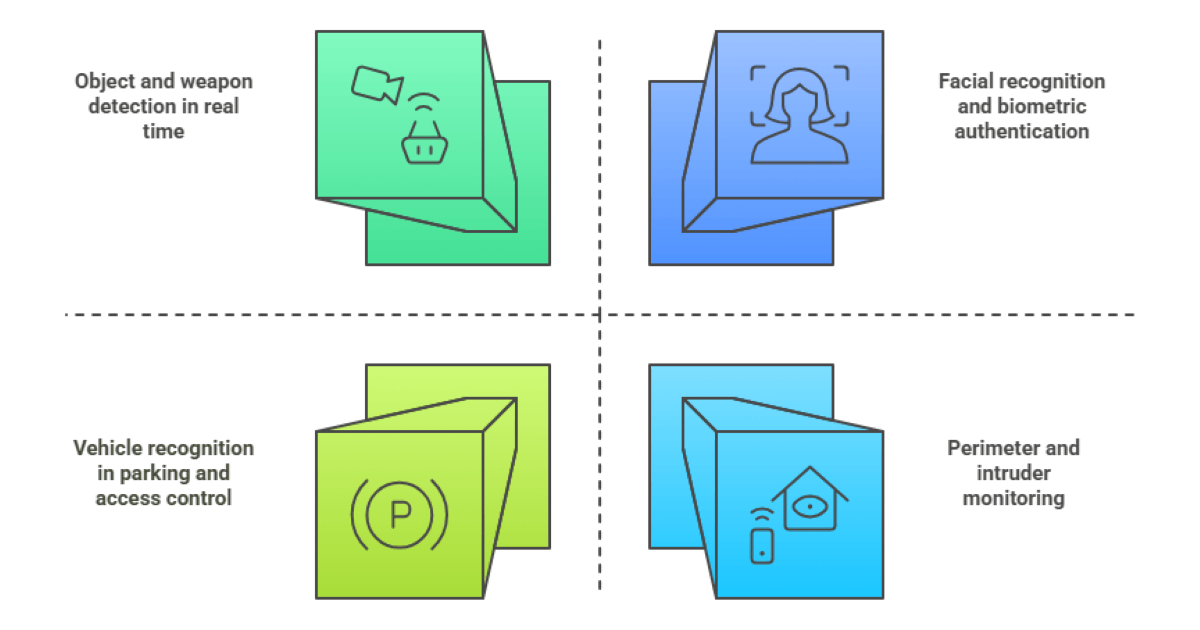
Modern businesses are implementing computer vision technology across multiple security applications that address specific operational challenges and threats.
Advanced facial recognition systems can achieve accuracy rates exceeding 99.5% under optimal conditions, making them reliable for access control and security monitoring. However, real-world accuracy can drop significantly to around 90.7% when processing images captured "in the wild" where lighting and positioning are not optimal. These systems compare facial features against databases of authorized personnel in milliseconds, automatically granting or denying access to secure areas.
Computer vision algorithms can identify weapons, suspicious packages, and prohibited items within seconds of appearing in camera feeds. These systems enable businesses to spot and handle threats accurately and efficiently, keeping places safe and running operations smoothly. Security personnel receive immediate notifications with precise location information, enabling rapid response before situations escalate.
Smart perimeter monitoring creates virtual security boundaries around your property using advanced computer vision algorithms. These systems detect unauthorized entry attempts while distinguishing between legitimate activities and actual threats. Studies suggest that computer vision-based surveillance systems can achieve significant reductions in false alarm rates, allowing security teams to focus on genuine threats instead of wasting time on false alerts.
Automated license plate recognition systems manage vehicle access and parking areas without requiring human oversight. These systems identify authorized vehicles, track parking duration, and alert security to suspicious or unauthorized vehicles. Integration with existing access control systems creates smooth entry experiences for employees while maintaining strict security protocols.
The integration of artificial intelligence and deep learning technologies has transformed security system performance and reliability in measurable ways.
Convolutional neural networks process visual data through multiple layers, each identifying different features from basic shapes to complex behavioral patterns. These networks learn from thousands of security scenarios to recognize faces, objects, and threatening behaviors with increasing accuracy over time. The result is security systems that become smarter and more reliable with continued use.
Advanced AI algorithms analyze context such as time of day, weather conditions, and normal activity patterns to distinguish between genuine threats and harmless activities. Research indicates that AI-powered systems can reduce false alarms by up to 90% compared to traditional motion detection systems, with some advanced systems claiming up to 99.95% false positive reduction. This intelligent filtering significantly reduces operator fatigue and allows security teams to focus on genuine threats.
Behavioral analytics establishes baselines for normal activity patterns and flags deviations that indicate potential security threats. These systems identify unusual behaviors such as loitering, unusual gathering patterns, or abnormal movement speeds before they escalate into incidents. Early detection allows security teams to intervene proactively rather than simply responding after problems occur.
The convergence of computer vision with IoT devices and edge computing creates more powerful and responsive security systems.
Edge computing processes video analysis directly on camera devices rather than sending data to remote servers for analysis. This approach eliminates network delays and enables instant threat detection and response. Edge computing significantly reduces latency and conserves bandwidth, which is crucial for IoT and real-time systems, enabling faster and more efficient visual data processing.
Smart cameras equipped with IoT connectivity share data with other security devices, creating coordinated response systems. Motion sensors, door contacts, and environmental monitors work together to provide complete situational awareness. This networked approach enables automatic responses such as locking doors when perimeter breaches are detected or adjusting lighting when suspicious activity is identified.
Cloud-based systems offer unlimited processing power and automatic updates, but require internet connectivity and raise data privacy concerns. On-premises solutions provide complete data control and work independently of internet connections, but require local infrastructure investment. Many organizations choose hybrid approaches that process sensitive data locally while using cloud resources for system updates and analytics.
The adoption of computer vision technology delivers measurable improvements across multiple aspects of security operations.
Real-time threat detection: AI systems instantly identify suspicious activities, weapons, and unauthorized access attempts, providing immediate alerts with threat location and severity levels.
Automated response capabilities: Systems automatically trigger lockdowns, alert security teams, and escalate responses without human intervention, reducing reaction times from minutes to seconds.
Enhanced detection accuracy: Machine learning algorithms achieve over 95% threat detection rates while minimizing false alarms through continuous learning and pattern recognition improvements.
Reduced operational costs: Automated monitoring allows one operator to oversee multiple areas previously requiring several personnel, significantly lowering labor costs while improving coverage.
Smart access integration: Facial recognition seamlessly connects with electronic locks and turnstiles, enabling cardless entry while maintaining detailed audit logs for compliance.
Despite clear benefits, organizations face several practical challenges when implementing computer vision security systems.
Privacy compliance requirements: GDPR and CCPA regulations mandate explicit consent for biometric data collection, requiring organizations to implement data minimization and clear opt-out procedures.
High initial investment costs: AI-enabled cameras and processing equipment require substantial upfront investment compared to traditional systems, challenging smaller businesses with limited budgets.
Complex integration processes: Professional installation and system integration with existing infrastructure add significant expenses and technical complexity to deployment timelines and costs.
Environmental adaptation challenges: AI models require extensive training with diverse datasets to perform accurately across varying lighting conditions, weather patterns, and physical environments.
Ongoing maintenance requirements: Custom model development and continuous refinement demand specialized expertise and resources to maintain accuracy as business operations and environments evolve.
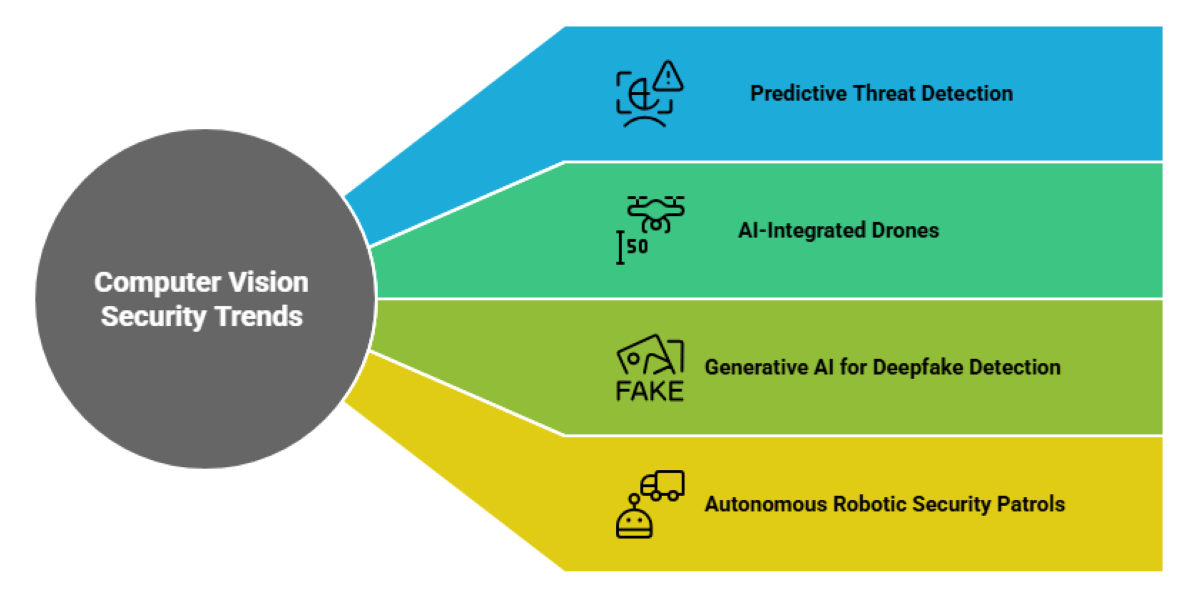
The security industry continues advancing with new technologies that promise even greater capabilities and effectiveness.
Advanced AI systems will predict potential security incidents before they occur by analyzing patterns in behavior, environmental factors, and historical data. Machine learning models will identify subtle changes in normal patterns that indicate developing threats. Predictive capabilities will enable proactive security measures rather than reactive responses to incidents after they happen.
Autonomous drones equipped with computer vision will patrol large perimeters and respond to alerts automatically. These aerial security systems will provide coverage for areas difficult to monitor with fixed cameras. Drone integration with ground-based security systems will create three-dimensional security coverage that monitors threats from multiple angles and perspectives.
As deepfake technology becomes more sophisticated, security systems will need AI-powered detection capabilities to identify fraudulent video content. Computer vision models can identify deepfake videos or images used in phishing attempts or fraud schemes by analyzing pixel-level inconsistencies. This technology will be crucial for preventing sophisticated social engineering attacks that use manipulated media.
Mobile security robots with computer vision capabilities will conduct automated patrols of indoor and outdoor areas. These robots will investigate alerts, provide two-way communication with security personnel, and gather detailed information about incidents. Integration with building systems will enable robots to unlock doors, control lighting, and coordinate with human security teams.
Leading organizations across various industries demonstrate the practical benefits of computer vision security implementations.
Advanced object detection methods now play a crucial role in identifying hazardous materials using various types of X-ray scans to help ensure the safety and protection of travelers. Major airports process millions of passengers annually while maintaining security standards through automated screening systems.
Organizations have deployed computer vision systems across their campuses to manage employee access and visitor tracking. These systems automatically grant building access to employees while requiring visitor registration and escort protocols.
Cities including Singapore and Barcelona use computer vision networks to monitor public spaces for crime prevention and emergency response. These systems automatically detect accidents, fights, and medical emergencies while coordinating response from multiple agencies.
Selecting the right technology partner is crucial for successful computer vision implementation in security applications.
Business Analysis and Computer Vision Strategy: We collaborate closely with your organization to align computer vision solutions with strategic goals, identifying optimal requirements, datasets, and models.
Application Development: Our team crafts robust and scalable computer vision-enabled applications that redefine user experiences from initial conceptualization through complete deployment and testing.
Model Design and Optimization: Utilizing cutting-edge frameworks including OpenCV, TensorFlow, and GPU modules, we optimize model designs for high-performance machine vision applications and efficiency.
System Integration: We seamlessly integrate computer vision software into existing products and configure systems to align perfectly with your specific business objectives and infrastructure.
Computer Vision Research and Innovation: By leveraging the latest research developments, we help businesses stay competitive through innovative visual recognition technologies and emerging methodologies.
Computer vision in security systems uses AI technology to analyze video feeds and images in real time, automatically detecting threats, identifying people and objects, and alerting security personnel immediately. Unlike traditional CCTV surveillance that only records footage, these intelligent systems understand what they're seeing and can respond instantly to security events across offices, warehouses, retail stores, and public spaces.
AI-powered surveillance can reduce false alarms by up to 90% through intelligent analysis that distinguishes between genuine threats and everyday activities like pedestrians, vehicles, or weather conditions. Machine learning algorithms continuously learn from new data to improve detection accuracy over time, achieving threat detection rates exceeding 95% while maintaining consistent performance without human fatigue.
Yes, modern computer vision security systems can identify weapons, explosives, knives, and suspicious packages in real time with high accuracy by analyzing object shapes, sizes, and movement patterns. Security teams receive immediate alerts with precise location information for rapid response, making them ideal for airports, schools, corporate facilities, and government buildings.
Facial recognition technology verifies employee identities for access control, tracks visitor movements throughout facilities, and identifies unauthorized individuals against database records with over 99% accuracy. Integration with smart access control systems enables automatic door unlocking for authorized personnel while maintaining detailed audit logs for compliance and security monitoring.
Healthcare facilities, financial institutions, manufacturing plants, educational campuses, and retail locations see significant benefits from AI-powered security systems due to their high security requirements and valuable assets. Transportation hubs, government facilities, and corporate offices also rely heavily on computer vision for comprehensive security coverage and threat detection.
Real-time detection enables security teams to respond to threats within seconds rather than minutes or hours after incidents occur, with automated alerts including threat location, type, and severity level. Early intervention prevents minor incidents from escalating into major security breaches or safety emergencies, significantly improving overall facility protection.
AI security systems collect and process biometric data, including facial images and behavior patterns, raising concerns about personal privacy and data protection under GDPR and CCPA regulations. Organizations must implement data minimization practices, secure storage protocols, and clear policies for data access and retention to ensure compliance.
Computer vision algorithms run directly on IoT-enabled smart cameras, enabling local processing and immediate threat detection without network delays or cloud dependency. These cameras communicate with other security devices, including door locks, alarms, and sensors, to create coordinated response systems for comprehensive facility protection.
Edge AI processes video analysis directly on camera devices rather than sending data to remote servers, eliminating network delays and enabling instant threat detection. Local processing continues functioning during network outages and reduces bandwidth requirements while enhancing privacy by keeping sensitive data on local devices.
Future developments include predictive threat detection that identifies potential incidents before they occur, autonomous drone patrols for perimeter monitoring, and advanced deepfake detection capabilities. AI integration will expand to include robotic security patrols and enhanced behavioral analytics for insider threat detection with more sophisticated machine learning models.