
Loading...
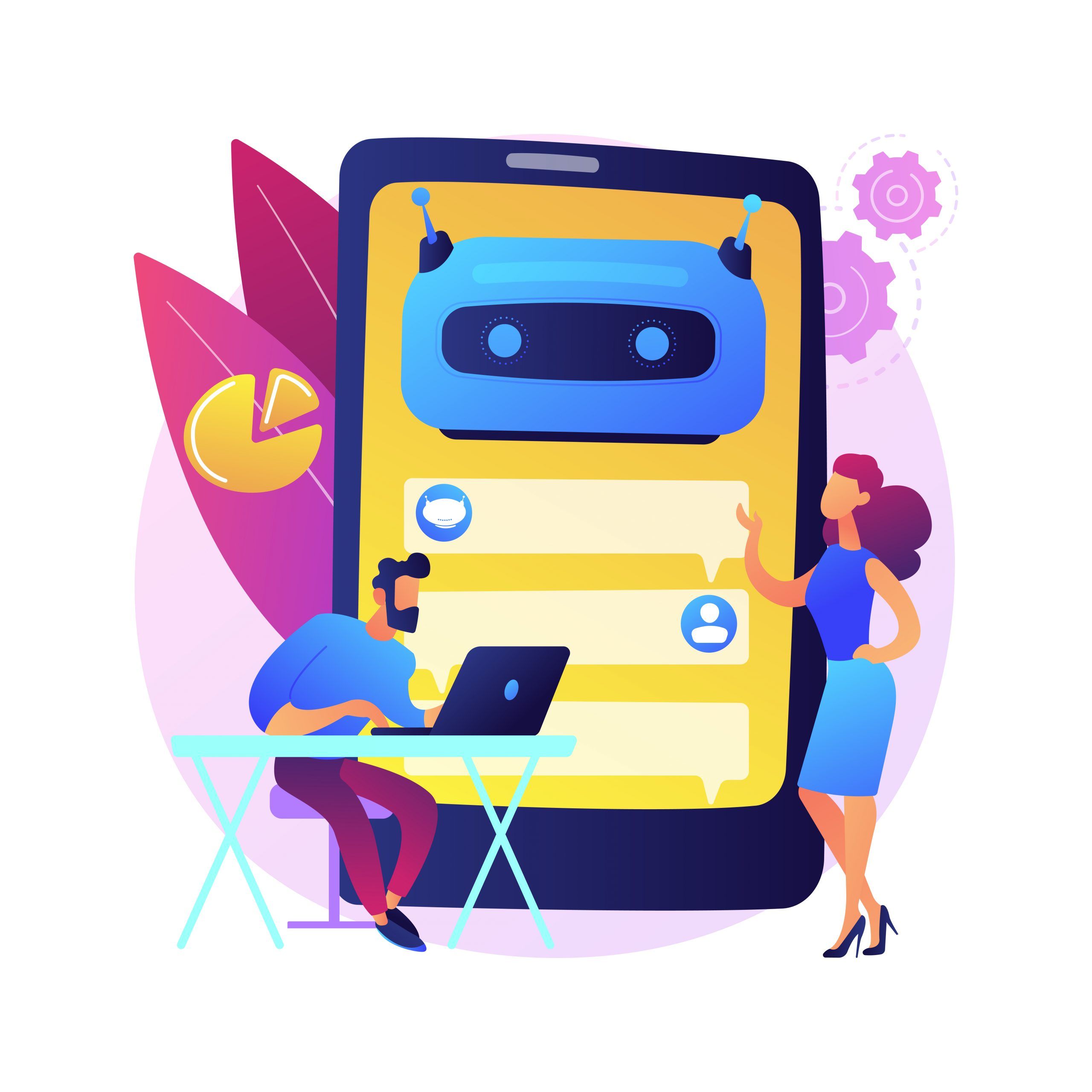
In the ever-evolving landscape of Artificial Intelligence (AI), two prominent technologies have gained significant attention: AI virtual assistants vs chatbots. These advanced applications have transformed how businesses interact with customers and users. Both are powered by Generative AI, a groundbreaking technology revolutionized by the advent of Large Language Models (LLMs). In this article, we’ll explore the nuances between AI virtual assistants and chatbots, highlighting their differences, unique capabilities, and how each leverages Generative AI to deliver distinct results.
Generative AI refers to the subset of AI that focuses on creating content, whether it's text, images, or other forms of media. LLMs, often referred to as "AI language models," are at the heart of Generative AI. These models are designed to understand and generate human-like text based on the patterns and information they've learned from massive datasets. One of the most notable examples of LLMs is OpenAI's GPT (Generative Pre-trained Transformer) series, including the latest iteration, GPT-4.
AI Virtual Assistants take the capabilities of AI Chatbots to the next level by incorporating multimodal interactions. In addition to text-based conversations, they can process and generate a variety of content types, including text, images, and even voice.
Let's take a closer look at the key differences between AI Chatbots and AI Virtual Assistants using a tabular comparison:
Aspect
AI Chatbots
AI Virtual Assistants
Interaction Types Text-based conversations Multimodal interactions Input Types Text Text, images, voice Use Cases Customer support, FAQs Smart devices, AR/VR Content Generation Text responses Text, images, voice Context Understanding Moderate Advanced Integration Complexity Relatively simpler Complex due to multimodal capabilities Example Technologies Facebook Messenger Bots, Slack Bots Amazon Alexa, Google Assistant
In the world of AI, the distinction between AI Chatbots and AI Virtual Assistants goes beyond semantics. While both technologies use Generative AI and Large Language Models to create content, their focus and capabilities diverge significantly. AI Chatbots excel in text-based conversations, making them suitable for customer support and FAQs. With their multimodal interactions, AI Virtual Assistants cater to more diverse applications, including smart devices and augmented reality environments.
We expect further refinement and integration of these two technologies as technology advances. AI Chatbots might evolve to incorporate multimodal capabilities, blurring the lines between the two. Regardless of the direction they take, one thing is sure: both AI Chatbots and AI Virtual Assistants are shaping the way we interact with machines, ushering us into an era of unprecedented AI-driven communication. Integrating Generative AI and LLMs into these technologies has been a game-changer, propelling them to new heights of sophistication and usability. Whether you're developing an AI Chatbot for your business website or exploring the potential of an AI Virtual Assistant for your smart home, understanding the nuances and capabilities of these technologies is crucial for delivering exceptional user experiences in the AI-driven world.
In conclusion, the journey of AI Chatbots and AI Virtual Assistants is a testament to the remarkable progress that Generative AI and Large Language Models have brought to the field of artificial intelligence. As we continue to witness their evolution, it's evident that they are not just tools but companions that are transforming how we interact with technology and enhancing our daily lives profoundly.
An AI chatbot is designed mainly for conversational interactions, answering questions, and providing quick responses. A virtual assistant goes beyond conversation, handling complex, multi-step tasks, integrating with various tools, and providing proactive support.
In most cases, no. While advanced chatbots can manage simple workflows, virtual assistants are built to handle multi-step, context-rich tasks that require deeper integration with business systems.
Yes. Many virtual assistants can process voice commands and even image-based inputs, whereas most chatbots operate through text-based interactions unless custom-built with multimodal capabilities.
For high-volume, repetitive queries, AI chatbots are more efficient. For complex, personalized, or multi-channel support, virtual assistants deliver a better experience.
Basic chatbots often lose context after a session ends. Advanced AI chatbots and virtual assistants can maintain ongoing context, but virtual assistants typically offer more persistent and personalized memory.
Yes. Virtual assistants leverage user data, preferences, and past interactions to tailor responses, while most chatbots follow pre-defined scripts or limited context windows.
Virtual assistants usually offer deeper integrations with enterprise applications like CRMs, ERPs, and project management tools, while chatbots tend to integrate with fewer systems.
In a broad sense, yes—chatbots are a simpler, specialized type of virtual assistant. However, the term “virtual assistant” generally implies broader capabilities beyond text-based chat.
If your needs focus on high-speed responses to common questions with minimal complexity, choose a chatbot. If you require task automation, cross-platform integration, or personalized support, opt for a virtual assistant.
Yes. Virtual assistants can proactively suggest actions, reminders, or insights based on user behavior and data, while most chatbots only respond when prompted.