
Loading...
Infrastructure—from bridges and railways to power lines and pipelines—forms the backbone of modern economies and everyday life.
Ensuring these structures remain safe and operational requires frequent, detailed inspections.
Traditional methods, while effective, are increasingly challenged by high costs, access limitations, and safety concerns.
That’s where drone infrastructure inspection is transforming the industry.
By employing aerial technology equipped with high-end sensors and intelligent software, drones are enabling faster, safer, and more cost-effective infrastructure assessments than ever before.
A complete drone utility inspection ecosystem involves several interconnected components:
These unmanned aerial vehicles (UAVs) include both multirotor drones and fixed-wing drones.
Multirotor drones are ideal for hovering and maneuvering around complex structures, while fixed-wing drones are suitable for covering large areas with longer flight times.
UAVs can carry a variety of sensor payloads depending on the inspection needs.
These include high-resolution RGB cameras, thermal sensors, LiDAR scanners, multispectral sensors, and gas detectors.
Flight management systems support mission planning, automated route execution, and data collection.
They also integrate with analytics dashboards for data visualization and reporting.
After the flight, collected data is processed using specialized software tools.
These tools perform 3D mapping, image stitching, anomaly detection, and reporting to convert raw sensor data into actionable insights.
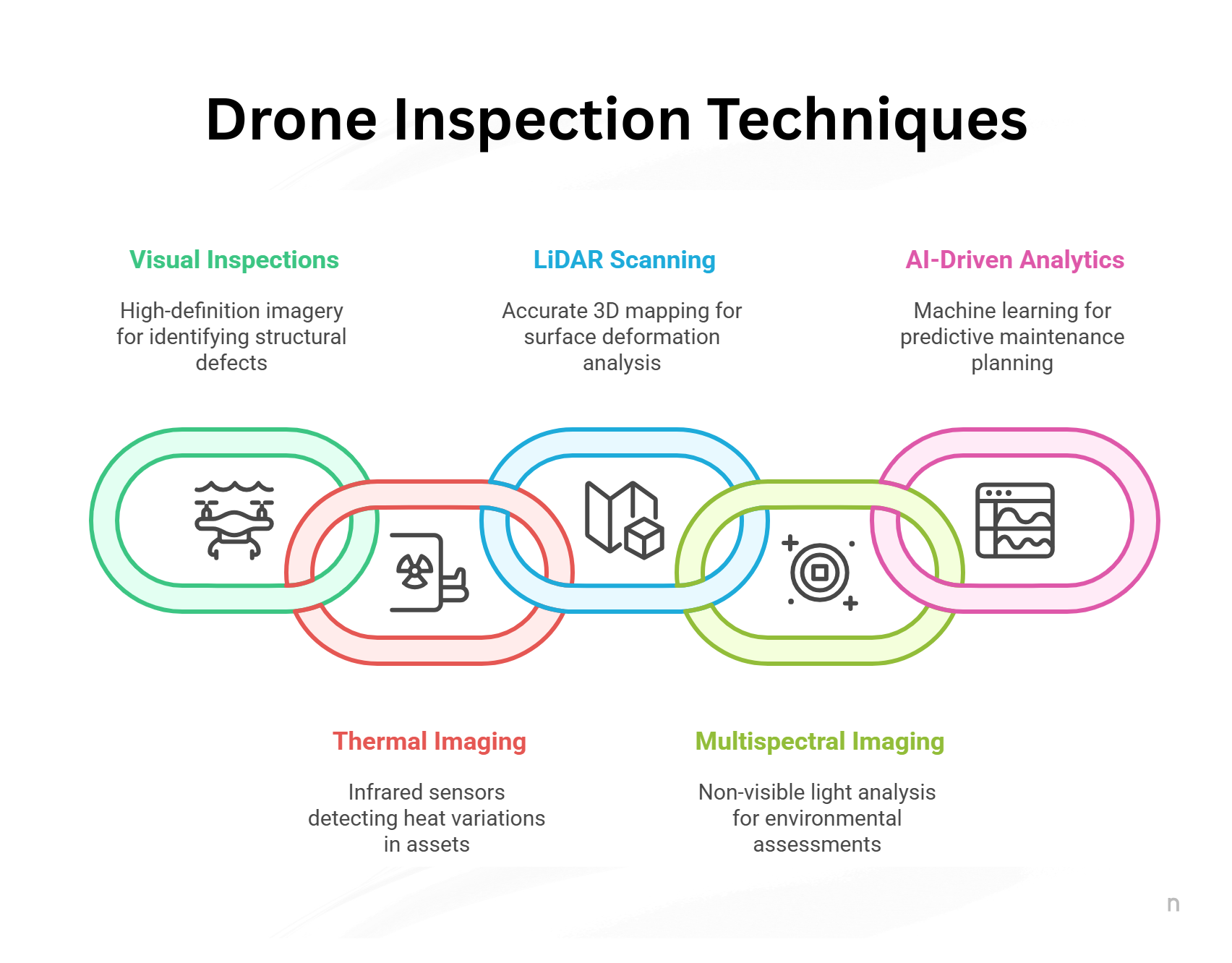
Modern drone inspection of facilities involve various specialized techniques tailored to infrastructure needs:
Visual Inspections: High-definition imagery allows inspectors to conduct line-of-sight and close-up evaluations of assets like poles, turbines, and panels to identify cracks, corrosion, or structural wear.
Thermal Imaging: These inspections use infrared sensors to detect heat variations, revealing problems like overheating transformers or failing solar cells.
LiDAR Scanning: LiDAR provides highly accurate 3D representations of structures and terrain, helping identify surface deformations or vegetation encroachment.
Multispectral Imaging: This method captures non-visible light data to analyze vegetation health, detect moisture levels, and assess environmental conditions.
AI-Driven Analytics: Machine learning algorithms automatically flag defects, assess wear patterns, and support predictive maintenance planning based on historical and real-time data.
Drone utility inspections offer a range of strategic benefits by enhancing safety, reducing costs, and improving efficiency.
Enhanced Safety: Crews remain on the ground while drones handle inspections in hazardous or elevated locations.
Lower Costs: Early detection of issues reduces emergency repairs and minimizes labor costs associated with manual inspections.
Faster Turnaround: Inspections that previously took days can now be completed in a few hours, improving efficiency.
High-Precision Data: Drones deliver detailed, real-time visuals and sensor readings that improve maintenance accuracy.
Remote Access: Drones for infrastructure inspection can reach difficult or dangerous-to-reach locations without ground disruption.
Improved Forecasting: Data captured by drones supports better asset lifecycle management and proactive maintenance scheduling.
Building inspection drones are transforming infrastructure monitoring across multiple sectors—from energy and telecom to agriculture and environmental conservation—by providing efficient, accurate, and scalable inspection capabilities in hard-to-reach or hazardous areas.
Transmission Lines / Poles: Drones inspect transmission lines and poles to detect corrosion, wear, and physical damage across long spans.
Substations & Transformers: Thermal imaging drones identify equipment that is overheating or showing signs of failure.
Wind Turbines: UAVs examine blades for cracks, erosion, or delamination in remote or elevated turbine locations.
Vegetation Monitoring: Drone electrical inspection assess tree growth near lines to prevent vegetation-related power outages.
Pipelines & Aqueducts: Drones survey pipelines and aqueducts for leaks, erosion, and structural integrity.
Dams & Reservoirs: LiDAR and thermal sensors monitor dam walls and water levels for signs of structural risk.
Plant Inspections: Aerial inspections of water treatment plants help detect rust, loose components, and surface damage.
Tower Assessment: Drones capture detailed visuals of cellular towers to identify panel damage or misaligned antennas.
Equipment Checks: UAVs inspect backup systems, signal boosters, and other telecom gear to ensure operational readiness.
Line-of-Sight Validation: Drones conduct microwave path and signal line-of-sight surveys to support 5G deployment.
Pipeline Monitoring: UAVs detect leaks, ground movements, and integrity issues in miles-long oil and gas pipelines.
Offshore Platforms: Drones inspect hard-to-reach offshore structures without interrupting daily operations.
Flare Stack Imaging: Thermal sensors are used to assess heat output and detect issues in flare stack performance.
ROW Surveillance: Drones monitor rights-of-way for unauthorized access or environmental interference.
Hotspot Identification: Drones use thermal imaging to detect overheating or malfunctioning photovoltaic cells.
Debris Shading: UAVs identify dirty or shaded areas reducing panel efficiency, supporting cleaning schedules.
Asset Mapping: Inspections are integrated with GIS to assist in planning maintenance and optimizing energy output.
Health Monitoring: Multispectral imaging helps monitor crop health and detect stress before it affects yield.
Disease & Pest Detection: Early identification of infestations allows for timely, targeted intervention.
Irrigation and Soil Analysis: Drones help map soil moisture levels, informing efficient irrigation strategies.
Counting & Tracking: Aerial inspections using drones automate livestock counts and tracks herd movement across large areas.
Health Behavior Analysis: Drones detect irregular movement patterns that may indicate health issues.
Predator Detection: UAVs monitor for predators or trespassers in open grazing zones in real-time.
Topographic Surveys: Drones generate accurate terrain models for infrastructure planning and development.
Erosion & Flood Risk Monitoring: Regular aerial surveys help identify shifting land and water flow patterns.
Habitat Studies: Agencies use drones to monitor ecological change and biodiversity in protected areas.
Blade Inspection: UAVs conduct close-up inspections of wind turbine blades to detect cracks or erosion.
Structural Analysis: Drones check tower and nacelle conditions, identifying rust, loose bolts, or physical damage.
Predictive Maintenance: Analytics from drone data supports trend analysis for proactive service scheduling.
Folio3 delivers AI-powered drone inspection software that enhances every stage of the inspection process.
We do not manufacture or sell drone hardware—instead, we provide custom software solutions that work with your existing drone fleets and sensor systems.
AI Anomaly Detection: Our machine learning models detect anomalies like hotspots, physical damage, and vegetation interference directly from drone-collected imagery.
Workflow Integration: We develop custom platforms that integrate inspection data with your GIS, asset management, and field service systems.
Real-Time Visualization: Dashboards provide on-the-fly insight into inspection results, risk levels, and maintenance recommendations.
Scalable Analytics: Our tools can process thousands of images and videos, flagging high-risk areas and supporting predictive maintenance strategies.
A leading solar energy company partnered with Folio3 to automate the inspection of thousands of solar panels using thermal drone imagery.
The solution achieved over 90% accuracy in identifying diode failures and hotspots. Our AI models filtered out environmental noise and duplicate captures to deliver clean, actionable insights.
The results were directly integrated into the client’s solar portal, streamlining workflow, reducing human error, and boosting maintenance efficiency.
With this custom AI-powered solar panel inspection solution, the company improved panel uptime, reduced manual inspection costs, and enhanced energy output across its facilities.
Read More: Drone Inspection Solution Case Study
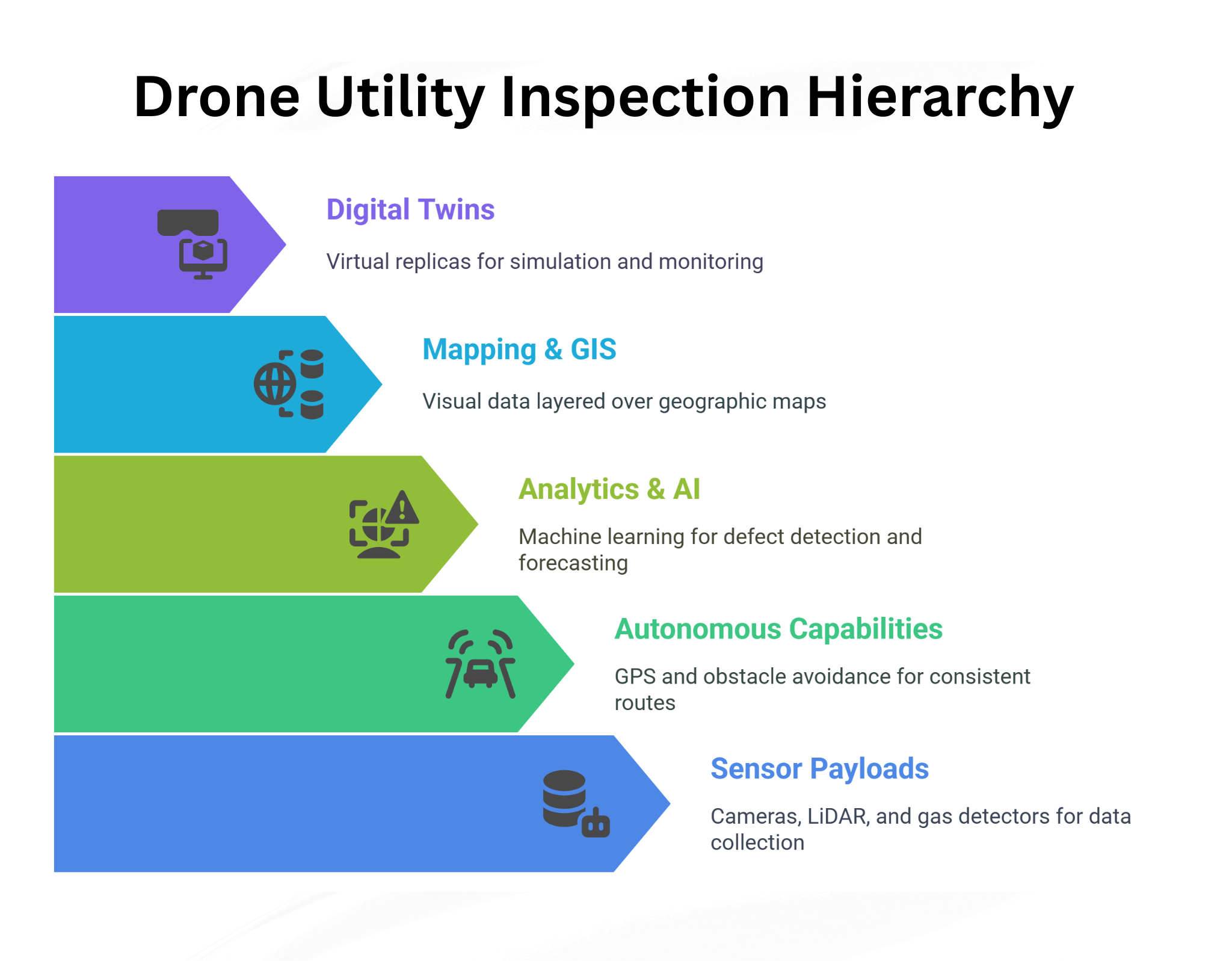
Advanced sensors, autonomous navigation, AI analytics, and GIS integration drive the success of drone utility inspections. It enables data-rich, high-precision insights that support real-time decisions and long-term asset planning.
Sensor Payloads: Cameras, LiDAR, thermal, multispectral, and gas detectors provide comprehensive data collection.
Autonomous Capabilities: GPS-based automation ensures consistent routes, while obstacle avoidance prevents crashes.
Analytics & AI: Machine learning enables automated defect detection, classification, and lifecycle forecasting.
Mapping & GIS: Visual data is layered over geographic maps for asset planning and compliance tracking.
Digital Twins: Virtual replicas of physical systems enable simulation and long-term asset performance monitoring.
Successful drone utility inspections require compliance with U.S. aviation laws, safety protocols, and internal policies.
Understanding regulatory requirements ensures legal operation, data security, and long-term program sustainability.
To operate legally and safely in the U.S. and using drones for inspection, you must follow these guidelines:
FAA Certification: Commercial drone operators must be Part 107 certified. Beyond Visual Line of Sight (BVLOS) missions may require FAA waivers.
Training & Licensing: Both drone pilots and data analysts should be trained and certified to ensure safety and reliability.
Privacy & Safety Protocols: Operators must ensure data privacy, avoid restricted airspace, and comply with cybersecurity standards.
Insurance Requirements: Liability, equipment, and data-loss insurance are crucial to mitigate operational risks.
Challenges and Considerations
While drones deliver powerful inspection capabilities, organizations must focus on airspace regulations, data complexity, weather sensitivity, and operational integration to ensure successful deployment and long-term scalability.
Flight Limitations: Payload weight, battery life, and environmental conditions can restrict flight time and range.
Weather Sensitivity: Wind, rain, and low visibility can impact drone performance and data quality.
Initial Costs: High-end sensors, software licenses, and training programs require upfront investment.
Data Management: Handling, storing, and standardizing large datasets across departments can be challenging.
Workforce Integration: Organizations must plan for team training and workflow adjustments when adopting drone systems.
Explore some of the most common questions about drone utility inspections, including what they are, how accurate they can be, and which industries benefit most from using them.
Drone inspections involve using UAVs equipped with cameras, thermal sensors, or LiDAR to assess the condition of infrastructure or landscapes. They replace manual inspections, improving safety, speed, and data accuracy.
With high-resolution sensors and AI-powered image analysis, drone inspections can achieve centimeter-level precision. This allows early detection of defects, corrosion, or anomalies that might be missed by manual checks.
Industries such as electricity, water utilities, telecommunications, oil and gas, agriculture, renewable energy, and government agencies benefit significantly from drone inspections by reducing downtime and improving asset management.
AI-powered drone utility inspections are reshaping how U.S. infrastructure is managed—offering safer, faster, and smarter alternatives to manual methods.
By combining advanced sensors, automation, and intelligent analytics, drone solutions enable proactive asset maintenance and improve decision-making.
Folio3’s customized platforms help utility providers harness drone data effectively, ensuring better operational efficiency and compliance with evolving industry standards.
Whether it’s detecting a failing solar panel or mapping a pipeline, drone inspections powered by
Folio3 empower companies to monitor critical infrastructure with precision, reduce downtime, and plan with confidence.