
Loading...
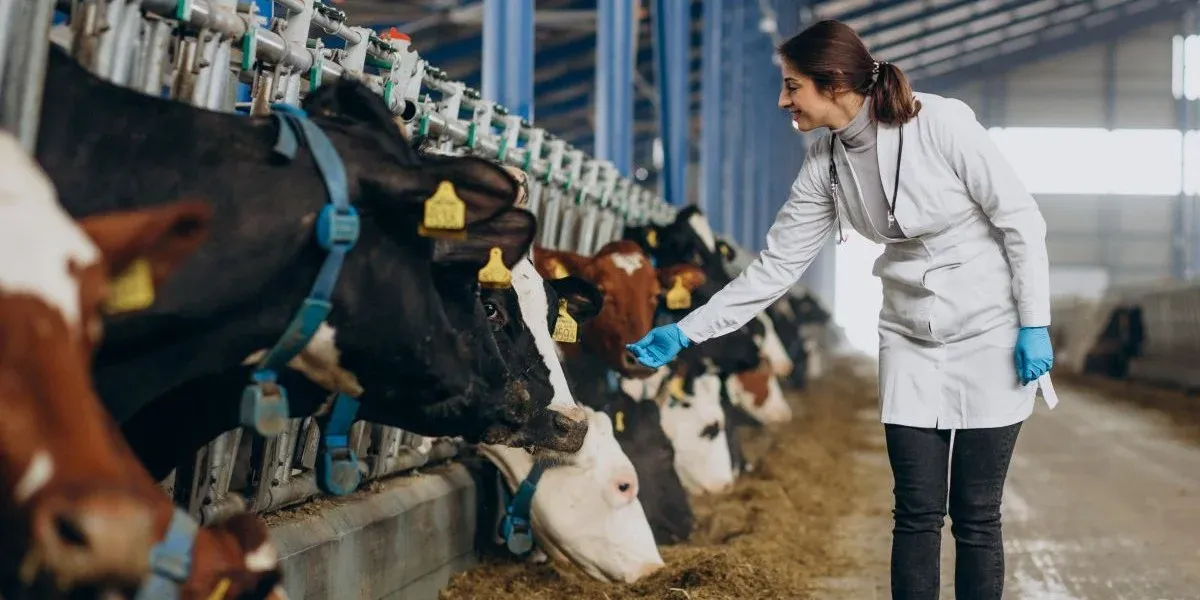
Traditional livestock monitoring means ranch hands walking miles of pasture daily, checking scattered herds by eye; a time-consuming process where sick animals go undetected and losses mount. With rural labor shortages intensifying and cattle prices squeezing margins, ranchers can no longer rely on manual methods alone. That’s why many are now weighing Drone vs Fixed Camera AI to modernize livestock monitoring and improve efficiency.
The question facing operations from small dairy farms to large cattle ranches is simple: Should you invest in drone AI systems or fixed camera networks for monitoring your livestock? This choice will determine not just workflow efficiency for the next decade, but potentially the survival of the operation in an increasingly competitive market.
The global livestock monitoring market size was estimated at USD 4.42 billion in 2024 and is projected to reach USD 8.53 billion by 2030, growing at a CAGR of 11.8%, signaling a massive shift toward AI-powered monitoring systems.

Modern livestock operations face numerous challenges that traditional management methods simply cannot address at scale.
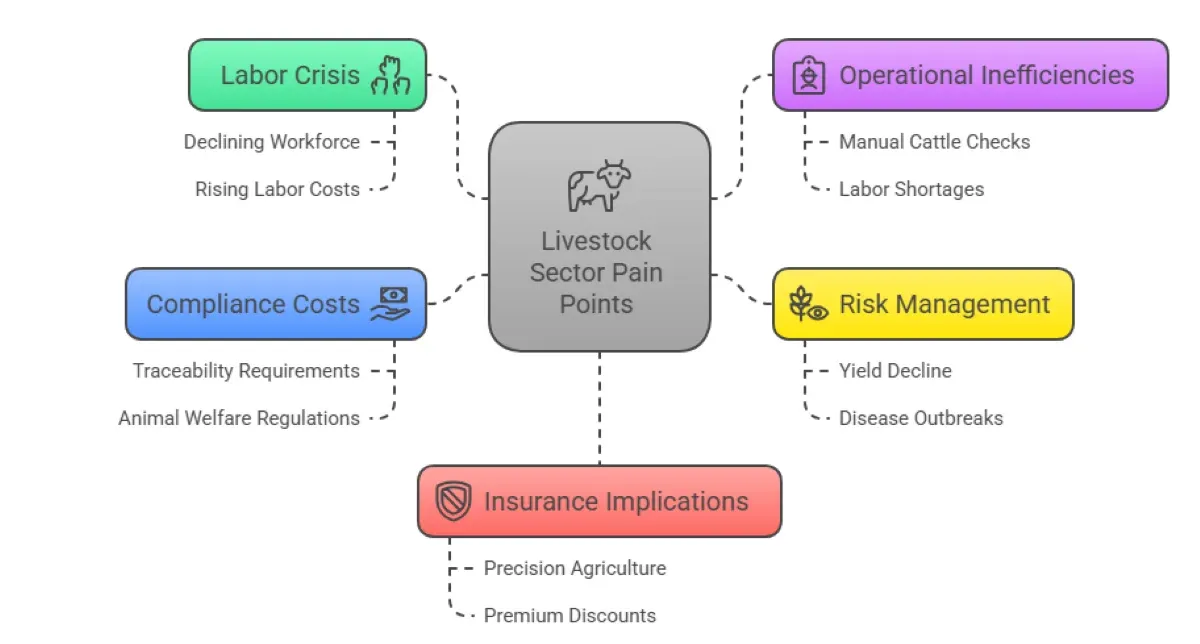
Business owners across the livestock sector are experiencing measurable impacts that directly hit their bottom line through five critical areas requiring immediate attention.
Agricultural workforce availability has declined significantly since 2020, with experienced livestock handlers commanding premium wages. Labor costs in agriculture surged 17% in 2023, with an additional 7% increase expected in the coming years, creating substantial annual expenses for ranch operations while positions remain difficult to fill during peak seasons and emergencies.
Traditional cattle checks consume considerable weekly hours for every hundred head of cattle. Studies show that 56% of farmers report labor shortages, with 2.4 million open agricultural jobs estimated in 2024. Manual rounds miss early-stage health issues when intervention costs remain manageable and animal welfare can be preserved without major veterinary expenses.
At the herd level, yields decreased from an average of 20 to 13 kg (a decline of 35%) per cow per day, with recovery taking place approximately 2 months after the end of the outbreak. Single disease outbreaks can devastate operations depending on herd size and response time, making early detection critical for preventing widespread losses.
USDA estimates that food traceability requirements carry implementation costs ranging from $53 million - $551 million annually for affected operations. State animal welfare regulations demand detailed documentation with significant per-head annual costs in manual record-keeping. Non-compliance penalties can range into thousands of dollars per incident, with repeat violations risking operational licenses.
Agricultural insurers can offer premium discounts for operations implementing precision agriculture technologies, recognizing reduced claims from early disease detection, improved animal welfare documentation, and enhanced theft prevention through surveillance capabilities.
Return on investment for AI monitoring systems materializes through four measurable improvement areas that directly impact operational profitability and long-term sustainability.
AI monitoring systems reduce manual labor requirements significantly for routine animal checks. Operations typically achieve substantial savings annually in labor costs while improving monitoring frequency from twice daily to continuous real-time surveillance, addressing the critical shortage of experienced agricultural workers.
Early health issue detection reduces treatment costs substantially and mortality rates significantly. Systems detecting temperature variations identify sick animals well before visible symptoms appear, preventing herd-wide disease spread and the associated 35% productivity losses documented in disease outbreaks.
Real-time behavioral monitoring improves breeding success rates through accurate estrus detection. Feed efficiency tracking identifies optimal nutrition adjustments, reducing feed costs while maintaining or improving weight gain rates across the herd.
Expanding operations through technology costs considerably less per additional animal monitored compared to hiring additional ranch hands annually. Technology scales linearly while labor costs compound with benefits, training, and management overhead requirements.
The livestock monitoring technology offers two primary approaches, each with distinct operational characteristics and financial implications for different operation types.
Drone-based monitoring systems provide aerial surveillance capabilities that cover large areas quickly while offering flexibility in deployment and data collection methodologies.
Drone systems deliver measurable improvements across three critical operational areas that directly influence day-to-day farm management and long-term profitability outcomes.
Modern agricultural drones can cover 200-500 acres per day, depending on flight patterns and data requirements. Agricultural spray drones can effectively cover 300-350 acres in a 10-hour day, making them significantly more efficient than traditional horseback or ATV checks for large pasture surveillance and herd location activities.
A single drone operator manages surveillance tasks previously requiring multiple ranch hands for equivalent coverage. Operations reduce staffing needs during routine monitoring while maintaining personnel for hands-on animal care, fence repair, and emergency response situations.
Thermal imaging can detect body temperature anomalies in livestock and alert farmers within minutes, compared to hours or days for traditional observation methods. GPS tracking locates missing animals in real-time versus extended search efforts using conventional ground-based approaches.
Enterprise Drone CapabilitiesSpecificationsFlight Time30-45 minutes per battery cycleCoverage Range200-500 acres per day, depending on the missionThermal ResolutionHigh-resolution for early health detectionWeather OperationsWeather-resistant systems for business continuityIntegration APIsFarm management software compatibility
Drone implementations introduce operational considerations that require planning and management to ensure consistent performance and regulatory compliance.
Commercial drone operations require FAA certification, annual recertification, and specialized insurance coverage. Training costs vary per operator, with ongoing compliance requirements including flight logs, airspace clearances, and equipment inspections.
High winds, precipitation, and low visibility limit drone operations. Seasonal weather patterns create operational downtime requiring backup monitoring methods during critical periods like calving season or severe weather events.
Effective drone operation requires extensive initial training plus ongoing proficiency maintenance. Staff turnover necessitates retraining investments, while complex systems demand technical troubleshooting skills beyond basic operation procedures.
Regular maintenance includes propeller replacement, battery reconditioning, and sensor calibration. Component failures require replacement parts, with backup equipment recommended for uninterrupted operations.
High-resolution imagery generates substantial daily data requiring cloud storage subscriptions and processing software. Data analysis demands specialized software training and ongoing subscription fees depending on feature requirements.
Stationary camera networks provide continuous monitoring through strategically positioned surveillance points that capture detailed behavioral data around the clock.
Fixed camera systems excel in providing consistent, detailed monitoring data through continuous surveillance that operates independently of weather conditions and operator availability.
Well-designed camera systems achieve over 95% uptime through redundant power supplies, weatherproof housing, and reliable network connectivity. Systems operate continuously during weather conditions that ground drones, ensuring uninterrupted monitoring during critical periods.
AI-powered cameras achieve 90-95% accuracy in controlled environments for animal identification and behavior classification within their coverage zones. Consistent lighting and positioning optimize computer vision performance, reducing false positives and improving alert reliability.
Edge computing enables instant analysis and alert generation within seconds of detecting anomalous behavior or health indicators. Real-time processing eliminates data transmission delays while reducing bandwidth requirements for continuous operation.
Enterprise Camera System SpecsRequirementsCoverage Density1-2 cameras per 50-100 acres, depending on terrainPower InfrastructureContinuous grid connection or solar backup systemsNetwork RequirementsMinimum 10 Mbps upload bandwidth per camera clusterStorage CapacityLocal storage plus cloud backup for 30-90 daysEnvironmental RatingIP66/67 weather-resistant for outdoor installations
Fixed camera systems require substantial initial investment but offer predictable operational costs and long-term value through continuous monitoring capabilities.
Initial deployment costs include camera hardware, network infrastructure, professional installation, and system integration. Costs scale with coverage area and terrain complexity, with remote installations requiring additional power and connectivity solutions.
Ongoing costs include software subscription fees, routine maintenance, equipment replacement, and system upgrades. Annual costs remain predictable with gradual increases for expanded coverage or enhanced AI capabilities.
Advanced livestock monitoring systems can provide measurable benefits through improved health outcomes and reduced labor costs. Intensive monitoring areas like calving pens, feed yards, and water sources typically achieve ROI within 2-3 years through reduced labor costs and improved health outcomes.
Business FactorDrone AIFixed Camera AIScalabilityHigh (add units as needed)Medium (infrastructure dependent)Labor ReductionSignificant field staff reductionSubstantial monitoring staff reductionCompliance ReportingArea coverage documentationDetailed behavioral dataInsurance BenefitsRisk mitigation documentationContinuous safety monitoringData OwnershipFull controlFull controlWeather DependencyHigh dependencyLow dependencyInitial InvestmentLower upfront costsHigher infrastructure investmentOngoing CostsBattery replacement, maintenanceSoftware licenses, system upkeep
Different livestock operations benefit from tailored monitoring approaches based on animal type, operation scale, and management priorities.
Extensive grazing operations benefit most from drone systems, providing rapid area coverage and herd location across vast acreages. ROI achieved through reduced labor costs for cattle checks and improved pasture rotation management decisions.
Concentrated dairy operations maximize value from fixed camera systems monitoring high-traffic areas like milking parlors, feed bunks, and calving pens. Continuous behavioral monitoring improves breeding decisions and health management outcomes.
Flock operations require a combination of approaches using drones for pasture surveillance and fixed cameras at gathering points. Predator detection and flock movement monitoring provide primary value through livestock protection and management efficiency.
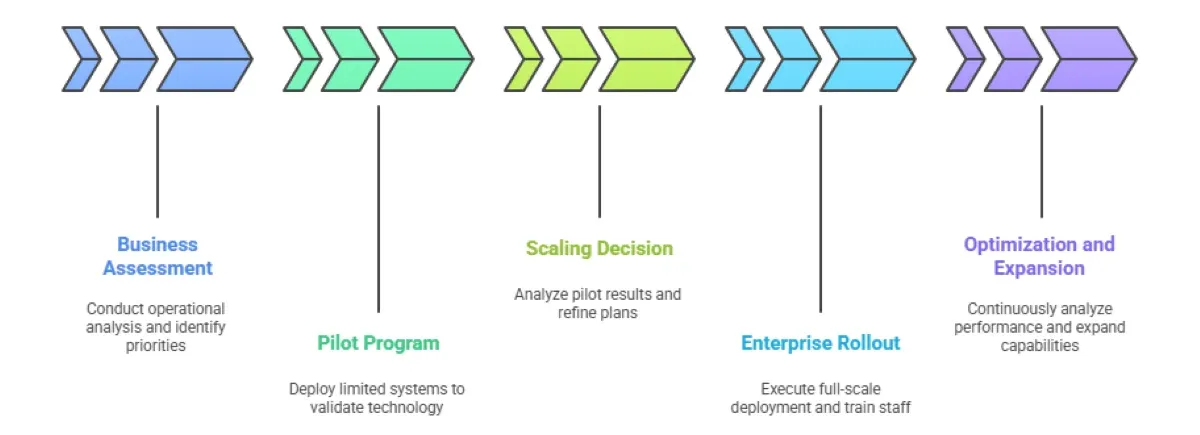
Successful AI monitoring deployment follows a structured approach that minimizes risk while maximizing operational benefits through phased implementation and careful evaluation.
Conduct thorough operational analysis, identifying monitoring priorities, coverage requirements, and integration needs. Evaluate existing infrastructure, staff capabilities, and budget constraints to determine optimal technology mix and implementation timeline.
Deploy limited systems in high-value areas to validate technology performance and staff adaptation. Test integration with existing management software while measuring baseline metrics for ROI calculation and system optimization.
Analyze pilot results to refine system specifications and expansion plans. Calculate demonstrated ROI and adjust implementation strategy based on operational experience and performance metrics achieved during the testing phase.
Execute full-scale deployment based on pilot learnings and refined requirements. Provide staff training while establishing maintenance procedures and performance monitoring systems for ongoing optimization.
Continuously analyze system performance data to identify improvement opportunities and additional monitoring applications. Expand capabilities based on demonstrated value and changing operational needs while maintaining focus on measurable business outcomes.
Selecting technology partners requires careful assessment of multiple factors that influence long-term success and operational integration.
Evaluate vendor solutions based on proven performance in similar agricultural environments and integration capabilities with existing farm management systems.
Vendor stability and support capabilities significantly impact long-term system success and operational continuity.
Total cost analysis must include all ownership costs and financing options that align with operational cash flow and investment priorities.
Technology deployment introduces operational and regulatory considerations that require proactive management to ensure successful implementation and continued compliance.
Develop backup monitoring procedures for system failures and maintenance periods. Establish redundant communications and power systems for critical monitoring areas while training staff on manual backup procedures.
Ensure systems comply with FAA regulations for drone operations, state animal welfare monitoring requirements, and federal data privacy protections. Maintain documentation demonstrating compliance with traceability and animal care standards.
Establish procedures for continued operations during severe weather, power outages, and equipment failures. Train staff on backup monitoring methods while maintaining animal welfare standards during system downtime.
Implement secure data storage with regular backups and controlled access to operational information. Establish data retention policies complying with regulatory requirements while protecting proprietary operational data.
Provide training on equipment operation, safety procedures, and emergency response protocols. Maintain current certifications for drone operations while ensuring staff competency in system troubleshooting and maintenance.
Choosing the right technology partner determines the success of your livestock monitoring investment and long-term operational improvements.
Folio3's sophisticated artificial intelligence converts complex livestock monitoring into streamlined, actionable intelligence. Our breakthrough technology delivers precision counting solutions that eliminate traditional challenges while providing comprehensive insights for data-driven ranch management decisions.
Remove labor-intensive counting tasks through continuous AI-powered surveillance systems. Our intelligent algorithms analyze drone aerial footage and fixed camera feeds, delivering accurate livestock counts during adverse weather, low visibility conditions, and complex pen movements without requiring human supervision.
Cloud-based platforms deliver immediate access to herd counts, facility occupancy rates, and animal movement analytics. Our monitoring technology sends automated anomaly alerts, enabling swift decision-making and strategic resource optimization through real-time operational visibility and predictive analytics.
Track specific livestock health metrics, weight progression, and behavioral patterns through contactless monitoring technology. Our platform integrates RFID tagging with visual recognition capabilities for unique animal identification, supporting precision agriculture through comprehensive individual performance analysis and health insights.
Our livestock solutions integrate seamlessly with established Feedlot Management Software and AgriERP systems through powerful API connections. This ensures unified information flow across operational platforms, eliminating data fragmentation while preserving existing workflow compatibility and system investments.
Our flexible technology architecture accommodates operations ranging from small ranches to massive commercial feedlots. Folio3 develops tailored agricultural solutions that align precisely with unique operational requirements, ensuring cost-effective implementation regardless of herd size or management complexity.

{ "@context": "https://schema.org", "@type": "FAQPage", "mainEntity": [ { "@type": "Question", "name": "What is the role of AI in livestock monitoring?", "acceptedAnswer": { "@type": "Answer", "text": "AI analyzes visual and sensor data to identify animal behavior patterns, health indicators, and operational issues automatically. Machine learning algorithms detect subtle changes in movement, feeding patterns, and social behavior that indicate health problems or breeding opportunities before they become visible to human observers." } }, { "@type": "Question", "name": "How do AI-powered drones help in monitoring cattle?", "acceptedAnswer": { "@type": "Answer", "text": "Drones provide aerial surveillance covering large pastures quickly while identifying individual animals through thermal imaging and AI recognition. They can detect temperature variations indicating illness, track herd movements, and locate missing animals across vast areas in minutes rather than hours." } }, { "@type": "Question", "name": "What are the advantages of fixed camera AI for livestock management?", "acceptedAnswer": { "@type": "Answer", "text": "Fixed cameras offer continuous monitoring with excellent uptime, providing detailed behavioral analysis and immediate alert generation. Systems operate independently of weather conditions while collecting consistent data for long-term trend analysis and automated record-keeping." } }, { "@type": "Question", "name": "Is drone AI more cost-effective than fixed camera systems?", "acceptedAnswer": { "@type": "Answer", "text": "Cost-effectiveness depends on operation size and monitoring requirements. Drone systems excel for large, extensive operations requiring area coverage, while fixed cameras provide better value for intensive monitoring of specific high-value areas like feed yards and calving pens." } }, { "@type": "Question", "name": "Can drones monitor livestock at night?", "acceptedAnswer": { "@type": "Answer", "text": "Modern agricultural drones equipped with thermal imaging cameras operate effectively in darkness, detecting animals through body heat signatures and identifying health issues through temperature variations. This capability extends monitoring capabilities beyond daylight hours." } }, { "@type": "Question", "name": "Do fixed cameras provide real-time health monitoring for animals?", "acceptedAnswer": { "@type": "Answer", "text": "AI-powered cameras analyze behavior patterns continuously, detecting changes in movement, feeding, and social interaction that indicate health issues. Systems generate alerts within seconds of detecting anomalous behavior while tracking individual animal health trends over time." } }, { "@type": "Question", "name": "What is the best setup for large farms vs small farms?", "acceptedAnswer": { "@type": "Answer", "text": "Large operations typically benefit from drone systems providing efficient area coverage, while smaller intensive operations maximize value from strategically placed fixed cameras monitoring high-traffic areas and critical locations." } }, { "@type": "Question", "name": "Can I integrate drone and fixed camera AI together?", "acceptedAnswer": { "@type": "Answer", "text": "Hybrid systems combine drone mobility for area surveillance with fixed camera continuous monitoring at key locations. Integration provides comprehensive coverage while optimizing cost-effectiveness and operational efficiency through complementary technology strengths." } }, { "@type": "Question", "name": "How accurate is AI in detecting livestock health issues?", "acceptedAnswer": { "@type": "Answer", "text": "Modern AI systems achieve 90-95% accuracy in controlled environments, detecting health issues well before visible symptoms appear. Thermal imaging can identify temperature variations that indicate illness, enabling early intervention and preventing disease spread." } }, { "@type": "Question", "name": "Why should I choose Folio3 for AI livestock monitoring solutions?", "acceptedAnswer": { "@type": "Answer", "text": "Folio3 combines proven agricultural expertise with comprehensive implementation support and customizable solutions tailored to specific operational needs. Our advanced analytics platform delivers actionable insights, while our multi-industry experience demonstrates technical capabilities and integration expertise across various precision agriculture applications." } } ] }
AI analyzes visual and sensor data to identify animal behavior patterns, health indicators, and operational issues automatically. Machine learning algorithms detect subtle changes in movement, feeding patterns, and social behavior that indicate health problems or breeding opportunities before they become visible to human observers.
Drones provide aerial surveillance covering large pastures quickly while identifying individual animals through thermal imaging and AI recognition. They can detect temperature variations indicating illness, track herd movements, and locate missing animals across vast areas in minutes rather than hours.
Fixed cameras offer continuous monitoring with excellent uptime, providing detailed behavioral analysis and immediate alert generation. Systems operate independently of weather conditions while collecting consistent data for long-term trend analysis and automated record-keeping.
Cost-effectiveness depends on operation size and monitoring requirements. Drone systems excel for large, extensive operations requiring area coverage, while fixed cameras provide better value for intensive monitoring of specific high-value areas like feed yards and calving pens.
Modern agricultural drones equipped with thermal imaging cameras operate effectively in darkness, detecting animals through body heat signatures and identifying health issues through temperature variations. This capability extends monitoring capabilities beyond daylight hours.
AI-powered cameras analyze behavior patterns continuously, detecting changes in movement, feeding, and social interaction that indicate health issues. Systems generate alerts within seconds of detecting anomalous behavior while tracking individual animal health trends over time.
Large operations typically benefit from drone systems providing efficient area coverage, while smaller intensive operations maximize value from strategically placed fixed cameras monitoring high-traffic areas and critical locations.
Hybrid systems combine drone mobility for area surveillance with fixed camera continuous monitoring at key locations. Integration provides comprehensive coverage while optimizing cost-effectiveness and operational efficiency through complementary technology strengths.
Modern AI systems achieve 90-95% accuracy in controlled environments, detecting health issues well before visible symptoms appear. Thermal imaging can identify temperature variations that indicate illness, enabling early intervention and preventing disease spread.
Folio3 combines proven agricultural expertise with comprehensive implementation support and customizable solutions tailored to specific operational needs. Our advanced analytics platform delivers actionable insights, while our multi-industry experience demonstrates technical capabilities and integration expertise across various precision agriculture applications.