
Loading...
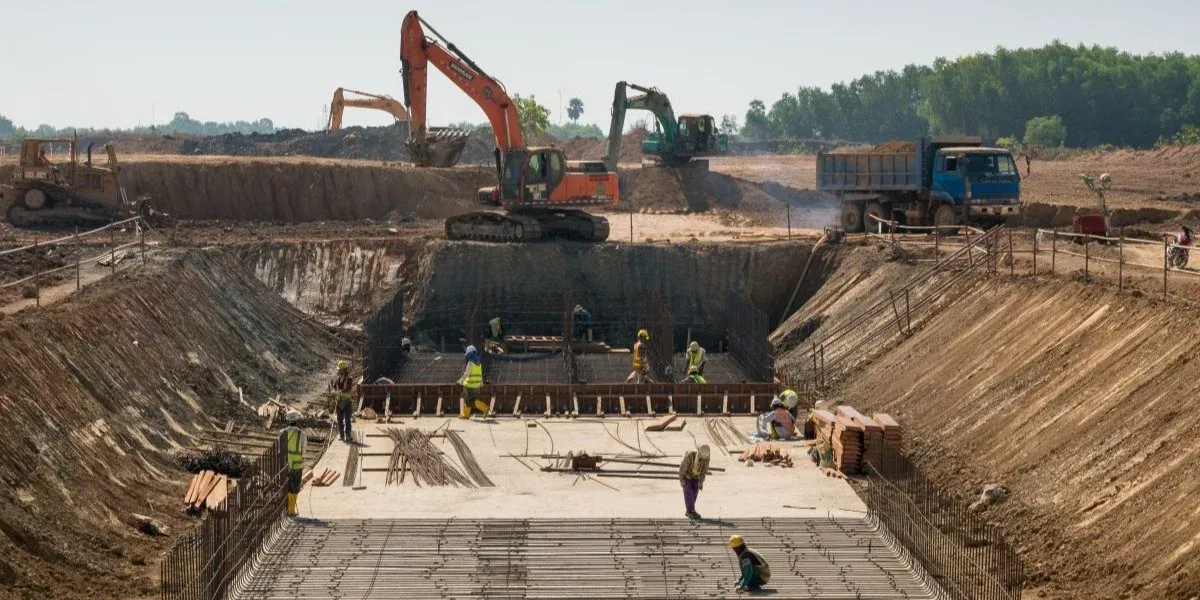
Last year, a mid-sized construction firm, faced crippling delays when undetected cracks in concrete slabs forced rework across an entire residential tower. The project, which was weeks from handover, suffered months of setbacks and millions in cost overruns. What started as minor quality control gaps escalated into contractual disputes and reputational damage, leaving the company struggling to recover.
Cases like this highlight why construction urgently needs smarter oversight. With edge AI for construction, autonomous drones can perform real-time inspections, detecting defects before they spiral. Globally, rework accounts for 2–20% of total project spending, averaging 12%, making instant quality control not just a safeguard but a profitability driver.

Edge AI for construction refers to AI processing systems that analyze data locally on construction sites rather than sending information to remote cloud servers. This technology enables real-time decision-making by processing visual data from cameras, sensors, and drones directly at the construction location.
Unlike traditional cloud-based AI systems, edge AI eliminates network delays and provides instant responses critical for safety and quality control. The technology empowers construction teams with immediate insights for defect detection, safety monitoring, and project oversight without dependency on internet connectivity.
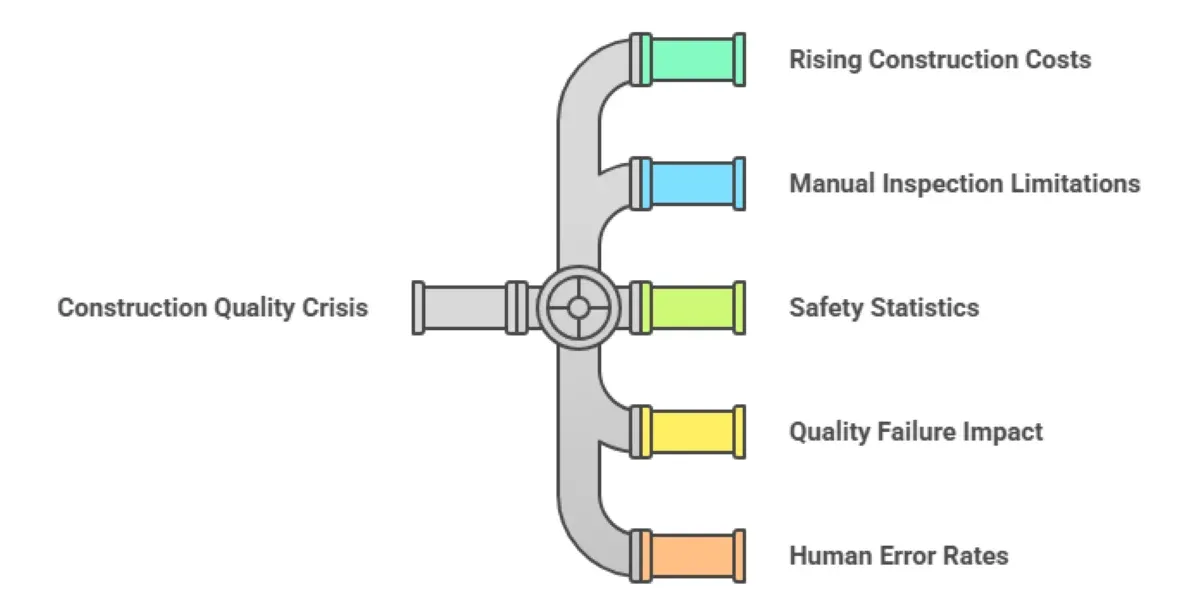
Construction projects worldwide face unprecedented quality control challenges that cost the industry billions annually. Additionally, traditional manual inspection methods prove inadequate for modern project demands and safety requirements.
According to the Construction Industry Institute, construction rework represents a significant portion of industry spending globally, with quality failures causing project delays and budget overruns. However, these safety incidents could be prevented through better monitoring systems and advanced analytics solutions.
Human inspectors face physical limitations in accessing dangerous areas and time constraints covering large construction sites. Moreover, subjective assessment variations lead to inconsistent quality control and delayed project delivery. Therefore, automated solutions become increasingly necessary.
According to the Occupational Safety and Health Administration (OSHA), construction remains one of the most dangerous industries, accounting for approximately 20% of workplace fatalities. Many incidents result from undetected structural issues and inadequate real-time safety monitoring systems.
Major infrastructure projects can experience significant delays when structural defects go undetected. Furthermore, traditional inspection methods often fail to catch critical issues early in the construction process.
Manual inspections suffer from fatigue-induced mistakes and inconsistent evaluation criteria. Additionally, human inspectors have limited ability to detect subtle defects that automated systems can identify with greater precision.
Edge AI transforms construction monitoring by processing critical data directly at job sites. Moreover, this technology eliminates cloud dependency delays while providing instant analysis capabilities essential for safety-critical environments.
Edge computing processes data locally on construction sites rather than sending information to remote cloud servers. Consequently, this enables split-second decisions for safety protocols while reducing bandwidth costs and latency issues.
Local processing eliminates network latency issues and ensures continuous operation during connectivity problems. Furthermore, it reduces data transmission costs and provides instant responses critical for construction safety applications.
Construction hazards require immediate response times under 100 milliseconds for worker safety protocols. Therefore, edge processing becomes essential for preventing accidents that cloud-based systems might miss due to delays.
Processing high volumes of daily images locally prevents network congestion. Additionally, this maintains continuous monitoring capabilities even in remote construction locations with limited connectivity.
Edge processing keeps sensitive construction data local, reducing exposure to network transmission vulnerabilities. Moreover, it maintains compliance with data sovereignty requirements and intellectual property protection needs.
Modern autonomous drones integrate advanced sensors and AI processing capabilities. Furthermore, they deliver comprehensive construction site monitoring with unprecedented accuracy across diverse project environments.
High-resolution 4K cameras with 20MP+ sensors, LiDAR mapping systems, and thermal imaging cameras provide comprehensive data collection. Additionally, precision GPS enables detailed structural analysis and material quality assessment.
Sophisticated sensor integration enables detailed 3D mapping and heat signature detection for electrical issues. Moreover, high-definition video capture allows precise defect identification and documentation.
Automated waypoint navigation and sophisticated obstacle avoidance algorithms enable safe autonomous operations. Furthermore, geo-fencing capabilities maintain precise flight paths around active construction sites with heavy machinery.
Comprehensive safety protocols include collision avoidance systems and emergency landing procedures. Additionally, restricted flight zones around personnel integrate with existing construction safety management systems.
Flight times range from 15-45 minutes depending on payload, with operational temperatures from -10°C to 45°C. Moreover, weather resistance and ruggedized construction ensure reliable performance across diverse conditions.
Edge AI enables immediate identification and classification of construction defects through computer vision algorithms. Furthermore, it delivers instant alerts and precise location data for rapid response.
Advanced AI algorithms detect cracks, misalignments, and material inconsistencies with 85-95% accuracy rates. Additionally, these systems can analyze thousands of construction images per minute in real-time.
GPS-tagged defect locations trigger immediate notifications to project managers through mobile applications. Consequently, this enables rapid response and prevents minor issues from becoming major problems.
Real-time comparison between as-built conditions and original Building Information Modeling specifications identifies deviations instantly. Moreover, this ensures construction progress aligns with architectural specifications throughout the project lifecycle.
Machine learning models trained on construction materials can identify poor concrete pours and improper steel placement. Furthermore, they detect insulation gaps and other material quality issues that human inspectors might miss.
Automated generation of inspection reports and defect catalogs provides comprehensive project documentation. Additionally, this reduces administrative burden on construction management teams while improving audit trails.
Construction companies achieve significant operational improvements through edge AI drone implementation. Moreover, these include reduced costs, enhanced safety performance, and improved quality control.
Drone inspections reduce assessment time from multiple days to several hours. Consequently, this enables immediate problem identification and faster decision-making across projects.
Eliminating scaffolding requirements and cherry picker rentals reduces labor expenses. Furthermore, this improves worker safety and allows skilled personnel to focus on higher-value activities.
Automated documentation and detailed inspection records help construction companies meet building codes. Additionally, compliance reporting and audit trail generation reduce administrative burden.
Traditional manual inspections require significant investment per comprehensive site assessment. However, drone inspections deliver equivalent results at 40-60% lower costs with improved accuracy.
Early defect detection prevents costly rework expenses and improves structural integrity assessments. Moreover, it enhances overall project quality while maintaining strict compliance with building codes.
Comprehensive return on investment analysis demonstrates measurable financial benefits of edge AI drone implementation. Furthermore, these benefits span multiple construction project metrics including cost reduction and time savings.
Traditional manual inspections require substantial investment per comprehensive site assessment. However, autonomous drone inspections deliver superior results at significantly reduced costs.
Drone-based quality control reduces inspection timeframes from multiple days to several hours. Consequently, this enables faster decision-making and improved milestone achievement.
Automated inspections eliminate scaffolding costs and equipment rental fees. Moreover, they reduce overtime expenses and allow skilled construction personnel to focus on higher-value activities.
Preventing construction injuries saves substantial costs per incident. Additionally, this reduces workers' compensation claims and insurance premiums associated with construction site accidents.
Early defect detection capabilities prevent expensive rework scenarios. Furthermore, they reduce warranty claims and improve client satisfaction while maintaining consistent quality standards.
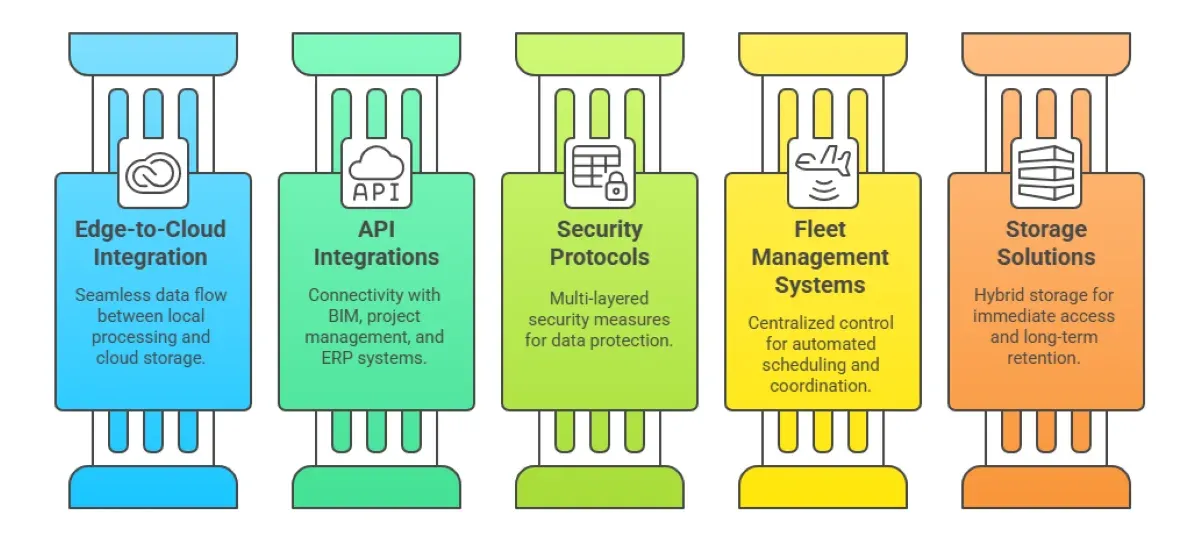
Successful edge AI drone deployment requires comprehensive system architecture. Moreover, this integrates local processing capabilities with secure data transmission protocols and cloud analytics platforms.
Sophisticated data pipelines capture and analyze inspection information locally through edge devices. Subsequently, processed insights transmit through secure channels to cloud storage platforms for comprehensive documentation.
Seamless connectivity with Building Information Modeling software ensures automated data flow. Additionally, integration with project management platforms and Enterprise Resource Planning applications streamlines workflow processes.
Multi-layered security architecture includes local data encryption and secure transmission protocols. Furthermore, access control management ensures compliance with construction industry security standards.
Centralized control systems enable automated scheduling and synchronized inspections. Moreover, coordinated flight paths ensure comprehensive site coverage for large construction projects.
Hybrid storage architecture combines edge caching for immediate data access with local backup systems. Additionally, cloud storage enables long-term retention and advanced analytics capabilities.
Edge AI drones enable sophisticated construction monitoring applications beyond basic inspection. Furthermore, these include comprehensive progress tracking and predictive analytics capabilities.
Automated daily site documentation with timeline variance analysis provides visual progress reports. Consequently, project managers can identify delays and resource allocation inefficiencies proactively.
Advanced thermal imaging capabilities detect heat loss patterns and electrical system anomalies. Moreover, HVAC performance issues and insulation defects become visible through specialized sensors.
Precise material quantity verification and earthwork calculations provide accurate resource management capabilities. Additionally, stockpile measurements prevent material shortages while reducing overordering expenses.
Real-time personal protective equipment compliance verification helps maintain OSHA compliance. Furthermore, hazard identification systems and worker proximity alerts prevent workplace accidents.
Advanced drone coordination technology enables simultaneous monitoring of multiple construction zones. Moreover, coordinated inspections provide comprehensive site coverage for large-scale projects.
Implementing edge AI drone systems requires addressing technical and environmental challenges. Furthermore, strategic planning and proper equipment selection ensure successful long-term deployment.
Wind resistance constraints and precipitation restrictions require careful operational planning. Additionally, extreme temperature effects and lighting variations affect inspection quality and safety.
Battery life optimization and processing power requirements affect operational efficiency. Moreover, storage capacity planning and hardware durability considerations require strategic equipment selection.
Comprehensive pilot certification programs and technology adoption training help construction teams adapt. Furthermore, workflow integration education ensures proper system utilization and maintains productivity.
High-volume data generation and bandwidth optimization needs require robust IT infrastructure. Additionally, backup protocol implementation and retention policy compliance demand systematic data management strategies.
Regular hardware servicing schedules and software update procedures ensure consistent system performance. Moreover, sensor calibration requirements and technical support availability minimize operational disruptions.
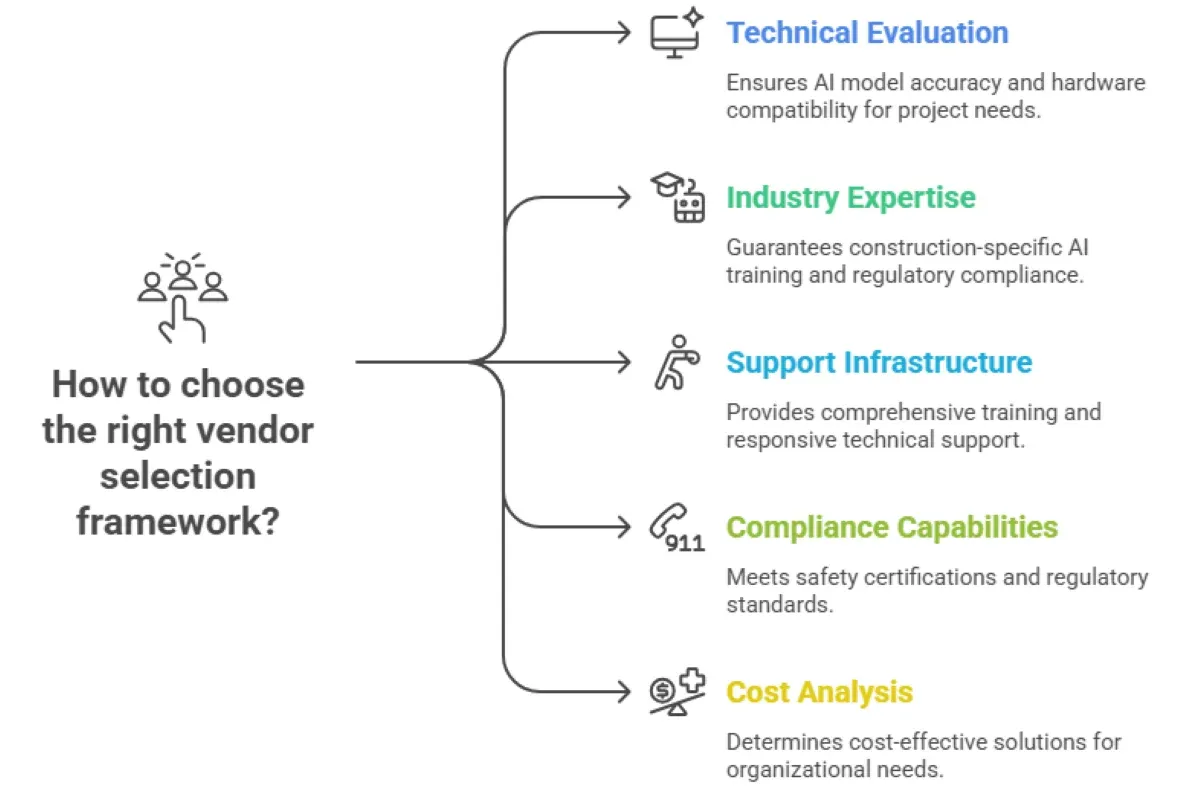
Selecting appropriate edge AI drone solution providers requires comprehensive evaluation of technical capabilities. Furthermore, construction industry expertise and support infrastructure quality determine long-term success.
Assessment parameters include AI model accuracy rates and hardware compatibility requirements. Additionally, system scalability options and integration capabilities must meet specific construction project needs.
Preferred vendors demonstrate construction-specific AI training data and regulatory compliance knowledge. Moreover, safety certification experience and proven track records ensure solution effectiveness.
Comprehensive evaluation includes training program availability and maintenance service quality. Furthermore, technical support responsiveness and documentation completeness ensure successful implementation.
Essential vendor qualifications include relevant safety certifications and insurance coverage options. Additionally, audit trail capabilities and regulatory compliance expertise meet construction industry standards.
Financial evaluation encompasses initial hardware costs and software licensing fees. Moreover, ongoing support expenses and training investments determine cost-effective solutions for organizational needs.
Successful edge AI drone deployment follows a structured phased implementation approach. Furthermore, this begins with proof of concept validation and expands to full organizational integration.
Initial single-site pilot testing establishes baseline measurements and demonstrates system capabilities. Additionally, this validates ROI projections and provides stakeholder training before larger-scale deployment.
Expanded operations across multiple construction locations enable process optimization. Moreover, workflow refinement and comprehensive ROI validation demonstrate scalability across diverse project types.
Complete system integration with existing construction management platforms maximizes benefit realization. Furthermore, advanced analytics implementation and comprehensive training ensure sustainable operational efficiency.
Quantifiable performance indicators include defect detection accuracy rates and cost savings measurements. Additionally, safety incident reduction percentages provide ongoing program evaluation metrics.
Strategic expansion planning includes fleet growth management and additional site integration procedures. Moreover, advanced feature deployment timelines ensure sustainable growth and continued value realization.
The convergence of edge AI and autonomous robotics promises comprehensive transformation in construction operations. Furthermore, this shift moves from reactive quality control to predictive, fully automated site management.
Integration of autonomous drones with robotic construction equipment creates fully autonomous construction ecosystems. Moreover, intelligent machinery coordination requires minimal human intervention for routine operations.
Advanced machine learning algorithms predict equipment failures and structural maintenance needs before problems occur. Consequently, proactive interventions prevent costly downtime and extend asset lifecycles.
Seamless connectivity between drone monitoring systems and automated construction machinery enhances efficiency. Furthermore, comprehensive construction automation platforms provide consistent results across projects.
Real-time construction site digital twins powered by continuous drone monitoring enable virtual project management. Additionally, predictive modeling and scenario planning optimize entire construction lifecycles.
Fundamental shift from reactive to predictive quality control continues driving innovation. Moreover, comprehensive IoT sensor integration and autonomous system deployment reshape construction monitoring approaches.
Implementing edge AI for construction quality control requires specialized expertise, proven technology solutions, and comprehensive support infrastructure to ensure successful deployment and measurable return on investment across construction projects.
We'll create custom software for your Edge devices such as Smart Cameras, Raspberry Pi and Single Board Computers, NVIDIA Jetson modules and specialized construction monitoring hardware. Our solutions are optimized for harsh construction environments.
We'll deploy machine learning models for real-time processing of construction data on Edge devices so that you can make intelligent decisions instantly. Our models are trained specifically for construction defect detection and quality assurance.
We will create interactive dashboards for your construction Edge Applications that will provide clear picture of the inspection data in an organized and meaningful manner. Real-time visualization helps project managers make informed decisions quickly.
Analyze real-time video streams from construction drones to draw actionable information that will enable you to unlock critical insights and get your hands on the quality control data that you require for project success.

Edge AI processes data locally on construction sites using onboard computing power. Moreover, this eliminates network delays and ensures instant responses, while cloud AI requires internet connectivity and introduces latency problematic for safety-critical applications.
Autonomous drones provide continuous monitoring capabilities and detect defects with 85-95% accuracy. Furthermore, they reduce inspection costs by 40-60% while enabling real-time quality control that prevents minor issues from escalating.
Yes, edge AI systems process construction site imagery in milliseconds. Moreover, they identify cracks, misalignments, and material defects instantly while construction work continues, enabling rapid response and correction.
Essential hardware includes high-resolution cameras (4K+) and thermal sensors. Additionally, NVIDIA Jetson processing units, GPS systems, and ruggedized components capable of operating in construction environments are required.
AI-powered systems achieve 85-95% accuracy rates while eliminating human error factors like fatigue. Moreover, they can detect subtle defects that human inspectors might miss consistently across different conditions.
Drone inspections provide 40-60% cost reduction compared to traditional manual inspections. Furthermore, they offer superior coverage, accuracy, and detailed documentation for quality assurance purposes.
Edge processing keeps sensitive data local, reducing transmission vulnerabilities. Moreover, encryption, access controls, and compliance protocols meet construction industry security standards for protecting intellectual property.
Modern edge AI systems offer API integrations with popular BIM platforms like Autodesk and Bentley. Additionally, project management software integration enables seamless data flow and automated reporting within existing workflows.
FAA Part 107 certification is required for commercial operations. Moreover, LAANC approval for controlled airspace, plus compliance with local regulations and OSHA safety standards are necessary.
Folio3.ai provides construction-specific AI expertise and proven implementation experience. Furthermore, comprehensive support infrastructure and customized solutions optimized for construction environments deliver measurable ROI with ongoing technical support.