
Loading...
Fleet managers today face mounting pressure to optimize operations while controlling escalating costs. Traditional tracking methods leave fleets vulnerable to inefficiencies, unexpected breakdowns, and compliance violations. However, AI fleet tracking device integration addresses these challenges by transforming raw data into predictive insights that reduce risks and boost profitability.
Moreover, AI fleet tracking device integration is revolutionizing how companies manage their vehicles, transforming reactive maintenance into predictive intelligence. Furthermore, modern telematics systems powered by artificial intelligence don't just track location; they analyze driver behavior, predict mechanical failures, and optimize routes in real-time.
Additionally, the numbers speak volumes: AI and telematics technologies are driving significant cost reductions while improving operational efficiency. Consequently, this technological convergence eliminates guesswork, reduces operational disruptions, and transforms fleet data into actionable insights that directly impact your bottom line.

Modern fleet tracking integrates GPS devices, cellular connectivity, cloud analytics, and machine learning algorithms. Consequently, this creates intelligent systems that predict, optimize, and automate fleet operations.
GPS tracking technology uses trilateration from multiple satellites to pinpoint exact vehicle locations. Meanwhile, OBD-II ports provide direct access to engine diagnostics and performance data, enabling comprehensive vehicle health monitoring and real-time status updates.
Moreover, 5G networks enable real-time data transmission with minimal latency. Furthermore, edge computing processes critical information locally for immediate decision-making and automated responses to emergency situations, reducing dependency on cloud connectivity.
Cloud platforms allow companies to process terabytes of data daily using advanced big data analytics. Additionally, machine learning transforms raw data into actionable insights, providing fleet managers with comprehensive dashboards for operational oversight and strategic planning.
Predictive algorithms analyze historical patterns, driver behavior, and vehicle performance. Subsequently, they forecast maintenance needs, optimize routes, and identify potential safety risks before incidents occur, enabling proactive fleet management strategies.
Temperature sensors, door monitors, fuel gauges, and cargo tracking devices provide comprehensive asset visibility. Therefore, they enable proactive management of sensitive shipments and equipment security protocols for enhanced operational control.
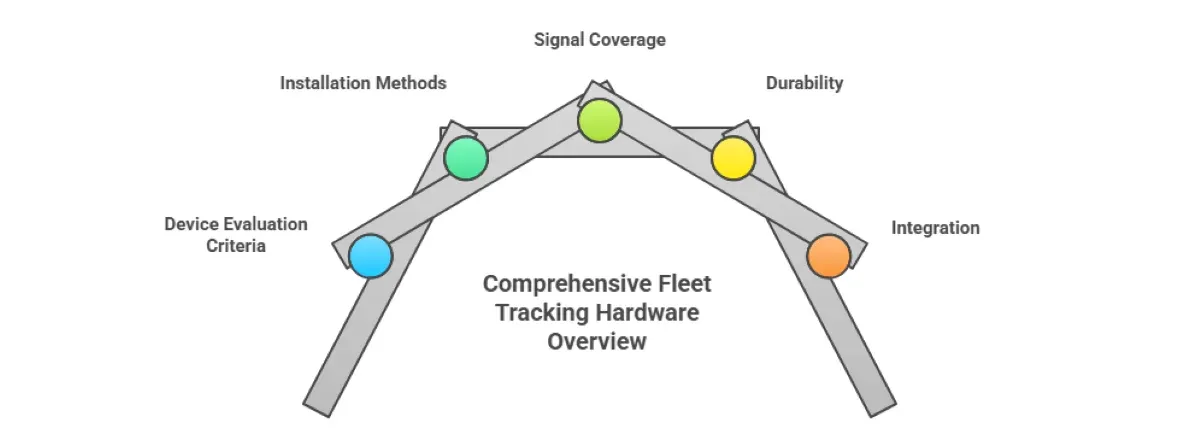
Choosing compatible tracking devices requires evaluating signal strength, durability specifications, installation complexity, and integration capabilities. Consequently, this ensures optimal performance across diverse fleet operations.
Primary features of the best vehicle GPS trackers include accurate location tracking with strong signal coverage. Additionally, frequent update cadence ensures reliable fleet monitoring and consistent data transmission even in challenging environmental conditions.
Plug-and-play OBD-II devices require no professional installation. However, hardwired systems offer enhanced security and tamper resistance but need certified technician installation for optimal performance and long-term reliability in commercial applications.
Rural operations require satellite backup connectivity. Meanwhile, urban fleets benefit from 4G/5G cellular networks providing real-time data transmission and immediate alert capabilities for time-sensitive operational decisions and emergency responses.
Industrial-grade tracking devices feature IP66 ratings for water resistance, dustproof construction, and shock-proof designs. Therefore, they ensure reliable operation in construction, mining, and other demanding environments requiring rugged hardware solutions.
Modern tracking devices support CAN bus protocols and multiple communication standards. Consequently, this ensures compatibility with various vehicle manufacturers and existing fleet management software platforms for seamless data integration and workflow automation.
Successful AI fleet tracking requires seamless API connectivity, scalable cloud infrastructure, and strategic deployment approaches. Furthermore, these accommodate existing systems while enabling future expansion.
RESTful APIs enable real-time data sharing between tracking devices and management platforms. Additionally, webhook integrations automate workflows and trigger immediate responses to critical events, ensuring seamless information flow across systems.
Cloud solutions offer unlimited scalability and advanced analytics. Meanwhile, edge computing provides immediate local processing for time-sensitive decisions and reduced bandwidth requirements in remote areas where connectivity may be limited.
Modern telematics platforms provide comprehensive API ecosystems that enable integration with ERP systems. Moreover, maintenance management software and dispatch applications create unified operational dashboards for enhanced visibility and control.
End-to-end encryption, role-based access controls, and compliance with GDPR and CCPA regulations ensure sensitive fleet data remains protected. Subsequently, this enables authorized stakeholder access for operational needs and regulatory reporting.
Microservices architecture supports growing fleet sizes. Furthermore, load balancing and data caching ensure consistent performance during peak usage periods and high-volume data processing scenarios for enterprise-level operations.
Fleet tracking technology has evolved from basic GPS monitoring to sophisticated AI-powered ecosystems. Meanwhile, the global telematics market is expanding rapidly as organizations recognize transformative operational benefits.
The telematics sector is forecasted to expand from USD 79.17 billion in 2023 to USD 170.35 billion by 2032, exhibiting a CAGR of 8.9% during the forecast period. This explosive growth reflects increasing adoption across industries as fleet operators recognize the critical importance of data-driven decision-making.
Indeed, 5G connectivity, edge computing, and machine learning algorithms are enabling real-time processing capabilities that were impossible with previous-generation tracking systems. Furthermore, these technological advances create opportunities for immediate automated responses to critical situations.
Currently, significant growth opportunities exist for early adopters who can leverage advanced analytics to optimize operations and reduce costs. However, implementation requires strategic planning and proper resource allocation.
Traditional reactive maintenance approaches continue to affect many contractors, leading to substantial additional costs annually due to unexpected failures. Nevertheless, these could be prevented through predictive analytics and proactive maintenance strategies.
Additionally, autonomous vehicles, smart city infrastructure, and IoT sensor networks will create interconnected transportation ecosystems. Subsequently, these will require advanced AI integration for optimal fleet performance management and seamless coordination with urban infrastructure systems.

AI-powered diagnostics transform reactive maintenance into predictive intelligence. Additionally, they analyze engine performance patterns to forecast component failures weeks before they occur, minimizing costly downtime.
AI-powered telematics systems continuously assess vehicle component conditions. Therefore, they predict maintenance needs and notify maintenance teams before issues escalate, preventing unexpected failures and optimizing maintenance schedules for maximum operational efficiency.
Advanced systems enable proactive scheduling and parts procurement for optimal uptime. Meanwhile, they minimize emergency repair costs and operational disruptions through early warning systems and preventive maintenance protocols.
Intelligent systems automatically generate maintenance requests, order required components, and schedule technician appointments. Subsequently, this is based on predicted failure timelines and parts availability for seamless operations and reduced administrative overhead.
Historical performance data enables optimization of replacement schedules, warranty tracking, and vendor performance evaluation. Therefore, it maximizes component lifespan and minimizes total ownership costs through data-driven maintenance strategies.
AI and telematics integration provide significant operational benefits through systematic predictive maintenance implementation. However, actual savings vary based on fleet size, vehicle types, and implementation scope.
Advanced AI algorithms monitor driving patterns, detect risky behaviors, and provide real-time coaching. Consequently, they improve safety scores while reducing accident rates and insurance premiums.
AI-powered dash cams and behavior analysis tools identify distracted or unsafe driving behaviors in real time. Additionally, alerts and scoring systems help reduce accidents through immediate feedback and performance tracking for continuous improvement.
Intelligent systems provide immediate voice alerts for speeding, harsh braking, or distracted driving. Meanwhile, they deliver personalized coaching recommendations based on individual driver performance patterns and historical data analysis.
Computer vision technology detects collisions, rollovers, and aggressive driving incidents. Subsequently, it automatically notifies emergency services and fleet managers with precise location data for rapid response and incident management.
AI enhances compliance monitoring by automatically flagging HOS violations, seatbelt usage, and other safety-critical behaviors. Therefore, it ensures regulatory adherence and reduces liability exposure through proactive risk management.
Documented safety improvements and reduced accident rates enable negotiation of lower insurance premiums. Additionally, proactive risk management protects against costly liability claims and litigation through measurable safety performance improvements.
AI-driven route planning analyzes traffic patterns, weather conditions, and delivery constraints. Consequently, it minimizes fuel consumption, reduces travel time, and improves customer satisfaction.
AI-driven telematics applications enhance route planning and provide updates on current traffic conditions. Furthermore, they enable drivers to avoid congested areas and decrease fuel consumption through real-time optimization algorithms and predictive traffic modeling.
Advanced algorithms identify inefficient driving patterns, excessive idling, and suboptimal routes. Subsequently, they reduce fuel consumption while monitoring fuel card transactions for fraud detection and cost control.
Real-time location sharing provides accurate delivery windows. Meanwhile, automated customer notifications reduce service calls and improve satisfaction scores through transparent communication and reliability that builds customer trust and loyalty.
AI analyzes cargo capacity, weight distribution, and delivery schedules. Therefore, it maximizes vehicle utilization while ensuring compliance with weight limits and optimal load balancing for enhanced operational efficiency.
Historical route data enables identification of optimization opportunities. Additionally, it benchmarks performance against industry standards and implements continuous improvement processes for enhanced operational efficiency and competitive advantage.
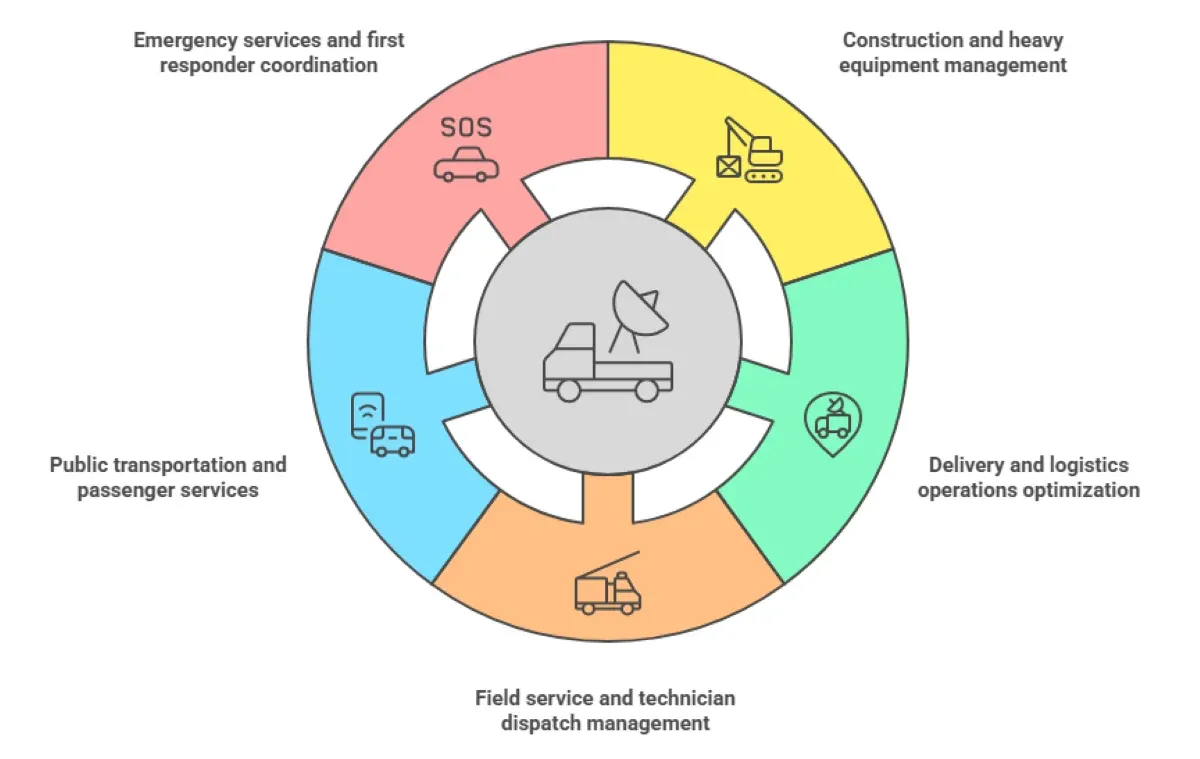
Different industries leverage AI fleet tracking uniquely. For instance, construction uses it for equipment security, delivery for customer satisfaction, field services for technician optimization, and utilities for compliance.
The construction industry faces unique challenges including equipment theft and misuse. Meanwhile, GPS tracking devices use geofencing to ensure expensive vehicles operate within authorized zones, protecting valuable assets and preventing unauthorized usage.
E-commerce demands require real-time tracking capabilities, automated customer notifications, and proof-of-delivery systems. Additionally, route optimization algorithms accommodate dynamic delivery windows and customer preferences for enhanced service quality.
Utility, repair, and service fleets use GPS tracking to streamline dispatch and reduce fuel consumption. Furthermore, they increase jobs completed per day through intelligent routing and automated scheduling optimization for maximum productivity.
Public transport providers use GPS fleet tracking for precise scheduling and accurate arrival predictions at each stop. Moreover, they integrate with traffic data for delays to improve passenger experience and operational reliability.
Critical response times require precise location tracking, automated dispatch systems, and real-time communication capabilities. Subsequently, these enable coordinated emergency response and resource allocation optimization for life-saving operations.
Automated compliance monitoring ensures adherence to FMCSA regulations, hours-of-service requirements, and safety standards. Therefore, it reduces administrative burden and violation risks.
FMCSA-registered ELD systems connect directly to vehicle engines through OBD ports. Additionally, they provide accurate logging of driving hours, ensuring regulatory compliance and reducing violation risks through automated data collection and reporting.
Automated HOS tracking prevents violations through real-time monitoring and predictive alerts. Furthermore, it provides seamless integration with dispatch systems for compliance optimization and driver scheduling.
Digital inspection checklists, automated defect reporting, and maintenance record integration ensure compliance with DOT requirements. Meanwhile, they reduce paperwork and improve inspection accuracy through standardized protocols.
Fleet operators are increasingly focusing on reducing emissions by making operational improvements. Therefore, AI-powered optimization of routes, idle time, and fuel consumption patterns supports environmental sustainability and regulatory compliance.
Automated tracking of license renewals, medical certifications, and training requirements ensures qualified drivers. Subsequently, it reduces administrative overhead and compliance risks through centralized management and automated alerts.
Successful deployment requires strategic planning, phased rollouts, and comprehensive training programs. Furthermore, continuous optimization maximizes ROI while minimizing operational disruption during transition.
Comprehensive fleet audits identify specific needs, evaluate existing systems, and define success metrics. Additionally, they create detailed implementation timelines that align with business objectives and operational requirements for successful deployment.
Implementation should begin with basic telematics systems before deploying AI intelligence integration. Subsequently, this systematic technology adoption approach minimizes risk and allows for proper staff training and system integration.
Structured training programs ensure successful adoption. Meanwhile, change management strategies address resistance, communicate benefits, and establish support systems for smooth technology transition and user acceptance.
Comprehensive testing protocols validate data accuracy, system reliability, and integration performance before full deployment. Therefore, they ensure optimal functionality and minimal operational disruption during implementation phases.
Regular performance reviews, system updates, and optimization adjustments ensure maximum ROI. Additionally, they adapt to changing business needs and technological advancement opportunities for improved efficiency and competitive advantage.
Common obstacles include legacy system compatibility, connectivity limitations, data standardization issues, and organizational resistance. Therefore, strategic approaches are required for successful technology adoption.
Existing fleet management systems require careful integration planning, data mapping, and gradual migration strategies. Additionally, this ensures seamless transition without operational disruption or data loss during system upgrades.
Rural operations require a hybrid communication infrastructure using 4G/5G for urban operations. Meanwhile, LPWAN or satellite networks ensure consistent connectivity across diverse geographical areas for comprehensive coverage.
Multiple vehicle manufacturers and device types require standardized data formats and API integration protocols. Furthermore, middleware solutions ensure seamless information exchange across systems and platforms for unified operations.
Comprehensive security frameworks, including encryption, access controls, and regular audits, protect sensitive fleet data. Subsequently, they ensure compliance with privacy regulations and industry standards for data protection.
Strategic communication, comprehensive training programs, and gradual implementation phases address employee resistance. Therefore, they demonstrate tangible benefits and build confidence in new technology systems.
Emerging technologies, including autonomous vehicles, 5G networks, edge computing, and smart city integration, will reshape fleet management. Consequently, adaptive strategies for technology evolution are required.
Self-driving technology will transform fleet operations, requiring infrastructure upgrades and regulatory compliance preparation. Furthermore, strategic planning for a gradual transition from human-operated to autonomous vehicle fleets is essential.
Ultra-low latency 5G networks enable real-time decision-making and enhanced video streaming capabilities. Additionally, massive IoT device connectivity supports comprehensive fleet monitoring and management systems.
Local data processing reduces latency and enables immediate automated responses. Meanwhile, it decreases bandwidth requirements while maintaining sophisticated analytics capabilities even during connectivity disruptions.
Connected traffic signals, intelligent parking systems, and city-wide IoT networks will provide enhanced routing capabilities. Subsequently, operational optimization through integrated urban infrastructure collaboration becomes possible.
Next-generation algorithms will provide more accurate predictions and autonomous decision-making capabilities. Furthermore, sophisticated optimization strategies continuously learn and adapt to changing operational conditions.
Folio3 AI delivers comprehensive fleet tracking solutions that seamlessly integrate advanced telematics, predictive analytics, and intelligent automation. Consequently, they transform fleet operations into data-driven, cost-effective systems.
Folio3 AI develops tailored fleet management platforms combining real-time GPS tracking, predictive maintenance algorithms, and driver behavior analysis. Additionally, automated compliance monitoring meets specific operational requirements and industry standards.
Our expert team creates seamless integrations between existing fleet systems and modern telematics platforms. Furthermore, we develop custom APIs that enable real-time data exchange, automated workflows, and comprehensive operational visibility.
Folio3 AI implements machine learning algorithms that analyze vehicle diagnostics and predict component failures. Subsequently, they automate maintenance scheduling to reduce downtime and eliminate unexpected repair costs.
We develop intelligent routing systems that analyze traffic patterns, delivery priorities, and fuel consumption data. Therefore, they optimize routes dynamically, reducing travel time and fuel costs significantly.
Folio3 AI creates customizable dashboards and automated reporting systems that transform raw fleet data into actionable business insights. Consequently, they enable data-driven decision-making and continuous operational improvement for maximum ROI.

{ "@context": "https://schema.org", "@type": "FAQPage", "mainEntity": [ { "@type": "Question", "name": "How do AI and telematics enhance fleet tracking devices?", "acceptedAnswer": { "@type": "Answer", "text": "AI and telematics transform basic GPS tracking into intelligent systems that analyze patterns and predict maintenance needs. They optimize routes in real time and enable automated decision-making, delivering predictive maintenance, cost reduction, and real-time driver coaching for improved safety and efficiency." } }, { "@type": "Question", "name": "What are the key features to look for in AI fleet tracking software?", "acceptedAnswer": { "@type": "Answer", "text": "Essential features include real-time GPS tracking, predictive maintenance algorithms, driver behavior analysis, automated compliance monitoring, customizable dashboards, mobile access, API integration, and strong security protocols. Platforms should offer machine learning capabilities, IoT sensor integration, and scalable cloud infrastructure." } }, { "@type": "Question", "name": "How can fleet tracking device integration improve operational efficiency?", "acceptedAnswer": { "@type": "Answer", "text": "Integration boosts efficiency through route optimization, predictive maintenance, and automated dispatch. It reduces fuel consumption and provides real-time visibility for faster decisions, resulting in higher asset utilization and increased revenue per vehicle." } }, { "@type": "Question", "name": "What are the best practices for implementing AI-powered fleet telematics?", "acceptedAnswer": { "@type": "Answer", "text": "Conduct a comprehensive fleet audit and deploy in phases. Provide employee training, set clear success metrics, and maintain continuous optimization. Ensure robust cybersecurity and full compliance with industry regulations during implementation." } }, { "@type": "Question", "name": "How do I measure ROI after integrating AI and telematics into fleets?", "acceptedAnswer": { "@type": "Answer", "text": "Measure ROI by tracking fuel savings, maintenance cost reductions, and insurance premium decreases. Monitor operational efficiency, reduced downtime, cost per mile, fleet utilization rates, safety scores, and compliance violations for a complete assessment." } }, { "@type": "Question", "name": "Which fleet tracking devices are compatible with AI telematics platforms?", "acceptedAnswer": { "@type": "Answer", "text": "Compatible devices include OBD-II plug-in trackers, hardwired GPS units, ruggedized IP66-rated devices, ELD-compliant trackers, and IoT sensor packages. Look for CAN bus support, multi-network cellular or satellite connectivity, and open API standards." } }, { "@type": "Question", "name": "How can AI help in predictive maintenance and driver behavior monitoring?", "acceptedAnswer": { "@type": "Answer", "text": "AI analyzes engine diagnostics and historical performance data to predict component failures before they occur. It also monitors driver acceleration, braking, and turning patterns to detect risky behaviors, providing instant coaching feedback and safety scoring." } }, { "@type": "Question", "name": "What are the common challenges in integrating fleet tracking devices with AI?", "acceptedAnswer": { "@type": "Answer", "text": "Challenges include legacy system compatibility, inconsistent data standards, and connectivity gaps in rural areas. Cybersecurity concerns, employee resistance, and upfront investment can also hinder adoption. Solutions involve phased rollouts, hybrid connectivity, staff training, and strong security frameworks." } }, { "@type": "Question", "name": "How does telematics integration support compliance and safety reporting?", "acceptedAnswer": { "@type": "Answer", "text": "Telematics automates compliance with FMCSA regulations, HOS tracking, and ELD requirements. Systems flag violations, generate compliance reports, track driver certifications, and monitor inspections, reducing administrative workload and minimizing risks." } }, { "@type": "Question", "name": "Why choose Folio3.ai solutions for AI-powered fleet management?", "acceptedAnswer": { "@type": "Answer", "text": "Folio3.ai delivers comprehensive AI fleet management with scalable cloud infrastructure and advanced machine learning. It provides seamless API integrations, industry-specific customization, predictive maintenance, real-time analytics, and automated compliance monitoring, backed by 24/7 support and proven implementation expertise." } } ] }
AI and telematics transform basic GPS tracking into intelligent systems that analyze patterns and predict maintenance needs. Additionally, they optimize routes in real-time and provide automated decision-making capabilities with predictive maintenance features, cost reduction benefits, and real-time driver coaching for improved safety and efficiency.
Essential features include real-time GPS tracking with frequent updates, predictive maintenance algorithms, and driver behavior analysis. Furthermore, automated compliance monitoring, customizable dashboards, mobile access, API integration capabilities, and robust security protocols are crucial. Look for platforms offering machine learning capabilities, IoT sensor integration, and scalable cloud infrastructure for future growth.
Integration improves efficiency through route optimization, predictive maintenance, and automated dispatch systems. Additionally, fuel consumption reduction and real-time visibility enable immediate decision-making. These improvements result in higher asset utilization and increased revenue generation per vehicle.
Best practices include conducting comprehensive fleet audits and implementing phased deployment strategies. Furthermore, providing extensive employee training, establishing clear success metrics, and maintaining continuous optimization processes are essential. Ensure robust cybersecurity measures and compliance with industry regulations throughout implementation.
ROI measurement focuses on cost reduction categories, including fuel savings, maintenance cost reduction, and insurance premium reductions. Additionally, track improved operational efficiency and reduced downtime metrics. Monitor cost per mile, fleet utilization rates, safety scores, and compliance violations for a comprehensive assessment.
Compatible devices include OBD-II plug-in trackers, hardwired GPS systems, and ruggedized units with IP66 ratings. Furthermore, ELD-compliant devices and IoT sensor packages work well. Look for devices supporting CAN bus protocols, multiple cellular networks, satellite backup connectivity, and open API standards.
AI analyzes engine diagnostics, performance patterns, and historical data to predict component failures in advance. Additionally, for driver behavior, AI monitors acceleration, braking, and turning patterns while identifying risky behaviors in real-time. This provides immediate coaching feedback and safety scoring.
Common challenges include legacy system compatibility, data standardization across different vehicle types, and connectivity limitations in rural areas. Furthermore, cybersecurity concerns, employee resistance to change, and initial investment costs present obstacles. Solutions involve phased implementation, hybrid connectivity options, comprehensive training programs, and robust security frameworks.
Telematics integration automates compliance monitoring for FMCSA regulations, HOS tracking, and ELD requirements. Additionally, systems automatically flag violations, generate compliance reports, track driver certifications, and monitor vehicle inspections. This reduces administrative burden and minimizes violation risks.
Folio3.ai offers comprehensive AI fleet management solutions with proven results, scalable cloud infrastructure, and advanced machine learning algorithms. Furthermore, seamless API integrations, industry-specific customizations, predictive maintenance, real-time analytics, and automated compliance monitoring provide complete solutions. Our platform includes 24/7 support with implementation expertise across diverse industries for customized solutions that transform fleet operations and maximize efficiency.