
Loading...

Maintenance teams worldwide face a familiar challenge: equipment failures that seem to come from nowhere, despite regular inspections and scheduled maintenance routines. Furthermore, the frustration of discovering critical issues only after costly breakdowns has pushed industries toward smarter, more proactive solutions like generative AI predictive maintenance.
According to Deloitte's infrastructure management framework, companies implementing generative AI predictive maintenance with drone technology achieve 10% reliability increases through reduced asset downtime. Additionally, this breakthrough combines autonomous drone inspections with advanced artificial intelligence to predict equipment failures weeks before they occur, transforming reactive maintenance into intelligent, data-driven operations.

Traditional maintenance approaches are rapidly giving way to intelligent, data-driven strategies that prevent costly equipment failures before they happen. Consequently, this fundamentally revolutionizes how industries manage their most critical and valuable operational assets.
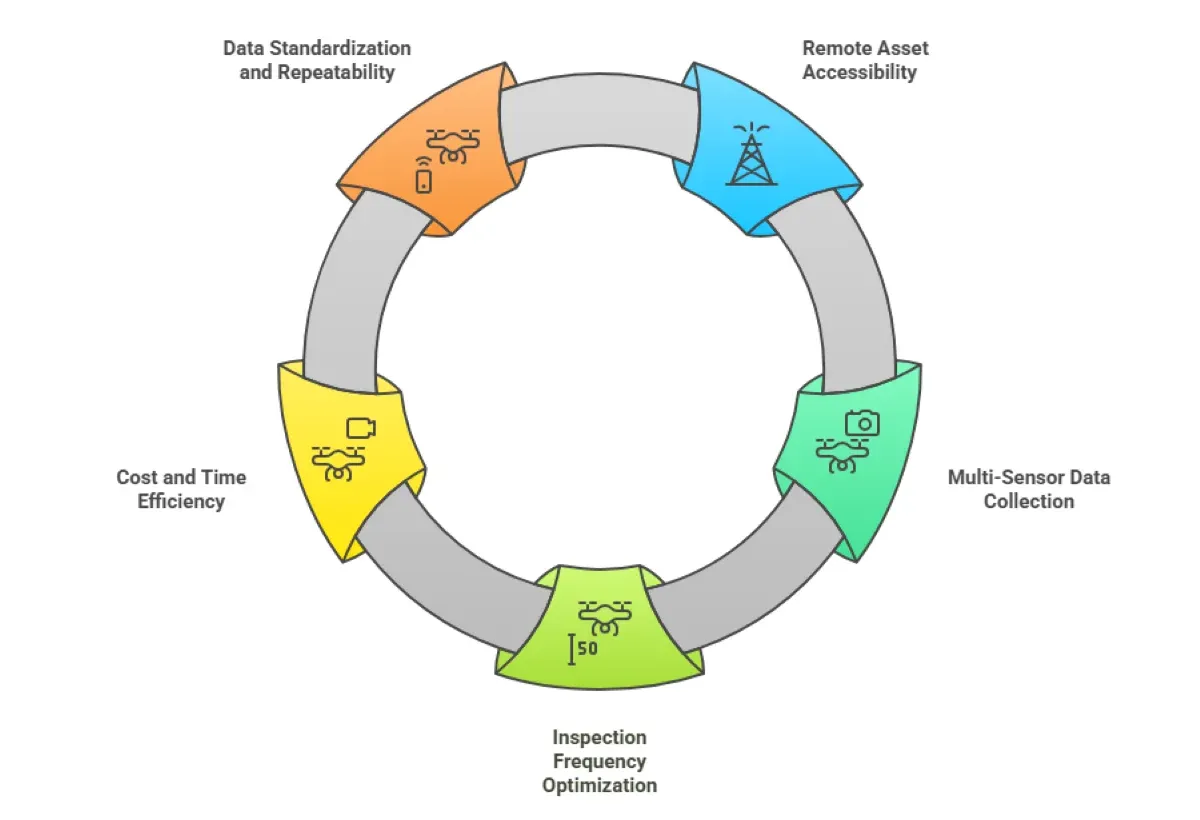
Drones reach dangerous or inaccessible locations like transmission towers, offshore platforms, and elevated structures without requiring scaffolding, rope access, or putting human inspectors at risk in hazardous environments.
Advanced drones capture thermal imagery, high-resolution photography, LiDAR measurements, and acoustic data simultaneously, providing comprehensive asset condition information that single-sensor traditional inspections cannot deliver cost-effectively.
Automated drone systems enable weekly or monthly inspections instead of annual checks, creating rich historical datasets that improve predictive model accuracy and allow early detection of developing issues.
Drone inspections reduce inspection time from hours to minutes per asset, eliminate expensive equipment rentals, and decrease labor costs while providing more comprehensive data than traditional manual inspection methods.
Drones follow precise flight paths and capture consistent imagery angles, ensuring standardized data collection that enables accurate trend analysis and reliable comparison between inspection cycles for better predictions.
Generative artificial intelligence successfully transforms raw sensor data into highly accurate predictive simulations, comprehensive synthetic training scenarios, and clear natural language maintenance recommendations automatically. Therefore, this eliminates the need for manual data interpretation and analysis.
AI systems seamlessly combine visual imagery analysis, thermal temperature readings, acoustic pattern recognition, and vibration data measurements to create comprehensive equipment health assessments that provide complete operational visibility and detailed condition monitoring across all critical asset components.
Generative models intelligently create realistic training scenarios for rare equipment failure conditions, significantly improving prediction accuracy and model performance when historical maintenance data is limited or unavailable, ensuring robust performance across diverse operational environments.
Machine learning algorithms automatically identify subtle equipment degradation patterns, early warning signs, and performance anomalies that traditional analysis methods and experienced human inspectors typically miss, enabling proactive maintenance interventions before critical failures occur.
AI systems generate highly accurate 3D simulations of physical assets and operational environments, enabling comprehensive virtual testing of maintenance scenarios, failure prediction modeling, and optimization strategies without disrupting actual equipment operations or production schedules.
Complex technical sensor data automatically converts into clear, actionable maintenance reports and recommendations that non-technical stakeholders, management teams, and field personnel can easily understand, interpret, and implement effectively for improved operational decision-making.
Real-world implementations consistently demonstrate measurable improvements in maintenance efficiency, significant cost reduction, enhanced operational reliability, and improved safety performance across multiple industry sectors. Therefore, this proves the technology's substantial business value and investment returns.
Companies report significant improvements through automated drone-based predictive maintenance systems. Additionally, research indicates that predictive maintenance can increase productivity by 25%, reduce breakdowns by 70% and lower maintenance costs by 25%, along with improved equipment availability and enhanced operational efficiency for critical assets.
Zero-risk inspections of dangerous infrastructure locations completely eliminate human exposure to hazardous environments while maintaining comprehensive monitoring coverage. Furthermore, this reduces workplace accidents, insurance costs, and regulatory compliance concerns for organizations managing high-risk assets.
Automated systems efficiently monitor hundreds of assets simultaneously across multiple locations, providing centralized oversight and coordinated maintenance scheduling. Consequently, this dramatically improves operational efficiency and resource allocation optimization across entire facilities, regions, or networks.
Advanced AI models achieve varying accuracy levels depending on the specific application and data quality. For instance, Variational Autoencoders (VAEs) achieve anomaly detection precision of 85-95% on average, depending on system complexity and available data. Therefore, this enables proactive maintenance planning, strategic parts procurement, and optimized resource allocation for maximum operational efficiency.
Targeted maintenance based on actual equipment condition data replaces expensive blanket scheduling approaches. Additionally, this reduces unnecessary maintenance interventions, minimizes operational costs, and extends equipment lifespan through optimized maintenance timing and resource allocation strategies.

Different sectors strategically leverage generative AI and advanced drone technology to address unique maintenance challenges. Furthermore, they meet specific regulatory requirements and industry-specific operational constraints while maximizing return on investment and operational effectiveness.
Power companies utilize AI-powered drone inspections for comprehensive transmission line monitoring, wind turbine blade maintenance, solar panel efficiency optimization, and substation equipment health assessment. Consequently, this reduces outages and improves grid reliability significantly.
Airlines successfully implement autonomous drone inspections completing comprehensive aircraft exterior checks in 20 minutes versus traditional multi-hour manual inspection processes. Therefore, this improves aircraft availability and reduces maintenance costs while ensuring safety compliance.
Production facilities continuously monitor critical equipment vibration patterns, thermal anomalies, conveyor system health, and production line performance through integrated drone surveillance systems. As a result, this prevents costly downtime and maintains optimal production efficiency levels.
Transportation departments effectively use advanced drone technology for bridge structural health monitoring, pipeline integrity assessment, railroad track condition evaluation, and road surface analysis. Subsequently, this extends asset lifespan while ensuring public safety.
Municipal governments implement comprehensive monitoring systems for public infrastructure assets, traffic management systems, environmental sensor networks, and utility systems. Moreover, this improves service delivery while optimizing maintenance budgets and resource allocation.
Successful implementation requires a robust technical infrastructure that seamlessly connects advanced drone hardware, sophisticated AI processing systems, and existing enterprise software platforms. Additionally, this ensures security, scalability, and reliable performance.
Autonomous drone platforms integrate multiple high-resolution sensors with edge processing capabilities for real-time data capture, preliminary analysis, and immediate anomaly detection. Furthermore, this ensures comprehensive coverage while minimizing data transmission requirements and processing delays.
Computer vision models, generative AI frameworks, and anomaly detection algorithms process drone data through scalable cloud infrastructure. Therefore, this enables real-time analysis, pattern recognition, and predictive modeling for accurate maintenance insights and recommendations.
Secure, scalable data storage and processing platforms support intensive model training, rapid deployment, and real-time inference for enterprise applications. Additionally, this ensures data protection, compliance, and high availability for mission-critical operations.
Robust APIs connect drone-generated insights with existing ERP systems, CMMS platforms, and mobile applications for seamless workflow automation. Consequently, this enables automatic work order generation, inventory management, and maintenance scheduling without manual intervention.
End-to-end encryption, comprehensive access controls, and detailed audit trails ensure data protection while meeting industry-specific regulatory requirements. Moreover, this maintains operational security and protects sensitive infrastructure information from unauthorized access.
Strategic deployment follows a carefully planned phased approach that minimizes operational disruption while maximizing return on investment. Additionally, this ensures system adoption and long-term success through systematic rollout and continuous optimization processes.
Comprehensive asset evaluation, detailed maintenance process analysis, and strategic pilot program design establish a solid foundation for successful AI implementation. Furthermore, this identifies key performance indicators and success metrics for measuring progress.
Drone fleet configuration, sensor integration, cloud platform deployment, and network connectivity create the technical foundation for efficient data collection, processing, and analysis. Therefore, this ensures scalability and future expansion capabilities.
Data preprocessing, model training, validation testing, and synthetic data generation ensure accurate predictions while addressing edge cases and rare failure scenarios. Consequently, this creates robust models that perform reliably across diverse operational conditions.
Full-scale rollout includes comprehensive performance monitoring, continuous model improvement, and detailed ROI measurement for ongoing system enhancement. As a result, this ensures maximum value delivery and sustained operational benefits throughout the system lifecycle.
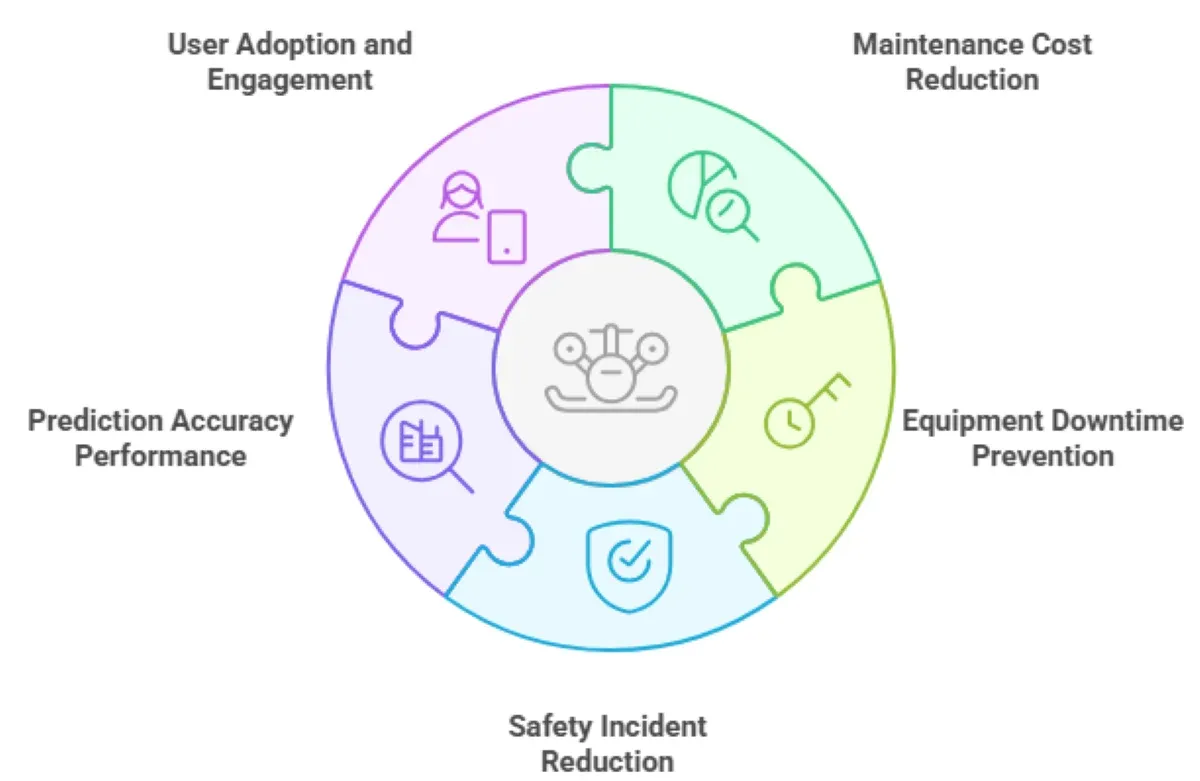
Organizations need comprehensive metrics to evaluate AI drone maintenance success, tracking operational improvements, cost savings, safety enhancements, and system performance to ensure maximum return on investment and continuous optimization.
Measure direct cost savings from reduced labor hours, eliminated scaffolding rentals, decreased equipment downtime, and optimized maintenance scheduling to quantify the financial impact of AI drone implementation on operational budgets.
Track unplanned outage reductions, scheduled maintenance optimization, and asset availability improvements to demonstrate how predictive insights prevent costly equipment failures and maintain continuous operational performance across facilities.
Monitor workplace accident decreases, worker exposure elimination in hazardous environments, and compliance improvement rates to assess how AI drone inspections enhance safety while maintaining comprehensive monitoring coverage.
Evaluate AI model precision in forecasting equipment failures, measuring true positive rates, false alarm frequencies, and early warning effectiveness to ensure reliable predictive maintenance decision-making capabilities.
Assess workforce training completion, system utilization levels, and stakeholder satisfaction scores to measure successful technology integration and ensure maximum value extraction from AI drone maintenance investments.
Strategic planning and comprehensive risk mitigation effectively address common obstacles including regulatory compliance requirements, technical integration complexities, and organizational change management needs. Additionally, this ensures successful deployment and adoption.
FAA drone operation requirements, industry safety standards, and data privacy regulations require careful planning and expert guidance. Furthermore, this ensures full compliance while maintaining operational flexibility and avoiding costly penalties or operational restrictions.
Legacy system compatibility, data quality assurance, and model drift management ensure reliable long-term system performance. Moreover, this maintains existing workflows and minimizes disruption to ongoing operations and established maintenance procedures.
Comprehensive training programs, skill development initiatives, and stakeholder engagement strategies facilitate smooth adoption and maximize system utilization across teams. Therefore, this addresses resistance to change and ensures user acceptance and proficiency.
Phased implementation approaches, backup systems, and quality assurance protocols minimize operational disruption while ensuring system reliability. Additionally, this maintains safety standards and protects against potential failures or unexpected system behavior.
Strategic planning carefully balances initial investment with long-term benefits, optimizing resource allocation for maximum return on investment. Furthermore, this manages cash flow and ensures sustainable growth throughout the implementation and operational phases.
Emerging technologies and evolving industry standards continue to shape the next generation of AI-powered predictive maintenance solutions and capabilities. Consequently, this creates new opportunities for operational excellence and competitive advantage.
Advanced drones will perform actual repairs and maintenance tasks, moving beyond inspection to complete autonomous facility management. Therefore, this reduces human intervention requirements and enables 24/7 maintenance operations in hazardous or remote environments.
Multiple coordinated drones will conduct simultaneous inspections, sharing data and optimizing coverage for large-scale infrastructure monitoring. Additionally, this reduces inspection time and improves data quality through collaborative sensing and analysis capabilities.
AI systems will automatically order replacement parts and schedule maintenance based on predicted failure timelines and inventory availability. Subsequently, this optimizes supply chain efficiency and reduces inventory costs while preventing stockouts and delays.
Changing compliance requirements and industry standards will drive the adoption of standardized AI maintenance protocols and certification processes. Moreover, this creates opportunities for early adopters while establishing best practices for industry-wide implementation.
More powerful on-device processing will enable real-time decision-making without cloud connectivity for critical infrastructure applications. Therefore, this reduces latency and improves reliability while maintaining high-performance analysis capabilities in remote locations.
Folio3 AI delivers comprehensive generative AI solutions that transform maintenance operations through cutting-edge technology, proven implementation expertise, and customized approaches tailored to specific industry requirements and operational challenges.
We provide comprehensive end-to-end generative AI consulting services specifically tailored for enterprises seeking innovation acceleration, streamlined operations, and measurable business value through strategic technology implementation and organizational transformation.
Custom models fine-tuned for your specific data and industry requirements deliver exceptional accuracy, scalability, and business-specific value across text, visual, and complex dataset applications. Furthermore, this ensures optimal performance and reliability.
Seamless embedding into existing CRM, ERP, and proprietary platforms ensures smooth integration without workflow disruption. Additionally, this maximizes operational efficiency and maintains data integrity across all connected systems and applications.
Optimized prompts specifically tailored for enterprise applications ensure consistent, relevant, high-quality AI outputs with reliable performance. Therefore, this meets business requirements and user expectations for improved productivity.
Seasoned specialists support your infrastructure through comprehensive model deployment, continuous monitoring, scaling, and optimization. Consequently, this keeps AI systems production-ready always while ensuring peak performance and reliability throughout the operational lifecycle.

Generative AI models achieve varying accuracy levels depending on the specific application and methodology used. For anomaly detection, VAEs typically achieve 85-95% precision, while the technology excels at identifying subtle patterns that traditional methods miss, especially when combined with multi-sensor drone data.
High-resolution cameras, thermal imaging sensors, LiDAR, and acoustic sensors provide optimal data variety. Additionally, multi-spectral sensors and vibration detectors enhance model accuracy for specific equipment types and failure modes.
Generative AI creates synthetic training data for rare scenarios and provides natural language insights. Moreover, traditional ML requires more historical data but offers proven reliability for standard pattern recognition tasks.
Most organizations see positive ROI within 12-18 months through reduced downtime and inspection costs. Furthermore, initial investment recovery often occurs within 6-12 months for high-value asset applications.
Data validation protocols, sensor calibration, and preprocessing pipelines ensure quality. Additionally, synthetic data generation supplements limited historical datasets while continuous monitoring maintains model accuracy over time.
Yes, APIs enable seamless integration with popular CMMS, ERP, and asset management platforms. Moreover, custom connectors ensure data flow between drone insights and existing maintenance workflows.
FAA Part 107 certification, industry-specific safety standards, and data privacy compliance are essential. Furthermore, regulatory requirements vary by sector, with aviation and utilities having stringent operational guidelines.
Multi-sensor validation, confidence thresholds, and human verification workflows reduce false alerts. Additionally, continuous model refinement and feedback loops improve accuracy while maintaining sensitivity to actual issues.
Energy utilities, aviation, and manufacturing show rapid adoption due to high asset values and safety requirements. Therefore, these sectors typically achieve fastest ROI through significant downtime cost avoidance.
We conduct comprehensive industry analysis, customize AI models for specific equipment types, and ensure regulatory compliance. Moreover, our solutions integrate with existing workflows while addressing unique operational challenges and requirements.