
Loading...

As enterprises accelerate their adoption of AI, one thing has become clear: powerful AI outcomes depend on robust architecture. Behind every high-performing AI system lies a well-planned generative AI architecture, the foundation that determines accuracy, scalability, security, and business impact.
This guide brings together the essential concepts of gen AI architecture, integrating both high-level system design and deeper architectural frameworks to help you understand how today’s leading generative applications are built.
Generative AI architecture is the structured design that powers large language models (LLMs), multimodal systems, retrieval pipelines, and enterprise AI applications. It defines how:
data flows
models process information
retrieval enhances accuracy
tasks are orchestrated
and applications interact with users
A strong gen AI solution architecture ensures your system produces accurate, grounded, and enterprise-ready results, not just impressive demos.
But how does it work? Generative AI works exactly like other artificial intelligence systems, but with one key difference: instead of being given specific instructions or rules, it learns from examples. Here are the steps involved in generative AI architecture.
Below are the key components that form the backbone of scalable generative AI systems.
At the core are models such as GPT, Claude, LLaMA, Mistral, and T5, which power intelligence. This is the base of your generative AI model architecture, responsible for:
text generation
reasoning
summarization
code automation
multimodal understanding
These models are enhanced, not replaced, when building enterprise systems.
This foundational layer turns your internal knowledge into model-ready fuel. It includes:
ingestion pipelines
document processing
chunking
embeddings
structured & unstructured repositories
A strong data layer is essential for accurate, context-aware results.
Modern gen AI application architecture relies heavily on retrieval, especially RAG (Retrieval-Augmented Generation). Tools such as FAISS, Pinecone, Weaviate, and Qdrant store embeddings and retrieve relevant information.
This layer:
grounded model outputs
reduces hallucinations
improves accuracy
keeps knowledge up to date
It’s the bridge between your data and the model’s reasoning.
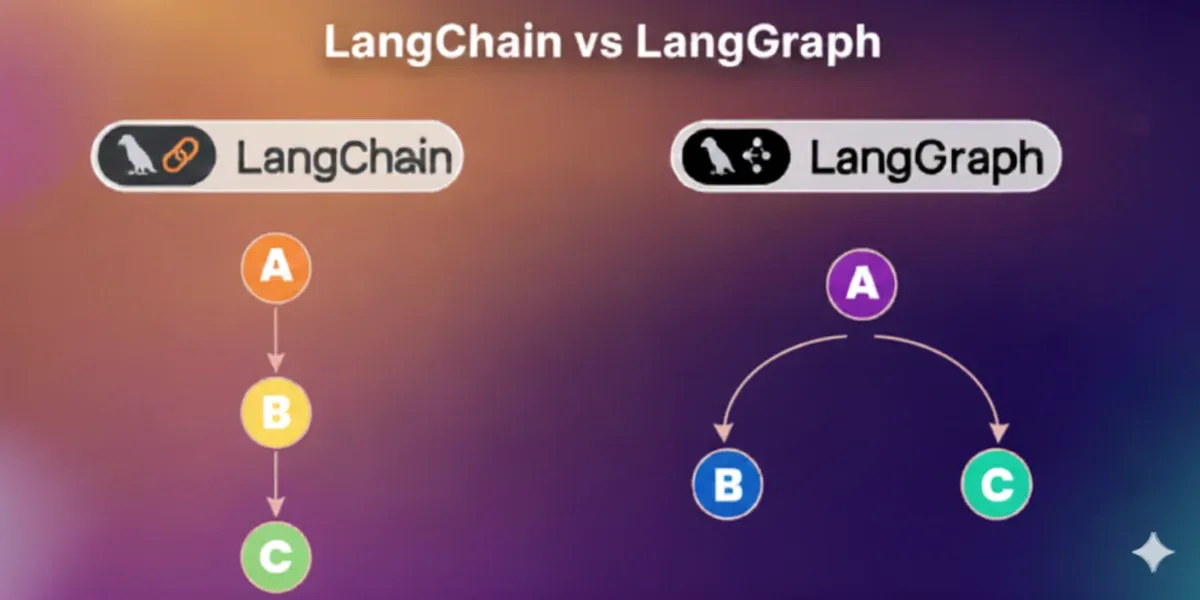
This layer coordinates workflows using tools like LangChain, LlamaIndex, or custom orchestration engines. It manages:
routing logic
multi-step task execution
memory and context management
prompt engineering
tools and API interaction
This is where a simple LLM becomes a full intelligent agent.
This includes everything that shapes the model’s final output:
inference optimization
reranking
grounding checks
safety filters
validation logic
prompt templates
Well-designed generative AI model architecture ensures low latency, high accuracy, and reliable behavior.
The final layer of gen AI application architecture is where end-users interact with the system:
enterprise AI assistants
chat interfaces
dashboards
automation tools
internal copilots
customer-facing bots
This layer converts generative AI into a functional, intuitive product.

Generative AI architecture is the best because it never copies another person's content and art; instead, it learns from the data and uses that knowledge and experience to create entirely new pieces. Consider them like algorithms trained on vast amounts of data, acting as a foundation for generating innovative content, text, images, music, and more.
To fully understand the gen AI solution architecture, you must know the underlying technical frameworks.
Generative AI learns and creates by using lots of different kinds of information, like social media posts, online databases, and even handwritten notes. The better the quality and variety of this information, the smarter and more creative the AI can be in what it comes up with.
Machine Learning algorithms help machines find patterns in data and use those patterns to create new, unique things. The smarter the algorithm, the better the results it can produce.
Modern generative AI uses transformer-based architectures with multi-head attention, positional encoding, and deep feedforward networks.
Natural Language Processing (NLP) technology helps machines understand and use human language. In generative AI, it creates written content that's grammatically right, makes sense, and stays on topic.
Genetic algorithms in generative AI work like natural selection; they evolve and improve over time. They're great for making new and diverse things. For instance, the AI might mix and match colors and shapes in art until it makes something completely new.
APIs, known as application programming interfaces, are crucial because they help different parts of the system talk to each other smoothly. They make it simple for apps and software to collect, organize, and use data with generative AI, making everything work together better.
Tools like PyTorch, TensorFlow, and JAX enable training, distributed computing, and efficient hardware acceleration.
Methods such as:
supervised fine-tuning
RLHF
LoRA / QLoRA adapters
domain-specific tuning
…extend model capability without rebuilding from scratch.
The world of generative AI boasts a diverse range of models, each with its unique approach to creating new content. Here's a glimpse into some prominent types.
Architecture: Imagine a competition between two artists; in GANs, there are two neural networks. One (the generator) makes new stuff, while the other (the discriminator) tries to tell if it's real. This back-and-forth training makes both networks better, creating lifelike results.
Applications: GANs excel at generating photorealistic images, creating artistic variations of existing styles, and even manipulating existing photographs.
Architecture: VAEs work like a creative coder using a compression trick. They squeeze input data into a smaller space (latent space), capturing its core. Then, a decoder uses this code to recreate the data or make new versions.
Applications: VAEs are well-suited for tasks like generating new variations of music or text, data compression, and anomaly detection.
Architecture: A writer always writes a sentence step by step, word by word. Autoregressive models work similarly; they create things one part at a time, using what they've made before to decide what comes next. This keeps everything making sense, but it can take a lot of computing power for hard jobs.
Applications: These models are commonly used for text generation tasks like creating realistic dialogue or writing various creative text formats.
Architecture: Transformers work like how we understand language—they look at how different parts of the information relate. This helps them see far-reaching connections and make stuff that makes more sense in context.
Applications: Transformer-based models dominate the field of text generation, powering large language models (LLMs) capable of producing diverse creative text formats, translating languages, and crafting different kinds of creative content.
These examples show how different setups can be made for specific jobs and results. Each one does special things, opening up many new possibilities in creating text, pictures, music, and more.
A well-designed gen AI solution architecture delivers far more than intelligent outputs; it unlocks creativity, efficiency, scalability, and innovation across industries. Here are the core benefits enabled by a mature generative AI architecture:
Generative models support breakthrough thinking by producing new ideas, variations, concepts, and designs, accelerating innovation in art, product development, marketing, engineering, and research.
With automated content generation, data processing, and iterative design testing, organizations can eliminate repetitive tasks and enable teams to focus on strategic, high-value initiatives.
Generative AI delivers hyper-personalized recommendations, content, and user experiences by adapting outputs to individual preferences, behaviors, and contexts, driving stronger engagement and satisfaction.
Generative models create synthetic data to expand existing datasets, test edge cases, and improve model robustness, especially valuable in low-data or privacy-restricted environments.
By simulating chemical properties, molecular structures, and performance scenarios, generative AI speeds up research and development in pharmaceuticals, materials science, biotechnology, and manufacturing.
Generative AI rapidly generates multiple design pathways and prototypes, reducing iteration time and helping product teams identify the most efficient, functional, and cost-effective options.
Selecting the right generative AI architecture is essential for building systems that deliver accuracy, scalability, and business value. When aligned with your data, workflows, and operational goals, Gen-AI can fundamentally reshape how insights are generated, decisions are made, and products evolve.
Below is a refined breakdown of key areas where generative AI enhances business intelligence, decision-making, and future innovation.
Modern BI goes beyond dashboards; it requires systems that understand data, generate insights, and support real-time decision-making. This is where gen AI architecture brings transformative value.
Generative models can create synthetic yet realistic data to fill gaps, test assumptions, and simulate scenarios, allowing businesses to experiment safely and strengthen their analytics.
Gen-AI can uncover deep, hidden patterns across large datasets. It works like a high-efficiency analyst, detecting connections traditional BI tools often miss.
Instead of manually interpreting dashboards, generative AI turns complex metrics into clear, human-readable narratives, making data more accessible across teams.
Generative models simulate market shifts, customer behavior, and external forces—supporting strategic planning with future-focused “what-if” insights.
By combining historical data with external variables, gen-AI predicts product demand more accurately, enabling smarter inventory, resource allocation, and sales strategies.
Generative AI analyzes user behavior and preferences to deliver tailored content, offers, or product suggestions, improving engagement and conversions.
AI models identify early warning signs, potential threats, and fraud patterns. This equips leaders to act proactively and minimize operational and financial risks.
Open-source models are rapidly advancing, making gen AI solution architecture more accessible.
Affordability: Lower cost makes it easier for startups and researchers to experiment and deploy.
Transparency & Collaboration: Open code enables community-driven innovation, auditing, and faster development.
High Customizability: Models can be modified at every layer to meet domain-specific or organizational needs.
Technical Expertise Required: Customization demands strong ML engineering and data science skills.
Limited Support: Support is community-based, which may delay troubleshooting or bug fixes.
Performance Trade-offs: Open-source models may not match specialized proprietary models in certain tasks.
Security Considerations: Public codebases can expose vulnerabilities if not properly managed.
The right choice depends on your priorities:
Choose open-source if cost savings, customization, and flexibility matter most.
Choose proprietary models when you need top-tier performance, reliability, and professional support.
A hybrid approach is increasingly common in modern generative AI architecture.
The future of gen AI architecture is moving toward more transparent, efficient, and human-aligned systems.
Explainable AI Becomes Standard: Models will be able to justify their outputs, increasing trust and enabling better governance.
Hybrid Architectural Approaches: Combining deep learning, reinforcement learning, retrieval systems, and domain-specific modules will unlock more powerful, adaptable AI systems.
Faster, More Efficient Models: Research is driving optimizations that reduce compute cost while improving inference speed and model quality.
Human–AI Collaboration: AI will work alongside humans, enhancing creativity and decision-making instead of replacing it.
Domain-Specific Models: Purpose-built models for medicine, law, design, science, and more will deliver higher accuracy and richer generative capabilities.
A well-designed generative AI architecture determines the true power of any AI system. From data processing and retrieval to modeling, orchestration, and deployment, every layer contributes to accuracy, scalability, and trustworthiness. As organizations shift toward AI-driven operations, the architecture behind these systems must be strategic, secure, and future-ready.
By combining strong data foundations, retrieval-augmented workflows, customizable model layers, and domain-specific optimization, businesses can build Gen-AI solutions that deliver meaningful insights, automate complex tasks, enhance decision-making, and unlock entirely new capabilities.
The future of generative AI belongs to organizations that not only adopt AI but also architect it intelligently.
It’s the layered system that powers LLMs, data pipelines, retrieval systems, and AI applications.
Strong architecture improves accuracy, scalability, security, and real-world reliability.
Foundation models, data pipelines, vector databases, orchestration layers, and application interfaces.
RAG improves accuracy by grounding outputs in your verified data and reducing hallucinations.
Model architecture defines how the AI thinks; solution architecture defines how the AI integrates into your business.
Choose open-source for customization and cost efficiency; proprietary for performance and support.
Finance, healthcare, manufacturing, retail, telecom, logistics, legal, and enterprise operations.
Not always. Many use cases perform better with RAG and optimized retrieval pipelines.
By generating insights, automating narratives, enhancing forecasting, and detecting deeper patterns.
Explainable AI, hybrid models, domain-specific architectures, faster inference, and human-AI collaboration.