

Loading...
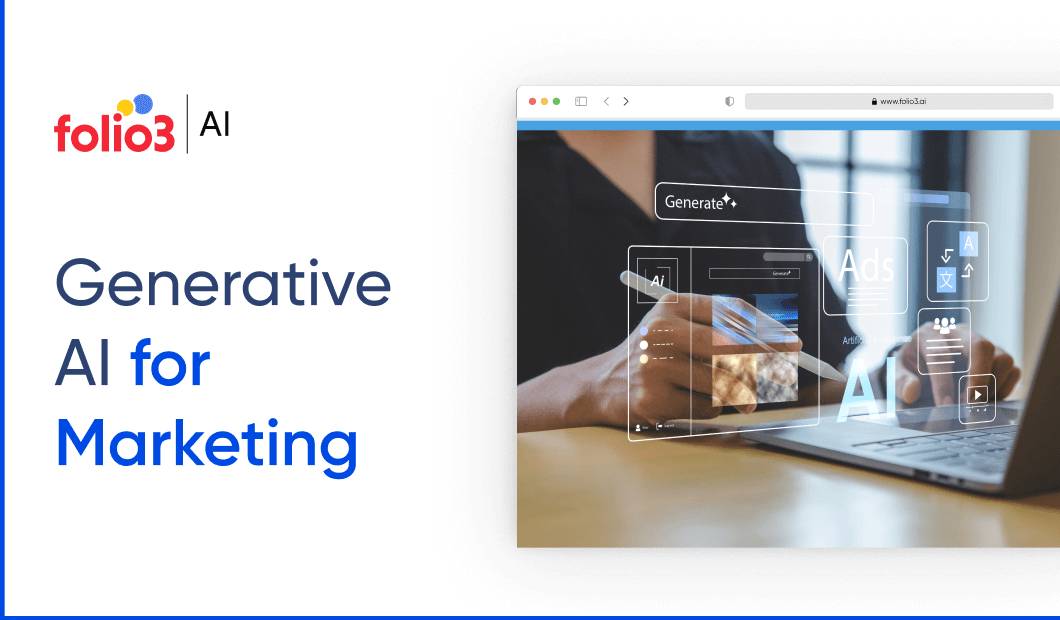
We all see it—generative AI is reshaping marketing. Top brands are using it to scale faster, personalize better, and cut costs. Generative AI for marketing isn't the future. It’s already here—writing blogs, creating ad visuals, crafting emails, and generating videos in minutes.
Big Brands like Coca-Cola and Nestlé use AI to localize campaigns globally, quickly and efficiently. It’s not just about speed. AI personalizes messages, predicts trends, and helps marketers make smarter decisions, faster.
The result? More engagement, better conversions, and higher ROI. Here we have written his blog for you to look at how generative AI is changing the way we do marketing, from content to strategy and everything in between.
Generative AI content marketing tools like Jasper, Copy.ai, and Writesonic are helping marketers create blogs, emails, and social posts in minutes. These tools understand tone, brand voice, and intent, generating polished content that aligns with audience needs.
According to HubSpot, 82% of marketers say AI-generated content performs as well or better than human-written alternatives in performance tests. This makes generative AI tools for marketing essential for scaling content production without compromising quality.
As OpenAI’s CTO Mira Murati put it, “Generative AI is giving marketers creative leverage like never before.”
Generative AI in sales and marketing makes hyper-personalization easier and more effective. By analyzing real-time data, AI can tailor content, emails, and offers to individual user behavior.
Epsilon reports that personalized content powered by AI improves engagement by up to 202%. Brands are now using gen AI services for email marketing, product recommendations, and dynamic web experiences that adapt to the user.
This is where generative AI fits into marketing strategy—turning data into meaningful, personalized interactions that convert.
Generative AI for advertising is changing the game in visual content creation. Tools like DALL·E, Runway, and Canva AI can produce ad-ready images, animations, and even video clips on demand.
For example, Heinz used AI to create globally consistent visual campaigns. And with 89% of marketers saying video gives them a strong ROI (Wyzowl), AI-powered video generation becomes a cost-effective solution for brand storytelling.
Visual production used to take weeks—now it takes minutes. That’s the power of generative AI marketing use cases.
With generative AI in sales and marketing, companies can now predict customer behavior, optimize campaign timing, and anticipate churn.
McKinsey found that AI-powered marketers improve ROI by 15–20% through better segmentation, targeting, and forecasting. This data-first approach ensures that marketing is both proactive and performance-driven.
When combined with LLMs, generative AI can even produce audience insights summaries, campaign recommendations, and competitor analysis—all tailored to your goals.
Generative AI fits into SEO strategy by identifying keyword gaps, generating optimized content, and improving structure. Tools like Surfer SEO, Clearscope, and MarketMuse help content rank higher with less manual work.
On the advertising side, generative AI for advertising automates creative testing, ad placement, and bidding. Google’s Performance Max and Meta’s Advantage+ campaigns now use AI to improve targeting and reduce cost per lead—up to 30% more efficient, according to Google Ads case studies.
This is one of the most practical generative AI marketing use cases—automating ad campaigns while improving performance.
Conversational AI is a major pillar of generative AI in marketing strategy. Tools like Chatfuel, Drift, and Intercom allow businesses to deliver instant, human-like responses via AI chatbots.
Gartner predicts 70% of all customer interactions will involve chatbots by 2027. These bots can answer queries, book appointments, recommend products, and guide users through purchase decisions—boosting lead conversion rates by up to 36%.
They’re a perfect example of how generative AI marketing tools enhance user experience and reduce customer service costs.
Increased efficiency: AI automates content creation, campaign management, and customer interactions, saving time and resources.
Cost savings: AI reduces manual labor, improves ad spend efficiency, and minimizes content production costs.
Enhanced personalization: AI-driven insights enable hyper-personalized marketing, increasing customer engagement and satisfaction.
Scalability: AI allows businesses to produce and distribute content at scale without compromising quality.
Data-driven decisions: AI-powered analytics provide valuable insights, enabling marketers to refine strategies and maximize ROI.
Start by identifying the marketing tasks you want to improve, content creation, ad optimization, personalization, or analytics.
For content: Tools like Jasper, Copy.ai, and Writesonic generate blogs, emails, and product descriptions.
For visuals: Platforms like Canva AI, DALL·E, and Runway help create images and videos.
For automation and personalization: Use HubSpot’s AI tools, Salesforce Einstein, or Seventh Sense.
Tip: Gartner predicts that by 2026, 80% of marketing tasks will be powered by AI—so selecting tools with long-term scalability is key.
AI works best when it fits into your existing systems, not when it replaces them. That’s why gen AI integration services are essential—they ensure AI capabilities align seamlessly with your current tools and workflows.
Connect AI to your CRM, email platform, PPC tools, and content systems (like CMS or DAM).
Use AI to automate repetitive tasks, generate creative ideas, and provide performance feedback.
Keep human oversight in place to ensure content stays on-brand and ethically sound.
Example: A retail brand using AI for automated email subject lines can A/B test multiple versions instantly while still letting marketers choose the final tone.
Pro Tip: Start small (e.g., one campaign) and expand as you measure success. AI is a force multiplier when integrated wisely.
AI shouldn’t replace your team—it should amplify it.
Connect AI to platforms like your CRM, email service provider, CMS, and ad platforms
Use AI to automate content drafts, subject lines, keyword suggestions, or customer segmentation
Let marketers oversee AI output for tone, brand voice, and accuracy
Example: AI can generate five headline variations for a landing page, and your team can choose the one that fits best.
To get the most from AI, your marketing team needs to understand how to use it effectively.
Provide basic prompt engineering training
Create internal guidelines for tone, brand voice, and do’s/don’ts of AI use
Encourage teams to experiment while tracking performance
Pro Tip: Start with low-risk tasks (e.g., internal email drafts), then move to customer-facing content.
AI tools should be treated like performance tools—not magic boxes.
Track results (CTR, engagement, conversions) across AI-generated vs. human-created content
Use A/B testing to refine prompts and outputs
Continuously update inputs based on what performs best
Insight: According to Salesforce, marketers using AI see a 41% increase in customer satisfaction when AI is optimized regularly.
While AI accelerates output, human oversight is essential to ensure quality and ethics.
Review AI content for bias, misinformation, or off-brand language
Use guardrails and approval workflows before publishing
Ensure transparency when AI-generated content is used in customer communication
Train AI models with brand-specific data to ensure relevance and accuracy.
Use AI for content ideation, editing, and optimization rather than full automation.
Maintain human oversight to preserve brand voice and messaging consistency.
Monitor AI-generated content regularly to ensure quality and compliance.
Balance AI automation with human creativity to maximize impact.
How Do You Use Generative AI in Marketing?It helps with writing content, designing visuals, running smarter ads, and personalizing customer interactions. Tools like ChatGPT, Jasper, and Canva AI make it fast and easy.
How Can Generative AI Boost Consumer Marketing?It delivers the right message to the right person at the right time. AI looks at customer behavior and tailors content, ads, and offers—leading to more clicks, conversions, and loyalty.
Which Marketing Companies Are Using Generative AI?Big names like Coca-Cola, Nike, and HubSpot are already in. They use AI to power creative, automate campaigns, and connect better with customers.
Generative AI is no longer a nice-to-have—it’s a growth enabler.
Companies leveraging AI in marketing are already seeing faster go-to-market times, lower content costs, and deeper customer engagement. McKinsey reports up to 20% higher ROI and faster campaign execution across AI-powered teams.
In a market that’s moving faster than ever, adopting generative AI isn’t just about keeping up—it’s about pulling ahead.
Integrating generative AI into your marketing strategy now means gaining a lasting advantage in speed, personalization, and performance. Wait too long, and you risk falling behind those who already have.