
Loading...
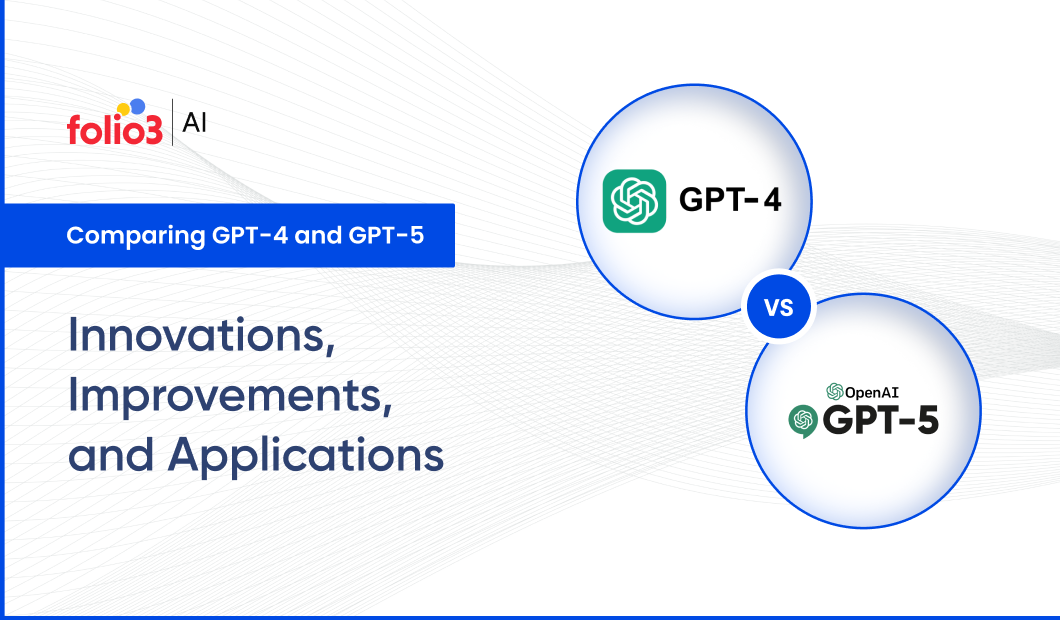
As AI technology evolves, OpenAI’s Generative Pre-trained Transformer (GPT) models have consistently pushed the boundaries of natural language processing (NLP). GPT-4, the latest publicly available version, has proven to be a game-changer in various industries. However, the anticipation for GPT-5 is palpable, with experts expecting even more groundbreaking innovations. This blog focuses on the key differences between GPT-4 and GPT-5, drilling down on innovations, improvements, and real-world applications.
We interact with artificial intelligence through GPT models, which are based on the Transformer architecture. Each iteration from GPT-1 to GPT-4 has brought incremental improvements in language understanding, context sensitivity, and human-like responses.
GPT-4, the current model, has been widely successful across a variety of applications—ranging from customer service to advanced content creation and even programming assistance.
However, with the ever-increasing demand for more sophisticated AI systems, GPT-5 has successfully established new benchmarks in capabilities and performance.
Industry experts are particularly excited about GPT-5’s improvements in handling more complex tasks and its ability to generate nuanced and diverse outputs.
OpenAI, the company behind these GPT models, has become a significant player in developing advanced AI systems.
Through the release of various GPT models, OpenAI has impacted industries across the globe, from healthcare and law to entertainment and finance.
Each model has brought about new possibilities, and GPT-5 has truly pushed the envelope beyond expectations, fundamentally changing how we think about and use AI in ways we're only beginning to understand.

FeatureGPT-4GPT-5Release Year20232025Model Size~1.76T parameters (estimated, unconfirmed)~300B parameters (estimated)Model ArchitectureTransformer-basedTransformer + integrated reasoning components from o1/o3 modelsTraining TechniquesSupervised learning + RLHFSupervised fine-tuning + RLHF + synthetic data generationContext Window8K or 32K tokens (two variants)API: 272K input + 128K output (400K total) ChatGPT: 8K (free), 32K (Plus), 128K (Pro)Language Modeling CapabilitiesGenerates coherent textEnhanced reasoning, chain-of-thought processing, multi-step logicMultilingual SupportStrong (50+ languages)Improved multilingual capabilities (specific count not disclosed)Context UnderstandingStrong but limited in complex scenariosSuperior contextual depth with unified reasoning systemHallucination RateReduced from GPT-3Significantly lower with improved factuality trainingPerformance & EfficiencyOptimized but resource-intensiveImproved efficiency with automatic model routingMultimodal CapabilitiesText + image understandingEnhanced text + image processing with improved visual reasoningMemorySession-basedEnhanced session memory with better context retentionTraining DataBroad datasetsDiverse datasets with advanced filtering (cutoff: Sep 2024)Ethical & Safety GuardrailsImproved safety measuresAdvanced "safe completions" approach, reduced sycophancyUse CasesGeneralized across sectorsEnhanced applications in coding, writing, healthcare, agentic tasksBenchmark PerformanceStrong baseline performanceCoding: 74.9% (SWE-bench), 88% (Aider Polyglot) Math: 94.6% (AIME 2025) Multimodal: 84.2% (MMMU)Domain SpecializationGeneralist with fine-tuningUnified system with automatic task-appropriate reasoningAutonomous Task ExecutionLimitedAdvanced multi-step workflows with tool coordinationAPI VariantsSingle modelThree variants: gpt-5, gpt-5-mini, gpt-5-nanoDeveloper ControlsBasic parametersAdvanced controls: reasoning_effort, verbosity, custom toolsPricing (API)GPT-4: $30/1M input, $60/1M output GPT-4 Turbo: $10/1M input, $30/1M output GPT-4o: $5/1M input, $15/1M output (legacy pricing)GPT-5: $1.25/1M input, $10/1M output Mini: $0.10/1M input, $0.40/1M output Nano: $0.03/1M input, $0.12/1M output

GPT-4 marked a major leap forward in natural language processing by improving accuracy, reasoning, and versatility across industries. Its standout strengths include:
Advanced Language Understanding – Handles complex queries with greater accuracy, maintaining coherence across long conversations.
Versatile Task Support – Powers applications in text summarization, translation, sentiment analysis, creative writing, and code generation.
Improved Context Retention – Reduces conversational “forgetfulness,” enabling longer, more relevant dialogue sessions.
Enhanced Reasoning & Problem-Solving – Performs better in math, logic, and structured decision-making compared to GPT-3.5.
Industry Adoption – Widely used for customer service automation, content creation, education, and software development.
From helping developers debug code faster to enabling companies to automate multilingual support, GPT-4 has proven to be a reliable, high-performance AI model for professional and creative work.
Building on GPT-4’s foundation, GPT-5 introduces improvements in speed, reasoning, and adaptability for both general and specialized use cases. Notable enhancements include:
Expanded Context Window – Processes and remembers significantly more text in a single interaction, allowing deeper analysis and richer conversations.
Higher Reasoning Accuracy – Improved problem-solving in technical, legal, and analytical domains, with fewer factual errors and hallucinations.
Faster, More Efficient Responses – Optimized inference for reduced latency and better performance on smaller devices or edge environments.
Improved Multilingual Capabilities – Offers stronger, more accurate responses in multiple languages, making it better suited for global applications.
Enhanced Domain Expertise – Delivers more tailored answers in areas like healthcare, law, coding, and creative industries.
Better Instruction Following – Produces outputs that align more closely with user prompts and formatting requirements.
These upgrades position GPT-5 as a more context-aware, resource-efficient, and industry-ready AI system, capable of supporting both everyday productivity and highly specialized professional tasks.
Following OpenAI's August 7, 2025, release, GPT-5 has delivered transformative improvements across reasoning, multimodality, safety, and performance that redefine AI capabilities:
Unified Intelligence System – Features a real-time router that automatically switches between fast-response and deep-reasoning modes based on conversation type, complexity, tool needs, and user intent, eliminating the need for manual model selection.
Massive Context Processing – Supports up to 400,000 tokens in API usage (272K input + 128K output), with ChatGPT offering 8K (free), 32K (Plus), and 128K (Pro) tokens, enabling analysis of entire books without losing context.
Three Specialized Variants – Offers gpt-5 (full reasoning capabilities), gpt-5-mini (cost-efficient for simpler tasks), and gpt-5-nano (ultra-low latency for real-time applications) with distinct performance profiles.
Superior Coding Excellence – Achieves 74.9% on SWE-bench Verified real-world software engineering tasks (vs GPT-4's 52%) and 88% on Aider Polyglot multi-language coding, with 22% fewer tokens and 45% fewer tool calls for efficiency.
Mathematical Mastery – Scores 94.6% on AIME 2025 mathematics competition without tools, demonstrating exceptional reasoning capabilities that set new standards for AI mathematical performance.
Enhanced Multimodal Processing – Sets a new state-of-the-art with 84.2% on MMMU college-level visual reasoning and 84.6% on VideoMMMU video-based reasoning, surpassing all previous models.
Reduced Error Rates – GPT-5 responses are 45% less likely to contain factual errors than GPT-4 responses, and 80% less likely when using thinking mode, with enhanced fact-checking mechanisms.
Advanced Safety Framework – Implements "safe completions" approach, replacing binary refusals, providing helpful responses within safety constraints while maintaining user utility.
Bias Mitigation – Reduces sycophantic responses from 14.5% to less than 6% through enhanced training on diverse datasets with advanced bias detection mechanisms.
Transparency Improvements – Provides better recognition of task limitations and clearer communication about capabilities, with improved honesty in acknowledging when tasks cannot be completed.
Customizable Personalities – Offers four personality options (Cynic, Robot, Listener, Nerd), enabling tailored conversations for better user engagement without explicit prompting.
Advanced Developer Controls – Introduces verbosity parameters (low, medium, high), reasoning effort settings (minimal, low, medium, high), and custom tools support with plaintext input.
Thinking Mode – Provides optional, deeper reasoning capability for complex tasks, available for Plus subscribers and higher tiers with step-by-step analysis.
Memory Integration – Leverages ChatGPT's existing memory system for enhanced session continuity and user preference retention across conversations.
Competitive Pricing – GPT-5 at $1.25/1M input tokens represents a 96% cost reduction compared to original GPT-4 pricing ($30/1M), making advanced AI significantly more accessible.
These upgrades position GPT-5 as a more context-aware, resource-efficient, and industry-ready AI system, capable of supporting both everyday productivity and highly specialized professional tasks.While GPT-4 brought remarkable improvements, GPT-5 has introduced even more significant advancements.
Industries such as healthcare, legal analysis, and personalized education stand to benefit from GPT-5’s advancements.
Its enhanced ability to understand complex relationships and its more sophisticated problem-solving capabilities could revolutionize how professionals in these fields interact with and leverage AI.For instance, doctors could use GPT-5 to assist in diagnosing conditions based on vast medical data, while lawyers might employ it for legal research, drafting documents, or analyzing case precedents.
These updates make GPT-5 a powerful choice for enterprise-grade AI applications across diverse industries.
[elementor-template id="15958"]
GPT-5 delivers breakthrough improvements across computational efficiency, accuracy benchmarks, and real-world applications, establishing new standards for AI performance and reliability.
Healthcare Accuracy: Achieves 1.6% hallucination rate on HealthBench Hard medical scenarios compared to GPT-4o's 12.9%, making it significantly more reliable for health-related queries.
Mathematical Excellence: Achieves 94.6% accuracy on the AIME 2025 mathematics competition without tools, compared to GPT-4's significantly lower performance, demonstrating exceptional reasoning capabilities.
Coding Superiority: Scores 74.9% on SWE-bench Verified real-world software engineering tasks versus GPT-4's 52%, with 22% fewer tokens and 45% fewer tool calls for efficiency.
Reduced Hallucinations: GPT-5 responses are 45% less likely to contain factual errors than GPT-4o, and 80% less likely when using thinking mode compared to previous models.
Multimodal Leadership: Sets a new state-of-the-art with 84.6% on MMMU college-level visual reasoning and 84.6% on VideoMMMU video-based reasoning, surpassing all previous models.
Another critical improvement for GPT-5 is in terms of accuracy and training data.
Advanced Training Infrastructure: Trained on Microsoft Azure AI supercomputers using NVIDIA H200 GPUs with large-scale supervised learning and reinforcement learning from human feedback techniques.
Enhanced Dataset Quality: Utilizes more diverse and filtered training data with advanced bias mitigation mechanisms, improving accuracy across a broader range of topics and domains.
Scientific Reasoning: Achieves 87.3% accuracy on GPQA Diamond PhD-level science questions with tools, demonstrating superior domain expertise across multiple scientific disciplines.
GPT-5 transforms industries through superior reasoning capabilities, enhanced accuracy, and integrated multimodal processing, establishing new benchmarks for AI-driven solutions across professional sectors.
Educational Enhancement: Creates personalized learning experiences through superior mathematical reasoning, enabling adaptive tutoring systems and sophisticated educational content generation with better contextual understanding across academic subjects.
Healthcare Excellence: Delivers improved medical information accuracy with drastically reduced hallucination rates, enabling reliable health information processing, medical result analysis, and clinical decision support systems.
Advanced Software Development: Excels at complex coding tasks and multi-language programming, creating functional websites, debugging large repositories, and generating optimized code with minimal prompting and superior aesthetic sensibility.
Scientific Research: Demonstrates exceptional performance on graduate-level science questions, facilitating advanced research analysis, academic writing, and complex scientific problem-solving across multiple disciplines with enhanced accuracy.
Financial Analysis: Leverages enhanced reasoning for sophisticated market analysis, risk assessment, and pattern recognition, with improved capabilities in processing complex financial documents and generating strategic insights.
OpenAI implements comprehensive safety frameworks addressing bias, misinformation, and responsible deployment while maintaining transparency and user control in GPT-5's advanced capabilities.
Responsible Deployment: Features enhanced detection of harmful requests versus legitimate queries, with continuous monitoring systems and robust strategies ensuring beneficial use while preventing malicious applications.
Advanced Bias Mitigation: Incorporates "safe completions" framework replacing binary refusals, with enhanced training on diverse datasets and advanced bias detection mechanisms for fairer, more balanced outputs.
Transparency and Accountability: Significantly reduces sycophantic responses, implements clear AI content disclaimers, and provides better recognition of task limitations for honest, trustworthy communication with users.
Privacy Protection: Maintains strict data separation for API users, implements advanced content filtering and moderation tools, with reinforcement learning from human feedback, ensuring consistent ethical behavior patterns.
Misinformation Prevention: Achieves substantial reduction in factual errors through enhanced fact-checking mechanisms and improved source verification capabilities to combat false information proliferation and maintain information integrity.
GPT-4 has proven to be a powerful tool with wide-reaching applications, and GPT-5 has now delivered transformative advancements. Following its August 7, 2025, release, GPT-5 has established new standards in AI capabilities with dramatically improved context understanding, enhanced efficiency, and robust ethical safeguards that fundamentally advance the field of artificial intelligence.
As GPT-5 rolls out, the implications for industries and applications across the globe are immense. Whether it’s enhancing conversational agents, generating more nuanced content, or offering better translation services, GPT-5’s capabilities are bound to reshape how we think.
What are the key differences between GPT-4 and GPT-5?
GPT-5 has more parameters, better contextual understanding, improved efficiency, and support for more languages compared to GPT-4.
What are the key differences between GPT-4 and GPT-5 in terms of pricing?
The key differences between GPT-4 and GPT-5 include pricing, where GPT-5 may initially be more expensive due to its larger model size and advanced capabilities. However, its improved efficiency could reduce long-term costs, making it more cost-effective over time, especially for large-scale applications.
ChatGPT 5 vs 4: Which one is better for advanced AI tasks?
GPT-5 outperforms GPT-4 in tasks like code generation, document summarization, and handling complex queries. Its improved architecture allows better accuracy, faster response times, and deeper contextual awareness — making it more suitable for enterprise-level AI applications.
What are the major improvements in GPT-5 compared to GPT-4?
GPT-5 brings enhancements in token processing (handling larger inputs), fewer hallucinations, better multilingual support, and improved long-term memory. It also builds on multimodal abilities — processing both images and text in more cohesive ways.
When is ChatGPT 5’s official release date?
ChatGPT-5 was officially released on August 7, 2025. The model is now available to all ChatGPT users, including free-tier users, with different usage limits based on subscription plans. Premium subscribers get access to additional features like GPT-5 Pro and enhanced reasoning capabilities.
What can GPT-5 do that GPT-4 can't?
GPT-5 can deliver better real-time decision-making, sustained memory over long sessions, and native image+text reasoning. Unlike GPT-4, GPT-5 aims to enable autonomous task execution and more human-like interaction flows.
How will GPT-5 change the future of AI-powered tools?
GPT-5 is likely to power the next generation of AI assistants, copilots, and creative tools with near-human fluency. It will make AI more proactive, context-aware, and capable of working across modalities and longer sessions.
Is GPT-5 available yet, and how can I access it?
GPT-5 is not publicly released in full form yet. However, some capabilities may be accessible in ChatGPT Plus or enterprise versions. Stay tuned to OpenAI’s official channels for announcements.
How does GPT-5 perform in real-world applications like content generation or coding?
Early indications show GPT-5 is more accurate and coherent in generating long-form content, writing optimized code, and producing data-driven insights — thanks to better reasoning and contextual capabilities.