
Loading...

Cities worldwide face mounting pressure to handle waste collection more efficiently as urban populations continue to grow rapidly. Current waste management operations struggle with the generation of 2.01 billion tonnes of municipal solid waste annually, creating operational challenges for teams dealing with rising costs and environmental pressures.
Traditional collection methods rely on fixed schedules and predetermined routes, often resulting in trucks visiting empty bins while others overflow nearby. Smart waste collection systems use connected sensors and data platforms to optimize pickup routes, monitor bin levels in real-time, and reduce operational costs by up to 40%.
The growing role of IoT in smart cities has made waste management one of the most promising applications for digital transformation, enabling municipalities to cut expenses while meeting ambitious environmental goals.

Traditional waste collection faces operational barriers that impact both costs and service quality. Understanding these challenges helps explain why cities are turning to IoT solutions for better results.
Collection trucks often follow predetermined routes regardless of actual bin capacity, wasting fuel on unnecessary stops. Fixed schedules mean that vehicles visit empty containers while full bins overflow just a few blocks away, creating costly operational inefficiencies.
Without real-time capacity monitoring, waste containers create service imbalances across collection zones. Some bins sit half-empty for weeks while others overflow between scheduled pickups, leading to sanitation complaints and pest problems.
The waste management industry faces persistent driver shortages and high rates of employee turnover. This staffing challenge makes it difficult to maintain consistent service levels while keeping operational costs under control for growing urban areas.
Collection teams operate without visibility into the current bin status or urgent service needs. Managers can't prioritize emergency pickups or adjust routes based on citizen complaints, resulting in reactive rather than proactive service delivery.
Traditional fixed routes generate unnecessary vehicle trips and extended idle time at collection points. This inefficient approach increases fuel consumption, greenhouse gas emissions, and vehicle wear while failing to meet sustainability goals.
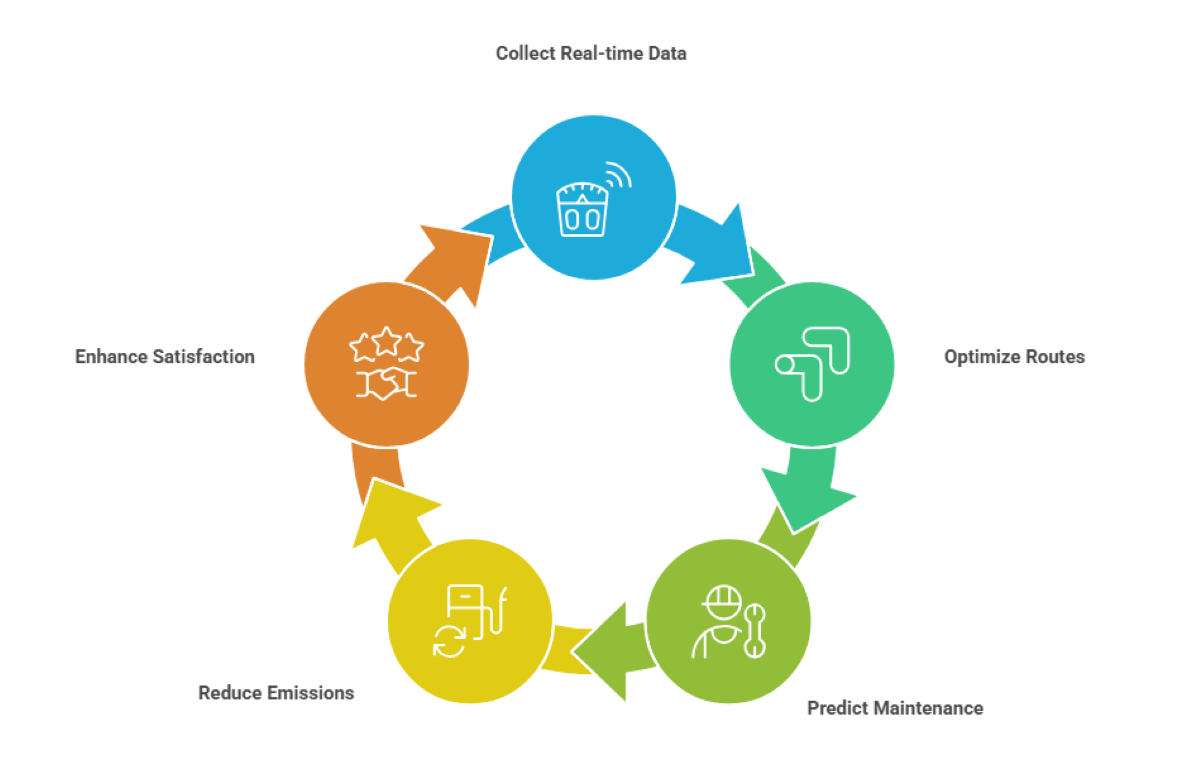
IoT technologies address core operational challenges through connected systems that provide actionable data and automated optimization. These smart solutions create measurable improvements across every aspect of waste collection operations.
Smart sensors continuously monitor bin fill levels, temperature readings, and location status throughout the collection areas. This constant data stream provides operators with immediate visibility into actual collection needs, rather than relying on predetermined schedules and assumptions.
Connected platforms analyze traffic patterns, bin capacity data, and historical collection trends to create dynamic routes. These intelligent systems minimize travel time and distance, ensuring that crews visit only bins that require service attention.
IoT systems track vehicle performance metrics, bin condition status, and equipment usage patterns over time. This data enables maintenance teams to schedule repairs before breakdowns occur, extending equipment lifecycles and reducing unexpected downtime costs.
Optimized routes reduce unnecessary trips and minimize idle time at collection points throughout service areas. Cities report fuel consumption reductions of up to 30% while making significant progress toward their sustainability and climate goals.
Real-time monitoring prevents overflow situations and enables faster response to citizen service requests and complaints. This proactive approach leads to cleaner neighborhoods, reduces public health risks, and fosters stronger community relationships through effective waste management services.
Modern waste collection relies on several interconnected technologies that work together to create intelligent, responsive systems. Each component plays a specific role in gathering data, processing information, and delivering actionable insights to collection teams.
Ultrasonic sensors measure fill levels with high accuracy while accelerometers detect tampering, tipping, or unusual movement patterns. Temperature sensors prevent dangerous fires in dumpsters containing hazardous materials, chemicals, or improperly disposed of electronics that could create safety risks.
GPS modules provide real-time vehicle location data and route tracking capabilities for entire fleets. Advanced telematics systems monitor driver behavior patterns, fuel consumption rates, engine performance, and maintenance needs to optimize both safety and operational efficiency.
LoRaWAN and NB-IoT networks deliver long-range, low-power communication capabilities for sensors in remote locations. These protocols are effective in areas where traditional cellular coverage is limited or unreliable, ensuring consistent data transmission.
Centralized cloud platforms aggregate sensor data from thousands of collection points into unified systems. Visual dashboards enable operators to make informed decisions about route adjustments, resource allocation, and emergency response priorities based on real-time conditions.
Advanced algorithms analyze historical collection patterns to predict optimal pickup times and identify maintenance needs. Machine learning systems continuously improve route efficiency over time by learning from traffic patterns, seasonal variations, and operational feedback.
Customer-facing mobile applications let residents report overflow issues and request special pickups for large items. Field applications provide drivers with real-time route updates, bin status information, and navigation assistance to optimize collection efficiency.

Connected waste systems deliver measurable improvements across operational, financial, and environmental metrics that matter to city budgets. These benefits justify the initial technology investment while creating long-term value for communities and stakeholders.
Cities consistently report 20-40% reductions in total collection costs through fewer truck miles and optimized schedules. Better resource utilization across service areas means smaller fleets can handle the same coverage while reducing labor, fuel, and maintenance expenses.
Route optimization and reduced empty runs cut greenhouse gas emissions by eliminating unnecessary vehicle trips. These improvements support municipal climate commitments and help cities meet increasingly strict sustainability reporting requirements from state and federal agencies.
Real-time monitoring eliminates guesswork from collection planning and reduces customer complaints about missed pickups. Field crews can focus their time and energy on areas that require service attention, rather than following inefficient, predetermined routes.
Comprehensive data dashboards provide clear metrics on collection frequency, response times, and overall service quality. This transparency improves accountability between departments and enhances public communication about waste management performance and budget allocation decisions.
Predictive analytics enables cities to right-size their vehicle fleets and adjust staffing levels in response to actual demand. Maintenance budgets can be invested where they'll have the greatest impact on equipment longevity and operational reliability throughout service areas.
Several cities have successfully implemented IoT waste collection systems, yielding measurable results and providing valuable lessons for other municipalities. T
San Francisco deployed over 8,000 smart sensors across public waste bins starting in 2019 as part of their zero-waste initiative. The system reduced collection costs by 30% while improving recycling rates and citizen satisfaction scores through enhanced service reliability and a decrease in overflow incidents.
Amsterdam's smart waste program utilizes underground pneumatic systems connected to IoT sensors in high-density residential areas. Since its implementation began in 2018, the city has reduced collection frequency by 75% in these zones while maintaining cleanliness standards and decreasing truck traffic.
Seoul installed fill-level sensors in over 3,000 public bins and integrated them with citizen-facing mobile applications. Over two years of operation, the system has reduced overflow incidents by 85% while improving response times for citizen service requests and complaints.
Barcelona deployed over 500 smart bins with IoT sensors across the city, starting in 2012, featuring nine underground pneumatic waste collection stations that serve 50,000 homes and 200,000 residents.
New York City deployed 197 BigBelly smart waste stations in Times Square and key locations starting in 2013, with mandatory citywide composting launched in April 2025. The smart bins increased trash capacity by 200% and reduced collection frequency by 50%. "
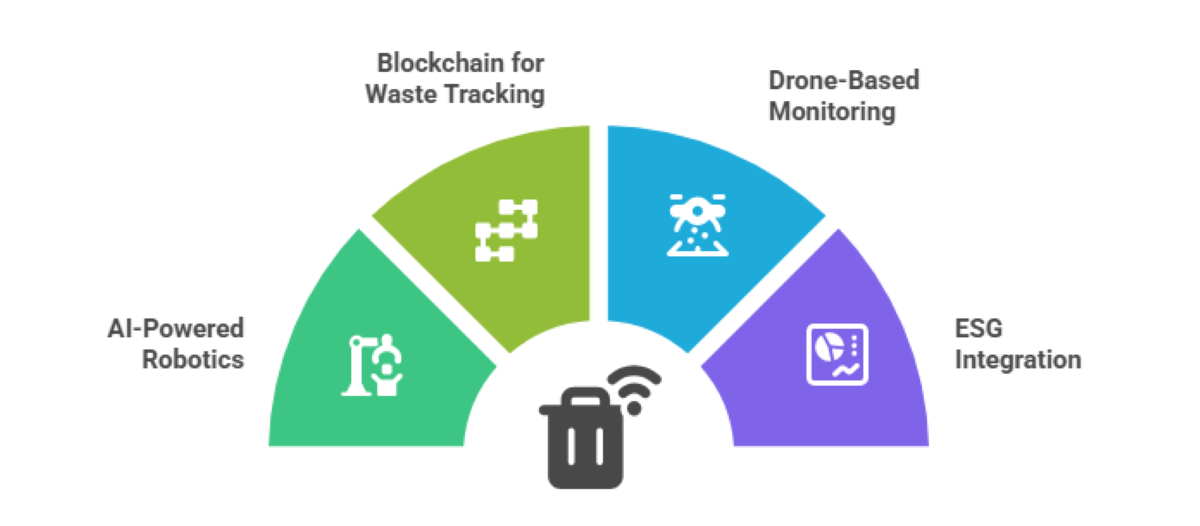
Emerging technologies promise to further transform how cities handle waste collection and processing in the coming decade.
Advanced robotics with computer vision can identify and sort materials at processing facilities, reducing contamination and improving recycling quality significantly.
Distributed ledgers create transparent records of waste streams from collection to disposal, supporting circular economy initiatives and regulatory compliance reporting.
Autonomous drones equipped with sensors can monitor landfills, illegal dumping sites, and large commercial areas more efficiently than ground-based inspections.
IoT data feeds directly into environmental, social, and governance dashboards, helping cities track sustainability goals and report progress to stakeholders.
Smart cities need comprehensive AI-powered platforms that go beyond basic IoT sensors to deliver intelligent waste management solutions. Folio3 AI's waste management solutions focus on automated systems that combine real-time tracking, predictive analytics, and compliance reporting for modern urban environments.
AI-powered systems monitor waste bin fill levels using IoT sensors and provide instant alerts to prevent overflow incidents. The platform tracks key performance indicators accurately while reducing manual monitoring efforts and improving response times across collection areas.
Advanced algorithms analyze historical data and real-time inputs to forecast waste volume trends across different neighborhoods and seasons. This predictive capability helps cities allocate resources proactively, prevent bin overflow, and plan infrastructure improvements based on actual demand patterns.
Computer vision systems and image recognition technology enhance sorting accuracy by automatically identifying different waste types. These AI-powered tools increase recycling rates while reducing contamination in waste streams, thereby supporting circular economy initiatives and sustainability goals.
The platform generates automated reports for environmental regulations and sustainability mandates, thereby eliminating the need for manual data collection processes. Cities can track waste diversion analytics and resource allocation while meeting stricter environmental requirements through precise, real-time documentation.

What is IoT in waste management?
IoT in waste management refers to the use of smart sensors, connectivity, and data analytics to optimize the collection, monitoring, and processing of waste.How does AI enhance smart waste management systems?
AI analyzes sensor data to predict bin fill times, optimize collection schedules, detect anomalies, and support sustainability goals with actionable insights.Can AI predict waste generation patterns?
Yes, AI models analyze historical data and real-time inputs to forecast waste trends, helping municipalities plan resources and reduce overflow issues.What role do data platforms play in IoT waste systems?
Centralized data platforms collect inputs from sensors and enable visualization, reporting, and automation of waste collection decisions in real time.Is IoT waste management eco-friendly?
Absolutely. It reduces fuel use, lowers emissions, prevents unnecessary trips, and supports recycling efforts by analyzing waste types and sources.How does smart waste tracking support sustainability goals?
Smart waste tracking enables efficient resource use, minimizes landfill dependency, and supports green city initiatives through informed decision-making.Are smart waste systems compatible with existing fleets?
Yes, most IoT solutions are retrofittable and can integrate with legacy fleet tracking or route optimization platforms with minimal adjustments.What are the biggest challenges in implementing IoT waste solutions?
Common challenges include initial costs, sensor accuracy, connectivity in remote areas, and managing large volumes of sensor data.Can smart bins detect hazardous or e-waste?
Advanced smart bins can use chemical sensors or image recognition to detect hazardous, recyclable, or e-waste for specialized handling.How secure is IoT waste data?
Most IoT platforms use end-to-end encryption, secure cloud storage, and access controls to ensure data privacy and protect against cyber threats.