
Loading...

Generative AI has become a driving force of automation in business. Take Claude, ChatGPT-4, and Midjourney, for example — they are summoned to make decisions. However, the quality of their output hinges on prompt design: a vague prompt leads to hallucinations, while a precise, context-rich prompt ensures relevant, high-fidelity responses.
That’s why prompt engineering best practices are essential for a polished outcome — to eliminate hallucinations and achieve clear, targeted results. You accomplish this by mastering the art of structuring inputs effectively and, when necessary, through fine-tuning large language models (LLMs).
Let me give you an example of the kind of exceptional outcome you can generate with a well-crafted, high-acumen prompt.
Prompt: This prompt is for generating a comprehensive go-to-market strategy for launching an AI-powered analytics SaaS product in the logistics sector.
"You are a senior business strategist with deep expertise in AI and global market dynamics. I’m launching a new AI-powered analytics platform tailored for mid-sized logistics companies in North America. I need a comprehensive market entry strategy that includes:
Competitive landscape analysis (top 5 players and their differentiators),
Ideal customer profile (ICP) based on industry pain points,
Go-to-market channels (digital + partnership opportunities),
Positioning statement and unique value proposition (UVP),
Potential pricing models based on industry benchmarks.
Ensure recommendations are data-driven, actionable, and suitable for a SaaS B2B environment."
It delivers accurate, no-fluff results and triples efficiency for domain-specific tasks — from RAG services and pipelines to smart automation. Ideal for support, content, research, and analytics where precision matters. Ready to master prompt engineering? We cover it all below—quick, clear, and to the point.
Let’s start with the basics: how to do prompt engineering? And what is it? Prompt engineering is all about crafting the right input to get the best possible response from an AI model.
LLMs like GPT-4 rely entirely on text-based instructions, so the way you phrase your prompt makes all the difference.
A vague prompt gives you generic or even wrong answers.
A clear, structured prompt leads to accurate and relevant results.
Be specific about what you want
Provide enough context
Remove any ambiguity
This is especially important for:
Chatbots
Content creation
Coding help
Data analysis
When done right, prompt engineering helps businesses:
Generate better insights
Automate tasks more effectively
Create high-quality content
Consistent practice is essential to sharpen your skills in this field, especially as businesses increasingly rely on prompt engineering services for high-priority tasks, including decision-making. The best way to gain mastery is through hands-on experience, and the tips shared here are designed to help you do just that.
The quality of an AI’s output is directly tied to how clearly and specifically the task is defined.
Key Guidelines:
Use unambiguous, directive language.
Define output format and boundaries: e.g., “Summarize the article in 3 bullet points,” or “Respond in 150 words using formal business tone.”
Avoid open-ended vagueness unless intentionally seeking exploratory results.
Provide structure to reduce the cognitive load on the model, improving performance and reducing randomness.
Example:Instead of: “Tell me about digital transformation.”Use: “Provide three key challenges mid-sized logistics companies face during digital transformation, and suggest brief solutions for each, in under 250 words.”
Advanced Tip:Use delimiters like triple quotes or XML-style tags to define variables in longer or nested prompts.
LLMs lack memory of the real world and operate based on the tokens (text) you provide. Supplying relevant context greatly enhances understanding.
Best Practices:
Give a short background or setup at the beginning of the prompt.
Clarify the intent and audience of the response.
Specify tone, voice, or role: e.g., “You are a financial advisor speaking to a first-time investor.”
Use progressive layering: if needed, build the prompt in stages — first setting context, then defining the task.
Example:
“Act as a market analyst. Using your knowledge of tech industry trends, provide a 200-word summary of generative AI's impact on SaaS startups since 2022. Focus on automation and customer service enhancements.”
Advanced Tip:Prepend static instructions in system-level prompts if available (e.g., OpenAI’s system message in ChatGPT API) to maintain consistent behavior.
Demonstration-based prompting, often called few-shot learning, helps the model understand your expectations through examples.
Types of Examples:
Input-output pairs (e.g., correct answer to a query)
Pattern demonstrations (e.g., style or formatting)
Completion samples (e.g., beginnings of a paragraph or table)
Template Strategy:
Create modular prompts you can reuse with variables inserted (e.g., a blog generator prompt for different industries)
Clearly signal to the model where the example ends and the live task begins
Example Prompt:“Rephrase the sentence below to sound more persuasive and professional. Example:Original: ‘AI is changing the world.’Improved: ‘Artificial intelligence is revolutionizing industries by unlocking efficiency, innovation, and scale.’Now try:Original: ‘Robots are getting better.’Improved:”
Advanced Tip:When using examples in production workflows, keep a repository of tested templates that can be versioned and optimized over time.
Prompt design is an iterative process. Even slight changes in phrasing, structure, or context can significantly affect output quality.
Testing Strategies:
Perform A/B testing between prompt variations.
Measure consistency, accuracy, creativity, and alignment with user intent.
Document how the model behaves with subtle changes to develop a better prompting intuition.
Common Iterations to Test:
Different tones (formal vs. conversational)
Different constraint levels (word limits, format)
Varying degrees of context inclusion
Addition of clarifying examples or instruction lines
Advanced Tip:Use structured evaluation methods like BLEU, ROUGE, or human-in-the-loop review cycles in enterprise applications.
LLMs inherit biases from their training data and can reproduce harmful, stereotypical, or misleading content if not carefully prompted.
Ethical Prompting Best Practices:
Use inclusive language and avoid assumptions (e.g., gender-neutral terms, culturally sensitive phrasing).
Avoid prompts that reinforce stereotypes or unsafe behaviors.
Prompt the model to include diverse perspectives when appropriate (e.g., “Include viewpoints from both developed and emerging markets”)
Bias Evaluation:
Regularly audit outputs from AI systems for fairness and inclusivity.
Use adversarial prompting to test if the model responds safely to edge cases.
Document model behavior in sensitive domains (e.g., healthcare, hiring, finance).
Advanced Tip:Combine prompts with safety layers such as post-processing filters, human reviews, and prompt mutation algorithms.
Prompt engineering must adapt to the domain and the use case. A one-size-fits-all approach fails in specialized environments.
Tailoring by Application Type:
Maintain dialogue context using chained prompts or memory systems.
Clarify user intent before response generation (e.g., "Can you confirm you're asking about billing support?").
Content Generation:
Specify format, audience, tone, and structure.
Include editorial guidelines and examples when available.
Data Extraction:
Ask for structured responses (e.g., tables, JSON, lists).
Ensure formatting consistency for downstream processing.
Coding and Technical Tasks:
Provide clear code goals and programming language.
Use prompt delimiters for code blocks (e.g., triple backticks).
Decision Support:
Frame decisions with pros/cons, constraints, and multiple perspectives.
Include risk and confidence-level analysis.
Advanced Tip:When scaling prompt use, maintain prompt libraries mapped to business functions, and track prompt performance using prompt analytics.
Few-shot prompting provides multiple examples to guide AI responses, while zero-shot prompting relies on model inference without prior examples.
Few-shot Prompting: Best for tasks requiring pattern recognition.
Zero-shot Prompting: Useful when prior examples are unavailable or impractical.
Chain-of-Thought prompting encourages step-by-step reasoning by instructing AI to break down complex problems into logical steps.
Example Prompt: "Solve the following math problem by explaining each step: 'If a train travels 60 miles per hour for 3 hours, how far does it go?'"
AI models can be instructed to refine their responses iteratively by prompting them to critique and improve their own output.
Example: "Generate a summary of this article. Then, refine it to improve clarity and conciseness."
Mastering prompt engineering becomes easier and more efficient when supported by the right tools. These platforms provide structured environments for testing, refining, and scaling your prompts for real-world business use cases.
Provides an interactive interface for testing prompts with OpenAI’s LLMs.
Allows users to fine-tune temperature, token limits, and response randomness.
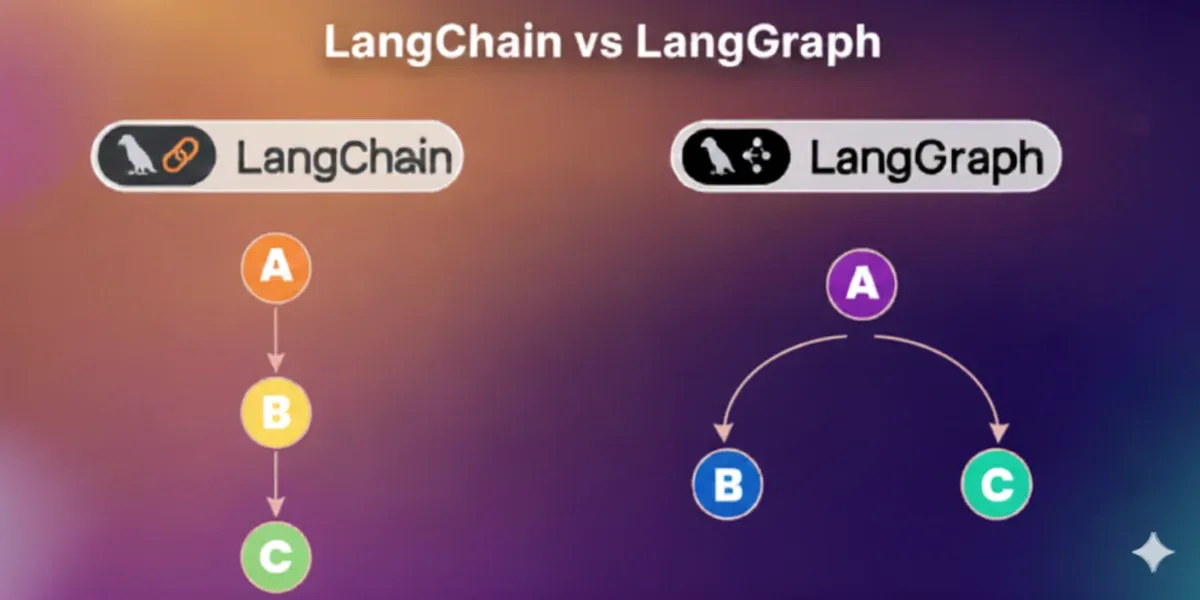
A robust framework for developing LLM-powered applications.
Supports prompt chaining, memory integration, and structured data processing.
Enables tracking and version control for prompt iterations.
Helpful in benchmarking different prompt strategies.
OpenAI, Hugging Face, and Cohere provide API access for structured prompt engineering.
APIs allow developers to integrate LLM capabilities into applications seamlessly.
Prompt engineering is key to getting useful results from AI. AI doesn't think—it responds based on how you ask. A clear, specific prompt leads to better answers; a vague one often fails. For example, telling a chatbot “Help the customer” may lead to generic replies. But saying “Give a step-by-step troubleshooting guide in a friendly tone” gets much better results.
The same goes for content creation—more detailed prompts mean higher quality output. Businesses can improve AI by setting clear goals, adding context, and testing different prompts. Tools like LangChain and PromptLayer make this easier.
As AI grows, learning to write better prompts will be key to using it effectively.
Q1. What Is Prompt Engineering, and Why Does It Matter?
It’s the skill of writing clear, targeted inputs for AI to get better responses. Good prompts lead to more accurate, useful outputs—especially in chatbots, content, and data tasks.
Q2. How do I write better prompts? Be clear, give context, set limits, and try examples. Test different versions to see what works best.
Q3. What’s the difference between zero-shot and few-shot prompting?Zero-shot = no examples given. Few-shot = show the AI a few examples first to guide its response.
Q4. How Can I Reduce Bias in AI Outputs?Use inclusive, neutral wording. Avoid loaded questions. Test prompts regularly to spot and fix bias.
Q5. What tools can help with prompt engineering?Try OpenAI Playground for quick tests, LangChain for building AI flows, and PromptLayer to track and improve your prompts over time.