

Loading...

Municipal waste managers face a persistent operational challenge: collecting maximum waste with minimum resources while maintaining cost control. Traditional waste collection follows rigid schedules that ignore actual bin fill levels, leading to trucks collecting half-empty containers while others overflow between scheduled pickups. As these inefficiencies grow more costly, many organizations are now exploring how to calculate smart waste management ROI in 18–24 months to justify investments in AI-driven collection systems.
The financial impact is substantial across America's waste management sector. According to the Environmental Protection Agency (EPA), Americans generate 292.4 million tons of municipal solid waste annually, averaging 4.9 pounds per person per day. The U.S. waste and recycling industry, including medical and hazardous waste markets, reached an estimated $104.63 billion in revenue in 2024, representing the first time the industry has surpassed $100 billion.

Smart waste management ROI measures the financial return organizations achieve by implementing technology-driven waste collection systems.
Formula: (Total Savings - Implementation Costs) ÷ Implementation Costs × 100.
However, calculating meaningful returns requires understanding both tangible savings and strategic benefits that traditional waste management cannot deliver.
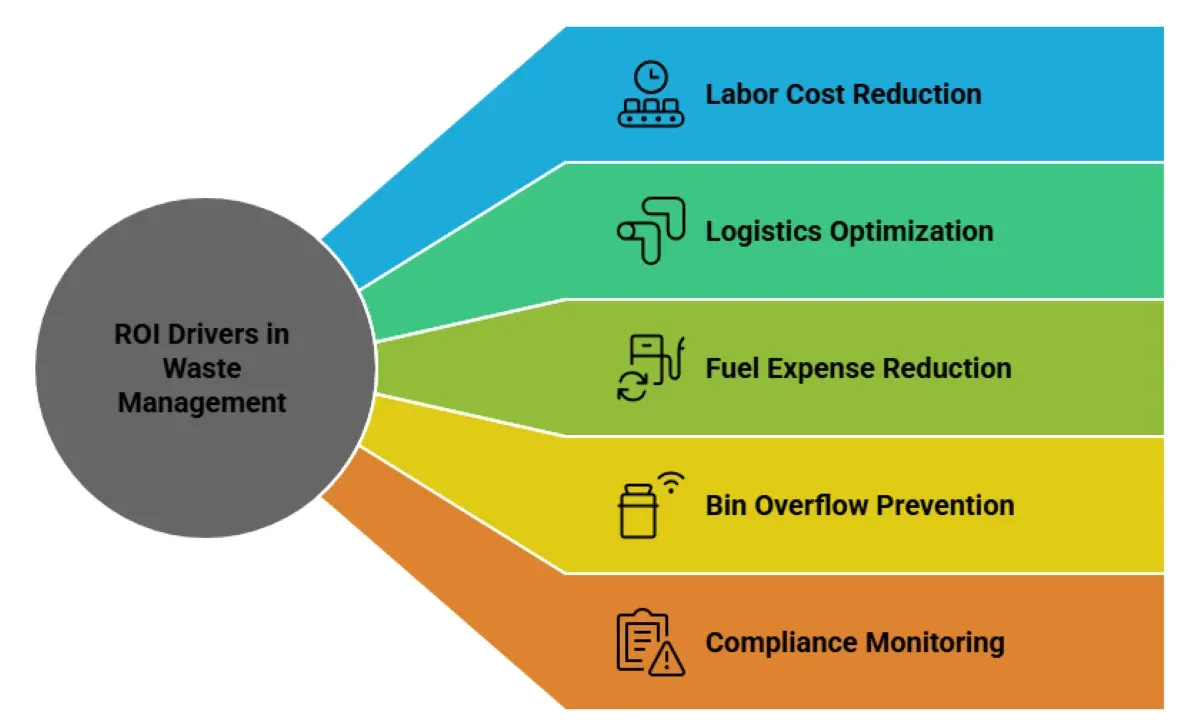
Modern waste management systems generate returns through five primary drivers that directly impact operational expenses and service quality.
Smart sensors eliminate guesswork in collection schedules. Workers focus on bins that need attention rather than checking every container. This targeted approach reduces labor hours in most implementations, translating to substantial annual savings per collection vehicle.
Route planning becomes data-driven rather than habit-based. Algorithms analyze fill levels, traffic patterns, and vehicle capacity to create efficient collection routes that reduce total miles driven considerably, saving hundreds of gallons of fuel monthly per vehicle.
AI-powered route optimization directly cuts fuel consumption. Fewer unnecessary trips and shorter total distances translate to immediate cost savings that provide meaningful monthly savings per truck, depending on fuel prices and route efficiency improvements.
Smart sensors prevent overflow situations that create cleanup costs and regulatory fines. Organizations avoid penalty fees that can range from hundreds to thousands of dollars per incident, depending on local regulations. Most implementations reduce overflow incidents dramatically.
Automated data collection simplifies regulatory reporting while ensuring consistent compliance. This reduces administrative overhead while minimizing the risk of non-compliance penalties that can reach thousands of dollars or more per violation.
Smart waste systems deliver measurable impacts across operational areas that traditional methods struggle to address effectively.
Sensors detect equipment issues before they cause service disruptions. Preventive maintenance reduces emergency repair costs and extends equipment lifespan compared to reactive maintenance approaches.
Real-time fill level data enables flexible scheduling that matches actual needs rather than fixed schedules. This responsiveness reduces collection frequency for low-usage areas while ensuring high-traffic bins receive appropriate attention.
Smart bins equipped with AI-powered sorting capabilities improve recycling rates substantially. Better waste categorization reduces disposal costs while generating revenue from recyclable materials.
Historical data reveals waste generation patterns that inform staffing decisions and equipment deployment. Organizations can allocate resources more effectively during peak periods while reducing costs during low-activity times.
Automated tracking provides data needed for sustainability reporting and carbon footprint calculations. This information supports environmental initiatives while potentially qualifying organizations for green incentives and certifications.
Understanding total implementation costs helps organizations create realistic budgets and accurate ROI projections for their smart waste initiatives.
Smart bins cost $200-1,500 per unit, depending on sensor capabilities and durability requirements. IoT sensors add $50-200 per bin for basic fill-level monitoring. AI software subscriptions typically range from $5,000-$25,000 annually based on system complexity and user count.
Platform setup requires 2-6 months of professional services costing $10,000-50,000, depending on system scale. Staff training adds $2,000-10,000 for comprehensive programs. Retrofitting existing bins costs $100-300 per unit for sensor installation and connectivity setup.
Software updates and support typically cost 15-20% of annual subscription fees. Hardware servicing ranges from $50-$200 per bin annually. Cellular or Wi-Fi connectivity adds $2-8 per bin monthly, depending on data usage and service provider.
Cost CategoryTraditional systemSmart systemDifferenceLabor (Annual)$120,000-180,000$80,000-120,00030-35% reductionFuel (Annual)$15,000-25,000$10,000-18,00020-30% reductionEquipment$50,000-100,000$75,000-150,000Higher upfront costMaintenance$8,000-15,000$12,000-20,000Scheduled vs. reactivePenalties/Fines$5,000-20,000$500-2,000Significant reduction
Note: Costs are estimates based on typical municipal and commercial implementations. Actual costs may vary based on scale, location, and specific requirements.
Smart waste systems generate returns through operational improvements that compound over time to deliver substantial cost reductions.
Route optimization allows collection teams to service more locations per shift. Predictive fill monitoring eliminates unnecessary stops, reducing driver hours daily. These efficiencies translate to substantial labor savings annually per collection vehicle.
AI algorithms analyze traffic patterns, bin locations, and fill levels to create optimal collection routes. Reduced mileage saves hundreds of gallons of fuel monthly per vehicle. At current fuel prices, this represents meaningful monthly savings per truck.
Smart sensors alert teams when bins reach capacity, preventing overflow situations. Each prevented overflow saves hundreds of dollars in cleanup costs and potential fines. Organizations typically reduce overflow incidents dramatically after implementation.
AI-powered waste categorization increases recycling rates substantially in most facilities. Higher recycling volumes generate additional revenue per ton while reducing disposal costs, creating dual financial benefits for organizations.
Real-time monitoring ensures consistent adherence to collection schedules and environmental regulations. Automated reporting reduces administrative time considerably while minimizing non-compliance risks that can cost thousands of dollars per incident.
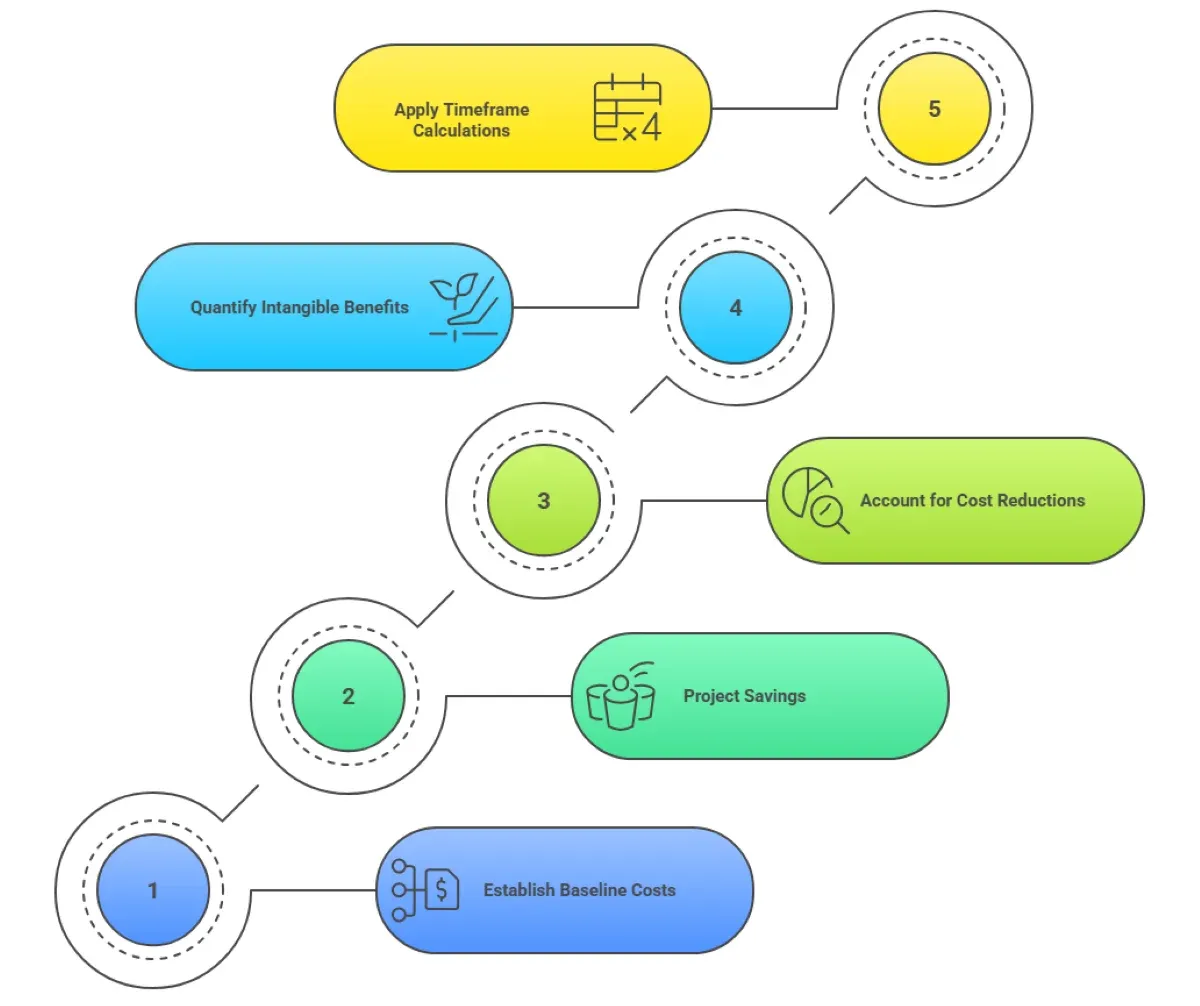
Accurate ROI calculations require a systematic analysis of current costs and projected savings from smart waste management implementation.
Document current expenses, including labor, fuel, equipment maintenance, and penalty costs. Track collection routes, driver hours, and service complaints for 3-6 months to establish reliable baseline data for comparison purposes that will support accurate ROI projections.
Key metrics to track:
Total labor hours per week
Fuel consumption per vehicle
Equipment maintenance costs
Overflow cleanup expenses
Regulatory penalty costs
Administrative overhead
Calculate expected labor reductions based on route optimization and predictive monitoring capabilities. Estimate fuel savings from reduced mileage and more efficient routing algorithms. Factor in overflow prevention benefits and improved recycling revenue potential from better waste stream categorization.
Include direct savings from reduced labor and fuel expenses in your calculations. Add indirect benefits like improved customer satisfaction scores and reduced administrative overhead costs. Consider long-term equipment lifespan improvements and maintenance cost reductions that accumulate over time.
Environmental improvements support corporate sustainability goals and potential carbon credit opportunities that create additional revenue streams. Enhanced service reliability improves customer satisfaction and reduces complaint handling costs. Better data collection enables strategic planning and resource allocation optimization across multiple operational areas.
Use conservative estimates for first-year savings while allowing for learning curve effects during initial implementation phases. Project higher returns in months 12-24 as teams optimize system usage and identify additional efficiency opportunities. Include potential expansion benefits as successful pilots scale to larger operational areas.
Annual Savings: $180,000
Implementation Cost: $120,000
First-Year ROI = ($180,000 - $120,000) ÷ $120,000 × 100 = 50%
24-Month ROI = ($360,000 - $120,000) ÷ $120,000 × 100 = 200%
Effective ROI tracking requires the right combination of technology platforms and performance indicators to monitor progress accurately.
Modern waste management platforms provide real-time dashboards showing collection efficiency, route performance, and cost metrics across all operational areas. These systems track fill levels, collection frequency, and operational costs across all service areas for performance monitoring that supports data-driven decision making.
Key metrics include:
Collection frequency reduction
Bin fill optimization
Fuel usage per route
Operational cost per ton collected
These indicators provide clear benchmarks for measuring ROI progress over time.
Advanced analytics platforms use historical data to forecast ROI trends beyond the initial 24-month period using machine learning algorithms. Machine learning algorithms identify seasonal patterns and usage trends that inform long-term investment decisions and expansion planning while reducing uncertainty in financial projections.
Smart waste platforms connect with fleet management, ERP, and financial systems to provide comprehensive data tracking across organizational departments. API integrations enable data sharing that supports accurate ROI calculations and performance reporting while maintaining data consistency and reducing manual entry errors.
Smartphone apps allow field teams to report issues, confirm collections, and update system data in real-time from any location. This connectivity ensures accurate data collection while reducing administrative overhead and improving operational responsiveness to changing conditions and customer needs.

Countries worldwide have implemented smart waste management systems with measurable results, demonstrating clear ROI potential across different markets, city sizes, and operational scales.
Amsterdam equipped waste collection trucks with weighing mechanisms that instantly calculate container weight and predict fill levels using historical data with 80-90% accuracy. The city installed 12,500 Enevo fill-level sensors in waste containers and tested the system with plastic waste.
San Francisco partnered with Recology and installed NordSense garbage level sensors in trash bins along major commercial corridors. The solution helped municipal authorities reduce the number of overflowing containers by 80% while optimizing operational expenses. The city diverts about 80% of its waste from landfills through its comprehensive smart waste management approach.
Barcelona implemented a smart waste management system that utilizes sensors installed in waste bins. These sensors monitor fill levels and communicate with waste collection trucks, optimizing collection routes based on real-time data. The city has extensive pneumatic waste collection systems covering approximately 50,000 homes and numerous commercial establishments.
Seoul adopted an intelligent waste system that combines sensor technology, big data analytics, and citizen engagement. RFID tags are attached to waste bins, allowing the city to track and monitor waste collection in real-time. Through citizen education and awareness programs, Seoul has successfully achieved a recycling rate of over 60%, significantly reducing the amount of waste sent to landfills.
Organizations often underestimate the complexity of ROI calculations, leading to unrealistic expectations and budget overruns that could be avoided.
Overlooking implementation costs - Equipment purchases represent only 60-75% of total project costs, missing integration and training expenses.
Using inaccurate baseline data - Poor record-keeping creates unreliable current cost measurements, making meaningful ROI calculations impossible.
Ignoring strategic benefits - Financial calculations miss customer satisfaction, compliance, and operational flexibility that provide long-term value.
Expecting immediate results - Real ROI requires 6-12 months for staff learning and system optimization before benefits materialize.
Underestimating ongoing expenses - Maintenance, connectivity, software subscriptions, and support costs significantly impact long-term financial projections and returns.
Emerging technologies will create new opportunities for ROI improvement as smart waste systems become more sophisticated and integrated.
Self-driving waste trucks eliminate driver costs while optimizing collection efficiency through continuous operation and precise routing algorithms, though widespread deployment remains years away.
AI systems forecast waste generation patterns with greater accuracy, enabling proactive resource allocation and extending ROI calculation horizons beyond standard timeframes with confidence.
Smart systems identify valuable materials in waste streams, creating revenue opportunities through automated sorting that transforms waste from cost centers into profit generators.
Connected urban systems share data across departments, creating synergies that multiply ROI potential through coordinated operations between traffic management, energy systems, and waste collection.
Improved waste management reduces greenhouse gas emissions, qualifying for carbon credit programs, generating additional revenue streams that enhance overall ROI calculations significantly.
Successful smart waste management deployments require strategic planning and careful execution to ensure organizations achieve projected returns on their technology investments.
Begin with small-scale deployments in high-traffic areas to demonstrate value and refine processes before full-scale implementation. Pilot programs reduce risk while providing valuable data for ROI calculations and system optimization.
Invest in proper sensor calibration and data validation processes to ensure accurate measurements. Poor data quality undermines ROI calculations and system effectiveness.
Include operations staff, finance teams, and customers in planning discussions to identify potential challenges and opportunities. Early engagement improves adoption rates and system effectiveness.
Design systems that can expand gradually as ROI is demonstrated. Modular approaches allow organizations to grow investments based on proven results rather than large upfront commitments.
Folio3 AI specializes in developing intelligent waste management solutions that deliver measurable ROI within 18-24 months through proven technology integration.
Machine learning algorithms analyze waste composition patterns to predict generation trends. Custom models deliver accurate forecasts that enable data-driven collection strategies and reliable ROI projections.
API-based integrations connect with current fleet management and billing systems without infrastructure replacement. Organizations modernize gradually while protecting existing technology investments and minimizing workflow disruptions.
Folio3's ALPR solutions automate license plate recognition for real-time vehicle tracking and route verification, reducing fleet management overhead while ensuring collection schedule compliance.

ROI measures financial returns from implementing technology-driven waste collection systems. It calculates savings from reduced labor, fuel, and operational costs against technology investment expenses over 18-24 months.
AI optimizes collection routes while IoT sensors monitor bin fill levels in real-time. This combination eliminates unnecessary trips, reduces labor hours, and prevents overflow situations that create additional cleanup expenses.
The basic formula is (Total Savings - Implementation Costs) ÷ Implementation Costs × 100. Savings include labor reduction, fuel savings, and avoided penalties, while costs cover equipment, software, and integration expenses.
Yes, most organizations see positive ROI within 18-24 months through immediate labor and fuel savings. Quick wins from overflow prevention and route optimization often deliver returns within the first 12 months.
Labor cost reduction typically provides the most significant ROI impact, followed by fuel savings and penalty avoidance. Implementation costs and adoption speed also significantly influence overall return calculations.
Route optimization typically reduces fuel consumption by 20-30% and labor hours by 25-40%. For a single collection vehicle, this translates to $8,000-15,000 annual savings in most markets.
Yes, training, system integration, and cellular connectivity costs often exceed initial estimates. Budget an additional 25-40% beyond equipment costs for comprehensive implementation, including ongoing operational expenses.
Predictive models forecast waste generation patterns and maintenance needs, enabling accurate cost projections. This capability helps organizations plan resource allocation and calculate long-term ROI with greater confidence.
Dashboard analytics monitor key performance indicators, including collection frequency, fuel usage, and operational costs. Monthly reporting compares actual results against projections while identifying opportunities for continued improvement.