
Loading...
Most cities still collect waste in the same way they did decades ago, with fixed routes, scheduled pickups, and little insight into what happens between collection days. This outdated approach costs municipalities millions of dollars in wasted fuel and labor while creating service gaps that frustrate residents.
Smart waste management solutions for cities changes this equation by using real-time data to make collection more efficient and responsive. According to the United Nations Environment Programme's Global Waste Management Outlook 2024, municipal solid waste generation is projected to increase from 2.1 billion tonnes in 2023 to 3.8 billion tonnes by 2050, underscoring the importance of efficient waste systems for urban sustainability.

Municipal waste collection systems built decades ago can't handle today's urban complexity, creating inefficiencies that drain city budgets while delivering inconsistent service to residents.
Workers spend hours checking bins that aren't full while missing others that overflow, resulting in unnecessary labor costs and poor resource allocation throughout the city. This manual inspection process wastes valuable time and reduces overall collection efficiency.
Without real-time monitoring, bins overflow between scheduled collections, creating health hazards and reducing the quality of life for residents and businesses. These containers attract pests, create odors, and scatter waste across streets, requiring emergency cleanup responses.
Cities often make collection decisions based on estimates rather than actual usage patterns, resulting in poor resource allocation and missed optimization opportunities. This information gap prevents municipalities from identifying trends, adjusting service levels, or making informed strategic decisions about fleet deployment.
Fixed routes often include unnecessary stops, miss bins that need attention, increase fuel consumption, and require additional collection trips. This inefficiency can increase operational costs by 30% to 50% compared to optimized collection strategies based on actual needs.
Manual systems offer limited visibility into collection performance, making it challenging to identify issues or track improvement over time. Without real-time data, issues like missed pickups often go undetected until residents complain, creating reactive rather than proactive management approaches.
Smart waste management revolutionizes traditional waste collection through intelligent technology integration. This concept combines AI-powered analytics, IoT-enabled sensors, and cloud-based platforms to create efficient, data-driven waste systems.
The process begins with smart bin sensors that monitor fill levels, temperature, and contamination in real time. This data feeds into centralized cloud analytics platforms that process information using machine learning algorithms. The system generates actionable insights through interactive dashboards, enabling predictive collection scheduling, route optimization, and resource allocation.
Smart waste management transforms reactive collection into proactive, sustainable operations that reduce costs and improve urban cleanliness through automated decision-making and real-time monitoring capabilities.
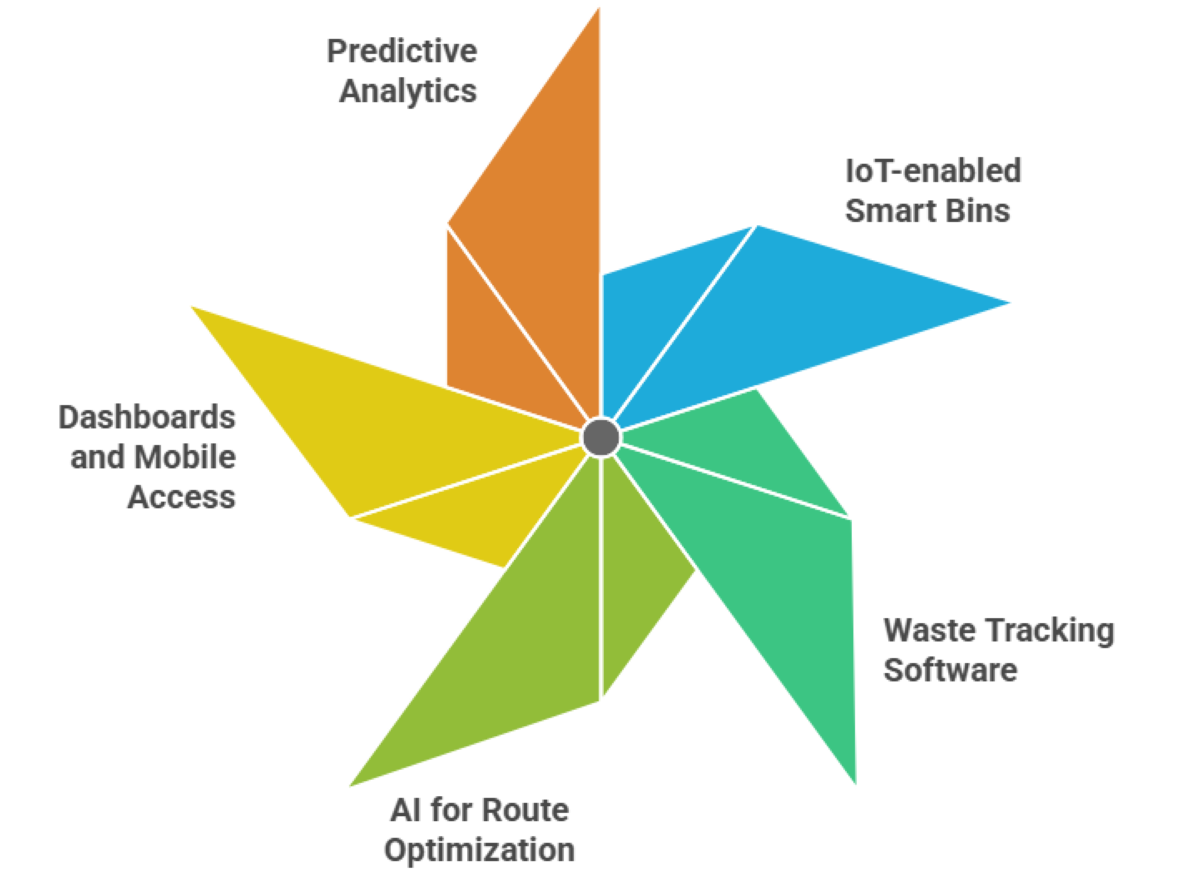
Modern waste management relies on integrated technology systems that provide visibility and control over collection operations through connected devices and intelligent software platforms.
Sensors detect fill levels, temperature changes, and unusual activity, wirelessly transmitting data to management platforms for monitoring. These containers feature tamper-resistant hardware, long-life battery systems, and weather-resistant communication modules, ensuring reliable operation in challenging urban environments and conditions.
Centralized platforms monitor bin status across entire cities, providing alerts, analytics, and reporting tools for efficient collection management. These systems integrate multiple data sources, including sensor feeds, vehicle tracking, weather data, and traffic information, to create unified operational dashboards for managers.
Machine learning algorithms analyze traffic patterns, bin capacity, and historical data to create efficient routes that reduce fuel costs. Similar to predictive analytics examples in other industries, these systems learn from operational data to continuously improve routing decisions based on real-world performance.
Web-based control centers and mobile apps give managers and field teams real-time access to bin status and performance data. These interfaces include customizable dashboards, interactive maps, and detailed analytics that help teams make informed decisions quickly and efficiently during daily operations.
Advanced algorithms forecast waste generation patterns by location and time, enabling proactive planning of collection routes and resource allocation for enhanced efficiency. Predictive maintenance IoT principles apply to both waste forecasting and equipment maintenance scheduling, ensuring optimal system performance and reduced operational downtime.
Smart waste management solutions for cities deliver measurable improvements in operational efficiency, cost control, and environmental impact for municipal operations across cities of all sizes.
Continuous sensor data shows exact bin capacity levels, eliminating guesswork and enabling responsive collection based on actual need.
Optimized routes and data-driven scheduling reduce unnecessary collection trips by up to 40%, improving productivity and service quality.
Reduced fuel consumption, lower labor costs, and improved vehicle utilization typically generate 20-30% savings in overall collection expenses.
Fewer collection trips mean reduced carbon emissions while preventing overflow helps maintain cleaner streets and reduces environmental impact.
Detailed analytics and reporting provide insights for long-term planning, budget allocation, and service improvements based on usage patterns.
Cities and organizations worldwide have implemented smart waste systems with measurable results that demonstrate the technology's practical value and return on investment.
Barcelona deployed 20,000 smart bins equipped with sensors, which reduced collection costs by 25% while enhancing service quality through optimization. The city's smart waste program integrates with broader smart city initiatives, including traffic management and energy systems, to facilitate comprehensive urban management.
Singapore installed sensor networks across the city-state, achieving a 30% reduction in collection trips and improved cleanliness scores. The program incorporates integration with the country's Smart Nation initiative, linking waste data to urban planning and environmental monitoring systems for comprehensive management.
New York City's Smart Bins pilot program, launched in December 2021, is expected to expand to 250 locations citywide by 2024, with plans for a total of 400 installations. The city's Department of Sanitation reports that these app-controlled bins accept all organic materials and are part of the broader effort to containerize waste and reduce street-level garbage across all five boroughs.
While smart waste management solutions for cities offer several benefits, cities face several practical obstacles during implementation that require careful planning and phased deployment strategies.
Smart bins cost $200-1,500 each, and citywide deployments require substantial upfront investment, though most cities see ROI within years. T
Existing waste management contracts, routes, and procedures must be adapted to accommodate new technology, which creates temporary complexity.
Connected systems require robust cybersecurity measures to protect operational data and ensure reliable communication between sensors and platforms.
Successful implementation requires coordination between IT departments, waste management teams, and external vendors to ensure seamless operation.
Sensor batteries, network connectivity, and software updates require ongoing maintenance programs to ensure consistent system performance and accuracy.
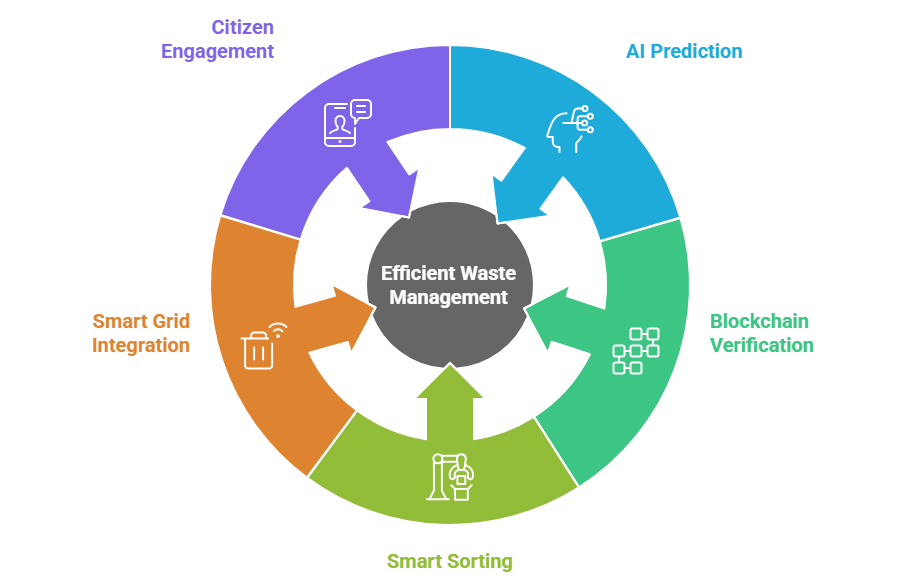
Emerging technologies will make waste collection even more efficient and integrated with other city systems in the coming years through innovative approaches.
Advanced machine learning will forecast waste volumes by neighborhood and time, enabling proactive resource allocation and accurate planning. These systems will incorporate weather data, local events, economic indicators, and social media trends to predict waste generation patterns with unprecedented accuracy.
Distributed ledger technology will track materials through the recycling process, ensuring proper handling and creating verified sustainability metrics. Blockchain systems will provide immutable records of waste streams, enabling more effective compliance monitoring and supporting circular economy initiatives through transparent material tracking.
Automated sorting systems will identify and separate recyclable materials at collection points, increasing recovery rates and reducing contamination. Similar to computer vision for defect detection in manufacturing, these systems will enhance accuracy and enable the recovery of valuable materials that are currently difficult to separate.
Waste-to-energy facilities will connect with smart electrical grids to optimize energy production timing and contribute to renewable energy goals. This integration will enable dynamic pricing for waste processing based on energy demand and grid conditions while creating additional revenue streams.
Residents will use smartphone apps to report issues, schedule bulk pickups, and receive education about waste reduction practices. These platforms will provide personalized recommendations based on household waste patterns and local recycling options while enabling two-way communication between residents and teams.
Folio3 develops thorough AI-powered waste management software that transforms traditional collection operations into intelligent, automated systems tailored to specific industry requirements and operational goals.
Folio3 develops AI-driven, automated waste sorting systems that utilize computer vision to identify and categorize materials. Our smart bin integration provides real-time monitoring of fill levels and predictive maintenance alerts.
Our software leverages predictive analytics to forecast waste generation patterns, enabling proactive collection planning. Intelligent routing optimizes collection paths based on real-time data, resulting in a 30% reduction in fuel costs.
Folio3 builds automated compliance reporting tools that track waste streams and generate audit-ready documentation. Our systems maintain detailed logs, ensuring municipalities stay ahead of evolving regulations.
We develop tailored waste-tracking software for the manufacturing, retail, healthcare, construction, and hospitality sectors. Our solutions address unique requirements, such as hazardous waste handling and food waste management.
Our platform includes mobile applications for field teams and web-based dashboards for managers, providing real-time access to collection data, performance metrics, and operational alerts for coordination.

A smart waste management system uses sensors, AI, and cloud technology to monitor bin levels in real-time and optimize collection routes. This approach reduces costs while improving service quality compared to traditional scheduled pickups.
Smart bins only request pickup when full, eliminating unnecessary collection trips that can account for 30-40% of traditional waste collection costs. Route optimization further reduces fuel and labor expenses.
Yes, modern smart waste platforms are designed to integrate with existing ERP, CRM, and operational systems through APIs and data connectors. Implementation typically involves gradual transition rather than complete system replacement.
Smart waste systems only collect operational data, such as fill levels and location information, not personal data about residents. Data is encrypted during transmission and stored on secure cloud platforms with access controls.
Most cities see a 20-30% reduction in waste collection costs within the first year, with full ROI typically achieved in 3-5 years. Savings are achieved through reduced fuel consumption, optimized routes, and improved operational efficiency.
Smart waste systems are highly scalable, starting with pilot programs in specific districts before expanding citywide. Modular sensor networks and cloud-based management platforms accommodate growth from hundreds to thousands of collection points.