
Loading...
Solar panel inspection costs vary dramatically across the United States, ranging from $200 for basic visual assessments to over $1,000 for detailed AI-enhanced diagnostics. Solar installations have grown to over 4.2 million residential systems nationwide, and regular maintenance has become crucial for protecting these $20,000-$30,000 investments.
Modern inspection technologies, including thermal drones and artificial intelligence, have revolutionized system monitoring, offering superior issue detection and performance optimization. Professional inspections maintain warranty coverage, prevent costly repairs, and ensure optimal energy production throughout your system's 25-30 year lifespan.
Understanding solar panel inspection costs helps homeowners and businesses make informed decisions about protecting their solar investments while maximizing long-term returns. This guide covers state-by-state pricing variations, technology comparisons, payment options, and selection criteria for choosing qualified inspection providers. Let's get started by reviewing inspection prices in different states.
Solar panel inspection costs vary across technologies, system sizes, and geographic regions. In 2025, market competition and technological advancement will drive pricing trends.
Inspection TypeResidential (3-10 kW)Commercial (10-100 kW)Large Commercial (100+ kW)Manual Visual$200 - $400$500 - $1,200$1,500 - $3,000Thermal Imaging$300 - $500$700 - $1,500$2,000 - $4,000Drone Inspection$400 - $800$1,000 - $2,500$3,000 - $6,000
Solar panel inspection costs correlate closely with regional solar installation costs, market maturity, and local labor rates. States with larger solar markets typically have more competitive inspection pricing.
StateAverage System Size (kW)Average Cost Before IncentivesAverage Cost After Tax CreditAverage Cost Per WattAlabama5.8$21,047$14,733$3.42Alaska5.1$19,084$13,359$3.52Arizona7.0$20,759$14,531$2.79Arkansas8.1$22,554$15,788$2.63California5.9$20,840$14,588$3.33Colorado4.9$17,799$12,459$3.41Connecticut7.0$21,826$15,278$2.93Delaware7.7$24,065$16,846$2.94District of Columbia6.0$22,457$15,720$3.53Florida8.4$23,351$16,346$2.61Georgia6.3$21,166$14,816$3.17Hawaii5.1$16,936$11,855$3.13Idaho6.3$20,553$14,387$3.08Illinois7.3$24,265$16,986$3.14Indiana8.7$28,960$20,272$3.14Iowa8.7$25,661$17,963$2.77Kansas8.9$28,039$19,627$2.97Kentucky7.3$21,173$14,821$2.74Louisiana5.0$17,894$12,526$3.37Maine7.7$25,348$17,744$3.10Maryland8.2$25,372$17,760$2.91Massachusetts7.3$24,221$16,955$3.12Michigan6.5$23,669$16,568$3.44Minnesota7.6$23,900$16,730$2.96Mississippi5.2$17,284$12,099$3.14Missouri10.9$31,032$21,722$2.68Montana7.1$21,957$15,370$2.91Nebraska8.9$26,294$18,406$2.79Nevada7.2$21,745$15,222$2.85New Hampshire7.8$24,627$17,239$2.97New Jersey7.5$24,857$17,400$3.12New Mexico5.2$17,251$12,076$3.12New York6.9$24,479$17,135$3.33North Carolina7.0$23,000$16,100$3.10North Dakota10.8$35,906$25,134$3.13Ohio7.2$22,209$15,546$2.90Oklahoma7.0$19,618$13,733$2.64Oregon5.9$19,963$13,974$3.18Pennsylvania7.8$25,633$17,943$3.10Rhode Island6.4$20,680$14,476$3.04South Carolina7.6$24,663$17,264$3.06South Dakota8.0$23,562$16,493$2.78Tennessee6.7$21,198$14,839$2.97Texas7.1$21,460$15,022$2.85Utah5.8$19,637$13,746$3.19Vermont11.2$33,301$23,311$2.79Virginia6.9$22,346$15,642$3.05Washington7.1$24,160$16,912$3.20West Virginia8.4$25,154$17,608$2.83Wisconsin7.0$22,401$15,681$3.01Wyoming6.9$23,299$16,309$3.18
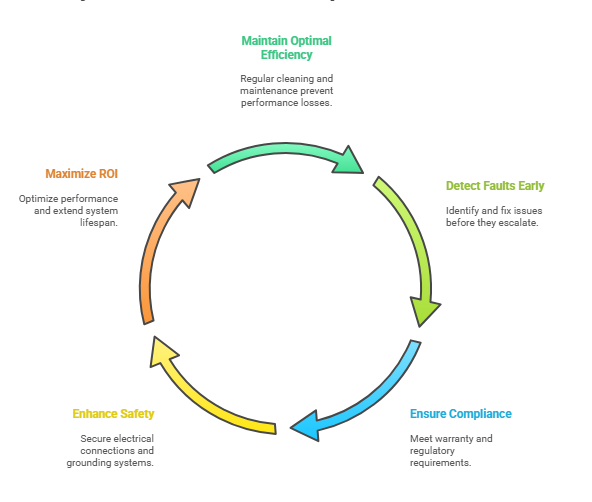
Professional solar panel inspections protect your investment, maintain peak efficiency, ensure safety compliance, and preserve warranty coverage while preventing minor issues from becoming costly repairs.
Research from the National Renewable Energy Laboratory shows that well-maintained solar systems consistently outperform neglected ones by 12-18% over their lifetime, preventing performance losses from dust, debris, and weather damage.
Early detection through professional inspections saves homeowners 60-80% on repair costs by identifying micro-cracks, loose connections, and electrical issues before system failure.
Most manufacturers require documented proof of regular inspections to maintain warranty coverage, while many building codes mandate periodic safety inspections for rooftop installations.
Regular inspections ensure electrical connections remain secure, grounding systems function correctly, and fire safety protocols for high-voltage solar installations are maintained.
Professional monitoring identifies performance optimization opportunities, prevents energy production losses, and extends system lifespan, ensuring maximum financial returns throughout the 25-30-year operational period.
Multiple factors influence inspection pricing, including system size, location accessibility, technology type, service frequency, and additional services required for a detailed system evaluation.
Residential systems (3-10 kW) are most cost-effective to inspect per watt, while commercial installations require more time and specialized equipment for comprehensive coverage.
Geographic location impacts costs through varying labor rates, travel requirements, and terrain challenges, with rooftop installations costing 20-40% more than ground-mounted systems.
Enhanced packages, including performance analytics, cleaning services, warranty assistance, and optimization recommendations, typically add value but increase overall inspection investment.
Modern solar inspections utilize diverse technologies ranging from basic visual assessments to advanced AI-powered analytics, each offering different capabilities and accuracy levels.
Traditional ground-based inspections using basic tools identify visible damage, connections, and basic functionality, but miss many performance issues. Technicians conduct walkthrough assessments, checking panel surfaces, mounting hardware, and electrical components for obvious defects like cracked glass or loose wiring.
While cost-effective for basic maintenance, these inspections rely heavily on inspector experience and cannot detect internal electrical faults, micro-cracks, or thermal anomalies that significantly impact system performance.
Handheld thermal cameras detect hot spots and electrical issues invisible to the naked eye, identifying overheating components, faulty connections, and potential fire hazards. These infrared sensors reveal temperature variations across panels and electrical connections, pinpointing failing bypass diodes, damaged cells, and dangerous electrical faults before they cause system failure.
Thermal imaging provides critical safety data by identifying potential fire hazards and electrical problems that could lead to expensive repairs or dangerous conditions.
Unmanned aerial vehicles with high-resolution and thermal cameras survey entire installations in 30-45 minutes, safely providing comprehensive visual and thermal data. Professional drones capture thousands of high-resolution images from multiple angles, creating detailed documentation of every panel while eliminating safety risks associated with roof access.
Advanced drone systems combine RGB photography with thermal imaging, enabling simultaneous detection of physical damage and electrical anomalies across large installations with unprecedented speed and accuracy.
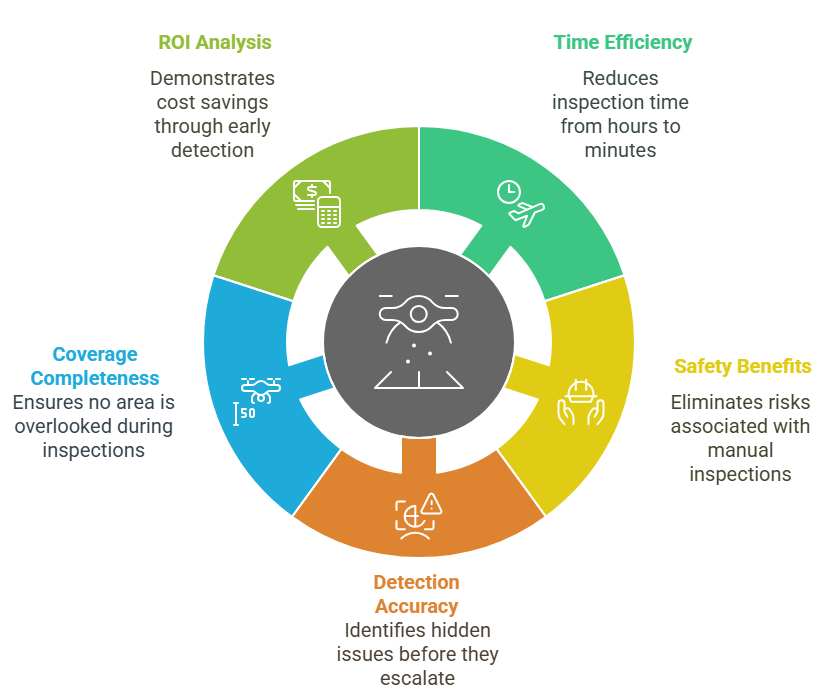
Modern inspection technologies like drone thermal imaging and AI analytics are a huge step forward from traditional methods, but the extra investment needs to prove its worth through better results and real cost savings.
Traditional manual inspections require 2-4 hours of technician labor, including setup, walkthrough assessment, and documentation. Drone inspections complete thorough system surveys in 30-45 minutes while capturing thousands of high-resolution images. This reduced inspection time translates to lower labor costs and minimal disruption to property operations.
Manual inspections require technicians to access rooftops, creating liability risks and safety concerns. Steep roofs, wet conditions, and tall buildings present genuine hazards that increase insurance costs and worker compensation claims. Drone technology eliminates human exposure to these risks while accessing hard-to-reach areas that may be skipped during manual inspections.
Manual inspections identify visible damage, such as cracked panels and loose wiring, but cannot detect internal electrical faults or thermal anomalies. AI-powered systems analyze thermal patterns, electrical signatures, and performance data to identify micro-cracks, hot spots, and gradual performance degradation. These advanced detection capabilities enable identification of problems months before they cause noticeable performance drops or system failures.
Drone inspections provide 100% system coverage, including difficult-to-access areas that manual inspectors may avoid due to safety constraints. High-resolution cameras capture detailed imagery of every panel from multiple angles, ensuring no components are overlooked. This comprehensive coverage reduces the risk of undetected issues that could lead to expensive repairs or safety hazards.
A typical 7 kW residential system worth $25,000 benefits differently from each inspection method. Traditional inspections prevent approximately $800 in annual damage through basic issue detection. AI-enhanced inspections prevent $1,500+ annually through early detection and performance optimization capabilities. Advanced technologies identify problems when repairs are less expensive and system optimization remains possible.
For AI drone solar panel inspection solutions, advanced platforms combine cutting-edge hardware with intelligent analytics.
Understanding the solar panel inspection cost breakdown helps evaluate quotes and ensure fair pricing for professional solar system monitoring services.
Service ComponentPercentage of Total CostTypical Cost RangeDescriptionTechnician Labor35-45%$150-$350Certified inspector time, including travel, setup, inspection, and documentationEquipment Depreciation20-25%$100-$200Professional cameras, drones, safety gear, and calibration costsData Analysis15-20%$75-$150Technical review, thermal analysis, performance evaluation, and trendingReport Generation10-15%$50-$100Professional documentation, photography, recommendations, and deliveryTravel/Transportation5-10%$25-$75Vehicle costs, fuel, travel time, and regional service coverageInsurance/Liability3-5%$15-$40Professional liability, equipment insurance, and bonding coverageCompany Overhead8-12%$40-$90Business operations, certifications, training, and administrative costs
Complex installations and challenging access conditions require specialized equipment and additional safety measures, resulting in premium pricing for high-risk inspection scenarios.
Steep roofs over 6/12 pitch, heights above 25 feet, or complex geometries incur $100-$400 safety surcharges for specialized equipment and additional technician training requirements.
Systems requiring crane access, scaffolding, or lift equipment add $200-$1,000 to standard pricing, while remote locations over 50 miles from service centers include $1-$2 per mile travel fees.
Understanding insurance coverage and warranty requirements helps maximize inspection value while ensuring compliance with manufacturer and policy requirements.
Some homeowner policies cover inspection costs for safety or damage assessment purposes, particularly after weather events or when claims processing and coverage maintenance are required.
Most solar panel warranties require documented annual inspections to remain valid, with inspection costs often offset by preserving thousands of dollars of warranty protection.
Commercial installations typically qualify for tax-deductible inspection costs as business maintenance expenses, with potential savings of 20-35% depending on applicable tax rates and regulations.
Certain warning signs indicate the need for immediate professional inspection, regardless of your regular maintenance schedule:
Sudden drops in energy production over 10%, inconsistent daily performance under similar weather conditions, or persistent inverter error messages require professional evaluation.
Visible panel damage, including cracked glass or burn marks, loose or damaged wiring, and evidence of animal or bird activity, requires prompt inspection to assess safety impacts.
Weather-related damage after severe events, excessive soiling accumulation, or biological growth may indicate drainage or structural issues requiring immediate attention.
Selecting qualified solar inspection providers requires evaluating certifications, technology capabilities, experience levels, and service quality to ensure comprehensive system assessment and reliable reporting.
Verify NABCEP certification, licensed electrical contractor status, drone pilot certification for aerial inspections, and a minimum of 3-5 years of experience with your specific system type.
For optimal results, ensure high-resolution thermal cameras, professional-grade drones, AI-powered analysis software, and comprehensive reporting systems with trending capabilities.
Folio3 delivers advanced AI-powered solar inspection solutions with over a decade of digital transformation experience, cutting-edge technology integration, and proven enterprise-ready platforms.
Folio3's AI-powered inspection software identifies multiple defect types, including hotspot detection, diode failure identification, shattered panel recognition, and micro-crack detection, which are invisible to traditional methods. The platform analyzes thermal anomalies, shadow impacts, coating degradation, and corrosion patterns with superior accuracy.
The platform integrates multiple inspection technologies, including live footage processing, terrain mapping, and custom reporting capabilities tailored to specific operational needs. Real-time anomaly detection provides immediate alerts for critical issues, while detailed performance analytics track efficiency trends over time.
With over a decade of digital transformation experience across multiple verticals, Folio3 delivers enterprise-ready solutions that scale with growing operations. Over 300 skilled developers with specialized certifications ensure full project support and ongoing maintenance capabilities.
{ "@context": "https://schema.org", "@type": "FAQPage", "mainEntity": [ { "@type": "Question", "name": "How often should I have my solar panels inspected?", "acceptedAnswer": { "@type": "Answer", "text": "Most manufacturers recommend annual inspections for residential systems, with semi-annual inspections for commercial installations. Systems in harsh environments like deserts, coastal, or high-wind areas may benefit from more frequent inspections every 6-8 months." } }, { "@type": "Question", "name": "Can I inspect my solar panels myself?", "acceptedAnswer": { "@type": "Answer", "text": "While homeowners can perform basic visual checks, comprehensive inspections require specialized thermal equipment and electrical expertise. DIY inspections cannot detect micro-cracks, electrical issues, or performance degradation that professional inspections identify and may void warranty coverage." } }, { "@type": "Question", "name": "What's included in a typical solar panel inspection report?", "acceptedAnswer": { "@type": "Answer", "text": "Professional reports include high-resolution photos of all components, thermal imaging analysis, electrical performance measurements, defect identification, and safety compliance verification. Advanced reports also provide performance trending analysis and predictive maintenance recommendations with specific repair priorities." } }, { "@type": "Question", "name": "Do drone inspections cost more than manual inspections?", "acceptedAnswer": { "@type": "Answer", "text": "Drone inspections typically cost $200-$400 more than manual inspections but provide superior coverage, safety, and detection capabilities. The additional cost is often justified by finding issues that manual inspections miss and reducing liability risks from roof access." } }, { "@type": "Question", "name": "Will inspection costs affect my solar warranty?", "acceptedAnswer": { "@type": "Answer", "text": "Most solar warranties require documented annual inspections to remain valid, making inspection costs essential rather than optional. The cost of inspections is typically far less than the value of maintaining warranty coverage worth thousands of dollars." } }, { "@type": "Question", "name": "What problems can a solar panel inspection detect?", "acceptedAnswer": { "@type": "Answer", "text": "Inspections can identify hot spots, shading issues, panel misalignment, cracked glass, loose wiring, inverter faults, and declining efficiency before they escalate into costly repairs." } }, { "@type": "Question", "name": "How long does a solar panel inspection take?", "acceptedAnswer": { "@type": "Answer", "text": "Residential inspections typically take 1-2 hours, while larger commercial arrays may require half a day or more, especially if advanced thermal imaging or drone technology is used." } }, { "@type": "Question", "name": "Are drone inspections safer than manual inspections?", "acceptedAnswer": { "@type": "Answer", "text": "Yes, drone inspections eliminate the need for roof access, reducing fall risks and equipment damage. They also capture high-resolution and thermal imagery faster than manual methods." } }, { "@type": "Question", "name": "Can inspections improve solar panel efficiency?", "acceptedAnswer": { "@type": "Answer", "text": "Absolutely. Regular inspections detect dirt buildup, damaged wiring, or shading issues, allowing for timely cleaning or repairs that restore optimal energy output and extend system lifespan." } }, { "@type": "Question", "name": "How much do professional solar panel inspections cost?", "acceptedAnswer": { "@type": "Answer", "text": "Costs vary by system size and technology. Residential inspections typically range from $150–$350, while commercial inspections can range from $500–$2,000, especially if drone or infrared imaging is included." } } ] }
Most manufacturers recommend annual inspections for residential systems, with semi-annual inspections for commercial installations. Systems in harsh environments like deserts, coastal, or high-wind areas may benefit from more frequent inspections every 6-8 months.
While homeowners can perform basic visual checks, comprehensive inspections require specialized thermal equipment and electrical expertise. DIY inspections cannot detect micro-cracks, electrical issues, or performance degradation that professional inspections identify and may void warranty coverage.
Professional reports include high-resolution photos of all components, thermal imaging analysis, electrical performance measurements, defect identification, and safety compliance verification. Advanced reports also provide performance trending analysis and predictive maintenance recommendations with specific repair priorities.
Drone inspections typically cost $200-$400 more than manual inspections but provide superior coverage, safety, and detection capabilities. The additional cost is often justified by finding issues that manual inspections miss and reducing liability risks from roof access.
Most solar warranties require documented annual inspections to remain valid, making inspection costs essential rather than optional. The cost of inspections is typically far less than the value of maintaining warranty coverage worth thousands of dollars.
Inspections can identify hot spots, shading issues, panel misalignment, cracked glass, loose wiring, inverter faults, and declining efficiency before they escalate into costly repairs.
Residential inspections typically take 1-2 hours, while larger commercial arrays may require half a day or more, especially if advanced thermal imaging or drone technology is used.
Yes, drone inspections eliminate the need for roof access, reducing fall risks and equipment damage. They also capture high-resolution and thermal imagery faster than manual methods.
Absolutely. Regular inspections detect dirt buildup, damaged wiring, or shading issues, allowing for timely cleaning or repairs that restore optimal energy output and extend system lifespan.
Costs vary by system size and technology. Residential inspections typically range from $150–$350, while commercial inspections can range from $500–$2,000, especially if drone or infrared imaging is included.
Solar panel inspection costs range from $200 to $1,000+, depending on technology and system complexity, but they consistently deliver strong returns through improved performance and prevented repairs. Modern drone and AI technologies offer superior detection capabilities that justify premium pricing through earlier issue identification and optimization insights. Professional inspections protect warranty coverage, ensure safety compliance, and maximize energy production throughout your system's lifespan.
For thorough monitoring solutions, Folio3's AI-powered inspection services represent the cutting-edge approach to solar system optimization and performance maximization.