
Loading...
In the digital age that we live in, video ads are an integral part of business. The same goes for logo detection. More and more businesses are investing in video marketing, increasing in demand for logo detection and recognition. Saying that it is the primary source to increase brand awareness would not be wrong. With multiple brands constantly introducing fresh content daily, logo detection is no longer optional. With a strong logo detection and recognition system, businesses can effectively target their audience and increase brand recognition. So, here we are, taking you down the road of logo detection and recognition in videos with a step-by-step guide. Let's understand what it is and how it works.

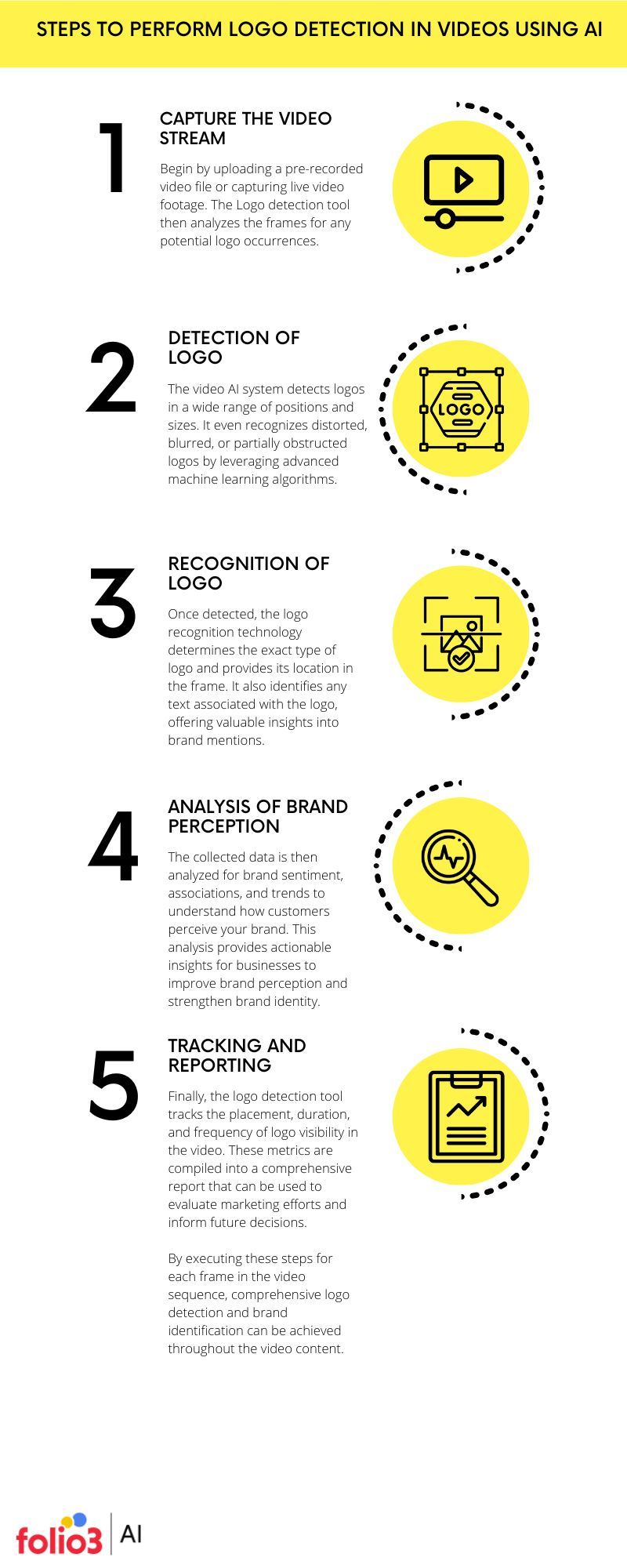
Logo detection and recognition in videos is a fascinating process that uses machine learning to recognize and understand brands within video frames. It operates in two key stages:
Identification
Matching and Recognition
This stage involves pinpointing regions within each video frame that might contain logos. The system is equipped with robust object detection algorithms specifically trained on extensive image datasets that include logos. AI algorithms are used to perform analysis of visual features like shapes, colors, and textures to distinguish potential logos from other elements in the video because not all identified regions are actual logos. To refine the process, additional filters or post-processing techniques are applied to eliminate false positives and ensure only genuine logo candidates remain.
After identifying the potential logos, the system attempts to match them with the existing database of known logos. This process involves using deep learning algorithms that analyze visual features of the logo, like shapes, colors, fonts, etc., to find a match. Once a match is found, the logo is recognized and labeled accordingly. This step can also involve tracking the logo across multiple frames in a video to gather insights on how frequently it appears. The gathered information helps measure brand visibility and impact.
It’s an undeniable fact that online presence reigns supreme, and businesses face new challenges and opportunities every day. Logo detection and recognition tools emerge as a powerful ally in this scenario. They empower companies to gain valuable insights and navigate this dynamic environment effectively. Let's delve into the reasons these tools are indispensable for businesses.
Imagine your business having a virtual eye scanning the vast ocean of online content, always on the lookout for mentions of your brand. Logo Recognition comes to offer its services as a powerful tool that scans images, videos, and social media content to pinpoint occurrences of your logo.
Brand awareness – Track how often your logo is used online, gauging your brand's reach and visibility.
Customer engagement – Identify user-generated content featuring your logo, understanding how customers interact with your brand.
Potential brand infringement – Detect unauthorized use of your logo, allowing you to take necessary actions to protect your intellectual property.
Any business logo serves as the visual representation of its brand, representing its values, reputation, and trust. Logo detection and recognition tools act as partners and safeguard your brand identity from potential threats.
Counterfeit detection – Recognize platforms that feature or misuse your logo to sell items.
Maintaining brand consistency – Monitor the use of outdated or incorrect versions of your logo so that business brands remain consistent across all channels.
Ensuring Brand Compliance – Ensure compliance with brand guidelines, making sure approved logos are used across all media channels.
Sponsorships are a powerful marketing tool, but measuring their true impact can be challenging. Logo detection tools bridge this gap. They track the placement and duration of logo visibility during events, broadcasts, or live streams. Let's find out how.
Quantifying brand exposure – Continuous tracking to make sure your logo appearance does not affect the brand's image and identity.
Assessing engagement – Monitor audience responses and engagements with your logo, providing valuable insights into sponsorship performance.
Identifying potential future partners – Discover events or platforms where your target audience engages with brands, informing future sponsorship decisions.
Counterfeit products hurt businesses financially and damage the brand reputation and customer trust. Logo detection tools help detect these counterfeits with a proactive approach.
Tracking of illegally sold products – Monitor business logos on online trade platforms, flagging counterfeit goods featuring your logo or packaging.
Identifying distribution patterns – Track the source and type of products being sold under your brand name, aiding in understanding the distribution network.
Evaluating sponsorship effectiveness – Understand the context of customers to analyze the sentiment surrounding your logo mentions during sponsored events.
Beyond identifying brand mentions, logo detection tools offer deeper insights into how consumers perceive your brand.
Analyzing brand sentiment – Understand the emotional tone associated with your logo mentions to reveal how customers feel about your brand.
Identifying brand associations – Compare your logo with other visual elements in the same post or video to determine which keywords and phrases are commonly associated with your brand.
Monitoring brand trends – Get an idea of all the trends or viral videos that can boost brand sentiment and associations over time.
https://youtu.be/sJum9p-npRg