
Loading...
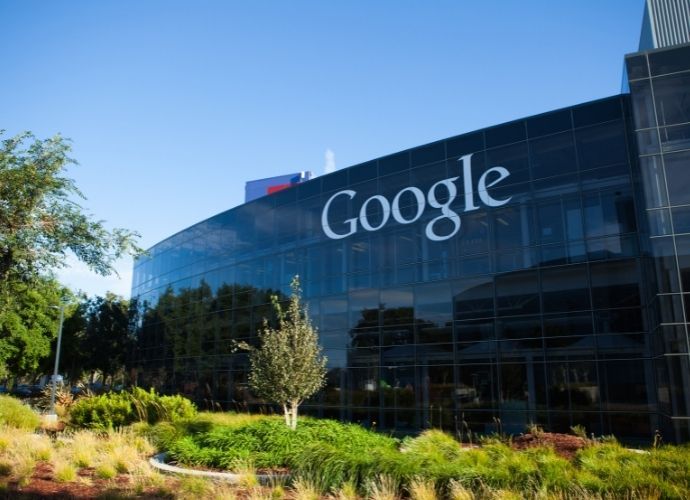
The Google Coral AI project marks a major advancement in combining artificial intelligence with edge computing. Google launched it to boost machine learning, and it gives developers some awesome tools for creating smart devices that can process data right on the spot. This local processing cuts down on latency and improves privacy, which is great for all sorts of applications. As we get closer to 2024, I think we’ll see Coral AI being used more and more in areas like healthcare, agriculture, and smart home tech. Its flexibility and efficiency are going to change how we interact with technology, opening the door to innovations that use AI right at the edge.
If you're curious about how Google Coral can be used for smart vision applications, it's a good idea to start by learning the basics of both Google Coral and computer vision.
Google’s Coral is an AI-powered platform designed for fast neural network inference on the Edge, which means it can process information right where it’s needed without relying on Google’s servers. This innovative hardware and software will enable smarter devices in your home or office, capable of handling a wide range of tasks. With its Coral platform, Google aims to tackle a new challenge- providing an AI solution for edge devices that don’t need cloud connection or processing power. These devices can learn in real time using machine learning algorithms, allowing them to adapt quickly without needing preprogrammed knowledge about how to function within the hardware.
Computer vision is about teaching computers to see and understand images and videos, similar to how humans do. With Google Coral AI, this can be done on small devices that use very little power. This means we can create many computer vision apps that work locally instead of needing cloud services. The possibilities are huge, from home security systems to self-driving cars.
Some specific areas where Google Coral AI is already being used for computer vision include:
Object detection and classification: Using machine learning models, Coral-powered devices can identify objects in images or videos.
Facial recognition: With advanced facial recognition algorithms, Coral enables devices to recognize and analyze faces in real time.
Gesture recognition: By training machine learning models , on gesture data Coral can enable devices to interpret hand movements and gestures.
Medical imaging: The low latency and high processing power of Google Coral make it a great tool for medical imaging applications, such as diagnosing diseases or monitoring patient health.
The following are the two ways to use Google Coral for computer vision applications:
The System-on-Module, or SoM, for short, is a powerful and versatile device that can be tailored to suit your needs. It comes with everything you need, including Edge computing capabilities, making it ready-to-use out of the box!
The TPU accelerator device is a small, portable piece of hardware that can be used by any user with access to the internet. It’s available for purchase as an attachment through a USB stick or PCIe slot on your computer’s motherboard–or even via an M2 Module if you’re looking to add some faster storage capacity!
The Coral Edge TPU boards and self-contained AI accelerators are used to build a wide range of on-device, deep learning-based applications. When using Google's latest technology in computer vision projects, many benefits come with its edge programming language that allows developers greater control over their creations than ever before!
The scalability of this AI solution is based on an excellent cost/performance ratio to build inferencing solutions in the field with many devices that are distributed (due to temporary power and network constraints).
The Edge AI capabilities allow you to process visual data locally without streaming it and keep your private user information. This is critical, especially if we want our AI vision applications in Europe or America!
The Google Coral USB accelerator is a small single-board computer that requires very little power compared to the rather heavy GPU chips. It gets its 5 V directly from the interface and doesn't need an additional step like some other accelerators to do, which makes it much more efficient in operation!
Offline capabilities allow the user to use Google Coral hardware in areas with limited connectivity. However, most AI edge devices come equipped with built-in storage and robust auto rebooting abilities, so they can function without internet access for an extended period of time or until their next update cycle, whichever comes first.
The cost for such edge computing devices is relatively low, and this makes the FPS ratio good. The USB accelerator only costs between 60 -75 USD, while single-board computers go up to 130$.
Folio3's AI image processing services are the perfect solution for any company that needs customized, scalable, and affordable services. Our team of experts has over a decade’s worth of experience in helping businesses find solutions to unique business challenges with their expertise ranging from face recognition all the way down to traffic analysis!
Folio3's experts excel in the design and development of advanced computer vision solutions for clients to help them stay ahead of the competition. Our team has expertise in face recognition services, image analysis, as well as other similarity-related services that can be applied across various industries.
What would you say if we told you about a solution that could monitor traffic and congestion with ease? One that identified the type/category of vehicle, as well. Sounds pretty great, right? Well, now is your chance because this amazing device can do just that! Let us tell you more about how the vehicle detection & counting solution system works.
Get a head start on your AI journey and make the most of that big data. Folio3 specializes in computer vision solutions for unstructured data, giving you clear, actionable analytics to fuel growth with Folio3's professional service options!
Google Coral is a powerful tool for computer vision applications. As technology continues to develop, more and more businesses will be able to take advantage of its capabilities. If you are looking for a way to improve your business's image recognition or machine learning capabilities, Google Coral may be the perfect solution for you. Folio3 can help you make your process simpler.
Tensor Processing Units (TPUs) are application-specific integrated circuits (ASICs) created by Google that are used to speed machine learning workloads. TPUs are built from the ground up with Google's extensive knowledge and competence in machine learning. The Coral USB Accelerator, on the other hand, is an accessory device that adds the Edge TPU as a coprocessor to your existing system. It can simply be connected to any Linux-based system through a USB connection.
{ "@context": "https://schema.org", "@type": "FAQPage", "mainEntity": [ { "@type": "Question", "name": "What is Google Coral AI?", "acceptedAnswer": { "@type": "Answer", "text": "Google Coral AI is a platform of hardware and software tools developed by Google for running machine learning models directly on devices (edge computing). It is built around the Edge TPU (Tensor Processing Unit), enabling fast, low-power, and private AI inference without relying on cloud processing." } }, { "@type": "Question", "name": "What is Coral in computer hardware?", "acceptedAnswer": { "@type": "Answer", "text": "In computer hardware, Coral refers to Google’s line of AI acceleration devices designed for edge computing. These devices integrate the Edge TPU chip, allowing efficient execution of TensorFlow Lite models on low-power hardware such as development boards, USB accelerators, and system-on-modules." } }, { "@type": "Question", "name": "What is the Google Coral USB stick?", "acceptedAnswer": { "@type": "Answer", "text": "The Google Coral USB Accelerator is a compact AI processing device that plugs into a host computer (via USB 3.0) to boost machine learning performance. It contains the Edge TPU, enabling real-time inference for tasks like object detection and image classification on existing systems." } }, { "@type": "Question", "name": "What is the Google Coral Dev Board?", "acceptedAnswer": { "@type": "Answer", "text": "The Google Coral Dev Board is a single-board computer for prototyping and developing edge AI applications. It combines the Edge TPU with an NXP i.MX 8M system-on-chip, supports TensorFlow Lite, and runs Mendel Linux, making it ideal for on-device AI testing and deployment." } }, { "@type": "Question", "name": "Use cases or projects achievable with Google Coral", "acceptedAnswer": { "@type": "Answer", "text": "Google Coral devices can power a wide range of projects, including real-time object detection in surveillance cameras, smart traffic monitoring and vehicle counting, manufacturing quality inspection, automated retail checkout systems, agricultural monitoring with drones, and IoT devices with on-device AI capabilities." } } ] }
Google Coral AI is a platform of hardware and software tools developed by Google for running machine learning models directly on devices (edge computing). It is built around the Edge TPU (Tensor Processing Unit), enabling fast, low-power, and private AI inference without relying on cloud processing.
In computer hardware, Coral refers to Google’s line of AI acceleration devices designed for edge computing. These devices integrate the Edge TPU chip, allowing efficient execution of TensorFlow Lite models on low-power hardware such as development boards, USB accelerators, and system-on-modules.
The Google Coral USB Accelerator is a compact AI processing device that plugs into a host computer (via USB 3.0) to boost machine learning performance. It contains the Edge TPU, enabling real-time inference for tasks like object detection and image classification on existing systems.
The Google Coral Dev Board is a single-board computer for prototyping and developing edge AI applications. It combines the Edge TPU with an NXP i.MX 8M system-on-chip supports TensorFlow Lite and runs Mendel Linux, making it ideal for on-device AI testing and deployment.
Google Coral devices can power a wide range of projects, including:
Real-time object detection in surveillance cameras
Smart traffic monitoring and vehicle counting
Manufacturing quality inspection
Automated retail checkout systems
Agricultural monitoring with drones
IoT devices with on-device AI capabilities